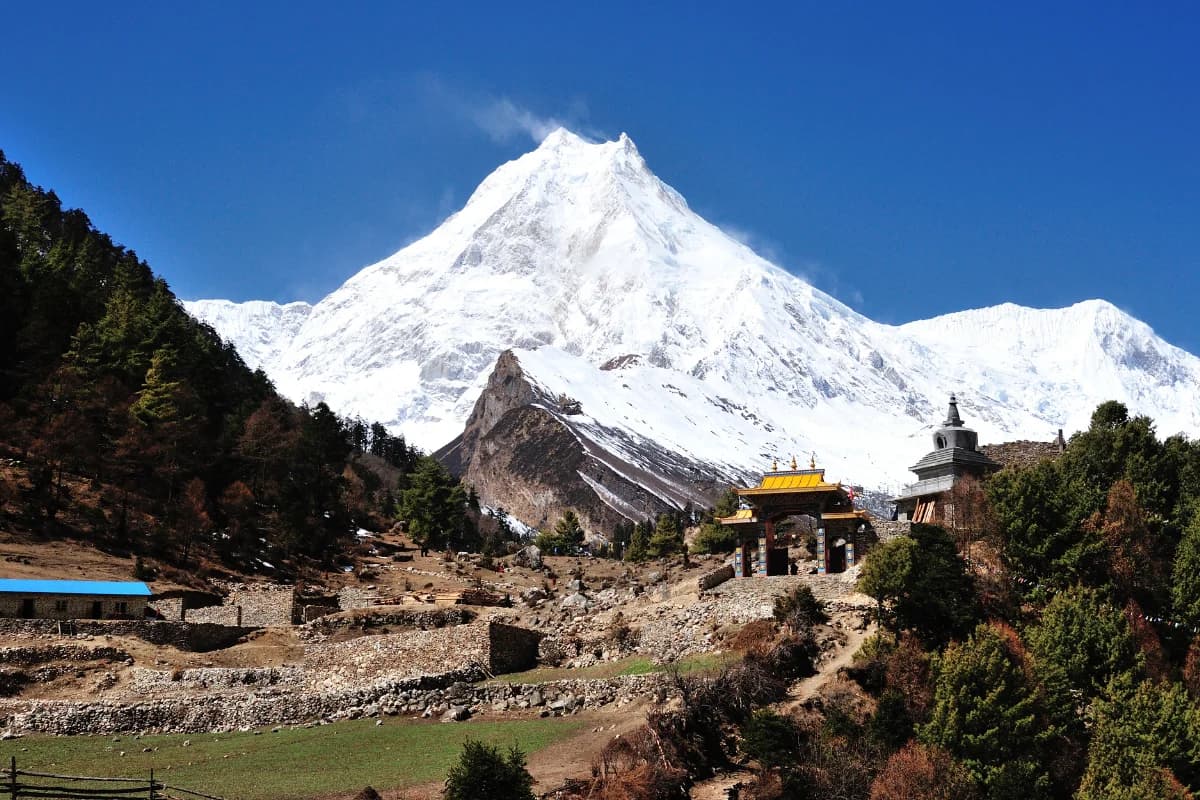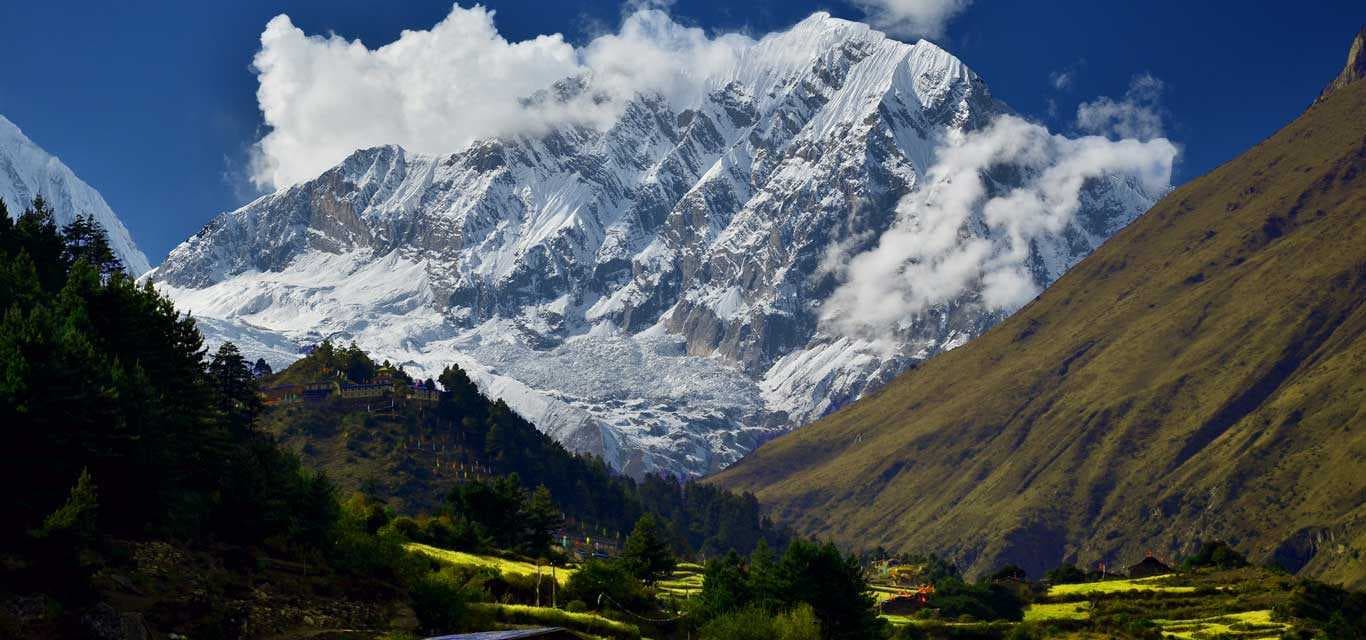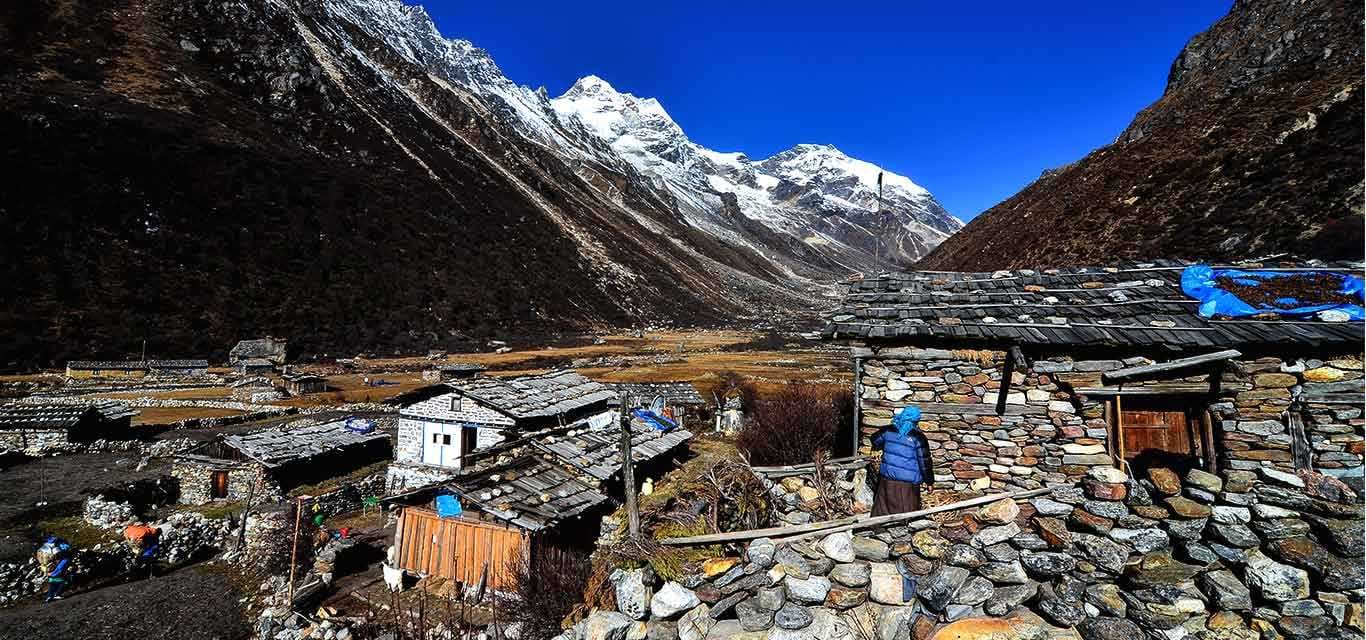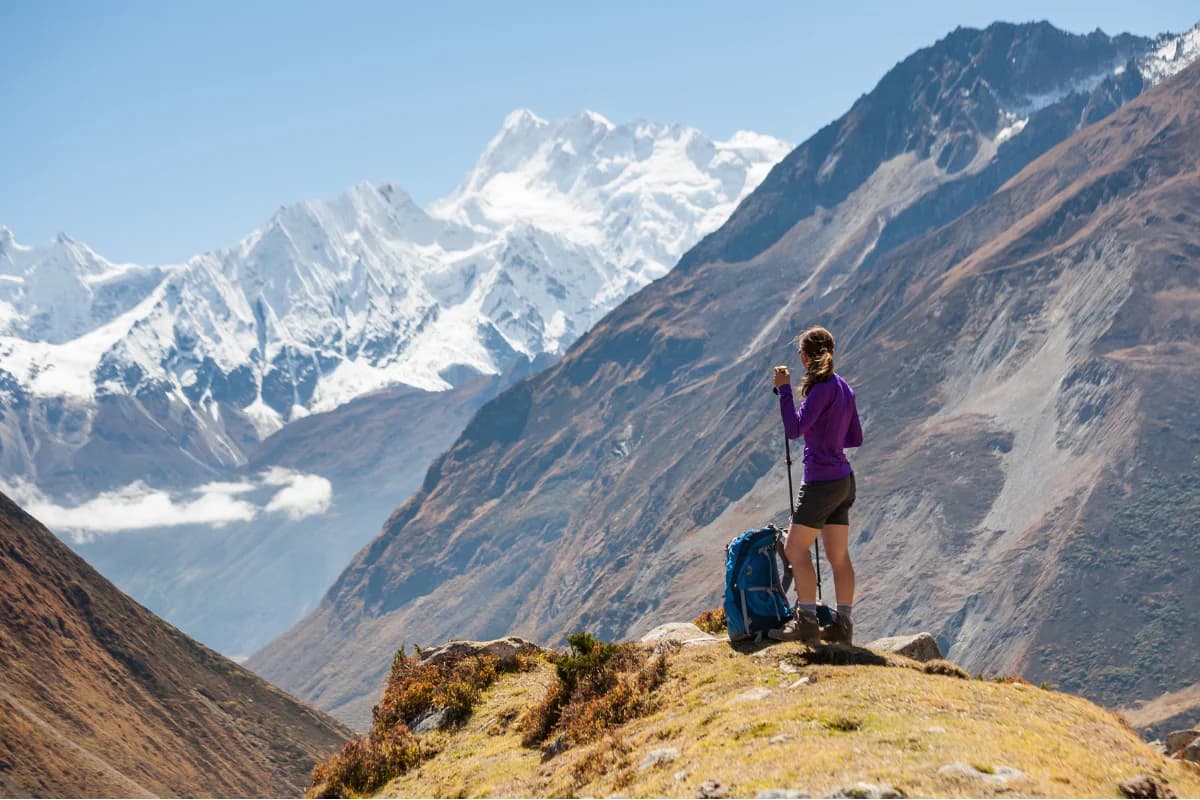
The Manaslu Circuit Trek surrounds the eighth tallest mountain in the world and will require a completely different kind of preparation. The highest point of the trek is Larkya La Pass which lies at an elevation of 5,106 meters (16,752 feet).
On average you will be walking 5 to 8 hours every day for 11 to 18 days. The trek passes through steep river valleys, glaciers, and remote areas where you cannot get any medical assistance other than being flown by helicopter.
The Manaslu Circuit Trek is one of the most challenging treks in Nepal in terms of difficulty. It does not require any technical mountaineering experience. However, it does need stamina, patience, and realistic perception of high altitudes' impact on the human body.
When Should You Start Preparing for the Manaslu Circuit Trek?
The timeline will be dependent upon the current fitness level. For beginners who do not exercise more than twice a week, 12 weeks of preparation will be necessary. For regular exercisers who exercise thrice or four times a week, 8 to 10 weeks of preparation will be required. Experienced trekkers who trek regularly will require only 6 to 8 weeks of preparation.
It is very important not to shorten the timeline. The body requires a certain period to develop endurance. Late preparations along with intense training sessions are risky for the body. In addition, it will not prepare you for the successive long days of this trek.
In the first twelve weeks before the trekking trip, it will be best if you concentrate on developing a cardiovascular base. Exercise by walking fast for forty-five to sixty minutes four to five days a week. Include one hiking session over the weekend, which will be initially two hours long.
At eight weeks out, begin hill training and backpacking with added weight. Identify the most challenging slopes you can find. Continue walking uphill for 30 to 45 minutes nonstop. Start wearing a 3 to 5 kilogram (7 to 11 pound) backpack. Begin strength training two times per week.
At four weeks out, simulate back-to-back hiking days. Complete 5 to 6 hours of hiking on Saturday, then hike 3 to 4 hours on Sunday. You are mimicking the accumulated fatigue of the trek. On the second day, your legs will be tired, and this is precisely what you need to be prepared for before Nepal.
One week before, scale back on intensity. Focus on getting enough sleep, packing gear, and resting. The fitness level at that point is the fitness level that you are taking into Nepal. Overtraining during the last week only results in injury.
Build the Endurance You Need for Long Trekking Days
This Manaslu Circuit is a physical challenge disguised as a trekking trip. Most of the days include about 6 to 8 hours of walking. The toughest day of the circuit is the one spent crossing the Larkya La which takes 9 to 11 hours. Your body must endure such activity for almost two weeks.
To start with, spend 30 to 45 minutes on brisk walking, doing it from 4 to 5 days a week. Gradually increase the time up to 60 to 90 minutes. Also, have a weekly long hike lasting from 2 to 3 hours, increasing the duration up to 5 or 6 hours.
It does not matter how fast you walk as long as you can keep your body moving for hours. This is called Zone 2 training where you can even hold a conversation during this activity.

Trekker carrying a heavy bag and taking support with trekking poles
Back-to-back hikes are the best way to prepare specifically. There are no rest days on the Manaslu Circuit in the first five days of your journey. Back-to-back hiking on consecutive Saturdays and Sundays without rest days helps to get used to cumulative fatigue that comes with hiking.
It is very important to train on an incline, because the Manaslu route involves constant ascending. Use any means for training: hills, stadium stairs, or even a treadmill with an incline. You should walk up the hill continuously for 30-60 minutes without stopping. This kind of workout develops the muscles that you need for hiking.
Descent training is also very necessary, but usually overlooked by hikers. The descent from Larkya La covers 1,570 meters (5,151 feet).
Your quadriceps muscles have to work under incredible pressure during the entire descending process. Train your quadriceps muscles while descending; use stairs or steep hiking paths.
Strength Training for the Manaslu Circuit Trek
The walk itself is not enough. The trail to Manaslu is rocky, bumpy, and usually very steep. Your muscles require strength as well as endurance. Your core requires stability to support your pack through uneven ground.
Pay special attention to the muscle groups involved in going uphill and maintaining control downhill. Squats develop quadriceps and glutes. Lunges work on your one-legged stability.
Step-ups mimic the stairs encountered along the path. Calf raises get your leg muscles ready for the repetitive lifting. Planks and core exercises will stabilize your spine when loaded.
Strength training should be done two to three times per week. Bodyweight exercises should be your starting point. Resistance can gradually be introduced. The idea is not to build up huge muscles, but to develop strength which will serve you for hours in the mountains. Three sets of 12 to 15 repetitions are required for each exercise.
However, it is during the descent from Larkya La that one needs to have strength. This is because the 1,500 meters (4,921 feet) of descent to Bimthang is very tough on your quad muscles. Many trekkers who did not do eccentric strength training suffered badly with knee problems in the descent part of this trek.
Single-leg exercises become very important for this trail. This is because this trail is never symmetrical. This is due to the fact that there will be constant stepping on stones and roots in this trail.
Train for Larkya La Pass, Not Just for the Trek
Larkya La Pass is the ultimate test. This highest point rises at 5,106 meters (16,752 feet). It is higher than the base camp of Mount Everest.
The trekking day consists of a 22 to 26 kilometers (13.7 to 16.2 miles) walk that involves a climb of 700 meters (2,297 feet) and a descent of 1,570 meters (5,151 feet). This is one of the longest days in any of the teahouse treks of Nepal.
There is no climbing involved in the route. It is the altitude, the distance and weather conditions that make this day an adventure. Trekkers begin their journey from as early as 4:00 AM or 5:00 AM. Mornings can get very cold. The winds at Larkya La can be strong. Descent can be steep and rocky.
How to Train for the Larkya La Crossing
Perform long uphill treks which last 5 to 7 hours. Locate a hill or a mountain close to your home and go hiking all the way to its top. Perform this routine at least once per week during the last month before the trekking starts. You need to make sure your body is able to climb for hours without stopping.
Practice climbing through rough terrain. Trails to Larkya La pass through the very rough terrain. It is very steep, rocky and slippery. Go hiking in the steepest trails you are able to find. Learn how to move uphill through rough terrain.
Perform downhill training sessions each time you practice. It takes longer to go downhill from Larkya La than to climb up. Your quads work hard when moving downhill. Make them stronger by performing downhill walking sessions. Go downstairs and hike down steep trails. Perform slow controlled squats.

How you can prepare yourself for Larkya Pass walking on snow
Have a daypack that is reasonable for what you’ll be carrying on crossing day, which includes water, food, clothing, and gear. The backpack weighs between 5 to 7 kilograms (11 to 15 pounds). Train with this weight. Do not train with a heavy pack. You are not training to be a porter.
Train for early morning hikes. Begin your training hikes around 4:00 or 5:00 AM. Get accustomed to hiking in the dark. Test out your headlamp. Know how your body reacts to early rising and chilly mornings.
Training should involve the use of trekking poles. Trekking poles are useful in helping minimize strain on knees when going down hills and offer stability when the terrain is uneven. Learn how to use them comfortably.
Prepare for the Samagaon to Dharamsala Section
The segment between Samagaon and Dharamsala is unique from all previous segments. Distances here become shorter. Samagaon to Samdo is just 8 kilometers (5 miles). Samdo to Dharamsala is 6 kilometers (3.7 miles). But altitude changes everything.
Samagaon is located at 3,530 meters (11,581 feet). Samdo is located at 3,875 meters (12,713 feet). Dharamsala is located at 4,460 meters (14,633 feet). Each step seems to be getting harder. There is about 40 percent less oxygen in the air than at sea level. 6 kilometers may take 3 to 4 hours.
This is when energy management becomes crucial. No matter how hard you try, you cannot speed up. No matter how tired you get, you need to stop. Your body needs to walk, breathe, adapt. Eat, drink, slow down. Save energy for the pass.
It’s an easy hike from Samagaon to Samdo, but it can be windy and sunny. The route takes one through the Budhi Gandaki Valley with Birendra Lake en-route. Many trekkers spend the day at the lake as opposed to visiting it as a side trip.
Dharamsala is a basic village with few amenities. The teahouses are simple with the rooms cold and the meals plain. Don’t have unrealistic expectations here. Have dinner early. Pack up your stuff for tomorrow. Get some sleep.
Get Used to Walking With a Backpack
The porters hired by most trekkers on the Manaslu Circuit are supposed to carry the main baggage. You will be carrying a day pack that includes water, layers, food, etc., which will weigh 5-7 kilograms (11-15 pounds). In 8 hours, that weight is going to be significant.
Start with the backpack early in your training. Begin with 3-5 kilograms (7-11 pounds) and then go up to 7-8 kilograms (15-18 pounds).

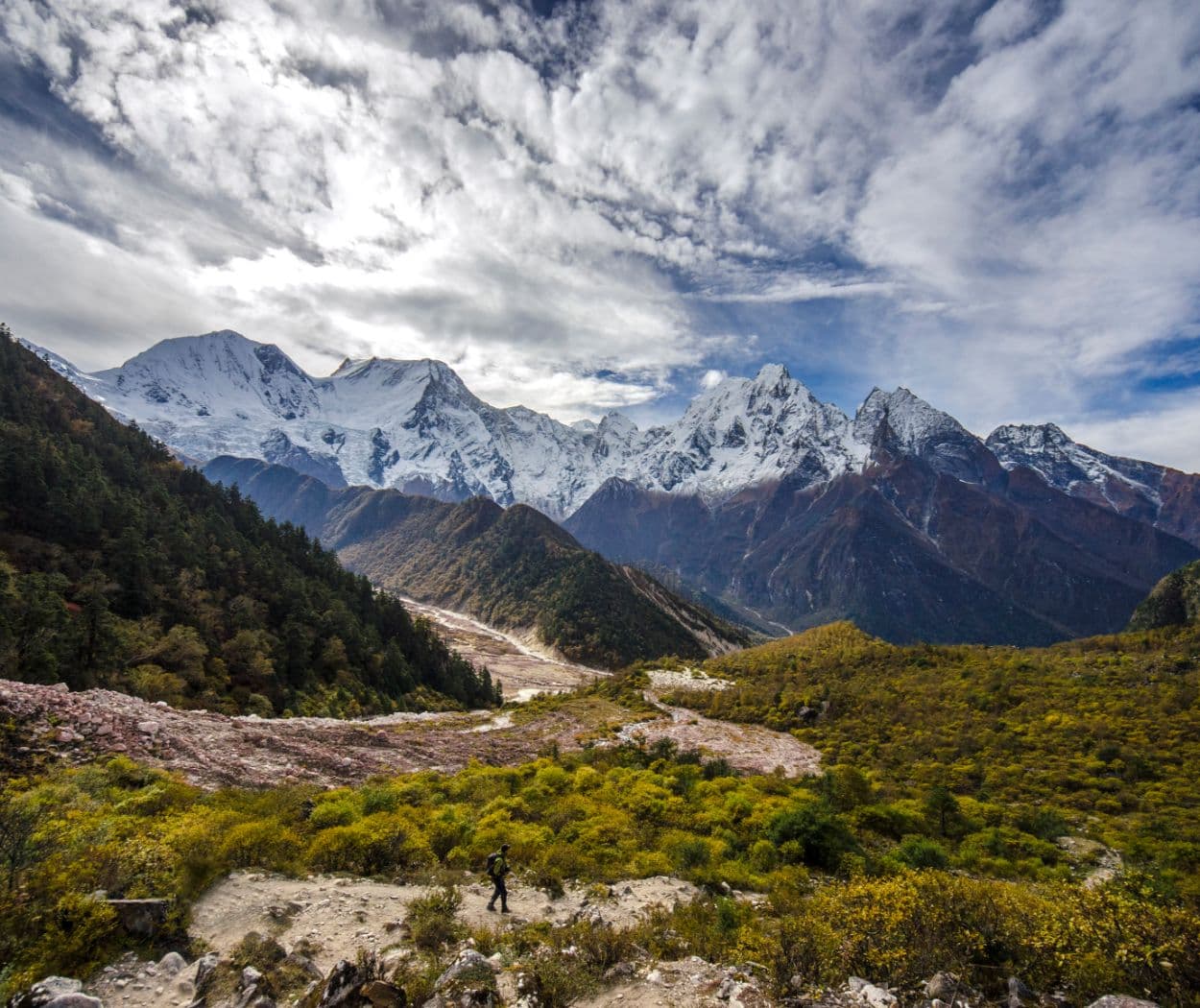
Manaslu Circuit Trek landscape during Autumn
Use the backpack you will take in Nepal. Adjust the straps and practice with the backpack in uphill and downhill conditions.
Use the hiking boots you will use in Nepal. They should be broken in through several months of wear, not days. Don't ever wear new boots into the Himalayas. Blisters and sore feet can end a trek for good.
Prepare Your Body for Manaslu's Changing Terrain
The Manaslu Circuit Trail is not one particular kind of trail. It changes constantly. In the first few days, you will be walking in subtropical river valleys. The trail follows the Budhi Gandaki gorge, where there are many suspension bridges and waterfalls.
Further, you will trek into pine and rhododendron forests. Even higher, the terrain will become rocky and exposed. When close to the pass, there will be glacial moraine and scree.
Flatter roads do not offer adequate preparation for trekking here. Try finding various terrains. Hike on rocky trails. Walk on uneven ground. Train yourself on stone steps. Train yourself on shifting loose ground.
Yet another feature of the Manaslu circuit trail is the suspension bridges. Suspension bridges can sway underneath your feet. The bridges can also be built at a considerable height over the river. If you feel uncomfortable walking on heights, try practicing walking on suspension bridges while training.
Stone steps appear frequently in the lower parts of the trail. These steps are often very uneven and slippery when wet. Practice on the stairs. Walk up and down them many times.
Altitude Preparation: What Fitness Can and Cannot Do
This is probably the most crucial part of this guide. Fitness will not protect you from altitude sickness. It does not mean that you are immune to the effects of thin air. This disease is caused by low oxygen, and anybody could suffer from it, no matter what physical condition he or she is in.
However, fitness is going to help you survive the trip. Cardiovascular health will provide your body with more oxygen; strong leg muscles will make the hiking easier under difficult respiratory conditions.
Nevertheless, fitness cannot replace the process of acclimatization. Fitness cannot substitute for gradual ascent. Fitness cannot take place on the rest day at Samagaon.
There are just several simple rules. Ascend gradually. The basic rule says that the altitude gained during sleeping must not exceed 300 to 500 meters (984 to 1,640 feet) above 3,000 meters (9,842 feet). The Manaslu itinerary relies on it. Samagaon and Samdo are the official acclimatization points.
Drink 3 to 4 liters of water per day. Dehydration increases the thickness of the blood and reduces oxygen transportation in the body. Eat enough food despite loss of appetite. Refrain from consuming alcohol while ascending.
Be aware of symptoms of acute mountain sickness, which include persistent headache, nausea, dizziness, exhaustion, and breathlessness during rest. Descent should be considered if the condition gets worse.
Medication may be used for prevention of altitude sickness. Acetazolamide (Diamox) facilitates the acclimatization process. However, it is not an alternative to gradual ascent. Consult your doctor about Diamox before you go hiking.
Learn about acute mountain sickness, High Altitude Cerebral Edema (HACE), and High Altitude Pulmonary Edema (HAPE). HACE involves mental confusion, difficulty walking, and lack of coordination. Symptoms of HAPE are similar to those of acute mountain sickness; in addition, patients experience breathlessness during rest and chest tightness with coughing.
Make the Most of the Acclimatization Stop in Samagaon
Samagaon is the most critical stop for acclimatization on the Manaslu circuit trek. It is necessary for trekkers to have a rest day in Samagaon. Many trekkers ignore this rest day and pay for it later.
The best utilization of this day is the activity day. The principle is climbing high and sleeping low. The idea behind it is that you need to go for a hike to a higher altitude and come back down in order to sleep. You stimulate the process of producing the red blood cells without being exposed to the danger of sleeping at the altitude that your body will not tolerate.
There are two options for acclimatization: Manaslu Base Camp and Birendra Lake. The trek to the base camp is 4,800 meters (15,748 feet) long and lasts about 7 to 9 hours. Birendra Lake is 3,691 meters (12,110 feet) tall and can be completed in 45 minutes to 1.5 hours in one way. The other option is Pungyen Gompa, which is 4,000 meters (13,123 feet) tall and lasts 5 to 7 hours.
The choice between hikes depends on your body's acclimatization process. In case you are acclimatizing successfully, then the base camp hike would be an ideal practice.
If your body is suffering from altitude sickness, the lake is a better place for your hike. However, no matter what happens, do not wear yourself out.
Prepare for the Mental Side of the Manaslu Circuit
Physical training is what everyone focuses on. Just as important is psychological preparation. The Manaslu Circuit is a far-away place. The infrastructure is simple. The weather can be awful for days. Everything slows down due to the altitude.
Sometimes, it will be cold outside. Sometimes, it will be gray outside. Sometimes, you will feel energized. Other times, you will feel heavy, as if walking in the mud. Patience is what this is all about. Patience means recognizing that you cannot make any rapid progress at high altitudes. Patience means realizing when it is time to slow down or take a rest day.

Suspension bridges you will cross in the lower Manaslu region
There will definitely be moments when you are wondering what you are doing out here. This is totally normal. The trekkers who manage to complete the Manaslu Circuit are not the ones who have not had their tough days. These are the ones who have continued to move slowly but steadily despite all obstacles.
Get used to discomfort in training. Hike in the rain. Walk when you feel tired. Train in the cold morning. The more you make yourself uncomfortable in training, the more you will be able to tolerate it when hiking.
Be flexible. The weather may ruin your plans. The pass may be closed. The teahouse may be full. Your fellow hiker may fall sick. Flexibility is a mental thing. Cultivate it before leaving home.
Practice Before You Trek: Small Things That Make a Big Difference
These details will make the difference. Break in your trekking boots over the minimum distance of 50 kilometers (31 miles) of walking. Check that your trekking poles work for you.
Layer your clothes in various ways and figure out what does not fit. Use the head lamp in the dark. Figure out how you can adjust the straps of your backpack without looking at them.
Check that your gloves and warm clothes work for you in the cold environment. Try drinking water from the bottle using your gloves. Understand how your rain jacket works when it is windy and rainy outside. The little experiments like this one will help avoid bigger problems on the trek.
Test your method of water purification. If you use a filter system, learn how to use it properly. If you use chemicals for purification, figure out the correct amount of these chemicals. Water purification is necessary on the Manaslu Circuit.
Check your sleeping bag and sleeping pad. If you are bringing them with you, unpack them and try to sleep with them at home.
Your Final Two Weeks Before Manaslu
It is all about maintenance in the final two weeks. Do not engage in excessively strenuous exercises. Continue walking but ensure that the workouts are gentle and do some strength exercises. Get your sleeping routine in order. Do not attempt to fit in your fitness program at the very last moment. It is not going to work.
Look out for injuries. If there are any injuries, sort them out now. You can consult a physiotherapist if necessary. Get your gear ready. Ensure that you have everything listed in the packing list. Look out for your permits and insurance. Double check your schedule with the trekking agency.
Organize your backpack. Wear it around the house. Adjust the straps. Everything must fit. Familiarize yourself with your gear.
Check your medications. Ensure that you have sufficient medication for the whole trek and some extras. Ensure that you carry a simple first-aid kit and blister kits. Carry all the prescription medications you will require.
Ensure that your vaccinations are up to date. Consult your doctor about the vaccines necessary for Nepal. Ideally, it should be four to six weeks before your departure date.
Who Is Ready for the Manaslu Circuit Trek?
If you can hike for 6 to 7 hours at a stretch, then you are well prepared for the journey. If you are able to climb up a hill for 1 to 2 hours at a stretch then you are well prepared. If you can manage consecutive days of walking without much fatigue then you are well prepared.
If you can manage hiking uphill carrying a backpack that weighs between 5 to 7 kilograms then you are well prepared. If you can recover overnight and be ready to walk the next day then you are well prepared.
Any beginner can do the Manaslu Circuit trek provided they prepare well. However, beginners require more time. Beginners should start preparation about 3 months in advance before going for the trek. Experienced trekkers can reduce the time, however, they cannot omit altitude-specific preparation.
Age is no issue. There are many trekkers in their sixties and seventies completing Manaslu Circuit trek.
Common Training Mistakes Before the Manaslu Circuit Trek
The number one mistake is training through running or cardio exercises while ignoring strength exercises. While running can build endurance, it fails to develop the strength in your legs that you will require when descending steep trails. Another mistake is training on flat surfaces alone, since the Manaslu trail isn't flat.
Some trekkers increase distance too rapidly and get themselves injured from overuse even before the trip begins. Some overburden themselves with excess weight in training. Some do not start preparing early enough and hope to squeeze everything in during a few weeks. However, the worst mistake of all is starting out with new hiking boots that haven't been broken in.
One of the mistakes is neglecting altitude preparation. Fitness won't prevent altitude sickness. You have to go up slowly and be aware of the symptoms. Altitude acclimation has been factored into the itinerary. Don't forget your rest days.
Last, some trekkers are unprepared mentally. They are too concerned about the physical aspect of trekking and do not think that the Manaslu Circuit trek is a mental challenge too. Be ready to feel uncomfortable. Be ready to move slowly. Be ready for things to go wrong.
Final Manaslu Circuit Trek Preparation
The Manaslu Circuit trek is no joke. It may not be technical, but it is certainly challenging. It is difficult terrain at high altitude. The remoteness of the trek means that help cannot reach quickly should any trouble arise. Being prepared is not an option. It is the key to a successful trek.
Begin your preparation early. Exercise regularly. Increase your endurance and strength. Learn how to use your equipment. Prepare yourself mentally for what lies ahead. The mountain will throw its best at you. But if you are prepared, you are ready.
Of all the treks in Nepal, the Manaslu circuit requires the most preparation. The route does not ask if you have ever climbed before. Instead, it asks if your legs can take you for eight hours; if your breathing can cope at 5,000m (16,404 feet); if your brain can remain calm in times when it seems impossible to move.
And here is the positive side of all this; training actually works. If you train hard for twelve weeks before heading to Nepal, you are ready. You cope with long days on the mountain. You cope with the altitude. You enjoy the trek. Rather than just survive the trek, you make memories out of it.
Plan Your Manaslu Circuit Trek With Us
Are you planning to make a Manaslu Circuit Trek in 2026? Send us a message on WhatsApp at +977-9851042334, and we would be glad to assist you in making your trip happen as per your convenience and physical fitness level.