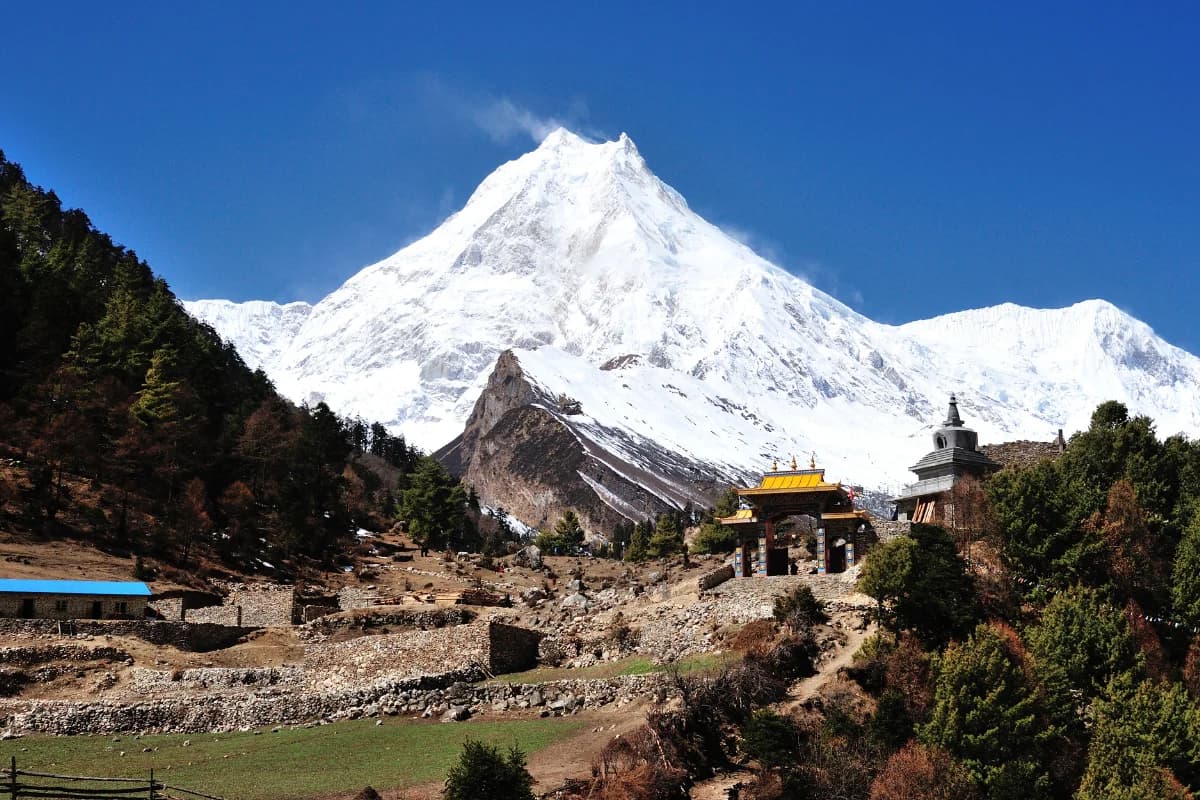
With the right preparations, fitness and sensible route-planning, the Manaslu Circuit Trek is definitely accessible to beginners. There is no prior experience of trekking in the Himalayas, but a willingness for a long day's walk, rough terrain, altitude changes and extreme mountain weather conditions.
This journey might be appropriate for new trekkers who have gone through a great training session and gradually introduced to good acclimatization. You can get your body ready for the challenges of the route with regular hiking and uphill training, strength exercises and longer walks.
But, Manaslu is more demanding than other Nepal treks, like shorter choices on lower elevations. It is a remote trail, one that demands stamina and careful planning, as well as sections that go high up and cross some passes. With careful preparation and the awareness of these requirements, the trek is a feasible first trek for the Himalayas.
How Difficult Is the Manaslu Circuit Trek?
The walking pace isn't always as easy as you might think. High elevation areas are rocky, steep and open fields, whereas low elevation areas are paved with forest, villages and suspension bridges.
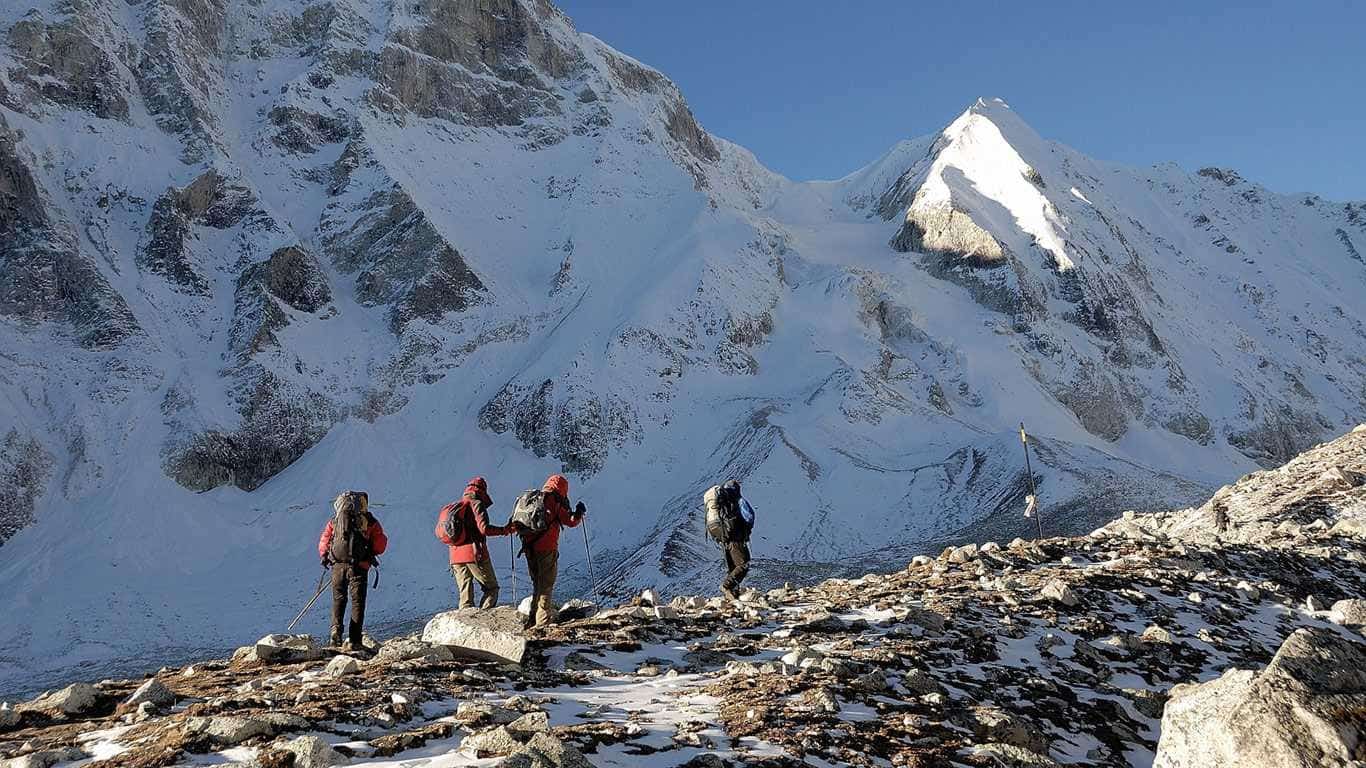
At its end this trail of course leads to Larkya La Pass, 5106m (16752ft), where the breath gets light and the cold grabs you with plenty of force of its own and those days do feel very long.
For beginners, keep in mind the walking route will be uneven and unpredictable. Gradual walking in some sections and sustained uphill climbing and careful downhill with rockiness over some of the sections.
Typical challenges include:
Steep uphill sections that require strong leg endurance.
Rocky and uneven trails that demand careful footing.
Long descents that can place considerable strain on the knees.
Multiple days of elevation gain that adds up to fatigue.
Higher elevation, more physically challenging when walking.
Descents can be as tough as climbs. Repeatedly downhill, tired legs, loose stones, controlled motion and appropriate footwear are required.
Why Is the Manaslu Circuit Trek Difficult for Beginners?
The distance, elevation and lengthy series of days on trail is the biggest challenge for the beginners. While you feel fine at the beginning, the route becomes tiring towards the end and the elevation increases.
In addition to that, altitude also influences the difficulty of tasks. Going to a higher elevation may make climbing easier than going to a lower elevation, even though the portion of slope and distance of climb are equivalent. Newcomers should therefore go at their own pace, not the pace they have built up at home.

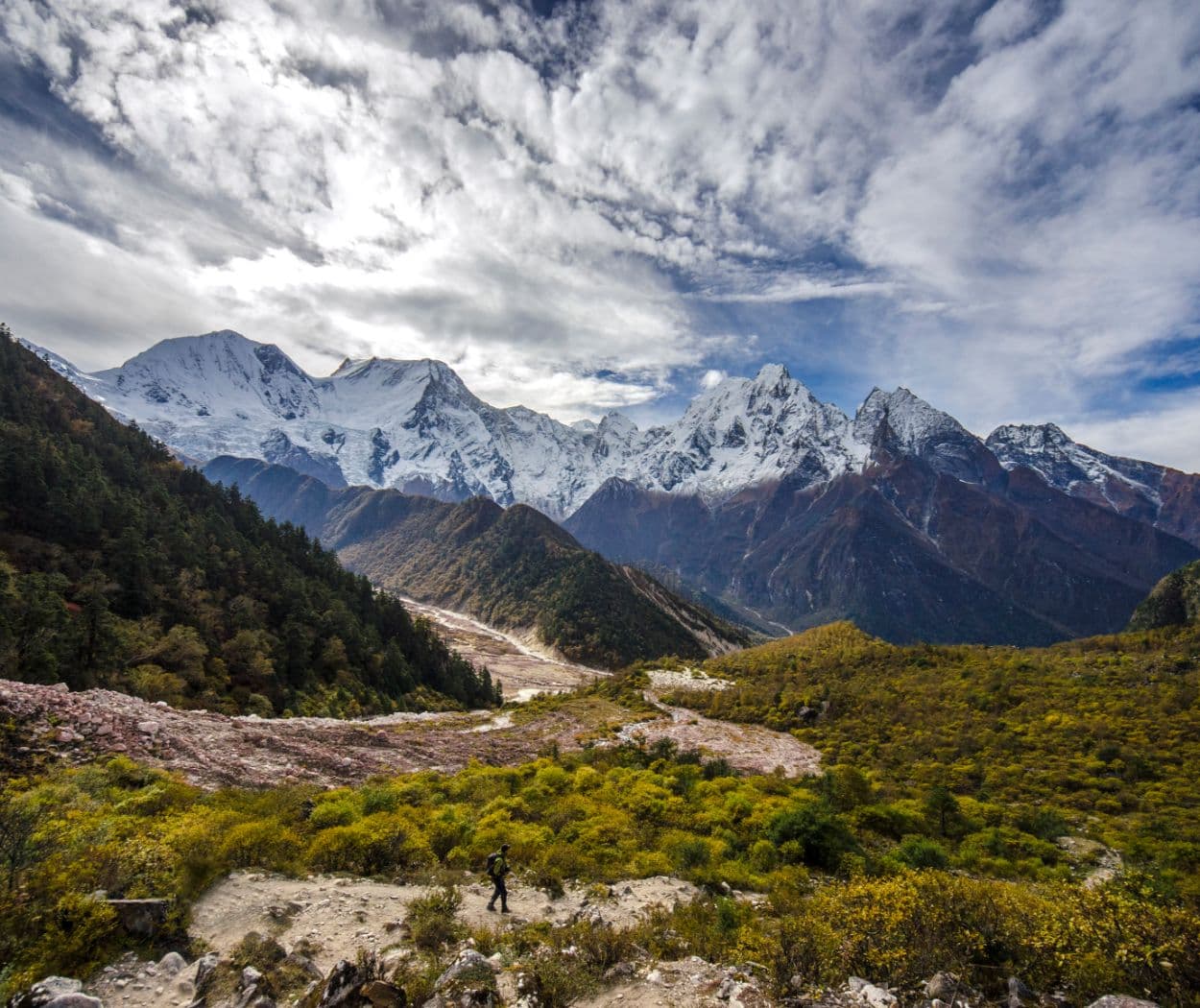
Trekking trail in Manaslu Circuit Trekking route
The Manaslu Circuit is challenging but it's not an obstacle for novices. A physically fit first time trekker can do it with proper training; slowly, gradually climbing the route; reasonable targets per day; and a trained trekker.
But the key is to approach Manaslu as a high altitude trek and not as a conventional hike.
How Fit Do You Need to Be for the Manaslu Circuit Trek?
There's a good amount of fitness that's required for the Manaslu Circuit Trek, specifically cardiovascular fitness, leg strength, and stamina. There's no need for you to be a professional athlete but you must be able to walk several hours in a row on back-to-back days.
Cardiovascular endurance will enable you to hold onto that at a higher elevation, as well as handle long uphill stretches. It will also help you to navigate a rocky path, long descents and steep ascents with less fatigue in your legs after repeated runs.
It is this general fitness that is so valuable because the journey starts progressively high and also features challenging days with Larkya La Pass at 5106 meters (16752 feet). Also, while fitness can help to prevent altitude sickness, the key is to properly acclimatize yourself in addition to being physically prepared.
Being fit and healthy will make it easier to walk throughout the day and recover between walks as well. Knowledgeable mountain trekking specialists like to condition participants for a trekking, particularly if the trekker has not been on extended journeys of this nature before.
Before the trek, focus on:
Walking, hiking or cycling for cardiovascular endurance.
Squats, lunges and step up for legs
Sustained climbing, uphill walking and stair training
Longer weekend hikes to build trekking stamina
Building up strength instead of working too hard, all at once
Fitness cannot be used as a substitute for acclimatisation, pacing or professional advice. The trek can be a straightforward day for the well-prepared novice, or else be unnecessarily difficult for the unprepared one.
Do You Need Previous Trekking Experience for Manaslu?
Physical preparation and trekking experiences are two different things. Familiarity of experience with long walks, turning trails, shifting conditions, life in the mountains. But for first-time Himalayan hikers, there's a solution to these daunting treks.
Sometimes, it is useful to have former trekking knowledge when a trail is rough, at a high altitude, or a steep downhill, or some long stretches. As an experienced trekker, you should have already learned how to pace yourself, how to battle fatigue, what to wear – and not wear and what to do about the trail conditions.
For beginners, more interest should be given to pre-trek training and realistic preparation, instead of a trekking history. Strength training, walking uphill and regular hiking can help build endurance.
Also, be warned that Manaslu is not a short and easy trek for all the first-timers. Please note: due to the remote location, progressive rise in elevation, and the high altitude and intractable terrain, care must be taken and responsible practices pursued.
How Many Hours Do Beginners Walk Each Day?
Beginners on the Manaslu Circuit Trek typically walk for around 5–8 hours per day. Normally it varies depending on the daily pass, type of trail, which has an ascending summit, weather, and the speed of the trekking group.
Higher portions may be more difficult due to low oxygen levels and steep gradients, while lower portions might be easier. However the lofty elevation of the Larkya La Pass (5,106 m / 16,752 ft) requires extra time and effort to approach.

Samdo peak behind Samdo village in Manaslu trek
Setting the pace slowly and steadily can help novices save energy throughout the day. A fast pace leads to fatigue early on which can be difficult on longer climbs.
Some practical steps involve:
Start early to allow enough time for the day’s route.
Keep a relaxed speed rather than compete against others at a faster pace.
Schedule regular, short breaks to control fatigue.
Slow down as the altitude increases.
Do not exceed your guide's pace or rest times.
Walking hours will vary day to day, so allow for prolonged activity rather than strict time targets for each day.
Manaslu Circuit Trek Altitude: How High Does It Go?
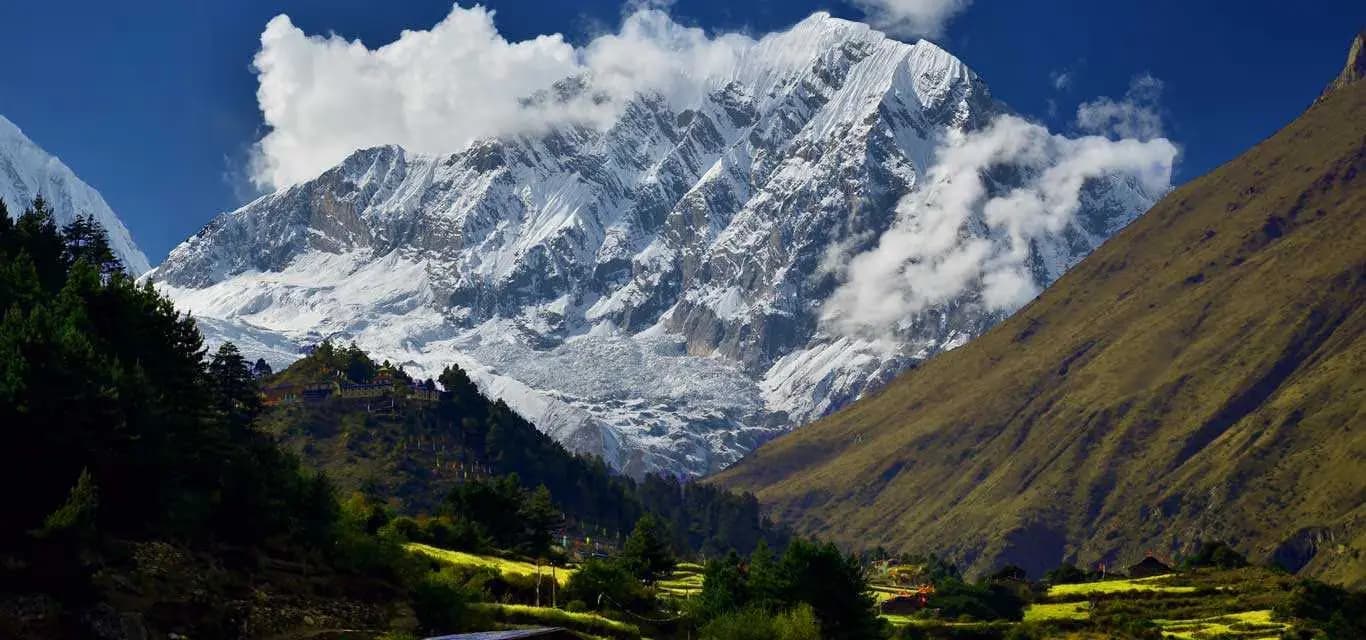
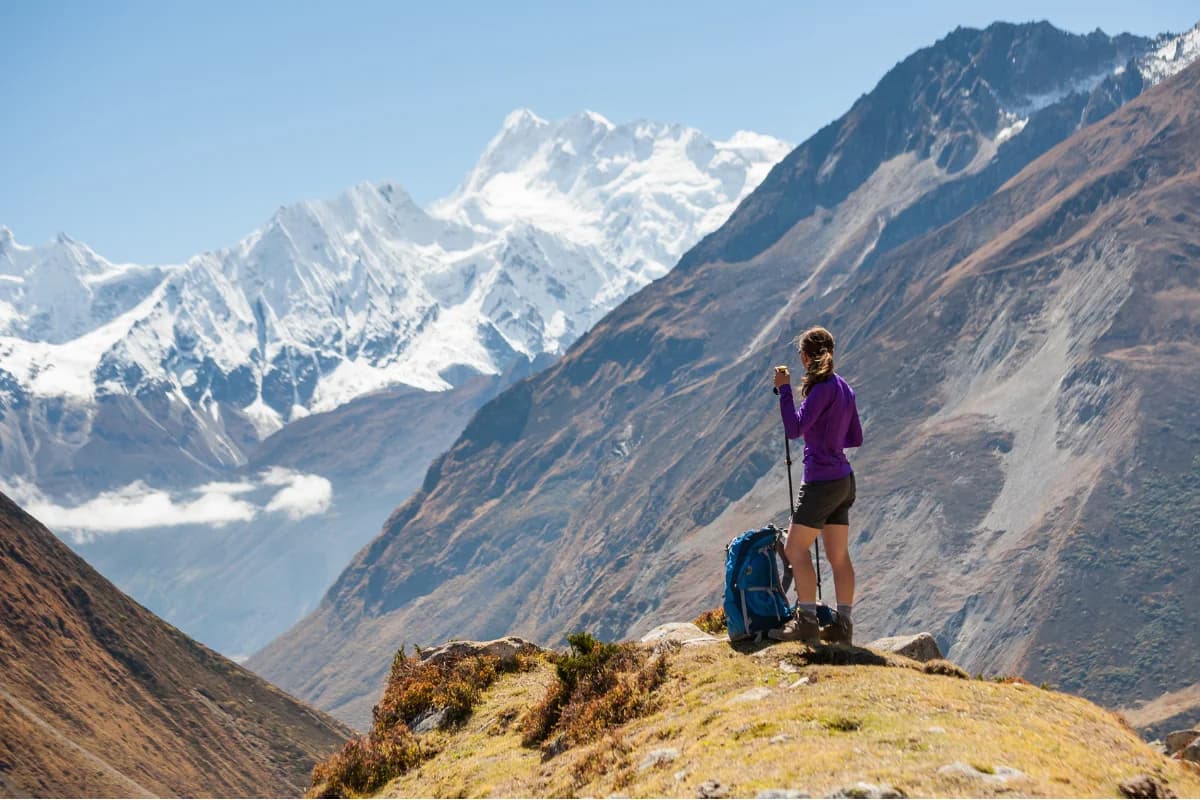
The Manaslu Circuit Trek starts in the lower hills and then ascends in stages into the high Himalayas forming a major range of elevations. The trail leads from valleys of the rivers to the subtropical forests and then through to the alpine landscapes and high mountain terrain. This steady shift is one of the most important considerations for beginners before the ascent, making altitude a key factor.
The routes vary in elevation, but several are noteworthy:
Lower Manaslu region: The trek starts in relatively warm and temperate valleys.
Namrung: At around 2,630m (8,629ft) it becomes alpine.
Samagaon: It is about 3530 m (11 581 ft.) high in elevation.
Samdo: At about 3875m (12,713ft) thinner air becomes very apparent.
Dharmasala: One of the highest overnight stops around 4460m (14633ft).
Larkya La Pass: 5,106 meters (16,752 feet), the highest point of the Manaslu Circuit Trek.
You should pay attention to the altitude and make sure you do it right for each trekker, regardless of age, health condition or past experience. Physical fitness will help you cope in long days of walking, but does not protect against altitude sickness. After all, accurate acclimatization still continues to be important for any high-altitude expedition.
The highest elevation is the Larkya La Pass (5,106m/sixteen,752 feet). Thin air, high altitude topography, cold temperatures and an extended day of walking make this pass a very difficult area.
Therefore, beginning trekkers need to consider altitude in their training and preparation; not just fitness. The planning of trips, qualified guide, approach of gradual ascent and consideration of symptoms are all important factors of high altitude management.
Larkya La Pass: The Biggest Challenge for Beginners
The Larkya pass located at 5106m (16,752ft), is one of the toughest sections of The Manaslu circuit. This trek is not difficult technically but requires alertness in pacing, with strong endurance to finish the trek.
The difficulty lies in the combination of the altitude, the steepness of the terrain, the cold weather and the long trekking day. The path is relatively steep at first, steepening into a more difficult climb later on through the thin air.

Donkeys carrying essential supplies up the snowy mountains in the Larke Pass of Manaslu Circuit Trek
The crossing day often takes several hours to complete and begins very early on to benefit from the morning stability. Snow or icy areas may be encountered at any time during the season, especially near the higher portion of the pass.
The crossing work may also be hard when the temperatures are cold. This last option can be uncomfortable, though, because of strong winds, cold weather, open spaces or areas at high elevations where some people are not accustomed to trekking.
Once at the pass, the descent must be controlled and the movement be steady. After the arduous climb, long downhill stretches can stress the knees and legs.
Physical Preparation Before the Manaslu Circuit Trek
It is normally best to begin planning the Manaslu Circuit Trek 8–12 weeks in advance for beginners. If you don't feel fit and you're not yet much of a hiker, you can start 3-4 months early so you can develop fitness and stamina over a longer period.
The level of preparation and experience should closely reflect the requirements of the trail. The Manaslu Circuit requires repeated steep hills, rock and dusty trails, long walks days, and dramatic height gain. Training programmes should be oriented toward the body's ability to walk on the mountain long-term and not short, intense efforts.
Build Cardiovascular Endurance
Start with simple exercises that challenge you to move more than normal. Walking, jogging, cycling or using the stairs will increase the level of your cardiovascular endurance.
Do not increase intensity too rapidly or gradually add more time. Make it a goal to keep up for a few hours without getting really tired out.
Strengthen Your Legs
Good legs are essential for climbing and descending the entire trip. Emphasize exercises to build the strength of the quadriceps, hamstrings, glutes, and calves.
Useful exercises include:
Squats
Lunges
Step-ups
Calf raises
Stair climbing
Controlled downhill walking
Repeat these exercises regularly and build up to higher exertion levels over time.
Practice Uphill Walking
Walking uphill should be the primary focus of your training. Walk up hill, trail or stairs, and incorporate prolonged walks uphill in addition to flat terrain.
Slowly increase the duration and elevation gain. This will further help your legs to get used to the continuous uphill walks on the Manaslu Circuit.
Include Long-Distance hikes
One of the key best tips for getting ready for the Manaslu Circuit trek is to practice multi day hikings. You can begin with simple walks and gradually increase the intensity or length.
Whenever possible, practice hiking on consecutive days. This can give you an idea of what you may experience if you walk on the same day while with fatigue.
Practice With Your Trekking Backpack
Use the backpack that will be used for the training hikes. Start with a light load and gradually increase it as your fitness improves.
This preparation aids your shoulders, back, hips and legs to adapt to weight. Don't make the trek any more physically demanding by carrying too many heavy items in your pack.
Make Training Progressive
Avoid your longest run or most strenuous exercise when you start training. Slowly increase walking duration, uphill efforts and workload gradually.
Some ideas for a weekly activity schedule are:
3-4 days: vigorous walking, hiking, and/or cardiovascular activities
2 days: Leg and core strength training
1 day: Longer outdoor hike
1 Day: Light recovery activity, complete rest.
The last week should be devoted more to recovery than to hard training. Being physically fit and well-rested when you arrive at the trail is more beneficial than attempting to become physically fit through extreme effort just before leaving.
Common Challenges Beginners Face on the Manaslu Circuit
Steep trails, long walk day, high climb, all mountain conditions and weather that are unpredictable throughout the Manaslu Circuit. If you are aware about the challenges ahead, then you can be better prepared to tackle them as they arrive.
Fatigue From Consecutive Walking Days
Your legs get tired after walking for hours daily, particularly in the first few days. Long distances and repeated climbs and descents can make for a more fatiguing experience.
What helps:
Keep the speed steady right from the get go!
Schedule frequent breaks to avoid becoming very tired.
Follow your usual diet and take in extra fluids with each meal.
Don't test your top speed on the first few days.
Steep Ascents and Descents
The route is mostly up and down, and there are some patchy and uneven areas. Steep ascents can easily have your heart rate up and high, and then on the lengthy descents you will have to put extra pressure on your knees.
What helps:
Train on hills and stairs before the trek.
Take shorter steps on steep sections.
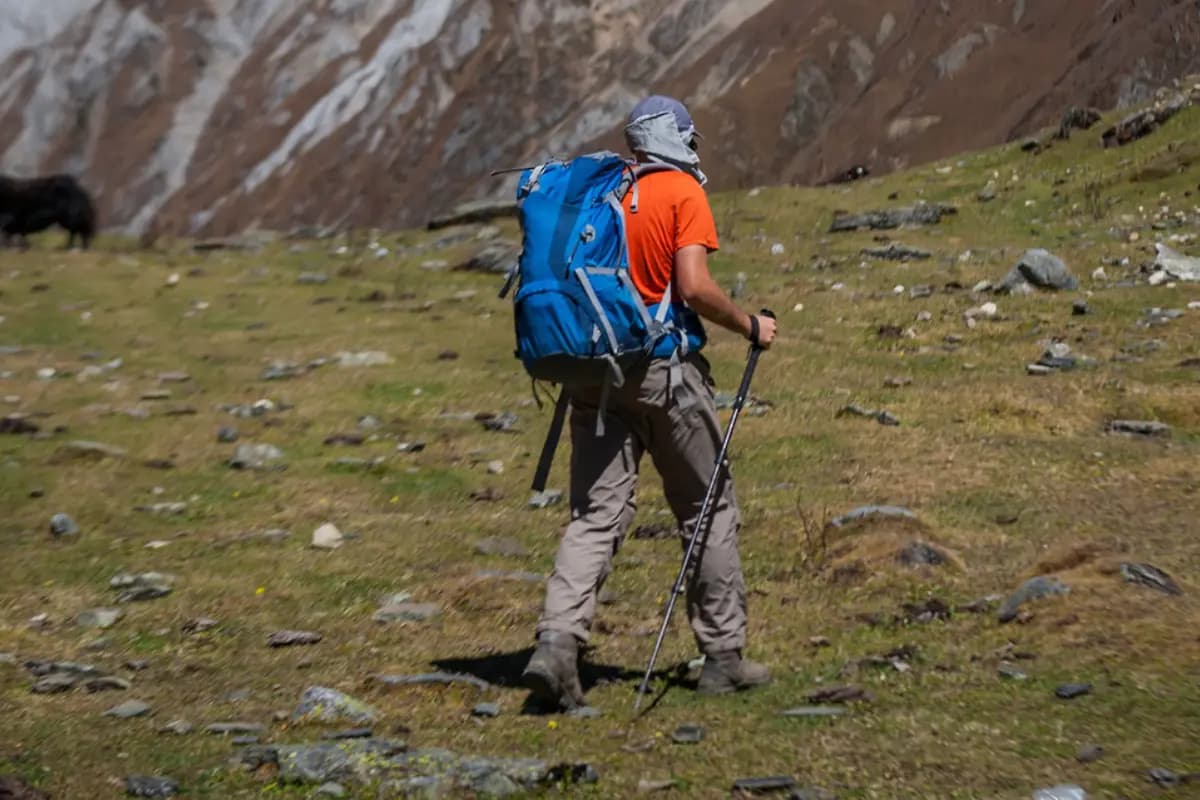
Use trekking poles when appropriate.
Proceed at a controlled speed, not rush uphill.
Long Walking Days
Look for about 5 or 7 hours of a walk on most trekking days if you are a beginner. These days may appear longer, depending upon the overall conditions of the trail, elevation gain, weather and rest stops.
What helps:
Get up early in the morning.
Not overdoing it or taking too many breaks.
Only wear a Daypack with necessary items.
Practice building up stamina before leaving, with longer hikes.
Altitude and Thinner Air
As the trip heads towards the high mountains, the altitude starts to be a factor. The summit of Larkya La Pass, at 5,106m or 16,752 ft, brings trekkers significantly less oxygen.
What helps:
Follow a gradual itinerary with proper acclimatization.
Take slow steps uphill.
Notify your guide on unusual or exacerbating symptoms.
Don't idealistically assume that because you are physically fit it will not lead to altitude issues.
Changing Mountain Weather
Mountain conditions can be very unpredictable, particularly at higher elevations. Cold weather and wind, rain, snow or low visibility can make the difficult part harder.
What helps:
Bring flexible clothing that also provides weather protection.
Store warm clothes for daytime use.
Review with guide before challenging spots.
Be flexible with your schedule when weather impacts the trail.
Remote Trail Conditions
The region of Manaslu is much more remote than a number of the popular trekking routes in Nepal. The closer you get to the mountains the more limited the services available will be, so if you're a beginner you should not expect to find the same amount of service that is found in the cities or lower in the mountains.
What helps:
Pack important belongings before you leave Kathmandu.
Listen to your leader's suggestions regarding food, water, lodging, and supplies.
Ensure necessary medicines and personal supplies are readily available.
Recognise that essentials are part of the experience.
Do Beginners Need a Guide for the Manaslu Circuit Trek?
Yes. Now the Manaslu Circuit Trek is supported and not possible for novices without the presence of a licensed trekking guide. The Nepal Tourism Board has added the Manaslu Circuit to its list of treks where trekkers must be accompanied by trekking agencies.
It is essential to understand the difference between solo trekking and guided trekking. While it is possible to go to Nepal without a group, it is not possible to hike Manaslu Circuit independently without a guide or agency permissions.
Further to this, Nepal's Department of Immigration says that trekking permits for restricted areas are only issued by the authorized trekking companies.
If you are new to this, then a licensed guide offers practical assistance in your journey. A guide will assist you with route navigation, pace, acclimatization, changing trail conditions, lodging arrangements and communications during unusual circumstances.
A guide can be of specific help in the higher and more distant parts of the journey. Popular Manaslu Circuit passes Larkya La Pass at 5106m or 16,752ft and at this point route management may be more difficult due to altitude, weather and challenging terrain.
Another advantage of guided trekking is the chance for beginners to learn what to do when the weather changes. After recent breaching of the Manaslu route due to flooding, the Nepal Tourism Board (NTB) has again urged visitors to exercise caution in the affected areas.
Therefore, for a first time Manaslu trek, the trekking guide should be recruited through a government-registered trekking agency. This meets regulatory needs and attends to practical need on the way to the remote and high regions of the trek.
What Is the Best Season for Beginners to Trek Manaslu?
For the Manaslu Circuit Trek, the best time is during March-May and September-November for spring and autumn reaches, respectively. During these seasons, weather tends to be more predictable, visibility is better and trail conditions are more consistent, rather than the monsoon or winter season.
Autumn: September to November
The trails will be dry, the weather will be good, and the mountain will be in good sight after the monsoon in autumn season. October-November are some of the best months to visit the higher altitudes – particularly Larkya La Pass.
September can still bring rain, particularly in the early part of the month. Conditions tend to get better in the later part of autumn (late September to November) and are better for novices.
Spring: March to May
The weather in the spring is usually very suitable for geotourism; the temperature is more pleasant and visibility is high. The lower and middle part of the road can be adorned in this season with rhododendron forests.
Snow is still possible during early spring around Larkya La Pass at 5106m (16752ft). April and early May are typically a lot calmer than March at the start.
Monsoon: June to August
With the monsoon comes frequent rain, clouds, muddy trails, and lower sections which may be difficult. Landslides are also possible and the track in the Budhi Gandaki is less safe if the trekker is not experienced enough.
For beginners, the consequences should be taken into consideration: monsoon dates are not an obvious choice, especially for those with less experience of wet mountain trails.
Winter: December to February
The weather is definitely colder in the winter, and there's more of a chance for snow and ice at higher elevations. Depending on the snow conditions, it can become difficult or even impossible to cross the area around Larkya La.
The trails change during the winter and you need to mentally and physically prepare for it. For beginners, it is important to carefully weigh their level of experience as well as support, before picking this time.
How to pick dates for beginners?
Consideration of weather stability, visibility, trail conditions, and conditions around Larkya La should be a top priority when choosing your trekking dates.
Look for:
Several days of generally stable weather.
Lower chances of heavy rain or fresh snowfall.
Good visibility around the high-altitude sections.
Favorable conditions for crossing Larkya La at 5,106 meters (16,752 feet).
Flexibility to modify routes if weather is unfriendly in the mountains.
A season suitable for the level of preparation and previous trekking experience.
On the mountain, there are no guarantees for conditions. At high elevations, the weather can shift rapidly, and a novice should check trail and pass conditions with the trekking company and guide prior to the trek.
Is the Manaslu Circuit Trek Right for You?
The Manaslu Circuit Trek could be a suitable trek for someone who is prepared, fit, has no fear of heights and has realistic expectations. Improve strength of legs, stamina and endurance over a period of about 8-12 weeks in preparation for the trek.
Your trekking objectives are also important while selecting Manaslu. The trail is suitable for those seeking a strenuous trek through the Himalayas, along remote trails and high altitudes.
Trail conditions can also be more challenging than beginners expect, however, those preferring shorter hikes, lower elevation, or easier trail conditions may find this circuit to be more difficult.
If unsure about fitness/service, consult with a competent trekking team prior to planning a trek. If you need any help in terms of having to plan your trip, map out your route or prepare a guide, contact +977-9851042334 for expert advice and support.