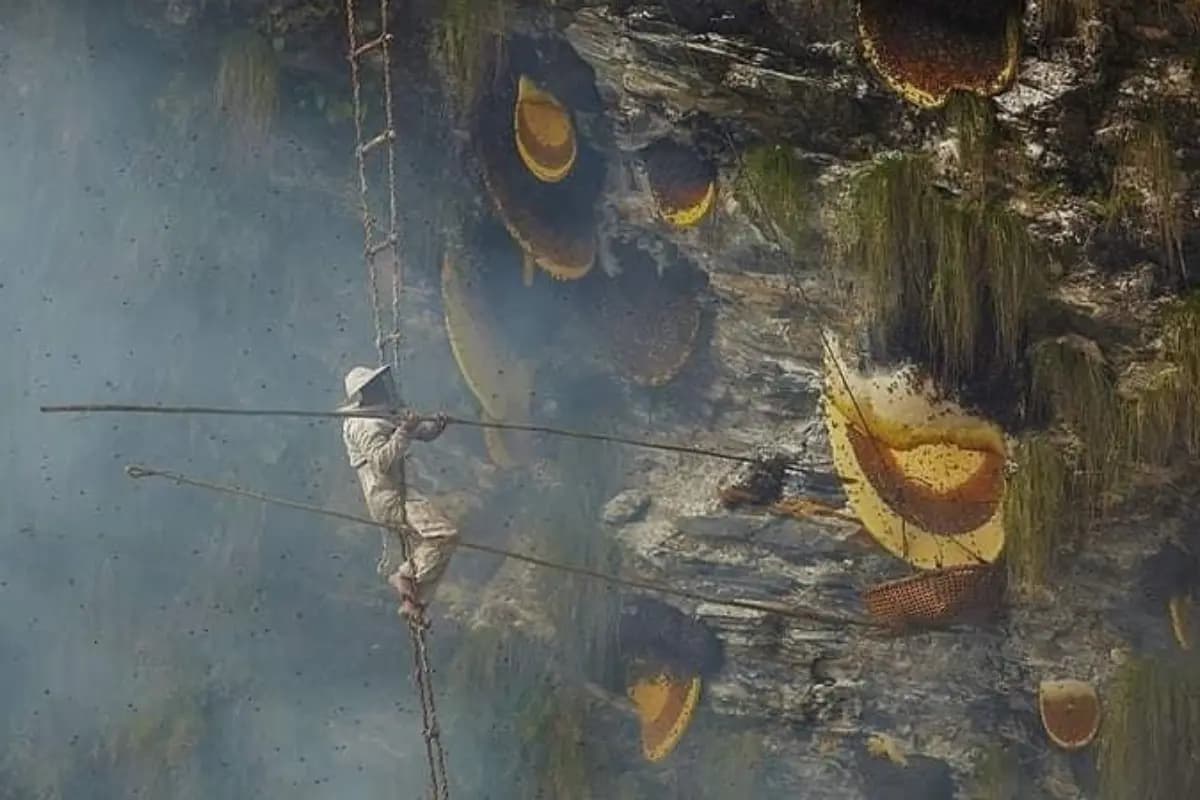
Mad honey collection in Nepal is ancient and completely appealing to tourists interested in adventurous and cultural tours. Bee hunting is the special practice of collecting wild honey from the cliffs where Himalayan bees make their nests.
Mad Honey is a kind of honey that is collected in the highlands of Nepal and has psychoactive effects, which classifies it as a species with high demand. The Mad honey collectors are professional bee catchers who use homemade ropes to reach the bee hive between steep rocks high above the ground.
Mad honey hunting is not only a process of hunting honey but more of an integrated cultural set-up of the Gurung community. Such honey hunters practice passing these techniques from one generation to another, thus making honey hunting an artistic affair.
Many people who visit Nepal participate in Honey Hunting tours that aim to watch this extraordinarily bold hunting and learn about its details.
What Is Mad Honey Nepal?
Red honey or mad honey of Nepal is a rare type of honey collected from giant Himalayan bees, Apis laboriosa. These bees collect their honey ingredient, nectar, from the flowers of a rhododendron, which is a source of psychoactive and healing grayanotoxins.
Mainly produced in the lower altitude of the Himalayan region, Himalayan Mad honey is much sought after for its unusual flavour and medical properties such as anaesthetic, sedative, and aphrodisiac qualities, not to mention energy booster.

Mad honey harvesting in Nepal
The cultural and ecological values of Mad Honey are what make it unique. It is economically important for the region because it engages Indigenous people such as the Gurung tribes, who have been using this form of art for many years.
Hunting Nepalese Mad Honey is in Spring and Autumn, when flowers are in production, especially the rhododendrons. The process is hard, and more so because the honey is harvested from dangerous cliff honeycombs, making mad honey a scarce and expensive commodity.
Can You Buy Mad Honey From Nepal?
Yes, you can currently buy mad honey originating from Nepal. But it is often limited to areas where honey hunting is carried out in the Himalayas.
Local farmers extract the honey mostly from the hills of Lamjung, Gorkha, and Annapurna, where honey hunters climb cliffs to retrieve honey from the nests of the giant bees of the Himalayas.
Mad honey is consumed locally and globally, usually in region-specific and online shops. However, mad honey should be bought carefully because it contains some hallucinogenic compounds deposited with health dangers when taken improperly.
This is because ordinary supermarket honey may be fake or produced in inhumane ways, and everyone needs to purchase their honey from the right seller.
Mad honey in Nepal can be found at the local markets, at the trekkers' paradise in Pokhara or Thamel, Kathmandu, or directly from the honey hunters or cooperatives.
Some online stores also sell mad honey, which customers can use to treat themselves. Although it may not be very popular, shipping may be limited as well.
Mad Honey Nepal Benefits
Mad honey variant from Nepal is considered to be of special importance due to its compound, grayanotoxins, which are derived from nectar in Rhododendrons flowers. Here are some of its notable benefits:
1. Pain Relief
Mad honey is also used as a natural, non-pharmacological analgesic. It is said to have weak anesthetic actions, which makes it effective in managing muscular and joint pains and some arthritic pains.
2. Improves digestion
People use mad honey to improve digestion and treat problems such as bloat, constipation, or general stomach discomfort. Its natural enzymes help it digest food and enrich the quality of the gut.
3. Boosts Energy and Stamina
It is especially consumed by those who want to boost their physical strength and endurance. Mad honey is mainly used as a natural energy source, though farmers and various people in the rural areas of Nepal commonly drink it.
4. Stress Buster and Helps One to Sleep Better
This honey has low-potency psychoactivity, which can help one relax and experience less stress. It has also been used in the treatment of insomnia, which causes people to sleep.
5. Enhances Immune Function
This type of honey is loaded with antioxidants and antimicrobial compounds that can enhance the body's immune system and prevent infections.
6. Natural Aphrodisiac
In some cultures, mad honey is considered an aphrodisiac, believed to enhance libido and sexual performance.
Precautions for using Mad Honey:
While mad honey has various benefits, consuming it in excess can lead to "mad honey poisoning," causing nausea, dizziness, or heart complications. Always use it in moderation and consult a professional for medicinal purposes.
Risks and Challenges of Honey Hunting in Nepal
Collecting honey in the Himalayas is a very risky and fatal exercise. The Himalayan honey hunters can scale great heights without ropes, harnesses, or mechanical equipment; instead, they use steep cliffs with bamboo ladders and ropes.
These are rather steep and unstable areas, which turn every step into a potentially deadly misstep. During the Mad honey harvest, strong winds or rain, shifting stones, and loose ground present additional risks.
Another big issue is handling the giant Himalayan bees, notorious for being aggressive to humans. These bees tend to guard their bees' nest, and their attack can cause rashes, swelling, or even anaphylactic shock.
During every collection period, honey hunters are stung multiple times, and the exercise is physically and psychologically challenging. Further, it is a seasonal practice where people harvest honey in spring and autumn, cover long distances on steep slopes and ascend and descend difficult terrains.
Honey hunters still do it because this is the tradition, and they get lots of money from this business.
Unique Properties of Mad Honey
Himalayan Wild or mad honey is particularly known for its special attributes. It contains grayanotoxin, a natural product from the fresh nectar of the flowers of the rhododendron plant.
These compounds give mad honey its mild psychedelic effect, which can be described as peaceful and sublime. This property makes mad honey one of the most popular products among adventurers and natural cure devotees.
In addition to being psychoactive, honey made from the flowers of these plants is popular for its healing properties. In the Nepalese community, it has been used, particularly in the home setting, to cure diseases such as stomachache, hypertension, and arthritic pain.
Himalayan wild Honey has antibacterial and antioxidant effects, which would serve it well for enhancing the body's immunity and health. These combine to enhance the idea of this honey as a scarce product sought after by many people.
However, they should be taken with precaution because if taken in large quantities, they can cause "mad honey poisoning." The signs and symptoms may be dizziness, nausea and vomiting, and low blood pressure.
However, as part of cultural practices, taken in moderate quantity and under the supervision of the local shaman, mad honey is actually exotic, health-beneficial, and provides peak entertainment of immense cultural importance to the region of the Himalayas.
Best Locations for Mad Honey Hunting in Nepal
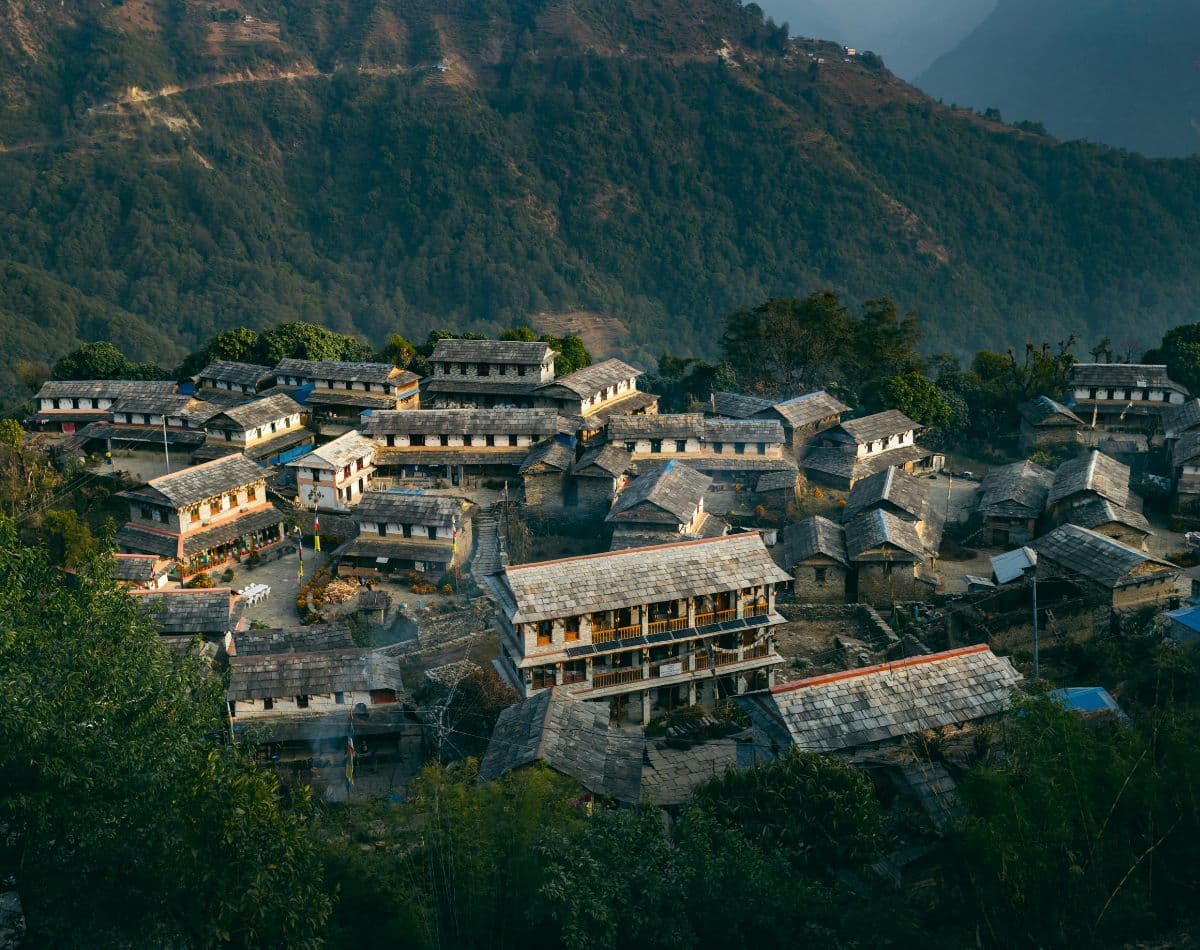
There are many areas in Nepal that have long been the settlers of a tradition of honey hunting. The most famous places for Mad Honey Hunting is the Annapurna region, and parts of it include Lamjung and Ghale Gaun.
These are remote areas of mountainous regions where cliffs are steep, and locals built large bee hives in the Himalayan. These places are more attractive because they also include the key areas of Gurungs and beautiful natural scenery.

Collecting mad honey in Nepal
Honey hunting is also performed in the northern Himalayas, specifically in the Manang district. Many bee nests are located on the cliffs of this area, and the honey produced is special for its taste and desired healing effects. As a result, Manang is a difficult but ideal location for honey hunting due to its deep, steep, and unspoiled geography.
The district of Dhading is also famous for honey hunting; thus, the activity is still practised by communities of the region. Like the cliffs, this region also has the same breed of giant bees, and honey collected from this place is very much in demand due to its natural and organic composition.
Season for Mad Honey Nepal Harvesting
Honey collection in the honeycombs in the Bee Centers in Nepal is a seasonal affair that is cultivated with the business of giant Himalayan bees and the flowering of Rhododendron plants.
Honey hunters mostly climb during the early part of any year, or in the spring season, and during the late summer or autumn.
These periods are when bees produce their largest quantities of honey because they forage flowers rich in honey, making nectar from sources like rhododendrons.
They prefer spring during honey hunting because the climate is comparatively better. During this period, the bees produce more honey. There is a lot of blossom at this time, guaranteeing that the honey is packed with all the necessary nutrients and tastes.
Honey Hunters can sometimes plan their logistics in advance of the spring season, preparing their equipment and following some customs or rites to ensure the harvest's safety.
Another favourable time for mad honey collection is autumn, when there is another chance to perform honey hunting for the communities. The weather during autumn is good since the climate is cooler, and most of the time, it is clear enough to climb the cliffs.
However, mad honey harvested this season may be slightly less than that collected during spring harvesting. The issue of timing is of great concern not only for the quality and availability of honey but also for regulating human-ecological interactions.
The Process of Honey Harvesting in Nepal
The process of honey harvesting in Nepal is intricate and dangerous, requiring exceptional skill and courage. It begins with identifying the bee colonies, which are often located on steep cliffs high above the ground.
These hives belong to the giant Himalayan bees, the largest honeybees in the world. Once a suitable hive is spotted, the hunters prepare their tools, including handmade bamboo ladders, ropes, and long poles with sharp blades.
On the day of the harvest, the hunters climb the cliffs using bamboo ladders anchored securely to the rock. They approach the hives carefully, often enduring aggressive swarms of bees defending their colony.
Smoke calms the bees and reduces the risk of stings. The hunters then use their poles to cut chunks of the honeycomb, which are lowered to the ground with ropes.
The harvested honeycombs are sorted, separating the honey from the wax. This raw honey, known as mad honey, is cherished for its unique properties and is sold in local and international markets.
Traditional Techniques and Tools Used for Mad Honey Nepal Harvesting
Mad Honey Nepal Harvesting has been inherited from ancestors in Nepal, and it is especially practised by the Gurung community and other people in other Himalayan areas. Using their techniques, the Nepalese Honey Hunters approach is suited for steep and rather mountainous terrains.
The most useful equipment is a bamboo hand ladder. The hunters build these based on the height and form of the cliffs where the bee colonies are situated.
These ladders are elongated and ductile to suit the rocks terrain and make easy work of the rocky understructures. The hunters chase bees with ladders tied with ropes across cliffs to balance as they climb to their hives.
Besides the bamboo ladders, hunters tie thick ropes from hemp or other natural products to reinforce their hold and lower the honeycombs effectively. These ropes are long and strong, in some cases taking rough knocks while holding the weight of honeycombs being lowered from cliffs.
The ropes are also used to construct harnesses, which reduce the chances of falling on the rock face during the climb.
Another is a long stick, commonly made of bamboo, with a knife-like structure in the end. This pole is used to shave the honeycomb from the beehive.
Some detective-like moves the Nepalese Honey Hunters make are using the pole to cut off some portions of the honeycomb while ensuring the bees do not attack them. The pole acts as a safety barrier because the hunters do not have to get too close to the bees if they are angry swarms.
To minimize the chance of being stung, smoke from burning leaves, twigs, or dung is used. This has proved to be very effective and is used in carrying out the process.
Mad Honey Hunters Of Himalayas
Mad Honey Hunters are the tribesmen of Gurung origin who go on this dangerous hunt. These people inhabit the rocky terrains of the Nepalese Himalayas. They are empowered and daring, and they have special attitudes toward nature and culture inherited from their ancestors.
It is not just a means of income for these people but also a cultural activity that they perform. The Gurung people, traditionally called the custodians of this craft, hang bamboo ladders and ropes and climb cliffs to collect honeycombs made by the colossal Himalayan bees.
How much does Mad or Himalayan Honey Cost?
The cost of mad honey in Nepal can also vary depending on the region, its quality, and the demand for the product. Generally, one kilogram of mad honey costs between NPR 20,000 and NPR 30,000 ( USD 150 to USD 250).
This cost shows the nature of this honey and the method of its collection by hunters from high cliffs, who face fatal dangers as they climb down the cliffs to hunt bees' honeycomb. The mad honey price depends on some factors, including the season of the year, the size of honey produced, and the geographical location where honey is collected.
Hunting Nepal Mad Honey is a specialty product that contains a hallucinogenic component, which puts it on a premium tier above plain honey. It is presented in small quantities, including 100-gram or 250-gram jars, and the prices may vary from NPR 2 000 to NPR 7 000 (approximately 20-50 USD).
Local grocery stores are the best place to buy it, especially in trekking areas such as Thamel or Pokhara. Honey hunters or local cooperatives are the best bets for getting original mad honey.
Mad Honey Nepal Documentary
The most famous is "Hallucinogen Honey Hunters," which focuses only on honey hunting in Nepal and other parts of the Himalayas besides Lamjung.
Besides this, many travel documentaries and portions of other famous programmes, such as BBC's Wild China, National Geographic, and Discovery Channel, also show the Nepali honey hunters of the Himalayas. They all depict stunning scenery, thrilling ascents, and traditions that surround the act of honey hunting.
You can search for honey-hunting documentaries on YouTube and other streaming platforms. One thing you should do is search for terms like "mad honey Nepal documentary" or "honey hunting in Nepal."