Nepali culture is quite an assorted patchwork of traditions, beliefs, and social practices. They are constructed through centuries of religious impact. Nepali etiquette and customs are shaped by ethnic variation and the Himalayan terrain.
It is a sign of the inseparability of Hinduism and Buddhism. You find that the spiritual significance impacts every aspect of life. This includes daily ceremonies and significant life choices. Usually, people feel strongly affected by the feeling of harmony, simplicity, and reverence. You can find it in every cornerstone of the Nepali lifestyle.
The Nepali culture is centered around the idea of dharma. It can be defined as a duty, a right, and a moral order. It guides personal behavior and social functions. It helps relationships between people in a community.
These are not merely polite ways but essential values. It represents the national spirit. The respect towards the elders, hospitality, and spiritual devotion. These cultural expectations are predominantly not written but largely shared. They adhered to universally in the urban and rural contexts of Nepal.
The multicultural makeup of Nepal is another crucial issue of Nepali identity. It is composed of over 125 ethnic groups and 100-plus languages. Having already shared Nepal, in this small Himalayan country.
Every Ethnic Group Holds A different Culture
Every ethnic group adds to the country’s cultural diversity. Each has its own customs, dances, music, festivals, and food. Besides, this diversity is mixed with a certain spirit of unity and appreciation. They are frequently repeated in the national motto: “Unity in Diversity.”

Nepali people have a very strong sense of community and collectivism. The family and village are paramount. Group decisions are common. People are conditioned to think mostly of the group as opposed to their own wishes.
This collectivist culture creates a friendly and welcoming atmosphere among travelers. Get ready to be there as part of it with respect. Nepali life revolves around religion, festivals, and rituals in everyday life. Praying at early hours of the morning. Or be it the burning of Butter lamps at temples.
Engage in full-fledged festivals such as Dashain and Tihar. They aren't a mere ritual, but it is filled with gratitude, purity, and harmony of the universe. Even modern Nepalis still have a tight connection to these ancestral practices.
Understanding Hospitality in Nepal
In Nepal, hospitality does not translate to the provision of food or lodging. Rather, it is perceived as a sacred obligation. The phrase from Hinduism reflects the treatment of guests. It is, namely, Atithi Devo Bhava (Guest is God).

So, visitors tend to take away the enduring memory of emotional openness. Modesty and genuineness in their engagement with the locals. These are a few values that every traveler needs to learn to interact with the Nepalese people.
It enables one to understand the local customs. It allows one not to accidentally disrespect anyone. This enables you to get more out of traveling. The fact is, adapting to the Nepali cultural values does not only involve the etiquette. But it is rather getting to know the soul of the country.
Nepali Culture of Greetings
Greetings play an important role in social interaction in Nepal. It says strong values of respecting others in this country. Travelers can show cultural sensitivity by acquainting themselves with popular greetings.

Observe Nepalis and make a good first impression. Greetings are also nice, very respectful, and usually accompanied by gestures. The gesture has a meaning when meeting the old, meeting friends, or even strangers.
Namaste or Namaskar:
The most famous and respectful greeting in Nepal.
It is correctly done with palms together, facing your chest, and bowing your head a little.
It translates to respectability. Also, it is desirable at all times, cutting across age and status.
The verbal accompanying this gesture is usually either namaste or namaskar.
Touching Feet:
It is a cultural gesture of respect to the elders or spiritual masters.
The younger would express this by lightly tapping the feet of the elder.
Following this, they touch his or her forehead.
This is usually practiced during fairs, family reunions, or religious functions.
Handshakes:
A sure greeting to be more likely to be used by younger folks in larger cities.
Handshakes are not strong but given with a nod or a smile.
Waiting until the other party initiates the handshake is also etiquette.
This greeting the opposite gender or an older person.
Bowing:
Normally, bowing without touching is customary as a welcome message to the monks.
It's for those highly revered community members.
By this small gesture, humility and reverence are expressed.
Verbal Greetings:
In addition to the greetings with physical expression, there are simple verbal greetings.
It follows immediately after the initial greeting.
They are simple greetings such as:
Ramro cha. Meaning How are you?
Or Sanchai cha? meaning Are you well?
Greetings among Women:
Women usually say Namaste with a gentle smile to one another.
Handshakes are not that frequent between women, but can be done in a city or formal context.
There is little physical contact, such as hugging or cheek kissing, in the street.
Formal Greetings:
Namaste works as a formal or ceremonial greeting.
They are customary and usually used with a title or honorific.
It indicates social status or hierarchy.
During the greeting process, politeness shows that they respect the Nepali people. Namaste, a handshake or a bow will be well accepted and appreciated. More so, when you make an effort to greet the locals in their local customs.
By adopting these greeting manners, you will put yourself in a positive light. Be it in any relationship. This will be able to earn goodwill when you visit Nepal.
Modesty and Dressing Code Expectations
A tourist needs to know the proper dress code in Nepal. So, honor the local culture as well as fit in without attracting unwanted attention. Nepal is a land of many cultures. There is one commonality in communities, especially in the way people dress. Whether they are of adult age or children. Dressing is an indicator of upbringing. It can also be local trends and observance of the social etiquette.

The youths in large cities have embraced a Western style. But they also keep a traditional type of fashion. Mostly in places such as Kathmandu, Pokhara, and Chitwan. They will wear jeans, shirts, dresses, and sneakers. Most wear them at workstations, cafes, and in universities. Still, showing too much skin is not accepted, such as short shorts, backless, or low-cut tops. Even in cities, you could earn suspicious looks or even disapproval.
Tourists are also not expected to dress as the local people, but to dress modestly. In the case of women, long skirts, baggy pants, or kurta suruwals (tunic and trousers) would be decent. Men are allowed to wear casual pants or jeans with T-shirts or collared shirts. But not to dress in tank tops or so-tight clothes in the streets.
Country norms are even more powerful with clothes and regulations being conservative. Women are usually spotted in the saris or kurta suruwals. In rural areas, you can find a wraparound style like the gunyo cholo. Ethnic people such as Newars and Gurungs wear them. Men can have daura suruwal in cultural activities or on formal occasions. They can also have simple trousers and shirts in rural conditions.
The difference between urban and rural is substantial. You can find tolerance in Thamel or Lakeside Pokhara. But it can be offensive in an isolated village or monastery. It is not uncommon for rural communities uphold the importance of tradition. Even more and may take the wearing of revealing clothes as unacceptable. Or even offensive.
Modest dressing ensures that the visitor is not subjected to unwarranted attention. Or arouses respect among visitors and locals.
Dressing in places of worship
The dress code is more serious when visiting religious places. Places like stupas, temples, or monasteries. Your shoulders are to be covered. You are not to wear shorts or a skirt that goes above your knees. Nor should you wear shoes when entering the spiritual place. Women are discouraged from wearing tops without sleeves. Leggings without a long shirt. It needs to cover the hip area. As for men, they need to wear at least shorts and sleeveless shirts.
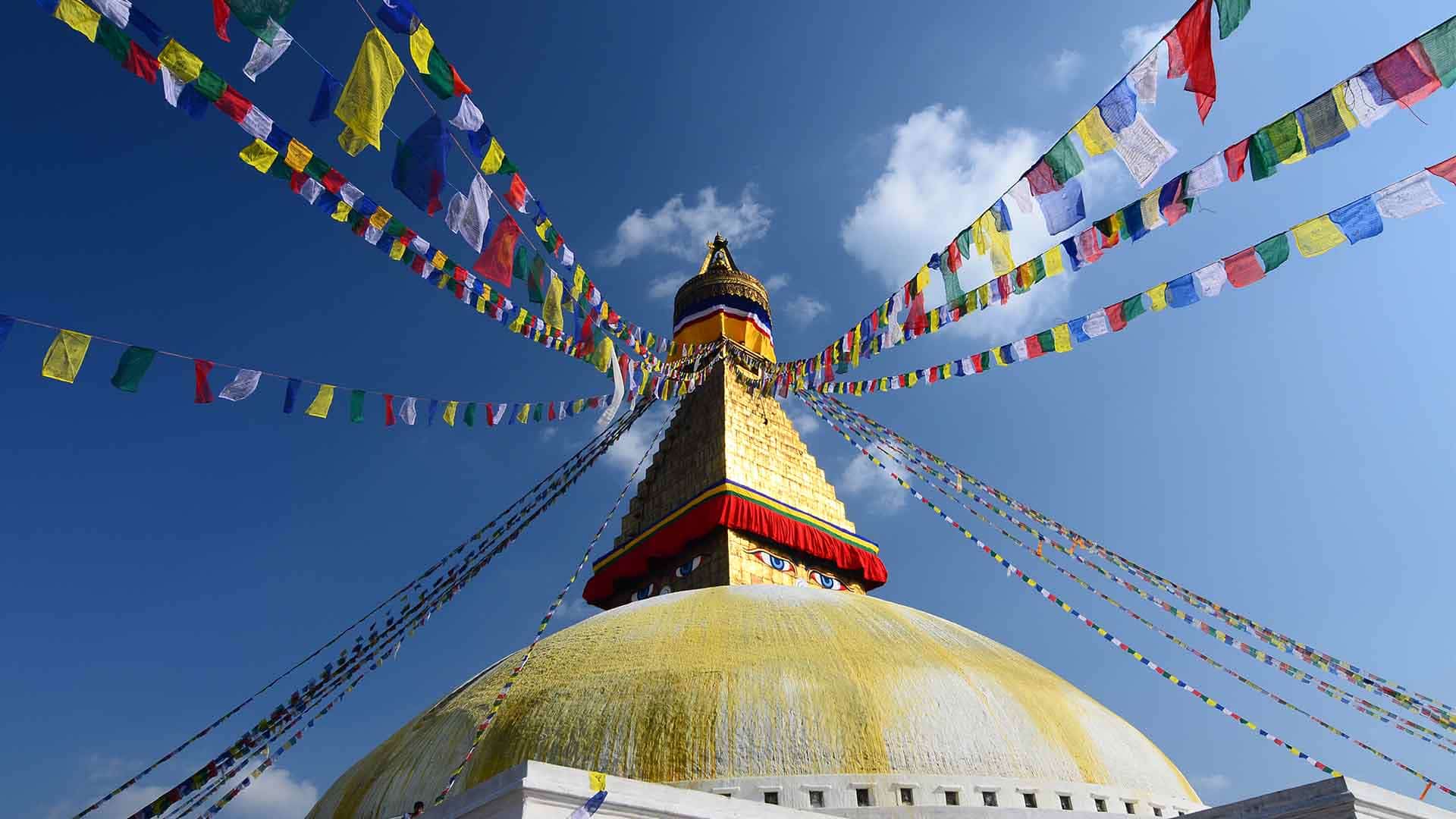
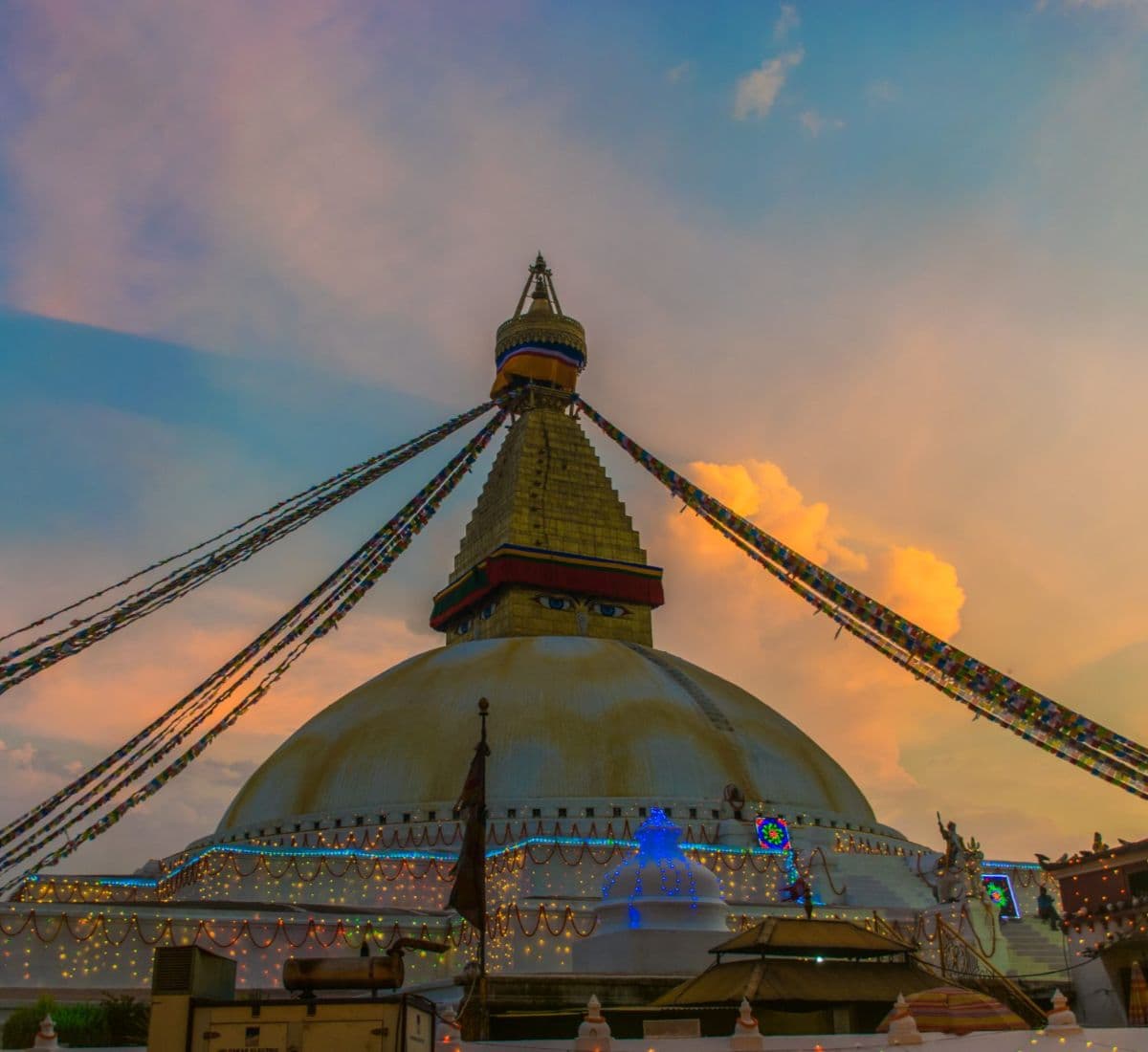
It will also be reverent to put on proper attire in places of worship, perhaps during ceremonies. To give an example, excessive exposure is not respectful before the Pashupatinath Temple. The same goes for the Boudhanath Stupa, or when celebrating Dashain and Tihar. No one may tell you that what you are doing is wrong. The locals may feel awkward, and this may influence your visit to the place indirectly. Also, how you are treated.
Color and symbolism in Dressing
Color and symbolism also have a great significance in the Nepali dress culture. As an example, white is identified with mourning, and it is worn during funeral times and moments of grief. Red, on the other hand, is associated with luck. It is worn by the brides, married women, and at lucky festivals and ceremonies.
Travelers need to be familiar with such symbolic meanings. Particularly when one is participating in an event or visiting a home. Dressing in the wrong colors on the wrong occasions, when they are not worn.
Wearing white to a wedding or red to a funeral can be interpreted as disrespectful. Whether one does so unintentionally or not. When in doubt, it is better to ask an official or a resident what to wear when attending any special events.
Dressing in Elevation
In high altitude areas, such as the Annapurna or the Everest region may be less rigid. It is due to the greater demands involved in trekking and during adventure tours. Even so, in such places, conservative clothes are valued in villages and teahouses.
Long pants that are not too heavy. Shirts or tops that have sleeves and a scarf or a shawl. A cover-up is the perfect outfit to wear when you will be visiting local homes and monasteries.
In mountain areas, functional dress is given higher priority. But some attire when communicating with local inhabitants should always be culturally sensitive. Shorts and skimpy clothes may be acceptable amongst other trekkers. But it is better to dress more decently when in the presence of the host communities.
Dressing in Nepal
Making a minor change in what you are wearing can give your relationship with the locals a real boost. Make everything you do as a visitor seem very favorable.
In the end, modest dressing in Nepal should not be viewed as consent. It is a sympathetic understanding, respect, and part of the culture. By caring about tradition in the region, you fashionably avert any misunderstandings. You also find yourself in new ways of understanding with greater depth.
Observing the dress code is an easy issue. It is a strong bond to appreciate the values and traditions. This makes Nepal a unique destination to be visited.
Table Manners and Dining Etiquette
Eating a meal in Nepal is not only about eating. But it is a social custom of indicating respect, society, and tradition. Knowledge of the Nepali etiquette of dining will make one feel at ease when eating.
It makes one aware of local values. The following are a few important dos and don'ts to remember when dining with Nepalis.
Eating with the right hand:
The left hand can touch communal dishes only.
People have a tradition that the left hand is unclean.
So it should be used to eat and pass food with the right hand.
As a left-hander, consider changing or making use of utensils.
Wash your hands before and after:
Hygiene is also a thing.
You will find obligatory water and soap in proximity to the eating place or before entering it.
The tradition can be considered hygienic, as well as a cultural need.
No fingers on food:
Do not touch any shared food with your fingers.
Take food with serving spoons or your right hand and do not use fingers directly into shared plates.
This is out of respect for fellow eaters.
Put off eating until the elders or hosts begin:
Waiting until the oldest person or the host commences to eat before you eat is a good manner.
This is an indication of respect and social order.
Do not waste food:
It is good to take only an amount of food that you can eat.
The waste of food is not acceptable according to Nepali culture.
Clearance of the entire plate depicts thankfulness.
Be seated squat (sitting in welcome in the traditional style):
The majority of the traditional environments eat on the ground. In case you feel uncomfortable, then sitting in a chair is acceptable, but follow the case of the host.
Trim down cutlery:
Most of the foods served traditionally are not consumed using knives or forks.
Hands are largely used. When there is cutlery to be used.
One should use it, but should not mix hands with cutlery when taking meals together.
Do not blow your nose on a dining table: This is offensive as well as unhealthy.
Walk out of the dining table just in case you must.
Show appreciation:
Being thankful to the host and complimenting the food will be a sign of respect. Nepalis are proud of cooking and hospitality.
Eating together means unity:
Taking food, no matter what, accept the invitation to eat with people of any other culture as a token of unity. Saying no to food time and again will be considered rude.
Do not eat with noise:
Slurping or eating loudly is not condoned in most social situations. In most informal family situations, this may be permissible.
Avoid pointing your feet:
Feet are seen as unclean. So, do not display the soles of your feet or point them at the persons when you are seated and having a meal.
Respect for the Elders and Social Hierarchy
The Nepali culture strongly rests on the norms of respect, seniority, and social order. And therefore, this is evident in the day-to-day activities. The central issues that concern age, social standing, and family functions. They are vital to the relations people have with one another.

People are raised to respect older people, not just the ones in their own family but also in society. It is expected of one to show respect to the elders. Bowing slightly and with a pressed-palm Namaste. Giving them seats and listening without interruption. The use of honorifics, such as:
Dai (older brother)
Didi (older sister)
Baje (grandfather)
Bajai/Boju (grandmother)
Typical of younger people who are addressing the older people. Either within the family or even those outside the family. Touching the feet of the grandparents or touching the forehead after being blessed. They are also widely recognised as shows of reverence.
In the family, the father or grandfather is usually the head of the household. They hold the decision-making patterns that adopt a top-down approach.

Young members of the family will seek the advice of the elderly in making crucial decisions. It can be about marriage, education, or traveling. This hierarchy motivates order, heritage, and collective responsibility among the generations.
In society, even outside their home, the hierarchy still affects the way Nepalis act. Be it at school, in workplaces, or in public. Teachers, religious heads, and officials receive special respect in words and actions. One is not allowed to question or go against them publicly.
Modesty and deference are encouraged. Be it in casual conversation or speaking to a superior rank or age.
Social interactions are also affected by religious and caste backgrounds. You can see them especially in traditional and rural societies. Nepal has undergone immense development in social equality. Still, there is a spillover of the past, which is the concept of the caste system. It affects how to behave, where to sit, and even the sharing of food.
People probably will not necessarily see these minor hierarchies. But being polite and careful in any social situation can help a lot.
Elderly members in the community or village heads are also respected. They usually act as mediators or advisors on community issues. Their words are considered to be of value even at formal and informal meetings. They expect the younger members of the community to respect their power. Such figures are usually welcomed with a formal greeting, and great interest is shown.
To travelers, knowledge about this social interaction can assist in their journey. It can establish more penetrative and respectful relationships. One should avoid being too relaxed or pushy. It can sound out of place, and polite, subtle ways and manners will be much appreciated. More can be done through small gestures. Such as elders speaking first, recognition of elders by a nod, and saying Namaste.
Importance of using the right language
Language is a major way of showing respect in Nepal. More so, in addressing different language levels. For example, the grammatical system of the Nepali language distinguishes between pronouns. It forms the verb according to the social position of the speaker versus the listener.

The age difference between them plays a vital role. Addressing someone younger or less valued in an informal manner is also impolite. It may ruin their relations or even their initial impression.
Etiquette in Temples and Religious Sites
It is a rich spiritual journey to step into temples and religious destinations in Nepal. However, one needs to keep in consideration the specific customs of such places.

Loyal attention to etiquette displays respect. It also guarantees a serene and respectful atmosphere. It's not only for the worshippers but for visitors as well. These are some key guidelines to observe when visiting temples or any religious site.
Do not enter in shoes:
It is a need that you do not enter any temple or monastery in your footwear.
It is considered a gesture of respect and sanitation.
Be modest:
Wear clothes that cover the shoulders and knees.
Clothes that are tight, showy, or sleeveless should not be worn at religious centers.
Minimize noise levels:
Always speak in low tones, never conduct a loud conversation.
Switch off or set your mobile phone to silent to ensure tranquility.
Seek permission to take pictures:
Do not take pictures in many sacred sites. Temples or during religious ceremonies.
It is always advisable to check the signage or ask a local before taking pictures.
Avoid touching religious objects or sculptures:
Do not touch and disturb sacred things or statues.
Never point your feet at shrines or statues:
Feet are dirty; therefore, sit or stand, hiding the feet, and do not show the soles.
Keep the flow of circumambulation:
Proceed in a clockwise manner around stupas or shrines.
This is how one has to show respect traditionally.
Avoid eating, drinking, or smoking in temple premises:
It is treated as ill manners in the sacred places.
Be obedient to blessings and offerings:
In case of somebody making tika (a coloured mark) or prasad (holy food)
Take it with your right hand and a little bow.
Awareness of photographing devotees:
Do not take pictures of devotees without their permission.
As it would mean their privacy and concentration in their worship.
Take your things with you:
Temples are occupied, so it is important to protect your personal things.
Do not litter the place with bags or shoes.
Take off hats and other sunglasses:
Removing a hat as a sign of humility and respect in places of worship.
Keeping these few, yet significant, suggestions in mind allows you to make the most of your visit. Keep the sanctity of the religious sites of Nepal intact. Behaving reverently is one way to experience the spiritual heritage of Nepal.
Following temple etiquette is a sign of cultural sensitivity. Show respect towards the religion of millions of people who visit such sacred places.
Gift-Giving & Gift-Receiving Customs
Giving gifts in Nepal should not be seen as a social courtesy. It is a significant action between people, a sign of respect, thanks, and goodwill. The value placed on gifts is not dependent on the amount paid but rather on the thought of the person consuming it. The acts of giving are to construct and sustain relationships. It's more than the transfer of goods.

When called into a Nepali household, it is expected and welcomed to make a small form of thanks. Gifting sweets, fruits, or tea is the norm. Appearance is regarded as part of sincerity. These gifts should preferably be well-packed or be presented in an orderly manner.
Do not bring the gifts of alcohol unless you absolutely know that the host drinks. Many families, including Hindu or Buddhist, do not drink due to religious or other reasons. On occasions such as during festivals (e.g., Tihar or Dashain), gifts can be given in many forms. It can be tika items, new clothes, sweets, or envelopes of money called dakshina. Elder gifts them to the younger members of the family.
In this type of environment, the elderly tend to be the givers. The juniors express their attentiveness during the process. Such exchanges of gifts tend to have some religious meaning. It represents prosperity, protection, and familial ties.
Foreign visitors do not need to memorise these habits to be like the local people. But it is always good to do what you can. As an example, it is acceptable to provide children in a village school with something simple. Things like a notebook or colored pencils are a great choice.
However, gifting the children in the streets and other public places is regarded as a bad habit. It might promote begging. Rather, rural visitors ought to work with local guides or teachers.
In Nepal, also, the manner in which a gift is accepted is of the essence. It is also proper to initially reject a gift before accepting it. Most individuals will merely do this out of modesty. They fully expect to accept it at a later stage. Gifts are also naturally accepted to be received with two hands. Even the gift can be touched by a person on his forehead as a sign of gratefulness and honor.
It is not expected to open the gifts before the giver, especially during formal visits. The tradition owes to the unwillingness to be ashamed. The need to appear modest, or not to seem to be materialistic. So, when another puts aside your gift unopened, it is not because they dislike or are indifferent.
In Nepal, symbolism is also relevant when giving suitable gifts. As an example, red and gold colors are symbolic of auspiciousness. It will be best during the packaging due to festivals or weddings. Even so, do not send any mourning-related gifts wrapped. They might be negatively perceived.
The exchange of gifts may be different in various ethnic groups and localities in Nepal. Sending khada scarves, as a greeting or parting, is customary. It is spiritual among the Tamang, Sherpa, or Newar communities. These sacred scarves imply innocence and empathy. They are usually adopted towards dignified visitors or in celebratory functions.
Thoughtful gift-giving applies to Nepal. You need to keep in mind cultural sensitivity, emotional intelligence, and social elegance. Visitors are not expected to bring over-the-top gifts. The simplest of actions is enough. As far as building mutual respect and sincere friendship is concerned. What matters is not the amount you spend on the gift. The reason why you gave the gift matters. The Nepali appreciate all the time.
Cultural Taboos and What to Avoid
Going to Nepal, being familiar with the cultural taboos will allow you not to offend the locals. Be it knowingly or unwillingly, and to have a sense of cultural awareness and enjoyment at the same time.

Humility, respect, and harmony are important aspects of Nepali society. Thus, there are ways of behaving and acting that are disrespectful or improper. The following is a brief list of key taboos to be observed during your travels.
Never step over the feet or legs of the person:
Feet are seen as the lowest and least hygienic parts of the body.
Walking over someone's feet is extremely rude.
Do not touch the head:
The head is sacred, and children and the elderly should never permit a person to touch his/her head.
Do not point your feet at others or sacred things:
Nepali people perceive it as rude and dirty to show the soles of your feet.
Avoid public demonstration of affection:
It is appropriate to hold hands. But it is not a good habit to kiss or embrace someone in the street.
In the countryside or in more conservative regions espcially.
Do not get angry or shout publicly:
It is not proper to get angry and shout, and such practices do not bode well with social order.
Do not eat or drink when walking in the streets:
Public eating is regarded as rude. Moreover, alcohol drinking can be offensive depending on the location.
Never receive or deliver anything with your left hand:
Either use the right hand or both hands; the left is impure.
Avoid direct and assertive pointing at people or religious symbols:
Pointing is considered accusatory or disrespectful; use your entire hand or nod.
Do not photograph people without their permission:
In rural or religious settings, always seek permission before taking pictures. This is part of their privacy.
Do not criticize or joke about religion or ways:
Religion is very personal and respected. Negative remarks or jokes can insult and hurt the relationship.
Do not wear shoes in-house or temples:
No shoes in homes or temples, and to be more respectful and hygienic.
Never turn away food or drink provided by hosts unreasonably:
Declining meals is considered impolite. So, in case you are unable to receive them, do it gently by explaining your situation.
Gender Roles and Public Interaction Norms
Nepal has seen gender roles being affected by a mixture of traditions and religion. The changes in society, especially in the urban and rural areas. Traditionally, the Nepali society favored patriarchy. Men are regarded as the decision-makers. Women perform house chores and bring up children. But there have been modest advances towards gender equity over the last twenty years. In urban centers and in schools, particularly.

The traditional gender roles in the rural areas continue to hold strongly. Men are seen to go to the fields and work even as the women take care of the home, children, and livestock. In urban regions, women have not only shown more interest in higher education. They have careers and leadership in business, politics, and the nonprofit sector. But also been on the rise.
Though some improvements have been made. Women are likely to face a stricter social code. Modesty, behavior, and social interaction are harsher for them than for men.
The interaction of opposite genders in the streets takes a modest yet courteous form. It's key in more conservative or elderly groups in particular. Public displays of affection, such as hugging or kissing people, are not common.
Many may likely consider it inappropriate. The shaking of hands is a way of greeting. Bodily contact between unrelated men and women should be avoided. That is, unless the other party is a woman initiating or welcoming such contact.
Women as foreigners are generally treated politely and with interest. But they should be dressed decently and be modest. Men are expected to make no more than friendly eye contact or be too familiar with Nepali women. It can be misconstrued or regarded as an invasion of privacy. Female travelers will likely discover that being quiet and reserved earns respect.

Nepali women usually respect one another by communicating in a low-tone-of-voice. They keep their eyes slightly cast down during dialogue with the seniors or male members. Yielding to the seniors in family group talks. This is being altered in the new families, particularly the urban family. More so, if they have international exposure.
Such expectations can be observed in many social settings. Young Nepali women can be against customs. Most of them find a compromise between the cultural requirements and personal autonomy.
It is also interesting to realize that gender norms can vary to a great degree in Nepal. Here, you can find a lot of ethnic groups. Women have greater freedom in some of the Tibeto-Burman societies. Women of the Sherpas or Gurungs are active in trade, inheritance, and decision-making. The Madhesi or high-caste of Hindu communities might be more bound by gender. Socially conservative practices.
In Nepal, transgender people and non-binary people can be identified in law. It is seen as progressive among others in the region. Still, legal safety has overcome social acceptance. Non-binary people still experience discrimination or are marginalized, especially in rural settings. LGBTQ+ travelers should expect a more open environment in metropolitan centers. But are best to be cautious and sensitive in more conservative places.
A study of gender relations prevents misunderstandings with the Nepalese. More so, due to cultural peculiarities. It also serves as a sign of respect to cherish, which guides everyday life. As an outsider, being culturally sensitive when dealing with people in the street. Irrespective of their gender, creates a mutual trust and good experiences.
Finally, being humble and conscious about these norms helps to enrich your experience. Be involved in the colorful, multifaceted Nepali society.
Tips on Festival Behavior and Participation
The culture and traditions of Nepal are great to explore. The lively festivals provide the travellers with a great chance to enjoy the richness of it. You can get closer to the local people by joining these celebrations.

A show of respect will give you a memorable experience. But we should always be cautious about cultural limits. So, act properly at these holy moments.
Watch and follow:
Inspect first, and then follow the locals when it comes to rituals or celebrations.
Particularly, this gives you an idea of how to behave and when to do so.
Dress adequately and decently:
The festivals usually happen in or near religious places.
So, dress decently and modestly, covering shoulders and knees, since one is in a sacred area.
Take permission to take photos:
Most of the activities in the festivals are personal or religious.
It is always advisable to seek permission before taking any photograph.
Particularly, where people are performing rituals or prayers.
One must respect personal space and processions:
One should not be pushing themselves into the crowd. They should not obstruct the religious processions. So, ceremonies go on with harmony and safety.
Receive offerings and blessings humbly:
If tika, prasad, or blessings are offered by priests, receive them with both hands and a bow with Namaste.
Take part in traditional dances and music:
You will hear music and see people dancing at festivals.
And yes, you can involve yourself in communal activities.
But only when people in the locality invite you.
Do not use alcohol or drugs during religious holidays:
Most Nepali holidays are religious, and one should not get drunk as it is only rude.
Be tolerant and easy with timelines:
Festivals are not necessarily bound to specific timelines.
Postponement or duration of ceremonies is usual, so enjoy the process with an open heart.
Never judge or belittle religious practices:
You may not understand or like the religious practices.
But don't comment negatively or joke about the practice.
Attend local community meals:
Wherever there are local community meals.
As a guest, adhere to these customs when enjoying that particular local food.
Get familiarized with festival vocabulary or greetings:
Easy words such as ‘Shubha Deepawali’ (Happy Diwali).
Or ‘Dashain ko shubhakamna’ (Best wishes for Dashain) can convey cross-cultural awareness.
Buy from local artisans and vendors:
There might be traditional food and art with handicrafts during the festival.
Buying it supports the local people and culture.
Nepali festivals invite visitors to respect and perceive them openly. It enriches their journey and appreciation of the culture celebrated for generations.
When you follow these suggestions, you will be developing goodwill. It establishes valuable cultural relationships. Nepal's festivals are a delightful reflection of life. Your considerate participation can make them more musical.
Home Visit Etiquettes (If Invited to a Home)
Being kindly accepted into a Nepali home is a culturally authentic experience. It opens a real insight into the life and culture of the local people. Having etiquette in place during your visit will be viewed as respect.
It shows appreciation towards the people you visit. It assists in building strong relationships. These are some of the important customs and actions. Take note when visiting a Nepali household.
Take a small gift:
It is kind to take a small gift like sweets, fruits, tea, or flowers to show appreciation for the invitation.
Cards are preferable over and more expensive gifts, as it is preferred to keep things simple.
Take off your shoes:
You should always leave your shoes outside.
It prevents the house from getting dirty and is a sign of respect to the family.
Welcome everybody:
Greet family members, particularly the older members of the family.
Use joan-joan and palm pressed together, and an inclination.
Be seated gracefully:
Do not cross your legs while sitting. Wait till you are taken to sit at a place.
In case you have to sit above the eldest or the host, it is advisable to do the same as a sign of courtesy.
Accept what the hosts give:
You are being well-mannered.
Accepting at least some minuscule portion of what your hosts are offering.
Even when your stomach is full, or you do not like whatever is given to you.
Eating and receiving food and presents:
Use the right hand or both hands as a whole when receiving food, gifts, or eating.
The left hand is believed to be unclean.
Avoid arguing on delicate matters:
Discussion of political, religious, or family issues is normally to be avoided.
That is, unless it is raised by your host.
Praise the food and home:
The truth is that when you praise the food and the hospitality they have offered you always receive a tight nod.
Follow the host's lead:
Notice the way your host acts when it comes to eating, drinking, or those rituals, and follow suit.
Adhere to local practices:
This could mean having to avoid certain rooms in the household. Like prayer rooms or other taboo places within the house, without invitation.
Consider personal space:
Nepal houses are compact, and it is vital to be conscious of what you own and not to sprawl or place feet on tables.
Show appreciation to your hosts:
At the end of the visit, do not forget to express your appreciation to the hosts. In case you can send the next message or act of gratitude.
Transport and Norms of Public Behavior
In Nepal, you can takebuses, microbuses, and shared jeeps. It means the conduct in any of the aspects of everyday life of the natives. Seats are also limited here, and so when traveling, people tend to keep in mind social etiquette. The historic practice is the most admirable one. It gives your seat to older adults, expectant women, or persons with physical problems. It is not only demanded but highly valued.
In the country and urban areas. It is normal for passengers to stand the whole time without raising any objections. When seats are taken by older people and mothers with young children. Even in city buses run by companies such as Sajha Yatayat, signs show reserved seating. If one fails to observe this, he or she can, in likelihood, get faces to turn the other way. Giving up the seat is considered good upbringing and respect for customs.
There is not much room on the public transport. It is common to rub shoulders or even to sit near. However, undeserved physical contact, particularly between the opposite sexes, is unwanted. To be culturally correct, men and women should not touch or lean too closely to each other. Women-only compartments or seats can be seen. It is to avoid unpleasant incidents or uncomfortable situations in bigger cities.
Many people are polite and keep conversation restrained on a bus. People should not talk loudly or make a phone call. The Nepalis tend to value the quiet and low-key manner in common areas. So talking too loudly, at least in English, may appear impertinent or even demanding. There should be a nod or smile or a simple mention of Namaste. It is appropriate and respectful to fellow passengers.
In a taxi or other personal transport, it is common to negotiate the fare before getting started. This is more common in places that lack meters. Most taxis in Kathmandu and Pokhara do not make use of the meter. Unless one wants to agree on the price amicably is nothing new to the locals here. Tipping in taxis or any other form of transport in the country is voluntary. But it is a good gesture to round off the money to an amount that is more acceptable.
The tipping culture in Nepal is expanding, especially in services related to tourism. such as trekking, guiding, or hotel portering. Though it is not a specific percentage, a small tip (5-10%) is expected in restaurants. To your driver or porter is regarded as polite and generous. At local restaurants or buses, tipping is not the norm, but it is never refused as long as it is given with sincerity.
Other social norms in society are not written. So, no making out in the street, don't be loud and boastful, and must never disagree in public. Humility is something that Nepalis in general regard. Be modest and respectful even in a frustrating situation. If you do, you gain more understanding and help.
Merely queuing up, taking turns, or helping someone carry a heavy bag. It will have a positive impact on the mood of the crowd.
An Interaction with Monks, Priests, and the Devout
Religious leaders in Nepal are placed with great respect. In society, they are also viewed as spiritual teachings and role models. Treated them with humility and respect when dealing with them. Their functions are closely connected with the centuries-old traditions and religiously significant acts. Gaining knowledge about the etiquette will prevent unintended disrespect. It creates useful cultural interchanges.
When greeting monks or priests, one is supposed to greet them by bowing. Or you can use the popular greeting of clapping their hands together in Namaste. Touching is normally discouraged except when done by a religious figure. Touching the head or shoulders is discouraged as the head is viewed as the most holy part of the body.
Taking photography without express consent should be avoided. Be mindful, particularly in ceremonies or in temples and monasteries. When attending religious activities, ensure you are with the leaders of the locals. Merely watch and listen. Blessing is the norm, and people bow their heads. Occasionally, touch the feet of elders or priests as a sign of honour and submission.
Receive any holy water, tika (mark on the forehead), and offer using your right hand. Two hands, as the left hand is considered of less respect in such cases. When attaining religious sites or meeting spiritual leaders, dress modestly. Wearing clothes that cover the shoulders and knees will be a sign of reverence. It is not appreciated to speak loudly, laugh, or make a commotion around monks or in monasteries. It is a place of contemplation and spiritual concentration.
When you are not sure how to do things, you should either ask in low tones or watch others so that you become involved. It is conventional and welcome to provide donations. Give monks and priests, but this should always be done privately and considerately. The most common alternative to give thanks, either blessings or guidance, is to give money, prayer scarves (khadas), or food.
Do not say that you want to gift something that may be perceived as an unworthy gift. Like an item that is of luxury or may imply moral indulgence. And do not pressure religious people to bless you by way of gift-giving.
The monks and priests in Nepal are considered to be living examples of spiritual ideals. Their lifestyle is taught to be simple and deprived of material items. Taking an interest in their lifestyle is accepted as a rule. But should be made in a discreet manner without being inquisitive. Nonetheless, stay away from any personal questions about their beliefs or practices. It is unless they have brought up the topic first. But the most important thing is to respect their privacy.
By considering these norms of interaction. Travelers can increase the authenticity of their spiritual experiences in Nepal. Politeness is an indicator of a desire to learn and an understanding. It is a valuation of local customs and use. It provokes goodwill and, often, friendly hospitality. You must keep in mind that religious leaders are highly regarded in society. This will help you pursue encounters with grace and cultural awareness.
The conclusion: Cultural respect as a traveler
A trip to Nepal presents a rare chance at experiencing a culture. Feel it filled with tradition, spirituality, and a welcoming nature. Of course, this connection is not about the obedience of rules of etiquette and customs of the area. It's also about willingness to show respect to people, places, and even history. It can be the gate not only to your better knowledge of the place.
What do tourists view as cultural differences? It's a learning experience, and seek to understand it through inquisitiveness and humility. They are likely to turn their travel into an exchange experience instead of a surface tour.
Learning and applying Nepali etiquette is useful. It can fill in the differences between different backgrounds. This makes them understand each other better and trust one another.
You should respect social standards.
Treat older people with care and behave decently.
Interact responsively with the local habits and cultures.
This proves your intentions to connect on a deeper personal level. Regardless of the language or nationality. Such polite exchanges of interaction among them can easily result in unexpected friendships. You gain an enjoyable experience. Get deeper insights into the cultural fabric of Nepal.
Finally, traveling with cultural respect helps the traveler. But also benefits the places visited. It promotes sustainable tourism. It does not overpower or replace local identity and traditions. But cherishes them instead.
When traveling to Nepal, be an appreciative guest. It is an effective means to become a responsible guest. Consume and act in a manner that is respectful to the heritage and humanity that make this land so amazing.
FAQs
1. How do you greet a person in Nepal?
The best greeting phrase is the namaste, which is done by closing your hands and bowing down. It is a sign of genuineness and appropriate to most age brackets and social contexts.
2. Do I need to take off my shoes before going inside a Nepali home/temple?
Yes, it is respectful and clean to take off the shoes. You should always remove your shoes when you enter the entrance to a personal home or a religious place.
3. May I shake hands with Nepal elders?
Handshakes are increasingly becoming widespread, particularly among youths and in towns and cities. But wait until the senior person starts it yourself. There is doubt that, in certain conservative situations, physical contact may be avoided.
4. Can I use my left hand to eat in Nepal?
No, it is seen that the left hand is traditionally unclean to eat and give food. Instead, use both hands together, or your right hand.
5. What are the things that I should not do in a temple?
Avoid issuing loud speeches and touching the holy items. Clicking photos without their consent. Look modestly dressed and take your shoes off.
6. What can I do in the Nepali festivals?
Be a part of the culturally appropriate event by dressing decently. Respect local customs. Never attempt to take part in rituals unless invited. Also, only take pictures if asked to take photos of ceremonies.
7. Does Nepal accept views on public displays of affection?
Showing affection, such as embracing or kissing. It is normally unacceptable, especially in rural society. It can be okay to hold hands, yet physical affection should be modest.
8. Why is it important to touch someone's feet?
Respecting elders or spiritual personalities by touching their feet is a traditional way. It is a gesture of humility. It is typically followed up with placing your hand on your forehead as a blessing.
9. Do I have to tip cabs or restaurants in Nepal?
In restaurants, hotels, and with guides or drivers, it is a matter of choice to tip, but it is considered a nice thing to do. It is a nice thing to leave 5-10 percent or round off the fare.
10. What are the subjects that I should not talk about with Nepali hosts?
Stalky topics such as politics, religion, and family arguments should be avoided. Unless the host brings it up. Being positive in the conversations will sustain peace.
11. What do I do when I am invited to a Nepali house?
Take a small present, such as sweets or fruits. Take off your shoes and take the food being offered suggestively. Shaking hands and saying Namaste to your host are good behaviors that show respect.