Tibet Overland Tour is a majestic journey that takes you from the Himalayan vistas of Nepal to Tibet. This tour begins in the energetic capital of Kathmandu. And it takes you to quite high-altitude of Tibet and enters the sacred city of Lhasa.
It’s a different way to see the Himalayas via land. This takes you through the Nepal-Tibet border. You come to see amazing mountain views, cultural sites, and ancient monasteries.
The Tibet Overland Tour is a great mix of natural beauty and culture. You will find the snowcapped peaks of the Himalayas. Experiencing the spiritual centers of Tibetan Buddhism will blow your mind.
Travelers see a great change in very little time. It’s not a drive from point A to B but a voyage of discovery. Many people choose this trip for the slow and scenic journey through the Himalayan lands. It is for those who prefer an in-depth, comfortable adventure.
How to Enter Tibet from Nepal?
Travelers enter Tibet from Nepal through the border at Kerung (Gyirong). It is at present the primary entry point. The Kodari border, which for a while was open for overland travel, is now closed since the 2015 earthquake.

Today, Tibet tours from Nepal begins in Kerung border in Rasuwa District. It is to the north of Kathmandu. All overland tours from Nepal to Tibet go through this entry point.
The Tibet Travel Permit (TTP) and a Chinese Group Visa are the must-have permits. These are different from a standard Chinese visa. Likewise, it should be obtained through an authorized travel agency.
Tibet Travel Permit (TTP)
The Tibet Tourism Board issues the Tibet Travel Permit. It allows foreign travelers to access and travel within the Tibet Autonomous Region. You may not board a flight or start your overland journey to Tibet without this permit.

It is open for travel agencies in Nepal or China to apply for the permit on your behalf. They do not accept individual applications.
Chinese Group Visa
Even if you have a Chinese visa in your passport, that’s not going to work for entry into Tibet from Nepal. You will instead have to get a separate Chinese Group Visa. You must apply for it at the Chinese Embassy in Kathmandu.
Upon your arrival in Nepal, we will help you apply for this visa. This visa is also issued for the same length as your Tibet tour. At times, it is valid for entry into mainland China if you are also planning to travel there.
Required Documents and Processing Time
To obtain your permits and visa, you will require a valid passport that has at least 6 months' validity.
To do this, you will have to provide a clear passport-size photo. Then, fill out the visa application form, which is supplied by your travel agent.

The Tibet Travel Permit issue time is 10 to 15 days. Chinese Group Visa issues within 3 to 5 workdays once we submit your documents in Kathmandu.
The tour company should synchronize with your travel plans. Also, note that in Tibet you may not go it alone and all your arrangements should be made in advance.
Best time for the Tibet Overland Tour
Picking the right time to go to Tibet is necessary. Weather plays a great role in road travel and the total experience. Though you may visit all year round, some seasons are better for overland travel.
Spring (April to May)
Spring is the best time for traveling to Tibet. After the long winter, the weather begins to moderate. It has sunny days and mostly clear skies.
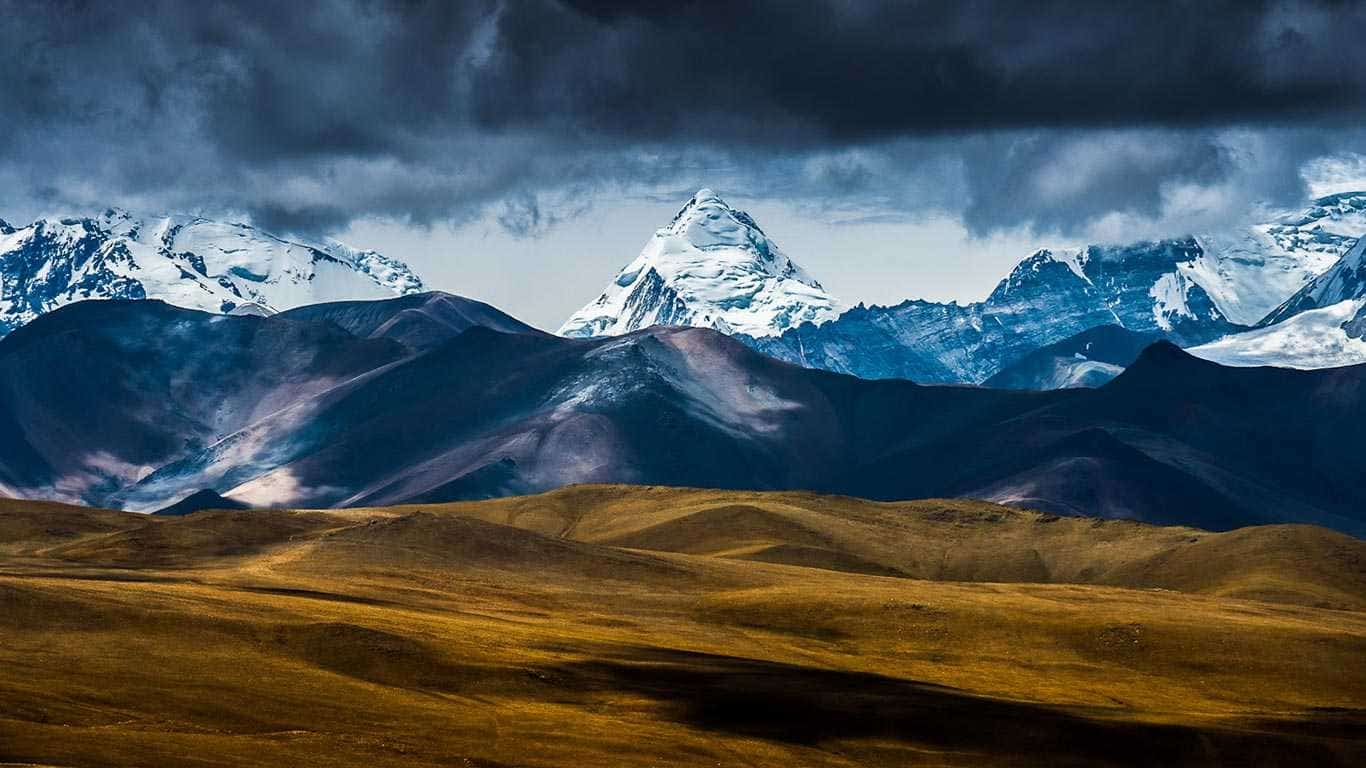
This is the time to see the snowcapped mountains. The roads are in better condition; the air is very fresh. Likewise, there are a few other travelers at this, which makes for a more peaceful trip.
Summer (June to August)
Summer in Tibet is the warmest time of the year. The area holds mild temperatures. And with the thin high-altitude air, which has a pleasant quality.

At the same time, it is the monsoon season. Rain can cause some roads to become treacherous and will delay your journey. Rain may be a factor, but we see very green and vibrant landscapes. If you don’t mind some rain, it’s still a great time to visit.
Autumn (September to November)
Autumn is the best time for the Tibet Overland Tour. The skies at that time were as clear as can be, and we had great visibility. From many spots, you will see Himalayan peaks.
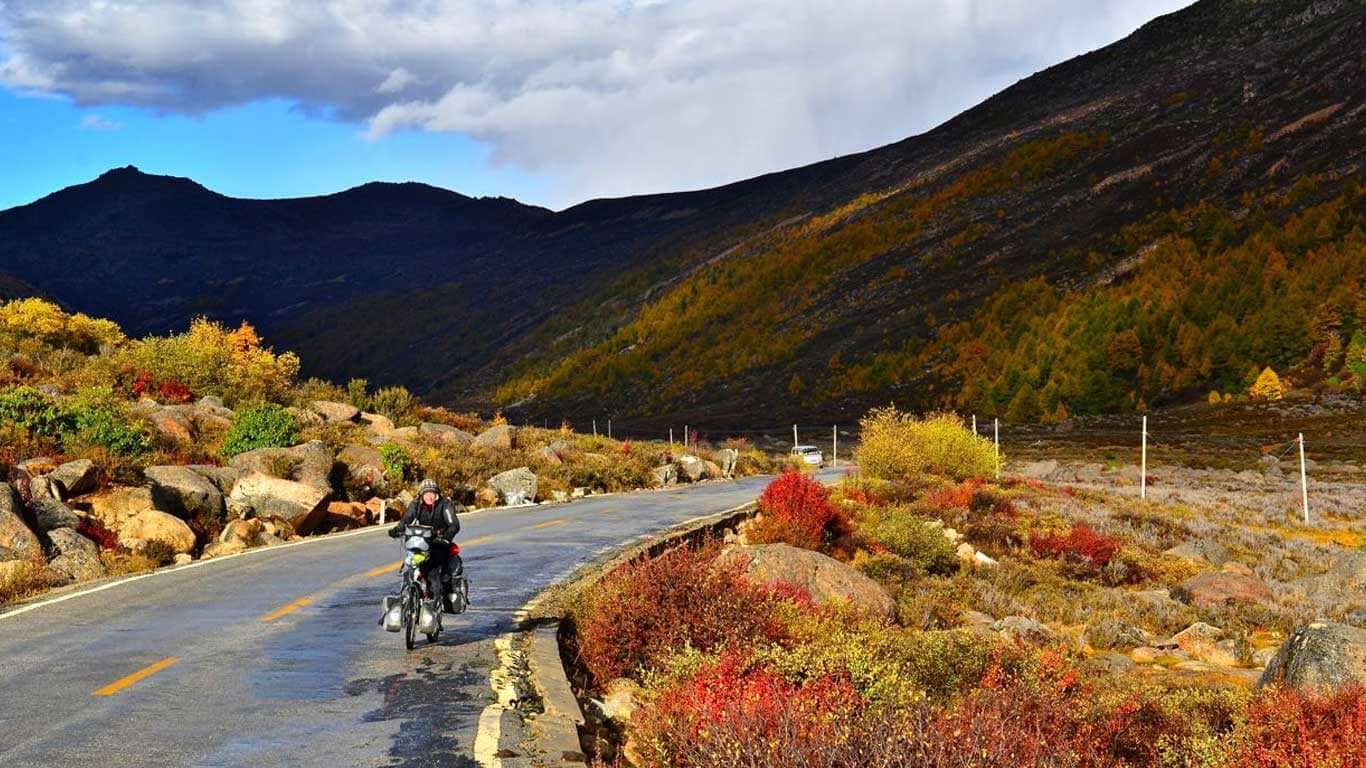
The weather is very stable and dry, which makes for safe and pleasant travel. In early October, you will see the beautiful color changes in the landscape.
Winter (December to February)
Winter is off-season. It may be quite cold, especially at high passes like Gyatso La. There is a risk of snow, which may close some roads.

Be more prepared for the cold, and despite the lower turnout of tourists, there is a quiet journey. In Lhasa’s case, all the major sites are open throughout the year. What you see is that the air becomes cleaner in the winter. In turn, this brings out beautiful mountain views.
Major Attractions Along the Way
The Tibet Overland Tour from Nepal is out of the ordinary. It is not only a trip but a passage between amazing places.
At each step, you have something different to see and do. It can be from climbing high mountains to visiting sacred temples. Here are the main points of interest that you will include as you head towards Lhasa:
Everest Base Camp (Tibet Side)
The Tibetan side of Base Camp has great views of Mount Everest. You can get right up to the base camp area, which is at an altitude of around 5,200 meters.

The Rongbuk Monastery, which is the world’s highest, is nearby. This stop is a major point of interest for many travelers. On clear days, you get to see the north face of Everest.
Yamdrok Lake
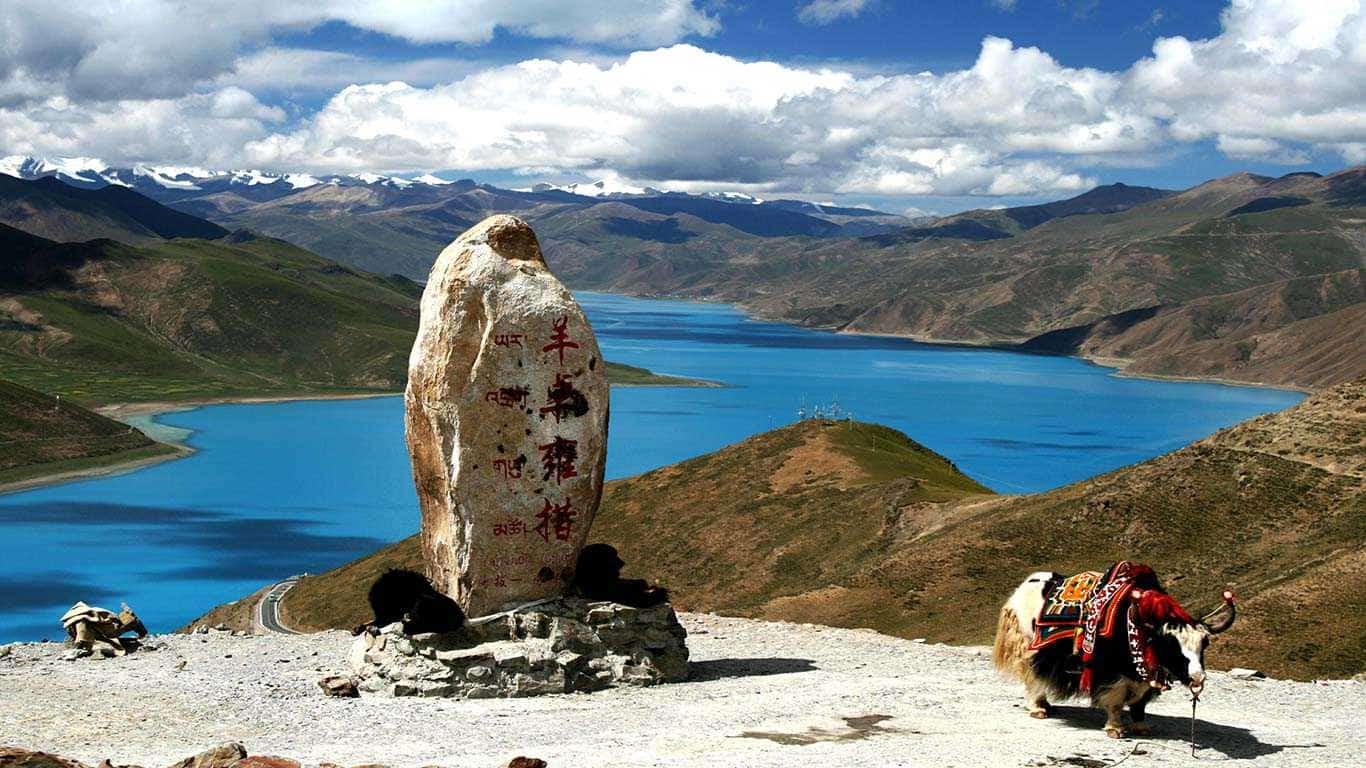
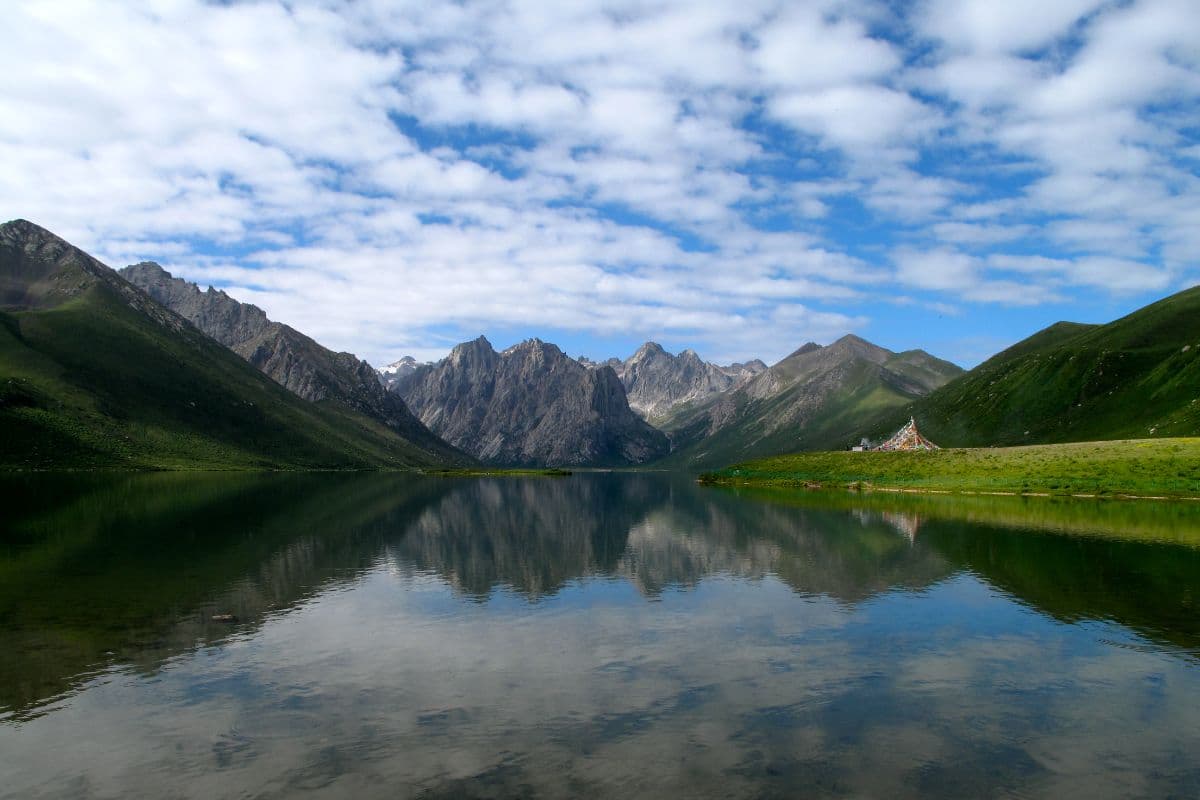
Yamdrok Lake, which is home to the three largest sacred lakes in that region. With its turquoise waters and curving shore, it is simply stunning. The lake is framed by snow-covered peaks and small villages that surround it. Within this setting, you will find peace.

It is thought that whichever way you put it, the spiritual benefits are for the visitors. The lake that we see is at an altitude of 4,400 meters above sea level.
Gyantse Kumbum
Gyantse Stupa is a large structure in Gyantse. It is known for its tiered design and vividly painted chapels.
Travelers may go to the top of the stupa, which offers panoramic views of the town and valley below. This is a great example of preserved Tibetan Buddhist art and architecture.
Potala Palace
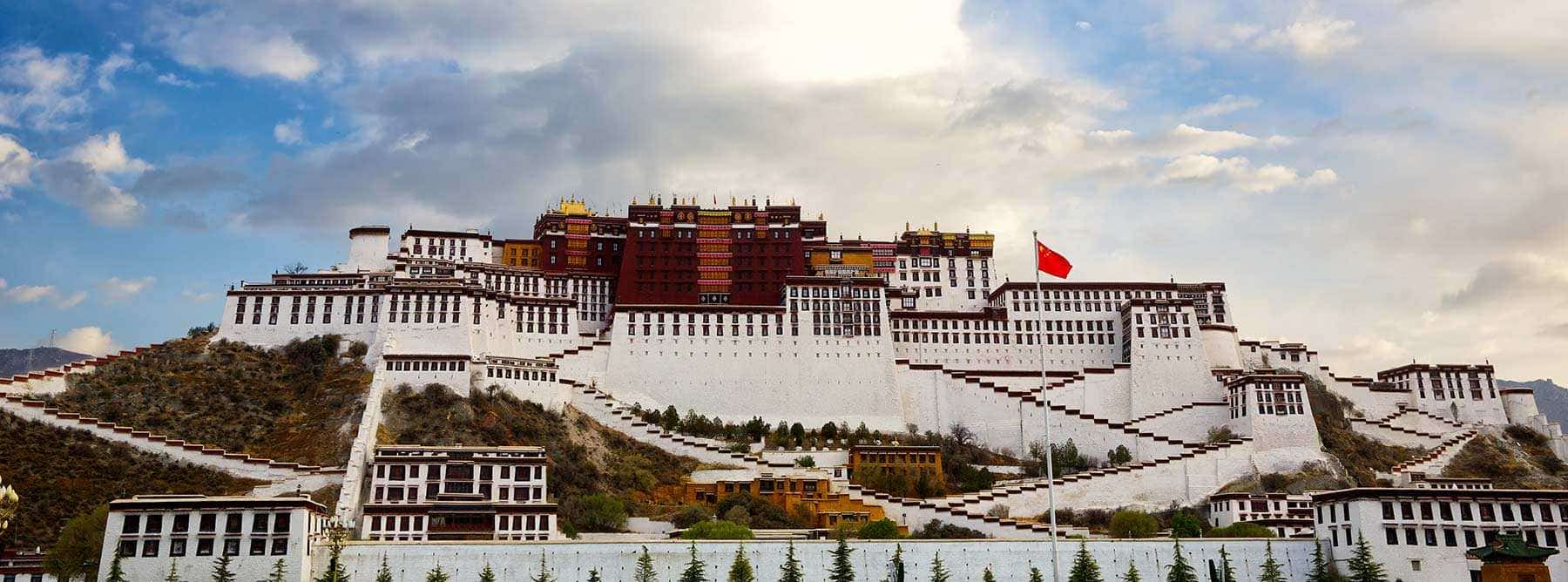
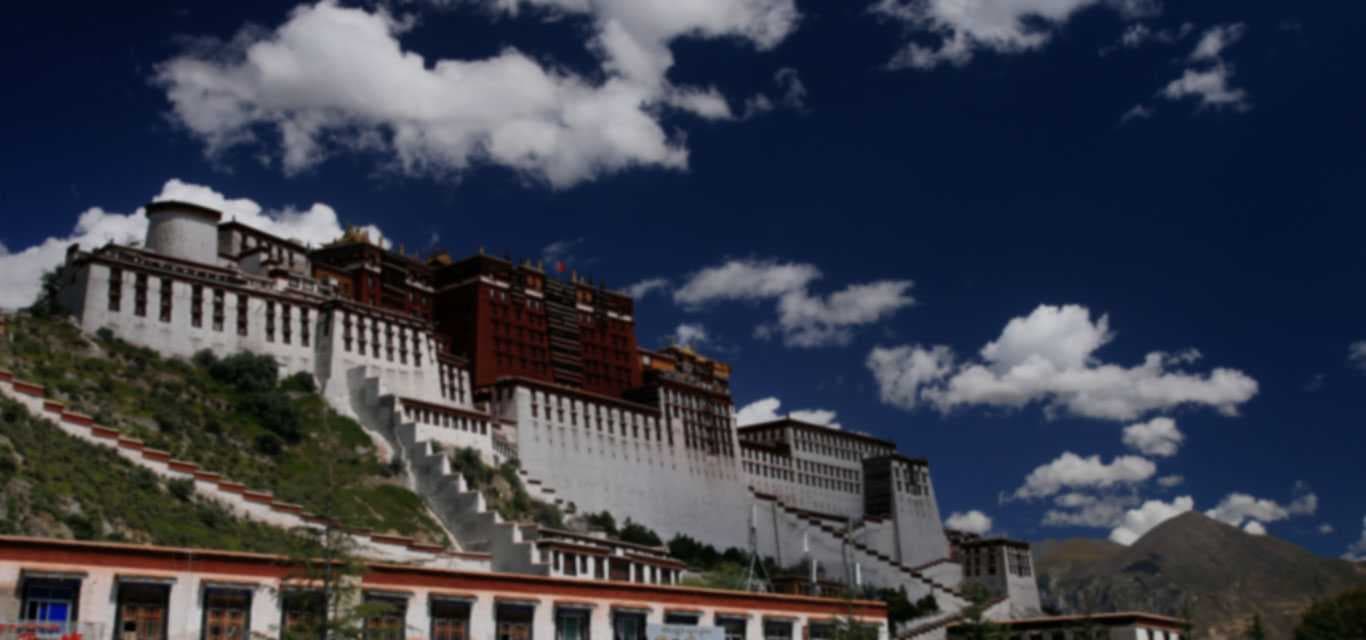
In Lhasa, the Potala Palace is the most recognized place in Tibet. For centuries, it was the winter home of the Dalai Lamas. Perched on a hill, the palace also provides views of the whole city.

Inside are ancient murals, religious texts, statues, and tombs of past Dalai Lamas. It is a UNESCO World Heritage Site and a must-see.
Jokhang Temple and Barkhor Street
Jokhang Temple is the heart of Tibetan Buddhism. From all over Tibet, pilgrims come to pray at the temple and walk its grounds.

The temple, which also serves as a home to a very sacred Buddha statue. It came with Princess Wencheng from China.
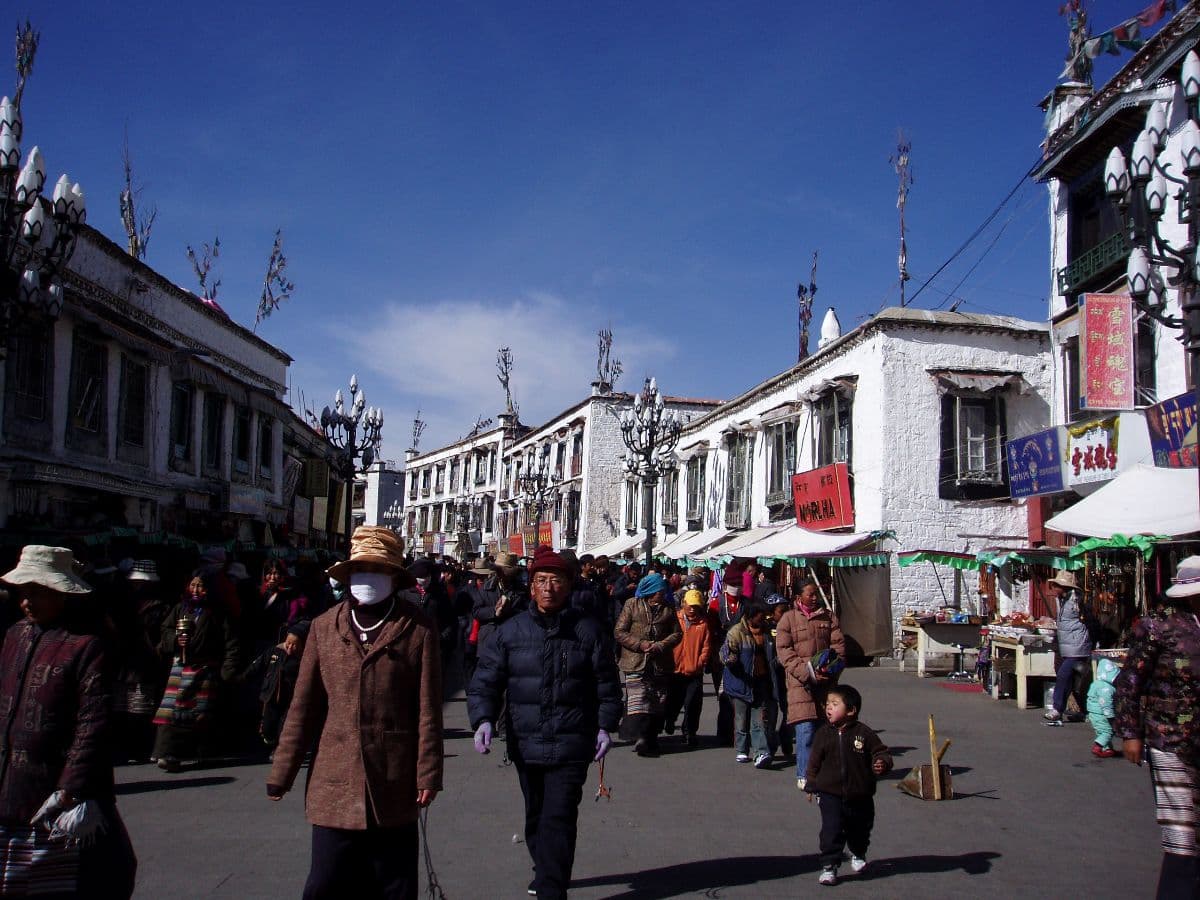
Surrounding it is Barkhor Street. It is a bustling market area with shops, prayer wheels, and pilgrims spinning their beads. It is a great place to see local culture and to find souvenirs.
Accommodation and Food Options
The Tibet Overland adventure takes in both remote and developed areas. Thus, the quality of accommodation and food is variable. Here is what you can expect along the route.
Types of Hotels and Lodges
In Gyirong, also known as Kerung, accommodation is basic. You’ll find guesthouses and local lodges, which are very simple. Rooms mostly have twin beds, electric blankets, and shared bathrooms.
In Tingri and Shegar, hotels are of basic but clean design. You may not see luxury amenities. Some lodges have attached bathrooms, while others do not. Electric blankets or small heaters usually provide heating.

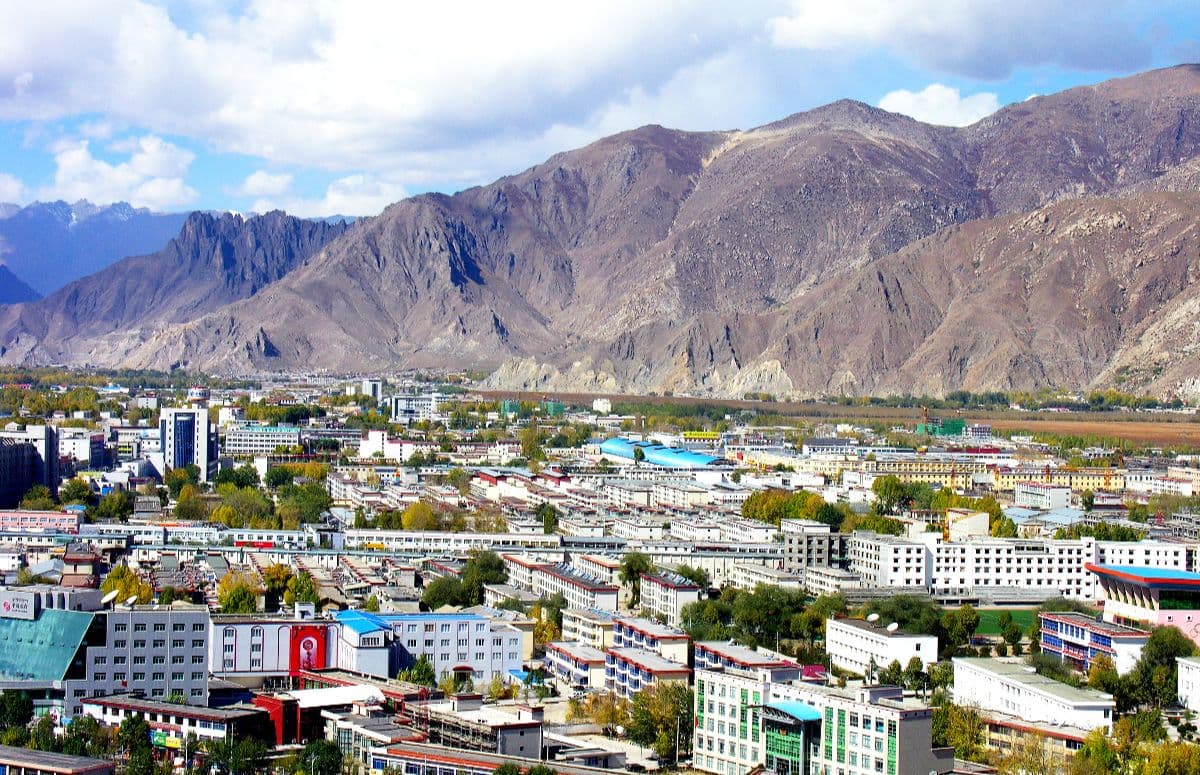
In Lhasa, which is the second-largest city in Tibet, you will find that hotels are a step up. We have 3- and 4-star options. They feature attached bathrooms, heaters, and in some cases Wi-Fi.
Gyantse has a choice of mid-range hotels, which are very comfortable. Also, they are located within walking distance of the Kumbum Monastery. They have warm beds, clean toilets, and basic Chinese food.
In Lhasa, you’ll find a great choice of hotels for your stay. We have budget guesthouses as well as luxury 4-star hotels. In these hotels, you can expect to find better amenities. Expect hot showers, heaters, Wi-Fi, attached bathrooms, and, at times, a buffet breakfast.
Food Choices During the Tour
In terms of food options, which vary by location in Kerung and Tingri, they are basic and mostly local. We see dishes like noodles, which are just boiled, fried rice, momos, soups, and eggs. Very common foods are Tibetan bread and butter tea.

In Lhasa and Gyantse, which is where you will be able to enjoy Tibetan, Chinese, and some Nepali foods.
You will have fried noodles, thukpa (noodle soup), rice with curry, and yak meat to recommend. Some restaurants in the area serve up dumplings, stir-fried veggies, and fried potatoes. In Lhasa, there is great food. You will find a range of Tibetan, Nepali, Indian, Chinese, and Western dishes.
Most of the time, for meals on the tour, we will have hotel restaurants or small local spots. Also note that we do not have high-end restaurants in the rural areas. But what we do have is very homegrown, tasty, and prepared healthily in almost all cases.
For Vegetarian and Vegan
Vegetarian options are present at the majority of stops we visited. But do note that the choice is rather small. You will get rice, fried noodles, vegetable thukpa, steamed buns, potatoes, and more. In many places, they serve eggs in vegetarian dishes.
If you are vegan, options are limited. You may have to bring your own snacks like dry fruits, protein bars, or instant soups. Request your guide to inform the hotel staff ahead of time. They will help them avoid using butter, cheese, or eggs in the preparation of their food.
Bringing along some veggie options is a great idea. Try picking like peanut butter and plant-based protein powder. Also, pack a thermos for that hot drink or soup.
Cultural Experience and Local Life
The Tibet Overland Tour is a cultural and spiritual journey. As we travel along, you will see how locals live, what they believe in, and how they celebrate life.
Tibetan Buddhism and Monasteries
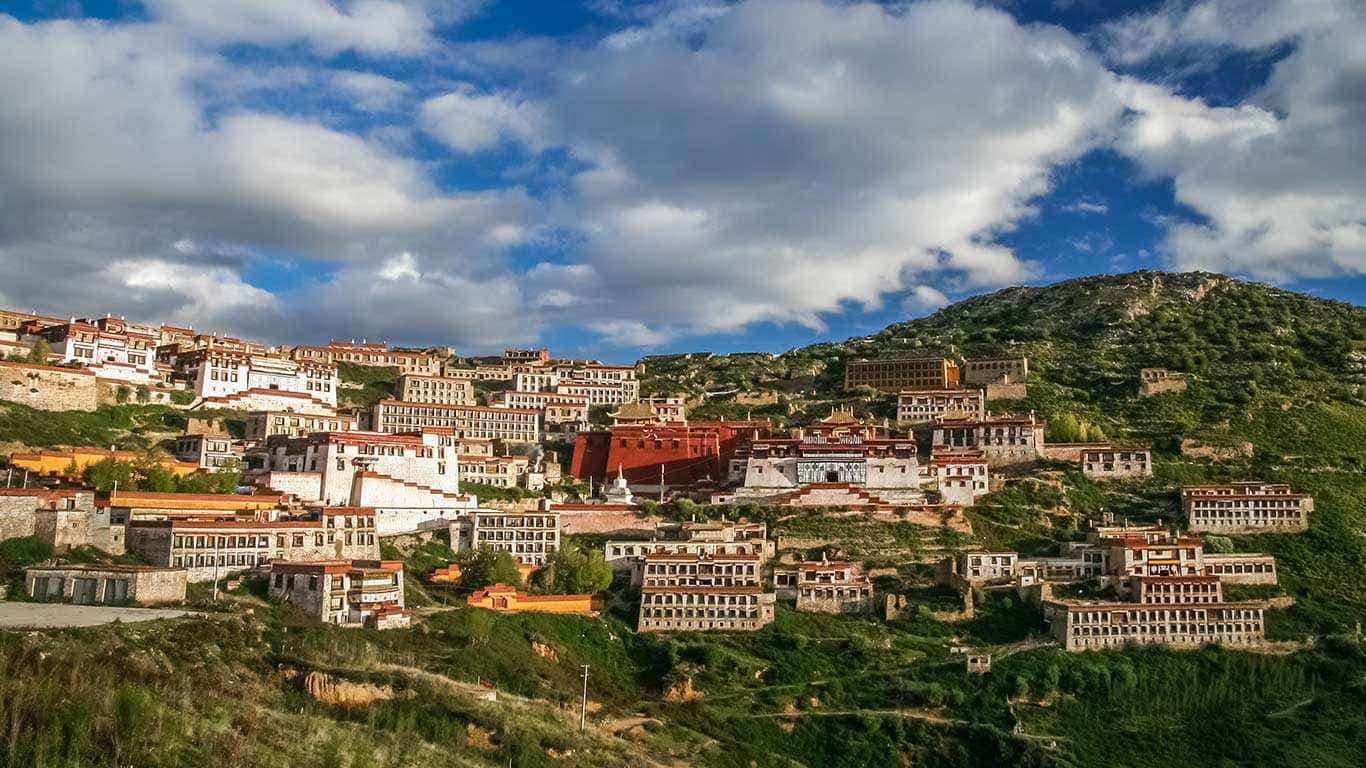
Tibetan Buddhism is at the core of Tibetan culture. In almost every town and village, there is a monastery. They are more than just places of worship; they are centers of learning, art, and daily life.

In the base camp area, which is near Everest Base Camp. You will find monks living and praying at Rongbuk Monastery. This is the highest monastery in the world. The views of Mount Everest from here are very stunning.
In Shigatse, you will see Tashilhunpo Monastery, home of the Panchen Lama. The Monastery has golden roofs. The place also features ancient murals and tranquil courtyards. Ot is also a respected institution in Tibet.
In Lhasa, Jokhang Temple is a sacred site that draws in thousands of pilgrims. They walk around in a clockwise direction as they spin prayer wheels and chant. At Sera Monastery, you will see monks in the traditional debate. It is a very incredible experience.
Local Customs and Festivals
Tibetan people are known for their kindness, spirituality, and connection to tradition. They wear the traditional chuba and, at times, very colorful aprons which the women do so into dress.
Spinning prayer wheels, walking in a clockwise direction around temples. It is known as kora, and lighting yak butter lamps is what you often do.
If you are to attend during festivals, the experience is to die for. The Losar Festival is the Tibetan New Year. The Saga Dawa Festival, which marks the birth, enlightenment, and death of Buddha. They are very large-scale affairs.
At these festivals, people come out to the monasteries. They light butter lamps and take part in traditional dances.
Interactions with Tibetan People
Meeting Tibetans is a high point of the trip. Most local people live simple lives off farming, herding, and trade. You will see farmers in their fields with barley, nomads with their yaks, and monks in their prayers.

While there is a language barrier at times, many Tibetans welcome visitors with a warm smile. In places like Lhasa, some younger people do speak a little English. Our guide will help you out and will also explain local traditions.
You can shop at local markets. Enjoy butter tea at a family-run teahouse. You watch the peace that is present in daily life there. These little things present a great view of life in the Himalayas.
Road and Travel Conditions
From Nepal to Tibet, the overland trip is along rough mountain roads and through high passes. It requires care in planning and good vehicles for safety and comfort.
Type of Vehicles Used
Most tours use 4x4 SUVs or minivans for transport. These vehicles do well on mountain and unpaved roads. They provide ample space for passengers and luggage. Some companies do use buses for larger groups. We prefer the smaller vehicles for greater flexibility and performance on the road.

Vehicles in general are in good repair and come with heating for cold weather. Many have seat belts, but the roads are bumpy, which will cause some shaking during travel.
Road Safety and Comfort
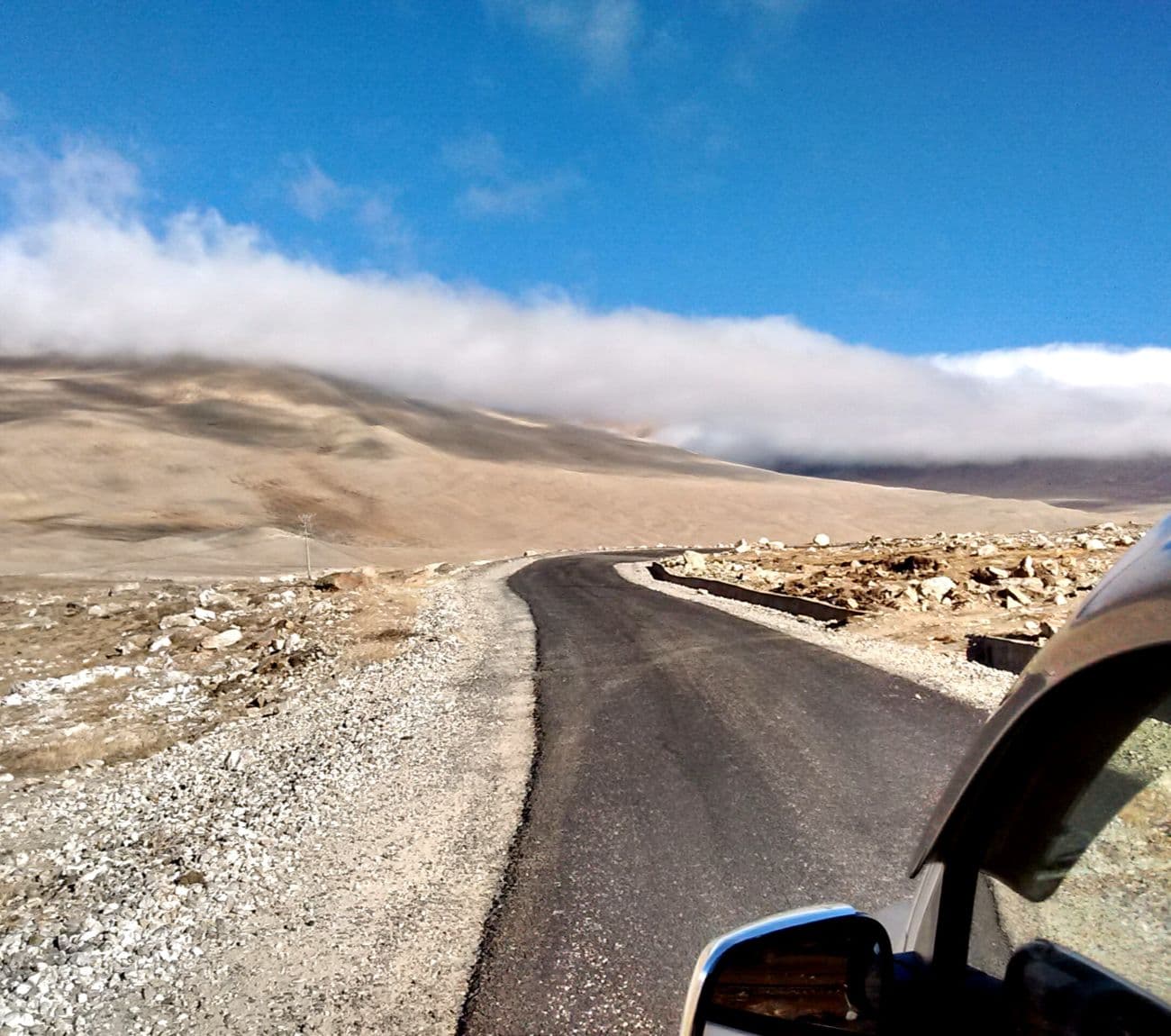
From Kathmandu to Lhasa’s roads go through high mountain areas with narrow winding paths.
Some sections are paved, but others may be of gravel or dirt roads. During the monsoon, it is also common to have landslides and slipperiness.
Drivers are used to mountain driving and are familiar with the route. We ask travelers to prepare for slow speeds and that at times the route will come to a stop due to road work or weather.
Comfort is a variable that depends on the vehicle and route conditions. We recommend you bring a neck pillow and wear comfortable clothing. Bring along water and snacks for the long driving hours.
Distance from Kathmandu to Lhasa
The distance by road between Kathmandu and Lhasa is 520 km (320 miles). It may take a 2 to 3-day journey, which varies with road conditions and border crossing points.
Most trips are broken up into many stages. It includes overnights in towns like Kerung, Tingri, and Shigatse. Thus, travelers have time to rest and acclimatize to the high altitude.
Cost of Tibet Overland Tour from Nepal
The cost of a Tibet Overland Tour from Nepal depends on many factors. Group tours are at a lower price since they share in the cost of transport, guides, and permits as a group. Private tours do, however, provide a more tailored experience at a greater price.

Another issue that plays into the cost is what kind of accommodation you choose. In budget hotels and guesthouses along the route, you will pay a lower rate.
But if you head to cities like Lhasa and Shigatse for a mid to high-end hotel, you can expect the total to be higher. Traveling at certain times of the year will also play a role in the cost. In spring and autumn, we see higher prices, which are a result of increased demand.
Also, it leaves out personal expenses, travel insurance, and meals. They are not included in the itinerary.
To get the best value, it is recommended that you compare different tour operators. See what is included in the price before you book. It is a good idea to plan well in advance and travel during the shoulder seasons, which may also help reduce costs.
Group Tour vs. Private Tour
Join in on a group tour or go for a private one; each has its pros and cons.
Group Tour
Group travel options are more affordable than private ones. Travellers split the cost of vehicles, guides, and permits with the other passengers. This makes it a budget-friendly option.

You get to meet new people and share in the experience. At the same time, though the schedule is set in stone, you have little flexibility. You go along with the group’s pace, which may leave you waiting around at times.
Private Tour
Private tours, which have the advantage of great flexibility. You can design your itineraries as per your interests and pace. It is great for families, couples, and travelers who prefer privacy. You may spend more time at the sites which interest you the most and which you wish to, and leave out the ones which don’t.
The downside is that private tours are more expensive. You are covering all the expenses by yourself. Also, you may miss out on the social element that group travel brings.
Which One Is Best for You?
If you are looking to save money and go on social trips, go for a group tour. If you prefer comfort, flexibility, and a personal touch, go for a private tour. As you choose between the two, consider your budget, travel style, and what you are looking to get out of your trip.
How to book the Tibet Overland Trip
Booking of a Tibet Overland Tour from Nepal. It is better left to a professional and experienced travel agent. In Kathmandu, many tour operators have expertise in the Tibet travel space. They can also assist you with the arrangement of all the needed permits and logistics.
Before you choose a travel agency, do some research on it. See what previous travelers have to say in reviews. Learn which ones are the most trusted and authorized.
We also recommend that you check if they can issue Tibet Travel Permits and Chinese Group Visas. A great agency will walk you through the permit process and present the tour details in a very clear way.
When you reach out to your travel agent, ask key questions. What is included in the tour price? For example, accommodation, transportation, permits, and meals.

Ask what types of vehicles will be used and what the hotel standards are. Go over the itinerary in detail to see that it matches what you are interested in and your physical ability.
Also, ask about the cancellation policies. Learn what to expect in the event of a closed border or weather-related travel issues. We should know what the agencies’ stand is on refunds and rescheduling.
Finally, include your passport info early, which will help you to go on time with the permit process. Also, book at least 3 to 4 weeks before your planned departure. This will give us enough time for visa and permit approvals.
Travel Insurance and Emergency Support
Travel insurance is a must for a trip to Tibet. The high altitude and remote locations in the region present greater health risks. It also covers you in case of accidents, illness, or emergency.
Choose from a wide range of insurance. Learn the best one for high altitude illness and medical evacuation. What is usually not included in regular travel insurance is these, so do check the details out.
Also, look for which policies include hospital stay, emergency flight, and rescue services. Emergency evacuation in the Tibetan regions is a complex and costly affair. In some serious cases, we may have to be air-lifted to Kathmandu or a nearby city for medical care.
If you don’t have insurance, the costs are very high. It is advised that you carry along your insurance contact info and pass it on to your tour guide.
Tips for a Safe and Comfortable Journey
Before your trip, see your doctor for advice on altitude sickness and health issues. Drink lots of water and stay away from alcohol during the trip. Take it easy at stops and give yourself time to acclimatize.
Communication options are limited in Tibet. In large hotels, Wi-Fi is available but may be of low speed or poor quality. For using your cell phone, you can buy a local SIM card in either Nepal or Tibet. But the reception quality is a variable.
Carry plenty of local currency (in Chinese Yuan) for small transactions. Card payments don’t always go through. Go to Kathmandu or Lhasa for the best exchange rates. Protect what you carry and vary the denominations.
Conclusion: Is the Tibet Overland Tour worth it?
The Tibet Overland experience is a special one. We feature amazing landscapes, in-depth culture, and spiritual growth. The trip is hard at times, but very much worth it.
This trip is for travelers who love adventure and culture. For those who want to see Mount Everest from the north side and to dive into Tibetan Buddhism. It is particularly for them.
If you can handle the altitude and road conditions, the tour is worth it. It gives memories and life lessons that stay with you.
FAQs
Can I go solo to Tibet from Nepal?
No foreign tourists are allowed to travel alone in Tibet. You must be a part of a group that is arranged by a registered travel agency.
Should I go on a tour group?
Yes, indeed, it is a rule that foreign travelers get permission. Via a licensed guide and private driver for their trip to Tibet. It also includes a planned itinerary in advance. This also goes for private trips.
From which side is Everest visible?
At Rongbuk Monastery and the Tibet side of the border, you can see the North Face of Mount Everest. Also, on bright days, the view is wide and clear.
Can I return to Nepal after the tour?
Yes, you can leave Lhasa for Kathmandu by flight or choose the overland route back. Many travelers opt to fly for a quick return.
What weather can I expect?
The climate changes by season, it is in the area you are in. In the mornings and at night, it is cold even in the middle of summer. At high passes, the wind is strong, and it is cool; it is best to always have warm clothing with you.
Is a visa required for my home country's visa required?
No, when you enter Tibet from Nepal, your home-issued Chinese visa will be cancelled. You will have to apply for a Chinese Group Visa at the Chinese Embassy in Kathmandu.
Will I have internet access in Tibet?
Wi-Fi is present in most hotels in Lhasa, Shigatse, and Gyantse. In remote towns, it is either a limited or nonexistent service. It is to be noted that Chinese internet restrictions apply. It includes many international sites.
Can I go to Tibet during Chinese public holidays?
It is possible to go, but we do not recommend it. During Golden Week or Chinese New Year, Tibet sees large crowds, and permit issues may drag on. Also, now, hotels and guides may be fully booked.