Boudhanath Stupa is a very peaceful and spiritual structure in Kathmandu. It is the largest stupa in the world.
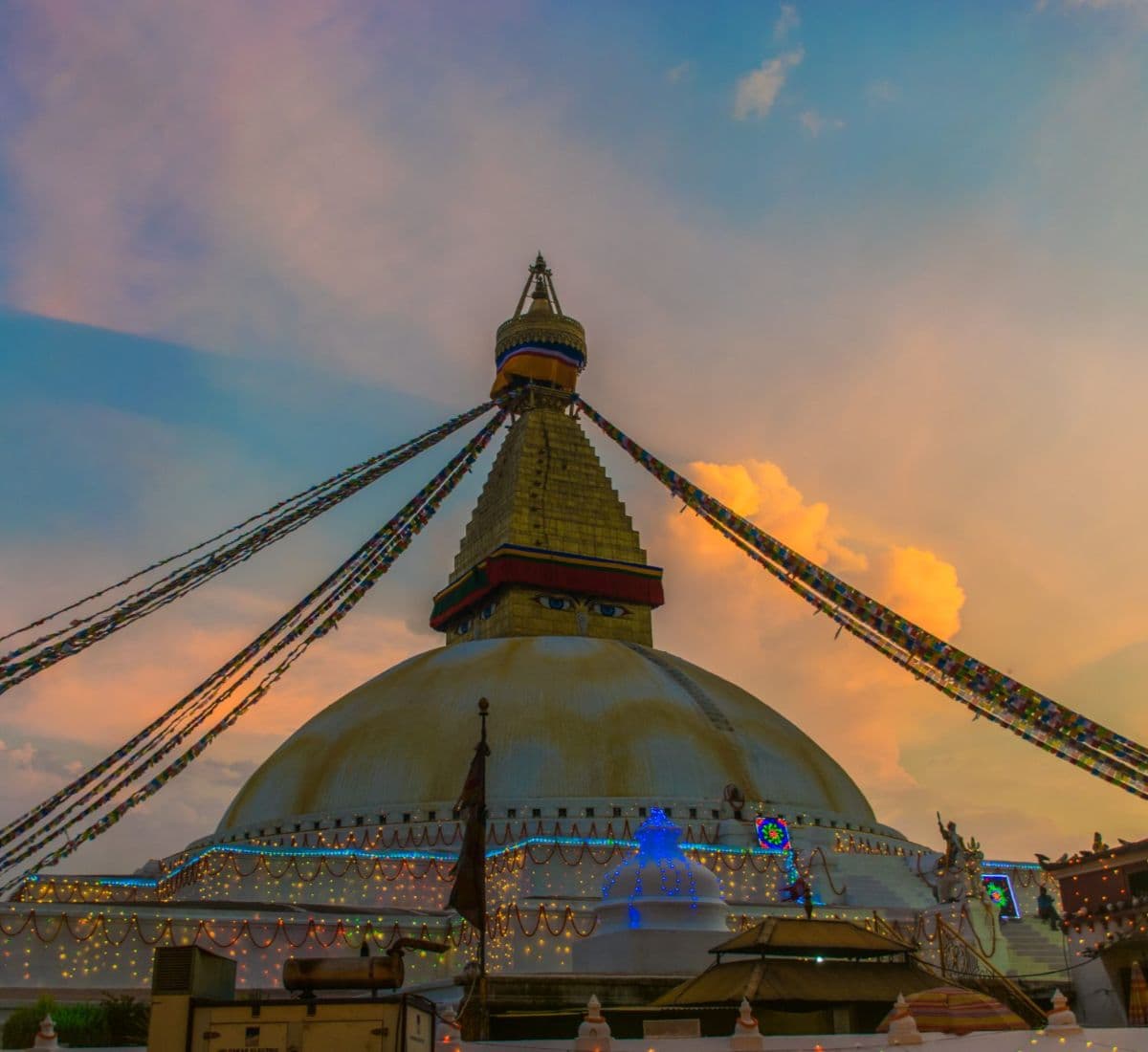
People from every corner of the globe come here to pray, meditate, and find peace. It has a great white dome that is topped off with a gold spire. The peaceful atmosphere and soft sound of monastic chant make this very special.
The towers are painted with large-scale eyes of Buddha that watch over all living beings. Around the stupa are found colorful prayer flags as they wave in the wind, carrying prayers to the sky.
Boudhanath is more than a place of worship. It is a representation of Nepal’s culture, history, and religious peace. Whether you are a pilgrim or just a tourist, this place speaks to you.
Where is the Boudhanath Stupa Located?
Boudhanath Stupa is situated in the northeast of the capital Kathmandu, Nepal. It is 9km to the city center of Thamel, which is the main tourist location.

The area of Boudha is a highly spiritual and tranquillity-filled place. It houses a huge Tibetan community and includes the stupa. Reaching Boudhanath is very easy. It takes 15 to 20 minutes to drive by car from Tribhuvan International Airport.
A taxi, a neighboring bus, or a separate vehicle may be taken. A majority of tourists take the cab. It is because of comfort and the convenience associated with taking it.
The stupa lies in the vicinity of the Pashupatinath Temple, which is 2 km. It attracts a lot of people who visit both of them in a day since they are very close to each other. When you arrive in Boudha, you will find the towering stupa. Standing above the constructed environment surrounding it.
There is no traffic around the stupa. Instead, what awaits you around the stupa are narrow lanes with shops. You can rest in cafes and monasteries. It forms an ideal rest area where one can spend time in the silence that engulfs the stupa.
Who built Boudhanath Stupa?
Boudhanath Stupa has a legend wrapped around its origin. The stupa was constructed during the 5th or 6th century AD.
In a popular tale, it is said that the stupa was built by a widow named Jhapko Lakpa. She is said to have given up all her wealth to construct the stupa out of great faith. Some say she did this to bring peace and happiness to the world.

In another story goes back to the times of the early kings. King Manadeva either built or renovated the stupa during his time as ruler. Some also think that the stupa’s design is founded in the Buddhist mandala. In turn, symbolizing the universe. This concept ties the structure to ancient Buddhist tenets.
Whether of a king or a humble widow, what matters most is the faith and devotion brought to the stupa to life. Over the years, rulers and communities came to restore and care for Boudhanath. Thus preserving it for generations.
How Old is the Boudhanath Stupa?
Boudhanath Stupa is an ancient structure. Most experts place the date of its construction in the 5th or 6th century AD. Thus, it has stood the test of time for over 1,500 years.

The record is unclear on the exact date of construction. It is thought to have been soon after King Manadeva’s reign, which was around the 5th century in Nepal.
For many years, the stupa has withstood earthquakes and invasions through the centuries. It has been restored and reconstructed by local people and Buddhist communities.
Its great age is what has made Boudhanath into a symbol of religion as well as a piece of living culture in Nepal. Here, you experience religious practice and the legacy of over 800 years.
History of Boudhanath Stupa
Boudhanath Stupa’s past is very in-depth and wide-ranging. It goes far beyond the scope of a religious monument. The site was also of large importance in the old days, as it lay along the main trade route that went from Nepal to Tibet.
Merchants and travelers who passed through the Himalayas come to pray and rest. To them, Boudhanath offers spiritual protection and good fortune on long arduous journeys. made the stupa a hub of activity and culture. In the local Newari tongue, Boudhanath was also called Khaasti Stupa.

Over time, Boudhanath became the preeminent center of Tibetan Buddhism outside Tibet. After the Chinese invasion in the 1950s, Tibetan refugees poured into Nepal. Many of them settled near the stupa. They established great monasteries that became centers of Buddhist study and practice.
The stupa is a symbol of peace, compassion, and wisdom. Its unique architecture represents the Buddhist path to enlightenment. From Nepal, Tibet, India, and other countries, pilgrims come in to perform rituals and meditate.
For generations, Boudhanath Stupa has been a sign of religious peace. Likewise, it became a hub for cultural trade. It brings together people from diverse backgrounds via faith and tradition.
Importance of Boudhanath Stupa
Boudhanath Stupa is very sacred and important in Nepal, also for Tibetan Buddhists. It is a symbol of enlightenment, peace, and protection.

For Tibetan Buddhists, Boudhanath is a living spiritual center. It is far beyond a monument. There, daily monks, nuns, and pilgrims come to pray, meditate, and do rituals. The stupa is a symbol of the Buddha’s mind and teachings, which also puts into view the path to enlightenment.
Buddha’s eyes painted on the stupa see out in all four directions. This is a symbol of his watchful presence and wisdom that guides and protects all beings. The stupa’s base is a representation of the world. At the top, we find a spire connecting earth and heaven.
Boudhanath is also a site of the kora. A ritual that devotees do by walking around the stupa in a clockwise direction. You spin prayer wheels and chant mantras. It is thought to purify the mind and accumulate good karma.
Importance as a Heritage Site
Boudha at the time of its great cultural and religious importance. Boudhanath Stupa was made a UNESCO World Heritage Site in 1979. It was put under the list by UNESCO for that site’s preeminent universal value. It is a symbol of Tibetan Buddhism and Nepalese culture.

The stupa is home to over fifty Tibetan monasteries. It, in turn, makes it a key center for Buddhist study and practice beyond Tibet. It also plays an important role in the preservation of Tibetan culture. Many refugees have settled here.
Symbol Of Peace
Beyond the scope of religion, Boudhanath Stupa is a symbol of peace and harmony. People of all backgrounds, faiths, and nationalities come here for peace and healing. The tranquil atmosphere fosters meditation, reflection, and brings us inner peace.

Boudhanath Stupa is the heart of the spiritual world for many. It brings together communities through faith, culture, and hope. Beyond the borders of Nepal, it is a worldwide point of importance that touches lives.
Boudhanath Stupa Architecture
Boudhanath Stupa is a beautiful example of design with rich meaning. It is a large-scale mandala in the Buddhist tradition. It is a symbolic representation of the world.
At the bottom of the stupa is a large white dome. This dome symbolizes that the earth is the most striking element of the stupa. Its smooth, round shape brings a sense of peace and stability.

Above the dome, Harmika rises a structure in the form of a square. To each of its four sides are the well-known Buddha eyes in bold color. These eyes stand for wisdom and compassion that watch over the north, south, east, and west.
Above the Harmika is a golden spire that has thirteen steps or rings. At the top of the spire, an umbrella-like structure is the chhatra, a symbol of protection. In the world of desire, the world of forms, and the formless world.
Around the stupa, you will find arrays of prayer wheels. Devotees spin these as they walk around the stupa. They believe in releasing prayers and blessings into the world. The whole stupa is painted white with vividly colored details on the spire and eyes. This stands out in the Kathmandu skyline, particularly at sunset.
Boudhanath Stupa: Eyes Buddha’s Watchful Eyes
A very prominent feature is the set of large eyes that can be seen on each of the four sides of the tower's top of the dome. These are the Buddha’s All-Seeing Eyes.
The eyes that display Buddha’s wisdom, awareness, and compassion. They see out to the north, south, east, and west. It means that Buddha sees all and is watchful of all living things, no matter their place.

In the middle of the eyes is a design that is a question mark or a nose. That is the representation of the Nepali number “1”. It is the symbol of unity; the one path to enlightenment is through the Buddha’s teachings. It is a reminder that we are all the same and that kindness is what connects us.
Above the eye level is what some report to be a third eye. This is the eye of wisdom that displays Buddha’s great spiritual insight. It represents his ability to see beyond the physical world.
Boudhanath Stupa After the 2015 Earthquake
On 2015 April 25, Nepal suffered a massive earthquake. It destroyed the country in large measure. The most sacred and historic monument of Nepal, Boudhanath Stupa, was massively damaged. Furthermore, the earthquake became one of the most fatal disasters in Everest.
It hit the main dome and the gold spire that crowned it. The structure had a few cracks, and to be safe, the upper half of the spire had to come down. This was the first time in years that the stupa was off limits to visitors.

Local Buddhist communities, monasteries, and volunteers took the first steps. It set things into motion for the reconstruction process during the following months.
Boudhanath Area Development Committee spearheaded the restoration. Also, backed by the monasteries, local artisans, and international donors. Masters of hands and the techniques of ages-old offered their services. Many donated materials, such as handmade bricks and gold plating.
They returned the stupa to its previous form. Yet the charm and cultural significance of the monument were preserved.
Buddhist rituals and blessings were also conducted during the reconstruction. The site remains unaffected spiritually. The newly restored Boudhanath Stupa reopened in 2016. The great ceremony occurred, and thousands of people attended the event.
Can You Go Inside Boudhanath Stupa?
No, there is no access for visitors into the main dome of Boudhanath Stupa. There is a large brick and mortar core at the stupa’s heart. There is no internal space or chamber for passage.
You can walk around the stupa, which is called the kora, a ritual circumambulation. Devotees and visitors go around in a clockwise direction with the stupa to their right. Along the way, you will pass many a prayer wheel in the wall. As you spin them, it is thought that the prayers go out into the world.

Walking the full kora path is a 20-to-30-minute walk at an easy-going pace. You will see monks, nuns, and pilgrims are into soft chanting of “Om Mani Padme Hum” as they go. The practice of walking, turning prayer wheels, and reciting mantras is a meditation.
You may not access the inner sanctum of the dome. But the periphery path is a very spiritual and peaceful experience. It allows you to connect with the history of the Buddhist practice and the mild energy of the stupa.
Boudhanath Stupa Kora: Ritual Circumambulation
At Boudhanath Stupa, you can take part in the kora. The sacred practice of walking around the stupa in a clockwise direction. This is a way to show respect, to gain merit (good karma), and to put oneself on their spiritual path. At Boudhanath, this practice goes on from very early in the morning until late in the evening.
You will see monks and nuns go about their daily lives. Watch elderly, tourists, and locals in a peaceful, silent setting or at a calm prayer. It is thought that as the wheels turn, the prayers go out into the world and bring peace for all.

Many also hold mala beads as they walk, accompanied by their soft chant. Walking, praying, and focusing the mind is a living form of meditation. Most people go around the stupa at least once, but some devotees do many rounds as a great act of faith.
At Boudhanath, the kora is not just a ritual. It is an experience that brings the community together. You get to calm the mind and foster connection. Whether you are a Buddhist or not, you can take part in the kora. You can feel peace, that’s hard to put into words, but very much felt.
Boudhanath Stupa Prayer Flags and Lamps
As soon as you arrive at Boudhanath Stupa, you will see the colorful prayer flags. See them dancing in the wind and the warm glow of butter lamps lighting up the area. Both are very symbolic in Tibetan Buddhism. They contribute to the spiritual beauty of the stupa.
Prayer Flags
Prayer flags are dangled down to the base, in turn extending in all directions. Five colors also represent the natural elements:

Blue for sky
White for air
Red for fire
Green for water
Yellow for earth
Each flag is adorned with sacred mantras, prayers, and symbols. We believe the wind takes these prayers to the world. And in turn spreads peace, compassion, and blessings to all. As the flags wear out and tear with time, they continue to pray for the world.
Butter Lamps
Around the stupa and in nearby monasteries, you will see rows of butter lamps. Devotees light these as offerings. A butter lamp is a symbol of wisdom and enlightenment, which in turn helps to put out the fire of ignorance.

People use lamps for many reasons, including peace, healing, and in memory of loved ones. We see the lamps flicker in a silent environment, which enhances the peace and sacred feel of the place.
The prayer flags and butter lamps add color, light, and strong spiritual energy. They tell each visitor this is a place of prayer, hope, and harmony.
Things one can see around Boudhanath
Boudhanath Stupa is a point of religious interest. It is filled with lively and tranquil neighborhoods that are full of culture, art, and food. In this neighborhood, you will find some of the top attractions around the stupa:
Tibetan Monasteries and Gompas
In Boudhanath’s area, there are over 50 Tibetan monasteries (gompas). These beautiful monasteries are open to the public. At times, fill up with colorful murals, prayer wheels, statues, and chanting monks.

The famous monasteries are Shechen Monastery, Kopan Monastery, and Drepung Gompa. They have visitors who come in to join in the prayers or who just sit and enjoy the peace.
Local Handicraft Shops
The area around the stupa is filled with local shops that sell handmade crafts. They have singing bowls, incense, prayer wheels, jewelry, woolen products, and Tibetan souvenirs.
In these shops, you will find great, meaningful gifts or something to take home from your visit.
Thangka Painting Galleries
Thangkas are a form of Tibetan Buddhist art that we see in fabric. At Boudhanath, you will come across many Thangka galleries.

Workshops run by artists who hand-paint spiritual deities and symbols in detail. Some of these places will allow you to watch the painting process or sign up for a short class.
Tibetan Food and Rooftop Cafes
After you explore a bit, you can relax in one of the many rooftop cafes that present to you the sight of the stupa. In the area, you will find a great choice of Tibetan and Nepali food.

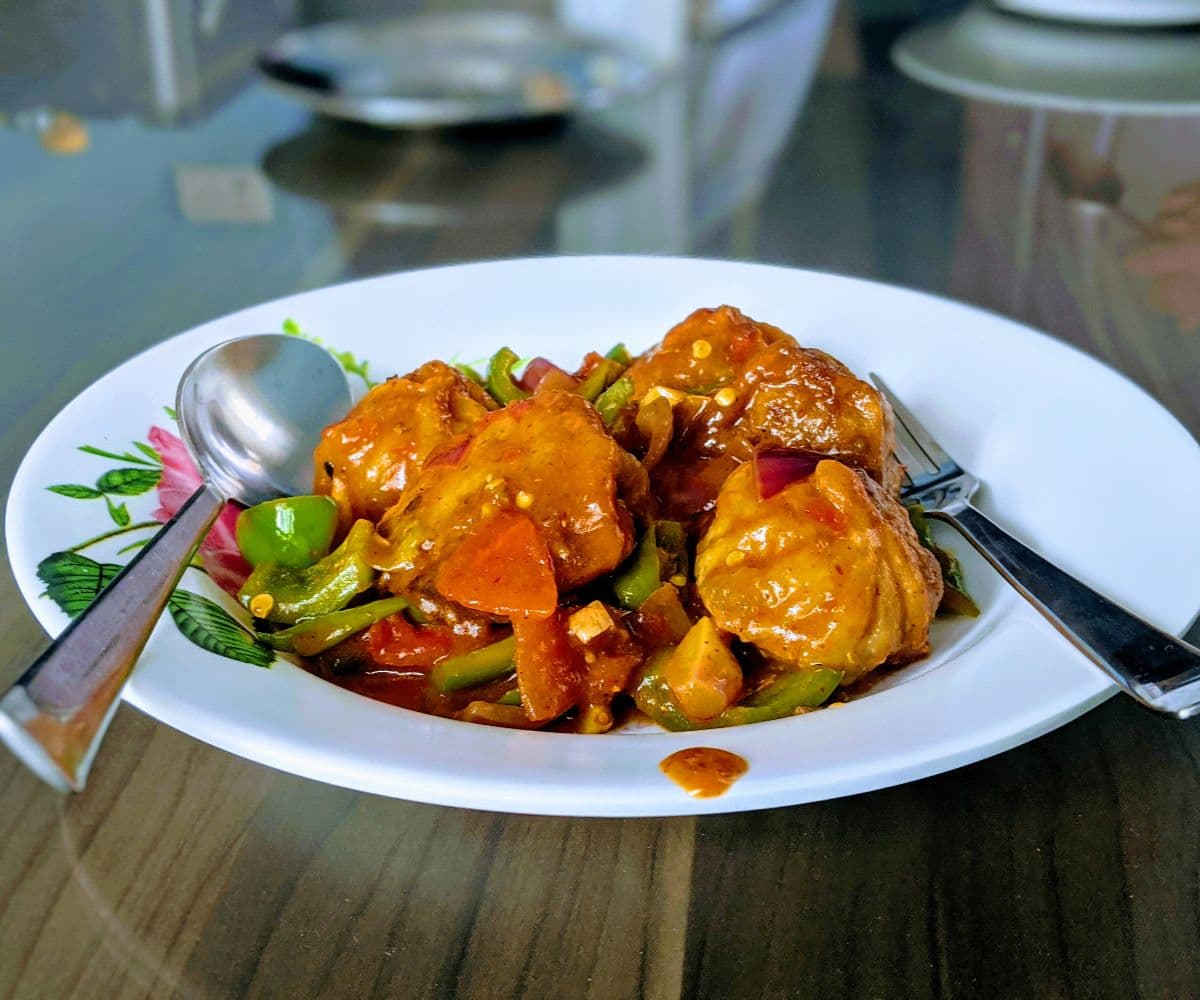
Don’t pass on trying Momo (dumplings) and Thukpa (noodle soup), as well as butter tea and Tibetan bread. Keema Noodles are famous as well.
Best Time to Visit Boudhanath
Boudhanath Stupa is open all year round. The best time to visit is in the autumn (September to November) and spring (March to May) seasons. These months offer clear skies and pleasant temperatures. It is the best weather for a stroll in the stupa and into the peaceful ambiance.

Winter may be cold, but mornings are peaceful and quiet. In summer, we get some rain, which in turn makes the stupa’s environment very fresh and clean.
At the break of day, and as the monks and local community begin their day with prayer and kora. The mornings are very peaceful. The light is soft, and the crowds are few, creating a calm and spiritual atmosphere.
Sunrise is also beautiful. The light touches the white dome, prayer flags dance in the breeze, and butter lamps start to glow. It is magical.
Boudhanath at its liveliest and most vibrant, schedule a trip during Buddha Jayanti. It is the birth of Buddha (which is in April or May), or Lhosar, the Tibetan New Year (which is in February or March).
During the festivals, the stupa is lit up with lamps and flowers. Monks chant prayers. People light thousands of butter lamps. The area comes to life with traditional music and dance. Whether in the peace of prayer or photography. The time you choose will enhance your experience at Boudhanath.
Boudhanath Stupa Opening Times
Boudhanath Stupa is open daily to visitors from very early in the morning until night.
Opening Time: At around 5:00 AM.
Closing Time: At around 8:00 PM.

During that time, you may walk around the stupa. Or spin prayer wheels. You can visit outlying monasteries and take in the peaceful setting. In the early mornings, things are very calm and very spiritual. At times in the evenings, you also have the beautiful spectacle of the butter lamps being lit.
The stupa is out in the open and always in view. Access to the inner walkway (kora path) and rooftop cafes may close at 8 PM. Also, monasteries in the area may have their own visiting times. It is best to visit during the day to see the beauty of the stupa, the shops, and local experiences.
Boudhanath Stupa Entry Fee
For the better preservation and maintenance of Boudhanath Stupa. They charge a very small fee from the visitors.

For Indian and other SAARC nationals, the fee is of the order of NPR 100. For tourists from abroad, the entry fee is higher, going up to NPR 400. Children under the age of 10 get in free.
At the entry gate to the stupa, the ticket is presented. The revenue goes towards stupa maintenance as well as that of nearby monasteries. They also improve services for our pilgrims and tourists.
Boudhanath Stupa Dress Code
At Boudhanath Stupa, it is important to dress respectfully, as this is a sacred site for many. We ask that you wear moderate clothing that covers the shoulders and knees.
Wear long pants and sleeves; it is best to avoid tight-fitting clothes in this religious setting, which is more formal. As for footwear, go for comfortable shoes as you will be doing a lot of walking around the stupa and the outlying areas.

It is a good idea to stay away from bright and flashy colors, which break the peace. Many guests go for light, natural colors that fit in with the calm setting. If you are visiting during the cold months, pack a shawl or scarf that also doubles as a head covering inside the monasteries.
By putting on appropriate attire, you show that you respect local customs and the spiritual value of Boudhanath Stupa. This in turn creates a welcoming atmosphere for all, from the pilgrims and monks to the tourists.
Distance of Boudhanath Stupa from Popular Places
From Tribhuvan International Airport:
Boudhanath Stupa is at a distance of 6 km (3.7 mi) from the main airport of Kathmandu. By taxi or car, the time for the trip is usually 15 to 20 minutes. But the time varies depending on the traffic we have at that time.
From Thamel:
Thamel, the main tourist area in Kathmandu, is at a distance of roughly 8 kilometers (5 miles) from Boudhanath. The drive time is 20 to 30 minutes, varying according to the time of day. Many travelers prefer to visit Boudhanath right after they are done shopping and dining in Thamel.
From Pashupatinath Temple:
Pashupatinath Temple, a very popular pilgrimage site for Hindus, is right next to Boudhanath Stupa. It is a distance of 2.5 km (1.5 miles) by car, which takes 7 to 10 minutes, and on foot may take up to 30 minutes. We assume you will enjoy it.
From Patan Durbar Square:
Patan Durbar Square, home of the rich Newari culture and architecture, is about 7 km (4.3 mi) from Boudhanath Stupa. That will take you to a 20 to 30 minute drive, which may vary with traffic.
Interesting Facts About Boudhanath Stupa
Boudhanath Stupa is the largest of its kind in the world and the biggest in Nepal.
Buddha’s eyes painted on each of the four sides symbolize his all-seeing wisdom and compassion.
In 1979, it was named a UNESCO World Heritage Site for its cultural and religious value.
The stupa rises to a height of 36 meters (118 feet), making it a prominent feature of Kathmandu.
Around 50 Tibetan Buddhist monasteries are located near the stupa, which in turn is a very active spiritual center.
The stupa’s design is a map of the Buddhist path to enlightenment in its domes, spires, and terraces contains layers of symbolism.
Boudhanath is a large pilgrimage destination for people from Nepal, Tibet, India, and the rest of the world.
The stupa withstood many earthquakes over the centuries, suffered very bad damage in 2015, but was put back to its former self.
Prayer flags wave above the stupa, sending our prayers to the sky and also representing the five elements of nature.
Walking in a circular motion around the stupa in a clockwise direction, known as kora, is a very important ritual for Buddhists.
Final Words: Why You Should See Boudhanath Stupa?
Visiting Boudhanath Stupa is not a typical tourist activity. It is a pilgrimage into peace, spirituality, and culture. Standing by the large dome in the midst of the whisper of prayer flags and the quiet of prayer, you can feel a peace that stays with you after you go.

Boudhanath is for you whether you are on a path of spiritual growth, seeking culture, or just a quiet moment.
This sacred site brings together people from different walks of life, and we invite you to be a part of a great tradition of hope and compassion. A visit here is a great chance to find inner peace in the heart of Nepal.
FAQs
Where is the Boudhanath Stupa located?
It is in the eastern part of Kathmandu, Nepal is at a distance of 8 km from Thamel.
How old is Boudhanath Stupa?
Boudhanath Stupa is over 1,500 years old and was built in the 5th or 6th century AD.
Can visitors go inside the stupa?
No, the stupa is a solid structure visitors may go all the way around.
What role do the eyes play in stupa design?
Buddha's presence is felt in all four directions through his eyes.
Is entry into the Boudhanath Stupa free?
No, the entry to Boudhanath Stupa is not free. The foreigners must pay a fee before entering.
What is ‘kora’ around Boudhanath Stupa?
Kora is the practice of walking in a clockwise direction around the stupa while also rotating prayer wheels and reciting mantras.
What is the best time to go to Boudhanath?
During spring and fall, as well as at the time of festivals like Buddha Jayanti and Lhosar.
Was there damage at Boudhanath in the 2015 quake?
Yes, it had damage, but it was opened again in 2016.