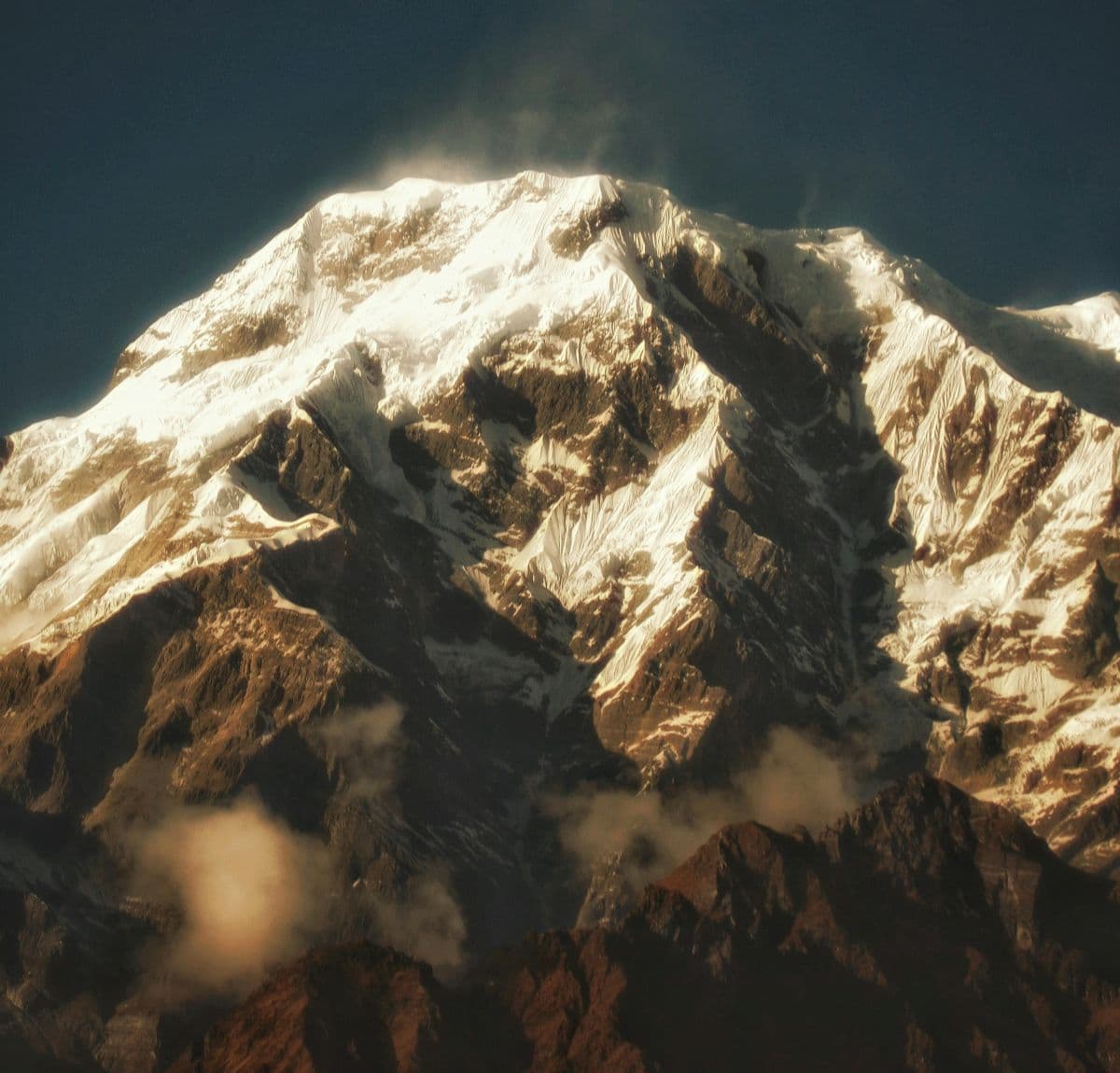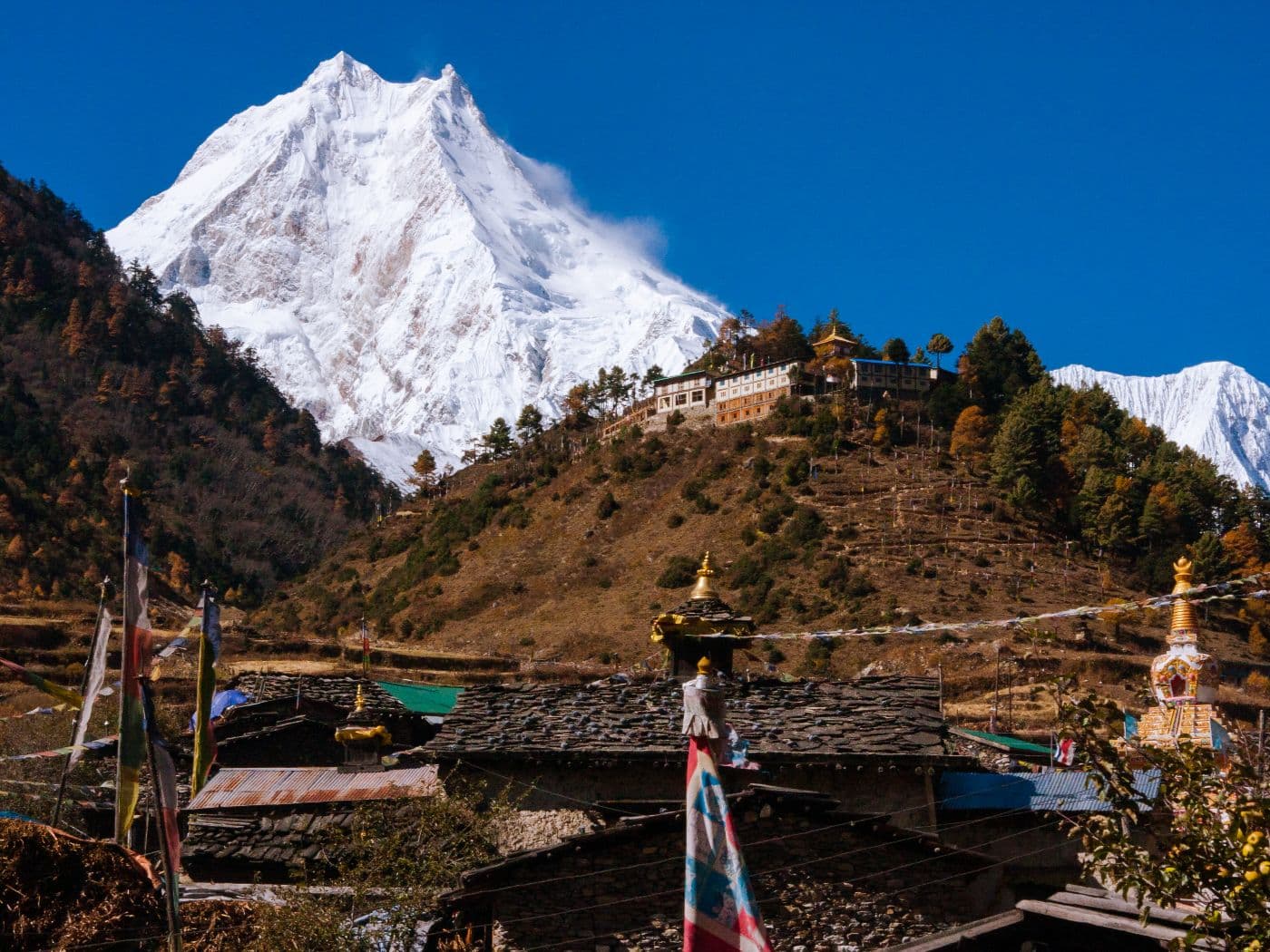
The Manaslu region is named after the mountain Manaslu (8,163 meters). Moreover, it is the world’s eighth-highest mountain. Manaslu is located in the north-central part of Nepal and runs along the Budhi Gandaki River. The Manaslu region is a part of the Gorkha district.
Manaslu provides an important linkage between Nepal and the Tibetan plateau. It provides a geographical and cultural mix that is unmatched in the other regions.
It is a mountainous terrain with sharp ridges and deep, alpine and glacial valleys. It has retained an antique lifestyle, which has survived to date. The modern world remains far from this region.
The Manaslu Circuit Trek has become increasingly popular among longtime trekkers. It presents more culture and nature-rich experiences in an unknown part of the world.
This restricted trekking area was not opened to foreign travelers until 1991. But even then, it also demands special permission. This thereby limited the growth of excessive tourist attention. But the region has preserved the real picture of the traditional communities, too.
Manaslu: Gateway to Ancient Nepal
Being isolated, the Manaslu region has turned into a living museum of the Himalaya. The age-old practices and lifestyles are still intact to a large extent.

The trekkers encounter a progression of desolate villages of the Himalayas. It includes Jagat, Deng, Namrung, Lho, Samagaon, and Samdo. This demonstrates unique cultural identities. Learn about settlement patterns in thousands-of-years of modifying high-altitude living conditions.
These villages have people of different ethnicities. They have a spiritual culture based on Tibetan Buddhism practices, shamanism, and animism. Be in the prayer-flag-festooned bani or the smoke drifting upwards in yak-dung fires. Every breath one takes is full of cultural background. It is far-reaching in every encounter with the natives themselves.
The snow-capped mountains of Manaslu are awesome. But the cultural diversity of the region is as spectacular as it can get. And this is what makes the trek more than trekking.
Travelers will see a dramatic landscape. They also experience the rhythms of the mountain life of people. They will see how people harvest buckwheat and spin wool. They will hear people singing their evening rites.
These special and valuable experiences show the worth of the region. It is a place that not only offers scenic beauty but also cultural value. To a great extent, the journey around Manaslu can be seen as a kind of physical adventure. It takes place in the high-mountainous terrain. But provides insight into the level of civilization and beliefs of the Himalayas.
Unchanged for Centuries: The Manaslu Region
Walk on the old paths along which the Tibetan salt trade once took place. The trekkers are able to experience the past in the sacred monasteries, stone chortens, and villages. Their way of life has not changed in centuries. The fusion of nature and culture observed here is unique. Manaslu region, thus, remains a treasure of cultural tourism and anthropological attraction.

Be it a view of centuries-old gompa or a humble meal of tsampa with a local family. Every experience in the Manaslu feels like another world. Far away from civilized society.
Ancient customs, the symbolism of spirituality, and the indigenous systems of knowledge. They are not the remnants of the historical past but rather an active component of everyday life. The level of immersion in the Manaslu region is both as informative as it is inspirational. It is a all you can eat buffet for culturally curious travellers.
Ethnic Groups of the Manaslu Region
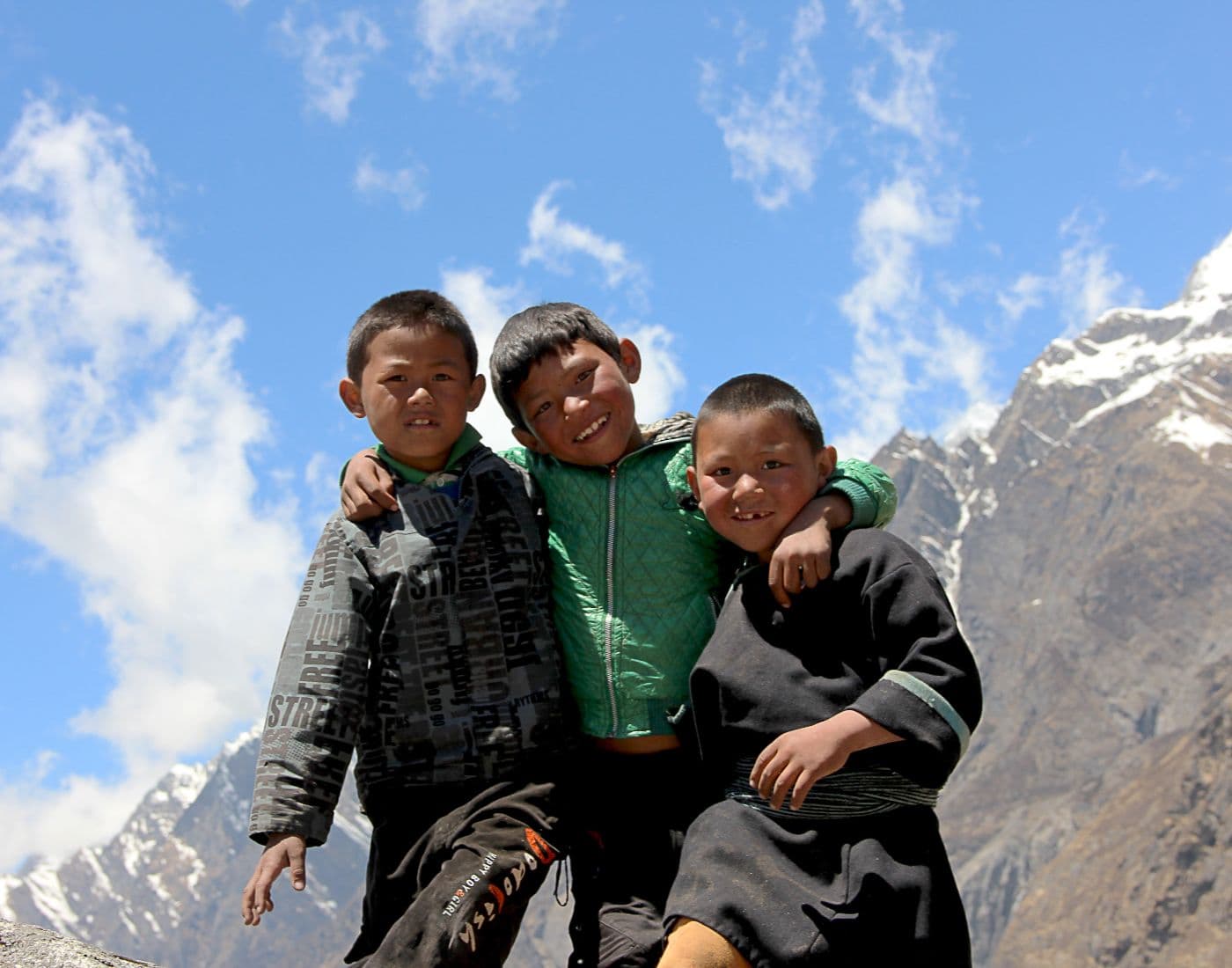
Cultural diversity and ethnicity are also prevalent in the Manaslu region. People occupying the area are from the Gurung, Nubri, and Tsumba communities. They have different languages, traditions, and belief systems.

Generation of sustainable life and spiritual strength. Dependability on nature is the feature that has allowed these ethnic groups to get along in the Himalayan highlands.
They are peculiar to have their own lifestyle. It is inextricably connected with the topography and elevation of the area. It is a unique custom and world perception.
Nubri People in Manaslu
People living in the upper region of Manaslu Valley are known as the Nubri people. They are descendants of Tibetan migrants. That is why they maintain strong cultural relations with Tibet.

They live in settlements that have flat-roofed houses with stone walls. Especially the Samagaon and Lho. They crave the bedrooms, which are elaborately designed. Prayer wheels and ancient monasteries are the hub of spiritual and social activity.
They use the dialect of Tibetan and wear the traditional woolen dress (chuba). Also, they celebrate the Buddhist festivals following the Tibetan lunar calendar.
The Nubri are a religious people with a deep-rooted tradition in the Vajrayana. It is a form of Tibetan Buddhism. The religion features a strong presence of monks and lamas. Most come as guidance leaders, instructors, and healers.
Watch the everyday action. See butter lamp-lighting, spinning prayer-wheels, and mantra-chanting. Such activities are not merely acts of worship. It is also a way of ensuring they have balance in nature and the spirit realm. Particularly in an environment where anything can go wrong.
Tsumba People of Tsum Valley
Towards the northeast of the area is the sacred and semi-restricted Tsum Valley. It is the house of the Tsumba, highly spiritual and secluded people. Tsumba culture is very righteous. It is based on non-violence, vegetarianism, and Buddhism. It is the most spiritually intense region in the Himalayas.

Tsum families tend to send a child to be a monk or nun at least once. Nepal and Tibet also have some great monasteries, like the Mu Gompa or the Rachen Nunnery. They are spiritual sanctuaries to practitioners all over Nepal and Tibet.
The Tsumba speak a different dialect and also have a unified outlook on Buddhist beliefs. They incorporate both Mahayana and Bon traditions. They emphasized compassion, karma, and reincarnation.
They have minimal access to modern amenities. As such, the Tsumba people tend to have fierce oral traditions and have solid communities. It creates health and cultural preservation.
They have a sacred topography with cliffs featuring the mani stones. Some meditation caves show their strong belief in the sacredness of the terrain.
Gurung People in Manaslu
Gurung are a people in the low hills of the Manaslu Circuit Trek. They add another dimension of cultural expression to this region. The Gurungs are regarded as a hospitable, warrior-like culture with a lot of folklore. The Gurungs follow a combination of Tibetan Buddhism, Hinduism, and prehistoric shamanism.

They have colorful festivals like Losar and Tamu Lhosar. They have traditional music and dance. It includes Ghatu and Sorathi, community feasts, which would serve to bind the village.
The Gurung population is also characterized by a healthy diaspora of people. Yes, it includes retired Gurkha soldiers. They contribute to local development as a form of remittance and education initiatives.
Gurungs are agriculturalists. They grow maize, millet, and vegetables. They use terraced cultivation in their home villages. Gurung people hold rituals to bring good harvests and help against evil spirits.
They have a social organization that appreciates elders, clan relations, and community-based decision-making. It makes them maintain their identity in the modern, fast-changing world.
Life in the Himalayas
These three people, the Gurung, Nubri, and Tsumba, are the cultural blood of the Manaslu region. Each represents a different window on the world of Himalayan life.

They can coexist and at the same time have different traditions. It is a perfect example of cultural harmony in this remote corner of Nepal. To the outsider, getting a feel of these groups is helpful. It enriches knowledge thereof. But it is also indispensable towards the realization of the world of Manaslu.
Traditional Lifestyle and Occupations
The Manaslu region has a traditional way of life that is closely related to the land. Agriculture is the main activity of most of the families. On the steep mountainsides, families cultivate crops including buckwheat, barley, potatoes, and maize. They use centuries-old farming techniques. They are adapted to high altitudes and erratic weather conditions.
The farming activity tends to be a social activity. The neighbors and family come to help out during planting and harvesting seasons. As the coherent sense of social cohesiveness in the region is very strong.

Yak farming is still the base of livelihood in Nubri and Tsum in the higher altitude. Here, yaks and their hybrid chauris (yak-cow breed) offer milk, butter, wool, and meat. They even fuel by means of dried dung.
The livestock herders transhumance between the pasturelands of the Alps and the lower refuges in winter. with a transhumance rhythm reminding the evolution of the terrain. This lifestyle makes them semi-nomads. Thus, it brings about resilience, self-reliance, and an intimate understanding of mountain ecology. And this runs in generations.
Economy in Manaslu
The economic activities between the Manaslu region and Tibet have always been cross-border trade. Especially by the Nubri and Tsumba people. In specific regions, traditional barter systems remain in existence.
Products such as salt, wool, dried meat, and medicinal herbs are traded for rice, spices, and clothing from the lower valleys. The people in Manaslu lost the trade routes through political borders. But this history still defines local economies, architecture, and cultural identity.

The families in the area observe a subsistence model of living. They eat what they produce. And minimal external sources are used to serve the necessities.
You can find preserved food in storage cellars, smoked-drying foods, and preserved dairy foods. This enables communities to endure the prolonged winter seasons. There is almost no contact with the outside communities.
Isolation of these villages has contributed to the preservation of culture. You can find ancient occupations, gear, and lifeways in this region. Some are fast disappearing in other parts of the Himalayas.
Seasonal Migration in Manaslu
Seasonal migration also provides a survival diet. Some men travel to Kathmandu and Pokhara when it is not the agricultural harvest. They go to work as porters, herders, or laborers. The migration provides a supplementary income. It also imports knowledge, tools, and materials. Gradually incorporating them into the conventional ways of life.

Nevertheless, there has been a certain modernisation of its values. But the traditional pillars of self-sufficiency and communal lifestyles. Unity with nature has always been applied in most houses.
Such an elaborate mix between farming and yak rearing. Commerce is not merely a survival mechanism, but it is what forms the cultural rhythm in Manaslu. Spirituality is supported by a labor-intensive mode of living. It builds strong kinship structures. It provides a land attachment of people to their land.
This is the kind of life that brings the Manaslu Circuit Trek its authenticity and depth. Trekkers have more than beautiful views to explore. It is a perspective into a way of life that has been shaped by strength and tradition.
Local Dialects and Language in Manaslu
The Manaslu region has linguistic diversity that is simply out of this world. Given the nature of the region, which can be described as an ethnic mosaic and is geographically isolated. Nubri and Tsum Valleys are inhabited by people speaking dissimilar Tibetan dialects.

Nubri-ke and Tsum-ke are not understood by one another. But they are based on Classical Tibetan, with minor adaptations. Dialects aren't only used for communication. It also serves as a repository of spiritual texts, folktales, and agricultural knowledge.
Nepali is the most spoken language throughout the lowland valleys. Particularly in trade, education, and government dealings in mixed settlements. A lot of the villagers are also bilingual/trilingual. Many can switch between the native dialect, Nepali, and, in some cases, Hindi. Some can use elementary English when communicating with trekkers.
This cultural polyglotism is an advantage. As it is through the Manaslu Circuit Trek, as a tourism economy, communities can safeguard their culture. At the same time, connect with the rest of the world.
There is, however, a concern about the language shift. Especially among the youngsters who have been educated in Nepali and are subjected to urban migration. So, a section of the children is losing their ancestral dialect fluency. Thereby weakening the oral traditions and religious recitations that form their very backbone.
Economic pressure and modernization are also associated with language erosion. The young people do not stay much longer in the villages. As such, they can't perpetuate linguistic and cultural progression.
To counter this, monasteries and schools have launched programs aimed at preserving the language. In areas such as Samagaon and Chhokangparo. These involve teaching through Tibetan writings, storytelling, and translating the Buddhist writings. The local dialect fosters their usage and pride in the heritage.
Linguistic Conservation Efforts
Villages have also been collaborating with NGOs and linguistic researchers. They record such at-risk dialects. They make audio archives and literacy documents that could be essential later on. The issues of language conservation are closely related to cultural survival. Because so much of identity is connected to local language. Be it through rituals or songs, or prayers, or even through agricultural instructions.
The loss of dialects goes hand in hand with disappearances of intangible heritage. It is why keeping them alive is a burning concern. Not only to linguists but also to the existence of the Himalayan culture as a whole. With the increased influence of the outside world on trekking routes. These initiatives are perfect for preserving the linguistic influences. As development is not expected to come at the expense of cultural death.
The unique Nubri and Tsum languages are not mere linguistic oddities. They are statements about a philosophy of the world. They are inspired by Buddhism, environmental concern, and traditional folklore.
To maintain these dialects will be to maintain an entire oral tradition. It encompasses all manner of Bon chants, from harvest songs to healing cures. As a form of sensible tourism, as far as the Manaslu region is concerned, maintaining language diversity should be taken as a priority. If you are culturally adventurous tourists who are also proponents of indigenous culture.
Spiritual Life and Religion in Manaslu
In the Manaslu region, spirituality is integrated deeply with all daily activities. The Tibetan Buddhism religion is the center of religious life and societal organization. Such ancient monasteries, or gompas, are there in the villages of Lho, Samagaon, and Chhokangparo. They serve as spiritual meeting points of worship, education, and community rituals.
Everywhere there is evidence of religious sentiment. Be it in prayer wheels, mani walls inscribed with sacred mantras, and prayer flags fluttering in the wind.

Lamas or Buddhist monks take a prime role in controlling the spiritual welfare of the community. They conduct rituals in birth, marriage, death, and seasonal festivals. Most families will sacrifice one of their kids to enter a monastic institution. The idea is that spiritual lineage and sacred texts are passed on from generation to generation.
Vajrayana Buddhism, which is taught here, has principles. Compassion, Reincarnation, and Harmony are neutral with nature. They are found in such activities as funeral rituals and farming seasons.
Many monasteries are not only spiritual places, but also architectural marvels. They house hundreds of years-old thangkas, scriptures, and other relics. Some monasteries are Pungyen Gompa near Samagaon and Mu Gompa in Tsum Valley.
Commonly, these locations hold pujas (ritual ceremonies), masked dances, and chanting festivals. They draw both locals and pilgrims to far locations. To trekkers, this is more of an eye-opener. They learn how divine the harmonizing of life in the Himalaya is when one witnesses or takes part in these rituals.
Besides mainstream Buddhism, Bon culture and animistic spirituality play a role in Bonism. It is also in the spiritual life dominating the Tsum Valley, which is more isolated. Bon is one of the earliest shamanic religions, long before the advent of Buddhism. It thrives on the veneration of mountain gods and nature gods. Then execution of protective measures to neutralize natural power.
There is an intersection between Buddhist and shamanistic practices. Local healers known as amchis employ herbal remedies and incantations. They use divinations to cure diseases and to communicate with the spirits.
This animism indicates how the people of the area respect. People show high esteem for the mountains, rivers, and forests. They are seen to have some spiritual content and meaning. There are many sacred places. Places like caves, springs, and mountain passes are believed to contain the guardian spirits.

Villagers normally make an offering or get prayer flags when they want to take a journey that will mean something. These beliefs can support environmental stewardship. They generate a sense of the world where spirituality and ecology can be closely related.
The force of the spiritual life in the Manaslu region influences the identity, morals, and possibly political choices. As lamas sometimes act as mediators of the community problems. It provides order in everyday life. More so in an environment characterized by a lot of physicality. No way hiking through this place of pilgrimage. It is not filled with the emotion and wonder of the spiritual culture of this area.
Festivals and Rites in Manaslu
The Manaslu area is the setting of a rich and colorful calendar of multi-colored Tibetan Buddhist festivals. And all are highly intertwined in seasonal and religious cycles in the Himalayas.
Lhosar
One of the most noticeable of these celebrations is the Tibetan New Year (Lhosar). It is celebrated through prayers, mask dances, and colored flags. It offers to drive away misfortunes to bring in good fortune.

Special meals such as khapse (fried biscuits), share chang (barley beer) are also served by villagers. They are involved in family groupings that mostly have storytelling practices tradition.
Yartrung Festival
Yartung Festival is a major festival. It is traditionally celebrated at the close of summer, during the harvest period. It is another important festival dedicated to deities and local heroes. This festival comprises cheerful horse races, archery, and community feasting. It also displays athleticism and cultural unity.
Yartung is widely celebrated, though not as famous as in Mustang and the Upper region. Some places in the Manaslu region celebrate Yartung, especially in the Gurung regions.
Dumji Festival
One of the most significant rituals of the Nubri and Tsumba can be the Dumji Festival. It is the celebration of the birth of Guru Rinpoche. According to the culture of the Nubri and Tsumba people, the tantric Buddhist master brought Vajrayana Buddhism to the Himalayas. It is the tradition of complicated rites conducted by monks.

They hold blessing rituals, traditional music, and dance in honor of protective gods. The festivals are religious. Also, they act as a means to preserve their culture, socialize, and even connect the villages.
Seasonal and agricultural rituals in Manaslu
Other than the important festivals, there are also many seasonal and agricultural rituals. The purpose of which is to guarantee plentiful crops and good livestock. It also works as a guard against natural disasters.
Before sowing or moving yaks to summer pastures, farmers make offerings to the local mountain gods. It is interspersed with Buddhist prayers and ancient animist practices. Activities like this reveal a close relation between spiritual and ecological sustainability.
These ritual occasions have many supplements. You can see them chanting, butter lamp, using incense, and circular dancing. All these lead through powerful senses to strengthen the unity of the community and strengthen personal belief.
Seasonal ceremonies also serve as a sort of calendar. It allows far-flung communities to keep time, coordinate efforts, and pass on cultural knowledge. Traditions like this offer tourists a rare opportunity to see centuries-old culture still in an unbroken chain.
Religious Sites and Monasteries
Mu Gompa
The most distant and sacred monastery in the Tsum Valley is Mu Gompa. It is situated on a high hill near the border of Tibet at an altitude of more than 3,700 meters. It was first established in the 19th century. It is a spiritual retreat place for monks and nuns. It offers a place to live in ascetic solitude and undertake long periods of meditation.
The monastery contains very valuable Buddhist texts, statues, and relics. It offers relaxed performance venues, facilities, and teachings. The lessons are based on Nyingma Tibetan Buddhism.
Mu Gompa is an important part of the spiritual and cultural life in the valley. It leads the locals in religious practices. Also, it provides a focal point for community decisions. Villagers walk to the monastery to get blessings and initiation rites. Also, it turns up during pilgrimage festivals, attracting other worshipers in the region.
Although it is in a remote area, the gompa is assisted by people who live in nearby areas of the monastery. Some of these people donate food and firewood as well as their labor as a spiritual service.
Trekkers who visit Mu Gompa provide an intense insight into monastic life and the Himalayas' spirituality. Life consists of silence, prayer, and simplicity. The view of crimson-clad monks on snow-flats as far as the eye can see.
The acoustics of echoing chant in the halls of stone are very memorable indeed. Mu Gompa is not only a tourist attraction- it is a custodian of the intangible heritage of Tsum Valley.
Rachen Gompa
One big nunnery is Rachen Gompa in the center of Tsum Valley. It is at Chhokang Paro, and more than 20 female practitioners live there. The school was launched at the beginning of the 20th century. Rachen Gompa promotes gender- aware spiritual practice.
It is a center of female empowerment in the traditional Tibetan Buddhist society. The nunnery is also used as a learning place. There are teachings about Buddhist philosophy, rituals, and language.
The gompa is busy with the colorful wall paintings, prayer wheels, and thangkas. It is central to local festivals, including Dumji and Lhosar.
The nuns at Rachen have made a good reputation. Their discipline, knowledge, and service to the community. They also commonly perform rituals in families and teach the children basic literacy.
The kind and peaceful ambiance of Rachen Gompa is normally a very relaxed cultural experience. More so for the trekkers who access the valley.
Sound maintenance of spiritual and social traditions makes Rachen Gompa a strong cultural center in the valley. It makes sure that the Tibetan Buddhist teachings are accessible to all sexes and generations.
Its focus on compassion, study, and service is a reflection of the virtues central to the religious life of the Himalaya. Such nunneries in Nepal are representative of the changing face of Buddhism. Its diversity and inclusiveness in distant parts of the mountains of Nepal.
Pungyen Gompa
Pungyen Gompa is located close to Samagaon in the Nubri Valley. This is a scenic monastery resting below the lush south side of Mount Manaslu. And the sacred site is regarded as the spiritual perch.
Monks and other visitors have a chance to meditate alone. Being in the company of the stunning beauty of glaciers, peaks, and alpine land. The gompa has been erected to commemorate the protective god of the region. It continues serving as an attraction site of meditation and pilgrimage.
Important life events or seasonal rituals drive the villagers to visit Pungyen Gompa. They receive blessings from the resident monks. They also engage in the rituals since they bring harmony to the forces of nature. The monastery is also important in Buddhist education.
The preservation of culture and local identity. The maintenance of the activities that it carries out. The inhabitants of neighboring villages are usually the ones who take care of and contribute to the activities. Its picturesque setting is what makes the region a memorable spiritual image in the Manaslu Circuit Trek.
The contribution of gompas in social life cannot be overestimated. They are centers of spirituality, educational centers, and meeting points. It retains the ancient customs. These monasteries provide sources of morality and custodians of culture. The continuity is guaranteed despite globalization and tourist attractions. They are the living proof of spirituality. The architectural brilliance of the Tibetan Himalayan culture.
Tsum Valley: The Hidden Himalayan Culture
Tsum Valley is an undisclosed Himalayan valley. It is left among the most culturally preserved places in Nepal. It occupies semi-restricted status and accessibility to foreign people till 2008.
The valley is situated between the Ganesh Himal and the Tibetan border. Moreover, it was part of an ancient trade route. Thus, a unique identity due to the Buddhist teachings and isolation.

The Tsumba inhabitants who live there have their own way of living. It is a mixture of Tibetan spiritual communities and local mountain cultures.
Polyandry is another distinctive feature of Tsumba culture. It allows one woman to marry several brothers. This restricts the subdivision of land among men in such an area with scarce resources.
Many households still preserve the old architectural styles. They build homes with stone, wood, and slate. Also, they live non-violently (ahimsa) due to a strong Buddhist ethic. Local people rely mainly on agriculture and yak herding. Festivals, rituals, and language are closely associated with the male ancestral bloodlines.
Chhokang Paro and Nile villages are the cultural and geographic centers of Tsum Valley. You find spectacular views, ancient monasteries, and multi-layered local life. Chhokang Paro lies on a beautiful plateau. The place is famous because of its warm hospitality. Stone made houses and a large number of community rituals.
Nile, the final main settlement before the Tibetan border, is the place of monastic retreats. Traditional ceremonies and a spiritual border post between Nepal and Tibet.
The culture in Tsum Valley is based on its spiritual devotion, oral culture, artisan crafts, and sustainable practices. They have been present due to the ages of self-imposed isolation. The inhabitants perceive themselves as the guardians of the holy valley.
They are blessed by Guru Rinpoche. A lot of everyday life conveys this understanding of spiritual duty. Trekking to this is not only an experience in the Himalayas but a cultural experience in the living, breathing Buddhist culture. They have never been exposed to huge numbers of mass tourists.
It is a semi-restricted trekking region. Getting entry into Tsum involves special documentation and support from registered trekking companies. It goes a long way in regulating the number of visitors and maintaining national integrity. This paradigm helps communities and protects nature. Ensure trekkers follow the traditions, dress code, and religious areas.
In coming sensitively and intelligently, tourists support the cultural sustainability of Tsum Valley. It is the last bastion of pristine Himalayan culture.
Traditional Architecture in Manaslu
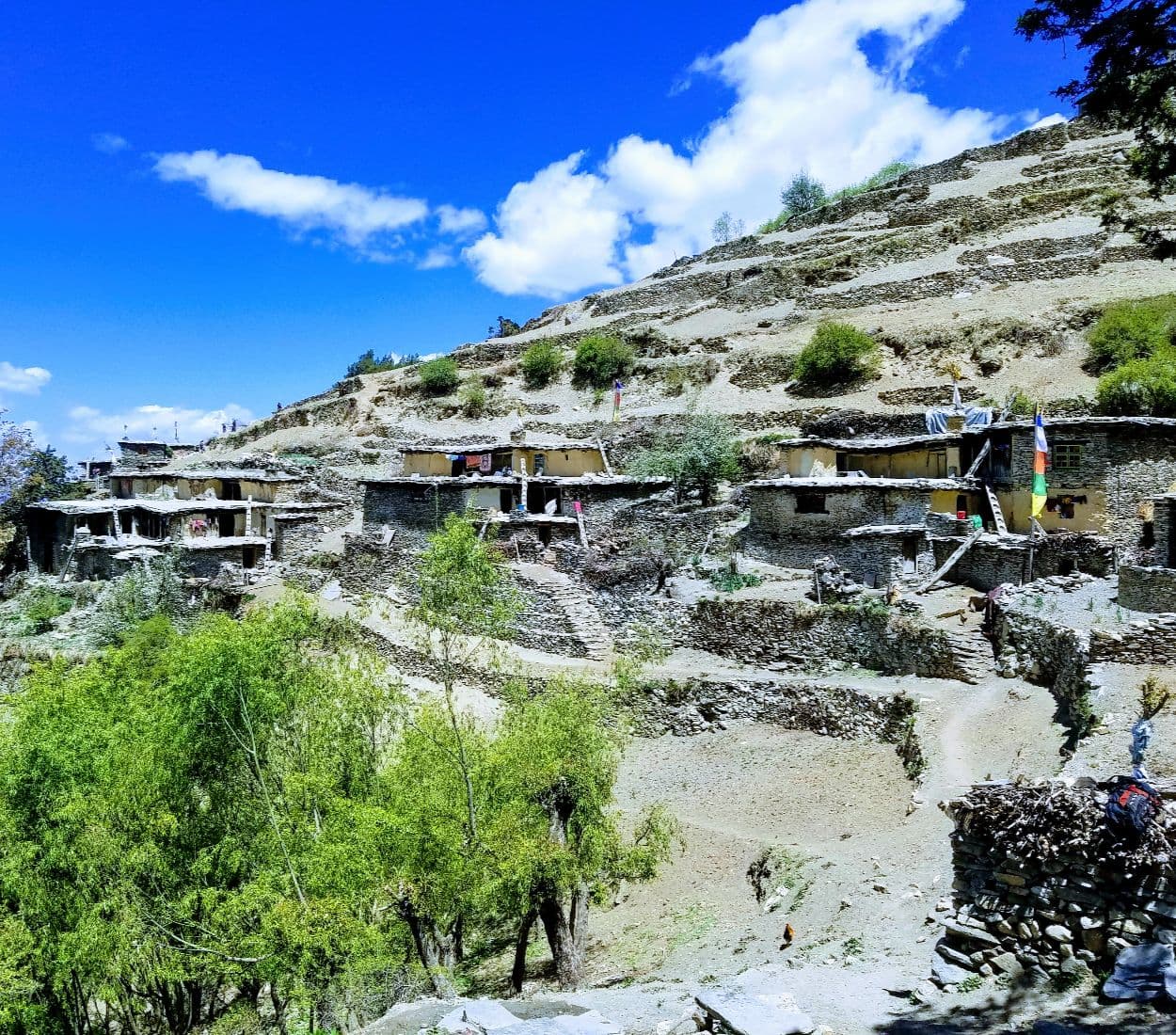
The region of Manaslu has a traditional architecture used in building. It touches on the mountainous standard and years of association with the Tibetans. Houses are made of stone, roofs are flat, and windows are tiny and wood-built. This architecture was useful to provide heat in the cold winters.
Most of these houses are normally built of stone and timber found locally. They have compact designs and central fireplaces, which can be used as kitchens and a source of heat. Buddhist prayer flags, wall paintings, and protective mantras are found on a lot of houses. It means that the owners are Buddhist.
Their flat roofs are also used as drying grounds for firewood, grains, and herbs. Whereas the communal courtyards enhance socialization and group activities. Besides landslides, snow, and earthquakes, buildings are constructed to be durable.
The engineering of which has been indigenous to an adverse alpine environment. These houses are more than a place of refuge. They also represent strength, improvisation, and cultural conservation.
Dress worn in Manaslu
When it comes to clothes, people in the Manaslu region usually wear woolen robes called chuba. It is a traditional wardrobe model of Tibet people adapted to the cold climate of the mountains. During festivals and ceremonies, the robes are frequently secured by colorful sashes. It is accompanied by hand-woven aprons, beaded necklaces, and silver jewelry.
Dressing differs a bit between the various ethnic groups. Most use locally produced wool, yak hair, and natural dyes. It gives the ethnic clothes a distinctive touch in the face of the rising influence of modern clothing.
The habitual clothing meets not merely the practical need. It also expresses the cultural identity, social status, and religious values. Especially among the Gurung, Nubri, and Tsumba people. On special occasion Lhosar or Dumji, elders and children equally wear ceremonial dressing.
It offers a picturesque presentation of antiquity. Even though Manaslu has been exposed to modern fashion from tourism and trade, local dressing in Manaslu is a major indicator of pride. It is the traditional dressing code.
Local food and cuisine
Manaslu region cuisine is a result of the agro-pastoralism lifestyle. It’s Tibetan culture, and restricted access to external goods, making it a rich and nutritious food. One that is sustainable in such a harsh environment.

Tsampa is another daily food, roasted barley flour with butter tea or water. It gives the person warmth and energy in the high-altitude areas. Butter tea (po cha) is a common dish that can be served both at the beginning and at the end of the meal. It contains yak butter, salt, and strong black tea. It provides hydration as well as calories in the harsh environment.
Other recipes are Tibetan-style bread (balep) cooked in frying pans with an open fire. The different types of dumplings, such as momo, are usually stuffed with vegetables or yak meat. National dishes include dal bhat, lentil soup, and rice that is also widely eaten.
Particularly in lower villages that show increased Nepali influence. Local variations may use barley or millet instead of rice. It uses fermented vegetables or yak cheese to supplement the nutrient content.
Regional cuisine is mostly seasonal and harvest-based. They basically mean that meals are determined by what can be grown, hunted, or preserved. Potatoes, turnips, and radishes are staples. In most households, they tend to have small terraced farms. Or raise livestock to gather milk, butter, and meat.
Group meals during harvest or celebration are also associated permanently as one of the strongest aspects of social life. It strengthens the social aspect, connecting the people, and celebrating the abundance in the region.
Due to the region’s isolation, the food culture of Manaslu remained more real and unchanged. It is also a significant constituent of the intangible heritage of the region. More varieties have been added to the menus of tea houses along the trekking route by some of them during the past few years.

The vast majority of families use time-honored and traditional methods of cooking and eating. One of the most cultural experiences trekkers can enjoy in this area is having simple meals with a local family. Try tsampa, butter tea, and yak milk.
Economic Development and Cultural Exchange
This has given the local economy a much-needed boost. Local people work as guides, porters, homestay hosts, and as tea house operators. The populations that were purely dependent on farming and yak rearing before tourism.

Now, they have access to tourism revenues. The movement has enabled easy access to medical care, education, and modern quarters. Hence, it greatly enhances the quality of life.
Even so, this economic revolution brings with it some outside cultural forces. It includes consumer goods, modern clothing, and outside values. It slowly permeates down to the young generations.
The historical way of life is practically threatened with extinction. It is due to the supplies of smartphones, advanced equipment, and innovative ideas brought by tourists.
There is growing concern that commercial tourism could erode sacred traditions and practices. In particular, when it is not emphasized with reverence and learning.
Environmental and Social Problems
The growing traffic of the trekkers has given rise to some problems. Things such as litter, tree-burning for firewood, and erosion of treks. Especially in the precious alpine environments.
Many tea houses use wood-burning stoves. This causes deforestation around camping areas and villages. Despite conservation policies, sustainable tourism and environmental sustainability remain serious issues. It’s especially for the local leaders and NGOs.

Modernization has also led to the evacuation of the high-altitude villages. Where youths are migrating to urban areas in search of greener pastures. This transition causes the disappearance of the indigenous knowledge and the agricultural cultures.
The loss of language fluency is also a danger. The youth leave the traditional lifeways of their ancestors. Responsible trekking, cultural immersion, and related activities such as eco-tourism are important factors. They must be promoted to preserve the Manaslu region's identity.
Conservation by Community Engagement
Most communities have active roles in managing tourism and modernization. In a culturally respectful way. Try tours that include a local homestay. Go on visits to monasteries. The experience of cultural festivals is becoming more educational for the visitor. It is also empowering to the locals.
Local youth and local monks are also in charge of waste management projects. Things like trail maintenance and cultural documentation projects. They work well, proving that tradition and new information can be compatible.
Some NGOs and trekking agencies work with village committees to provide hospitality training. They also teach sustainable farming and even language education. So that tourism offers the locals a way to benefit without feeling they are losing out on their identity.
Tourism income is increasingly being focused on the language, rituals, and architecture preservation. It means that every visitor has an impact and contributes positively to the culture instead of damaging it. Trekking in Manaslu should be approached purposefully. It helps to develop the economy of the people and also helps to maintain their culture.
Trekkers Etiquette Cultural
The travelers going into the Manaslu region are not guests arriving in the remote villages of the Nepalese Himalaya. They also become a part of an ancient lifestyle. A way of life that's long been meticulously maintained through decades. The mastery of cultural etiquette is the key to mutual respect. Manaslu trekkers can achieve peaceful coexistence with local communities.

Dressing modestly, meaning no flashy or revealing dressing. It is also requested of the visitors to greet the elders and the hosts always with a soft smile or a gentle bow. Or the customary greetings are also suggested, such as Namaste or Tashi Delek. It is advisable to walk around religious buildings clockwise according to Buddhist practice. Turn the prayer wheels with the right hand in the same direction.
Within gompas and monasteries, trekkers have to be shoeless and speak in low tones. Also, never touch religious books or statues unless called by a monk or Lama. Do not hold hands, run around, or show disdain towards religious or cultural beliefs. It would have a very disrespectful meaning. Also can make someone uncomfortable.
Giving money/sweets to the kids directly by trekkers is also a problem to be avoided. As it can develop unhealthy dependencies and undermine the self-reliance of the community. They can give to local causes. Be it via school donations, women's cooperatives, or education and health-related NGO projects.
The observance of these simple dos and don'ts for Manaslu trekking etiquette makes one not only have a better experience in their travel. It also keeps the dignity and integrity of the people who let outsiders into their holy places.
Cultural Conservation Efforts
With time, the highlands of the Manaslu Conservation Area could be readily infected by the slow creep of modernization. A few non-government organizations (NGOs), enthusiasts, and local leaders want to save the heritage of the region. Part of the efforts are especially aimed at oral history, traditional music, and folklore. Also, the local dialects of the Nubri and Tsum people.
The seasonal festivals are facing risks of being lost for younger generations. Village-NGO partnerships have led to the identification of culturally sensitive development. Here, the locals have been trained to be heritage guides, homestay owners, and cultural ambassadors.

Education is a potent means to preserve the culture in the Manaslu region. Particularly when it pairs the schooled curriculum with local knowledge systems. Tibetan Buddhism values, environmental protection, and language conservation are embraced by the schools and community centers. As such, children are raised with pride in their identity.
The actual inculcation of this wisdom consists of the frequent visits of elder monks, shamans, and oral historians to classrooms or youth centers. Teaching chants, local history, and community rituals effectively transfers the wisdom that would otherwise be lost.
The eco-cultural tourism in the Manaslu region has also contributed to strengthening cultural pride. Besides, it also creates sustainable income. Tour operators collaborating with locals have started providing culture immersion activities.
Trekkers can join local cooking classes, take part in village festivals, and religious treks hosted by the local lamas. Trekkers engage in such designed activities. They are on the frontline to contribute to cultural resilience. It empowers the communities. Sustainable tourism serves the interests of both the guests and the hosting communities.
Conclusion: Exploring Manaslu with Respect
It is not a mere trekking region of otherworldly alpine beauty. The Manaslu region is a living library of Himalayan culture. A reflection of spiritual depth and human strength.
Whether the trail is going up the mountain, a prayer flag in the air, catching the wind. Or a plain smile in the village. You find centuries of stories, beliefs, and wisdom passed through generations of people.

To really be in the Manaslu region is not only to travel in a landscape. But it is a landscape of the heart, humble, hospitable, and hope-packed travel. Being culturally conscious helps you take in the history of this ancient region. Appreciative of the sacred traditions of the land, trekkers gain more profound experiences. And all without much knowledge of the area.
Chatting over a cup of salted Butter tea with a Nubri family or getting a blessing from a monk at Mu Gompa. Or even enjoying the masked dances of the local people at the Dumji Festival. You are experiencing a world that lives by the truth of its own existence.
The region’s cultural richness increases. More so, when a traveler comes out of the touristic process and allows himself to embrace the Himalayan spirit. When you practice responsible travel, enjoy community-based tourism. You respect your hosts and their traditions. Such respect preserves the cultural makeup of the Manaslu region over time.
By doing so, you change your quest to something rather different. It is a pilgrimage of respect, understanding, and recognition of shared humanity. May your experience in Manaslu be not only a physical achievement. But an emotional pilgrimage to people, to prayers, and to the eternal beauty of this spiritual Himalayan place.
FAQs
1. Which are the ethnic groups in the Manaslu region?
Gurung, Nubri, and Tsumba communities inhabit the Manaslu area. And most of them are of Tibetan descent. These communities have continued to maintain special languages, practices, and spiritual cultures. They are now representations of Himalayan existence across centuries.
2. Which languages are spoken in the region of Manaslu?
Tibetan origins are behind such local dialects as Nubri and Tsum, with Nepali spoken. Various initiatives are being conducted to protect such dialects. Such as educating the communities and documenting them.
3. How is the customary life of the Manaslu region?
The villagers mainly rely on farming, raising yaks, and trading with Tibetans. A subsistence lifestyle that is dictated by the season. The extreme mountain conditions still prevail in many.
4. What is the significance of Tibetan Buddhism?
The Manaslu region has deep-rooted Tibetan Buddhism. It influences daily life, rituals, and festivals. Community life contains monasteries, prayer flags, mani walls, and spiritual leaders (lamas).
5. Does Manaslu have its own special festivals?
Yes, there are great festivals like Lhosar (Tibetan New Year), Dumji, and Yartung. They are a mixture of seasonal, religious, and communal festivals. Such occurrences will usually involve masked dancing, chanting, and feasting.
6. What etiquette are trekkers expected to be aware of when trekking in Manaslu?
This is because you should never take pictures before asking permission. You should also dress conservatively, and bring circles around monuments of religion clockwise. Elderly respect, monasteries, and local customs go pretty far in establishing trust.
7. Why is the culture of the Tsum Valley special?
Tsum Valley is somewhat of a restricted region. People have maintained their Tibetan Buddhist culture that has been unaffected by the outside world. Chhokang Paro and Nile are some of the villages that preserve old traditions, speech, and monasticism.
8. Which types of traditional food exist in the Manaslu region?
The food is a part of local cuisine and consists of tsampa (roasted barley flour), Tibetan bread, butter tea, and dal bhat. Foods are substantial and seasonal, and usually communal in nature, whether in a festival or at the end of the day.
9. In what way has trekking modified the local society?
Trekking has brought about income and pressure on the traditions and the natural resources. Eco-cultural projects and responsible tourism are even more in line with development and cultural conservation.
10. What is the traditional architecture of Manaslu villages?
The stone houses in villages represent flat housetops, the prayer walls, and carved wooden windows with Buddhist symbols. These houses are constructed in order to survive the weather and are indicative of spiritual ideals.
11. What should a tourist do to respect Manaslu?
Trekkers can visit the locals, support homestays, and take Scultural tours, which will make a great visit. It is important to be considerate of traditions and hence partake in responsible tourism to conserve the heritage of the region.