

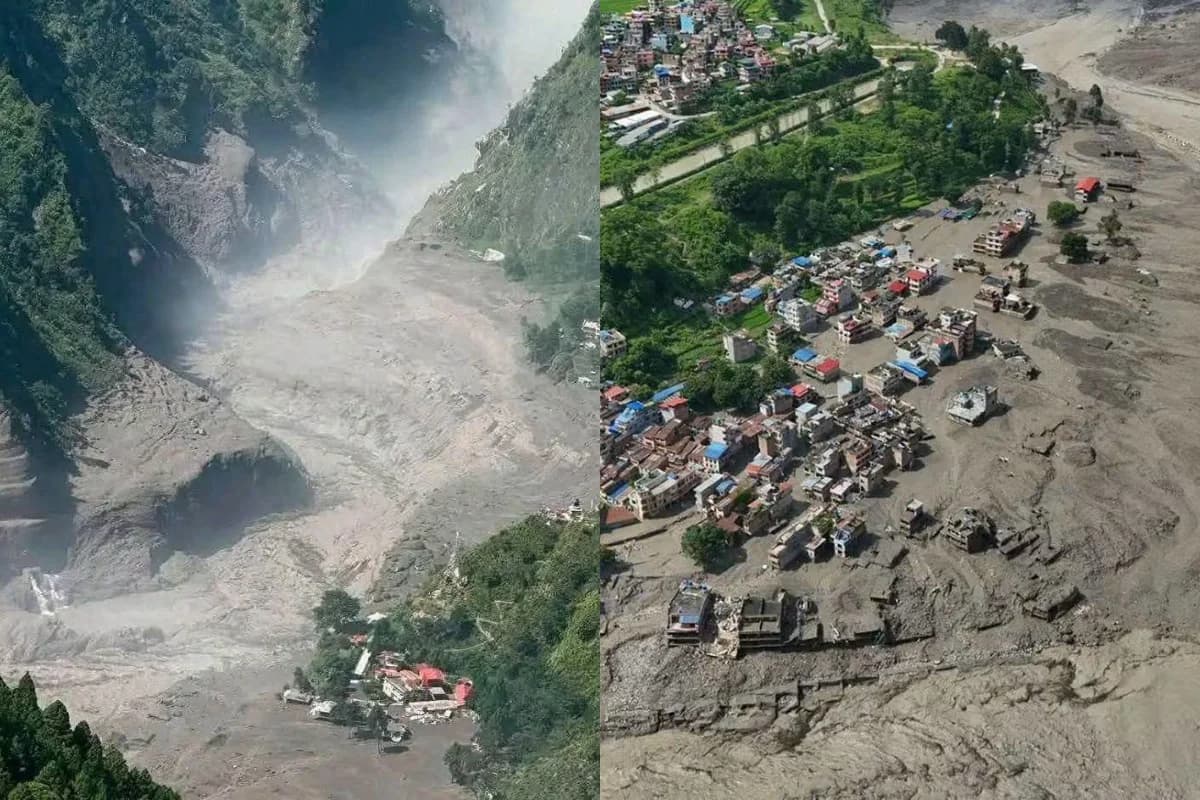
A devastating flash flood hit Nepal's Rasuwa district on August 26, 2026. The flash flood caught everyone unaware early in the morning at about 9:00 am local time. There was an outpouring of floods through the Bhote Koshi River from the Tibet Autonomous Region into Nepal.
In a matter of hours, the flood had completely erased whole communities along the river. The flood continued downstream through Nuwakot, Dhading, Gorkha, and Chitwan districts. The disaster did not just cause physical damage but went as far as changing people's lives and disrupting the economy, tourism, and cross-border business of Nepal.
The disaster is among the worst in Nepal's history.
Key Fact | Details |
Date | August 26, 2026 |
Primary affected area | Rasuwa / Bhote Koshi corridor |
Major river systems | Bhote Koshi and Trishuli |
Trigger | Ice/rock avalanche and temporary river blockage |
Affected districts | Rasuwa, Nuwakot, Dhading, Chitwan, Gorkha, Tanahun |
Major impacts | Loss of life, missing people, roads, bridges, hydropower and settlements |
Status | Recovery and rescue operations ongoing |
According to the health response report, six districts have been affected by the disaster. The flood occurred after the ice-rock avalanche that created a temporary dam on the Lhende Khola.
Casualty and damage reports may be updated by the officials as the rescue process continues. This article has discussed all aspects of Rasuwa flash flood 2026.
Rasuwa Flash Flood 2026: An Overview
The flood took place on August 26, 2026, around 9:00 in the morning. The first major effect of the flood took place in the Rasuwa district, situated on the border of the Tibet autonomous region of China.
The worst effects of the flood were felt in the Bhote Koshi river valley. The first wave of the flood started in the upstream area near the Nepal-China border, and then the floodwater reached the downstream areas of Nuwakot, Dhading, and Gorkha districts.
Bhote Koshi is a river that starts from the Tibetan Himalayan Range. This river starts flowing south towards Nepal via Rasuwa district. This river corridor is quite significant both commercially and for tourism.
This corridor is the connection between Nepal and China via the port at Gyirong. Moreover, this river corridor acts as an entry point to the Langtang valley, a famous hiking destination. Several hydroelectric plants have been constructed along the river banks.
The flood started off as a sudden surge of water from the Lhende Khola, which is a tributary of the Bhote Koshi. This surge of water rushed into Timure and Syafrubesi areas with enormous force. The water then flooded into the river channel of the Bhote Koshi River.
Then, it flooded downstream into the river systems of the Trishuli River. The flood moved for more than 100 kilometers through different districts. The people living downstream received no or very little warning. The water level in the Trishuli River rose by 3 meters above normal levels.
Rasuwa lies at high altitude within the Himalayan range. The district’s rugged topography means that any rainfall is channeled very fast into the rivers. When the water reached the Bhote Koshi and Trishuli rivers, it picked up speed. The water was carrying huge quantities of debris and stones. This flood then flowed down through the river valley for hundreds of kilometers.
What Caused the Rasuwa Flash Flood?
Upstream Ice and Rock Avalanche
The trigger factor was a combination of ice and rocks from a glacier situated in the Nepalese part of the mountain. This avalanche took place within the upper regions of the Lhende Khola drainage basin.
The cause of such an avalanche was confirmed by climatologists from the International Centre for Integrated Mountain Development. This is an example of an avalanche that consists of a huge fall of glacial ice and rocks from an altitude of about 5,500 meters.
This event is analogous to one that happened in this region in August 2025. The Lhende Khola has been flooded two times in fourteen months.
Temporary Damming of the Lhende Khola
The avalanche debris totally blocked the Lhende Khola River. It made a temporary dam along the river’s course. The dam was made up of ice, soil, rock, and other debris.
Behind this dam, there was rapid accumulation of water. A temporary lake was created by this damming effect. It kept growing as the melting water and stream flows increased. It made a potential time bomb that became more and more dangerous with time.
Sudden Release of Stored Water
The temporary dam failed. This led to a deluge of water that had been trapped being let loose. It was a huge volume of water that crashed down the valley. It was a disaster because of the volume and velocity at which it was moving. This deluge caught many people off guard.
Rapid Rise of the Bhote Koshi
Water started flowing down into the Bhote Koshi River. Within minutes, the river started swelling beyond its capacity. It carried rocks, trees, and other objects along with itself at a great speed. This erosional force caused destruction everywhere that lay in its way. The river continued swelling due to the increasing amount of sediments. Eventually, the floods of the Bhote Koshi River reached the Trishuli River system.
Himalayan Terrain and Downstream Flood Risk
The geographical location of Nepal makes the country highly vulnerable to flooding due to the presence of mountains. Due to the steepness of the mountainous region, water flows very fast to feed the river system.
The floodwater moves through narrow valleys and attains great energy due to the difference in altitude between the mountains and the plains of Nepal that is more than 4,000 meters.
Climate and Glacial Risk in the Himalayas
Climate change is making the Himalayan area warmer than the rest of the world. Melting of glaciers in the Hindu Kush Himalaya area has accelerated since 2000. The increase in melting is twice the rate from 2000 due to increased global warming.
It causes instability in the glacial environment of the area. Extreme weather events have occurred more frequently. Climate change acts as a general risk factor but might not necessarily be responsible for this particular event. It is necessary to perform attribution research to find a direct link.
How Did the Rasuwa Flash Flood Affect Nepal?
Loss of Life and Human Displacement
The number of people who died in the flood exceeded 1,300 in different districts. As of September 6, 2026, the number of deaths recorded was 1,342, which comprised 325 females, 523 males, and 494 unidentified bodies.
The number of households that have been affected by the calamity is approximately 10,000. At the moment, there are about 3,912 people who are residing in the holding camps. Over 17,000 children have been affected by the floods.
Missing People and Families Searching for Loved Ones
Almost 5,000 people are still unaccounted for. As per the information provided by the National Disaster Risk Reduction and Management Authority, the number is 4,996. The number of people missing from Rasuwa is estimated at 1,967 while in Nuwakot it is 2,340.
Also, 589 foreigners are reported missing. Families are still in search of their dear ones. The DNA samples from 2,472 people have been taken for identification purposes.
Destruction of Homes and Businesses
The flooding has damaged about 1,500 private houses in Rasuwa itself. Many public and private buildings were either damaged or destroyed. This comprises 28 government/public buildings.

Devastated condition of Nuwakot after flash flood
There have been eight community schools and three private schools damaged. Fourteen banks/financial institutions have been damaged. One petrol pump has been totally destroyed. The estimated economic loss is about NPR 387.5 billion. Approximately 20,000 houses need to be reconstructed.
Damage to Critical Infrastructure
The flood swept away a total of 41 kilometers (25.5 miles) of roads in the Rasuwa district. Six concrete bridges, eight Bailey bridges, and ten suspension bridges collapsed into the river. Three police stations have been carried away by the floods. The fate of 26 missing police officers is still unknown. Communication towers were rendered out of service due to the floods.
Disruption of Tourism and Trade
The flash flood in the Rasuwa area has caused damage to the tourism sector in Nepal. The trekking destination for the popular Langtang valley starts at Syabrubesi, which got severely affected by the disaster.
The flood also resulted in damage to the Gyirong port that connects Nepal and China, which affects cross-border trade and tourism. There were hundreds of missing tourists reported after the disaster.
Long-Term Recovery Challenges
This process is likely to take many years, perhaps even decades. The costs associated with infrastructure reconstruction are going to run into billions of dollars. Hydropower shortages will lead to an energy crisis within the nation.
Economic losses due to the decline in tourist income will have a negative impact on the economy. Displaced people will struggle to rebuild their lives from scratch. Psychological damage will remain even after physical reconstruction is done.
Which Districts and Areas Were Affected?
The flood has affected eight districts in Nepal. These districts are identified by official health response sources. The magnitude and nature of the effects vary greatly from place to place.
Rasuwa: This is the ground zero for the disaster. The flood ravaged Timure, Syaphrubesi, Hakubesi, Mailung, and Shantibazar. The whole market area has been washed away. About forty-one kilometers (25.5 miles) of road infrastructure has been washed away. This district records the highest number of missing people at about 1,967.
Nuwakot: The flood ravaged this district on its downstream journey. Betrawati and Trishuli Bazaar have suffered great losses. The number of dead recorded in Nuwakot amounts to 195. The total number of missing people in Nuwakot amounts to 2,340. Restoration of power in Nuwakot has reached about 95 percent.
Dhading: This district has suffered great devastation especially in the communities of the Trishuli corridor. In Dhading, there are 68 dead people. The power in Dhading has been fully restored.
Chitwan: This southern district was hit by the flood, and there were 362 recovered bodies reported. The low-lying areas around the river have been flooded.
Gorkha: There were 74 recovered bodies from Gorkha, and the district witnessed flooding along the river corridor.
Tanahun: 38 bodies have been recovered from Tanahun.
Nawalparasi East & West: Both of these districts witnessed significant casualties. Nawalparasi East recorded 222 deaths, while Nawalparasi West recorded 220 deaths.
Death Toll, Missing People and Rescue Figures
Last updated: September 7, 2026
The numbers continue to change as rescue operations progress.
Confirmed Deaths
1,342 people have died across eight districts. The breakdown includes:
Chitwan: 362
Nawalparasi East: 222
Nawalparasi West: 220
Nuwakot: 195
Rasuwa: 163
Gorkha: 74
Dhading: 68
Tanahun: 38
People Still Missing
The latest reporting says:
Total missing: 4,996
Rasuwa: 1,967
Nuwakot: 2,340
Foreign nationals: 589
Around 100 security personnel/employees also among those missing.
People Rescued
The total number of people who have been rescued up to now is over 13,391. Search and rescue operations are still ongoing. Security forces have dispatched 21,465 personnel for this purpose. Among these are 9,287 personnel from the Nepal Army, 7,975 from the Nepal Police, and 4,203 from the Armed Police Force.
Foreign Nationals Affected
There have been 589 foreigners missing. The list of missing includes tourists from countries such as India, US, UK, Malaysia and others. Initially there had been reports of 384 tourists being missing. Later on, the Nepal Tourism Board confirmed that there are 644 missing tourists. This includes 178 tourists from India and 127 tourists from Nepal.
Hydropower Workers and Other Workers Missing
Hydropower project workers were trapped due to damage to these facilities. Two workers were saved alive from the Trishuli 3A tunnel on September 4. One Chinese national was saved alive in Rasuwa on September 5. Many workers, however, are still missing.
Why the Numbers Continue to Change
Given the extent of the disaster, precise counting is rather impossible. Mud occupies many places where the dead might be lying. Some of the dead will never be discovered. Officials depend on the families informing them about their missing relatives.
There will definitely be some changes in the numbers as more areas are being searched. This is the reason why you should always keep yourself updated.
Damage to Roads, Bridges and Hydropower Projects
Infrastructure damage is one of the strongest search intentions surrounding this disaster.
Roads Washed Away by the Flood
The flood swept 41 kilometers (25.5 miles) of roads in Rasuwa. All roads in Rasuwa and Nuwakot were closed. The road between Nuwakot and Mugling was closed.
The road between Mugling and Narayanghat was closed too. The road between Trishuli, Mailung, and Syafrubesi was also closed. Some areas of the Prithvi Highway in Dhading were closed too. The Araniko Highway around Bhotekoshi and Liping was closed.
Bridges Destroyed or Damaged
Six bridges made of concrete in Rasuwa have been washed away by the floods. In addition, eight bridges made of Bailey and ten suspension bridges have been washed away as well. The bridges played an important role in providing connectivity.
Damage to the Pasang Lhamu Highway
Pasang Lhamu Highway is a vital road link that links Kathmandu to the Nepal-China border. There have been significant damage to this important highway through the floods. The highway was blocked in several places. This affected transport to the Langtang region.

Rasuwagadhi Custom Office, Nepal-China Border during the flash flood
Hydropower Projects Affected
Thirteen hydropower projects were damaged, both operational and under construction. Eight projects were completely destroyed. The destroyed projects include:
111 MW Rasuwagadhi
120 MW Bhotekoshi
22 MW Chilime
20 MW Langtang Khola
216 MW Upper Trishuli-1
5 MW Mailung Khola
60 MW Upper Trishuli 3A
37.3 MW Trishuli 3B
These losses have reduced more than 10 percent of the country's total generation capacity. About 300 MW of generation capacity is still out of commission.
Workers Trapped in Hydropower Tunnels
Numerous people were trapped inside the hydroelectric tunnels. The Chilime site got buried under debris. The Indian tunnel rescue team operated at the Chilime site. Two people were rescued from the Trishuli 3A tunnel. Another person, who is Chinese, was rescued alive.
Electricity and Infrastructure Disruptions
Electricity was not available for thousands of homes. But power has been restored in many parts of the affected regions. 78% of the homes in Rasuwa have electricity. 96.7% power has been restored in Nuwakot. 99.8% of the power has been restored in Dhading.
Impact on Local Communities and Livelihoods
Homes and Settlements Destroyed
The flood has ruined around 1,500 houses belonging to individuals in Rasuwa. Many settlements have been damaged or even flooded. Such places are Timure, Syaphrubesi, Hakubesi, Mailung, and Shantibazar. Each of these houses has a family who lost everything due to this tragedy.
Businesses and Local Markets Affected
The major market area of Rasuwa district got completely destroyed. Fourteen banks and other financial organizations got destroyed. One petrol pump got destroyed. Businesses established by the locals over the years vanished within no time.
Agriculture and Livestock Losses
Farmers lost their animals, land, and machinery. Farming lands have been covered with mud and debris. The flood has washed away the stored crops and the seeds as well. This poses a risk to food security of those affected people. It may take more than one season for the revival of the agriculture sector.
Loss of Income and Employment
Hundreds of thousands have lost their sole means of livelihood. There is nothing for daily wage earners to go back to work on. Shopkeepers have lost their shops. Owners of tea stalls by the trekking trails have an uncertain future ahead of them.
Displacement and Temporary Shelters
About 3,912 individuals are presently residing in holding camps. Holding camps are found in Rasuwa, Nuwakot, and Dhading. Several families are living in temporary settlements. They do not have basic facilities like privacy.
Psychological and Social Impact
The victims are left with psychological trauma for long periods of time. The rains make the survivor remember their fear of floods that could come again. The sound of water makes them think about their past experiences. The parents feel fearful when the children leave home. Some survivors have sleep disorders.
Challenges Facing Remote Mountain Communities
Remote areas pose the biggest problems. Broken roads and power lines hinder access. Portable solar panels have been delivered to remote villages. Yet, lighting and charging phones is a big problem. They are usually the last to get aid.
Which Trekking Regions and Routes Were Affected?
Langtang Region and Syabrubesi
The trekking route of the famous Langtang valley begins from Syabrubesi. The disaster occurred in Syabrubesi. The roads, bridges, and some sections of the town were washed away due to the floods. The Langtang valley area and Rasuwa district suffered the most from the disaster. This area should be avoided at present.

Siltanki area, Nuwakot after the flood
Roads Connecting Kathmandu With Langtang
Some major roads that lead from Kathmandu to Langtang are closed. The Trishuli- Mailung- Syabrubesi road has been closed. The Galchhi-Nuwakot-Rasuwagadhi-Syabrubesi route is closed.
Damage Around the Rasuwagadhi, Kerung Border
The Syabrubesi Corridor witnessed massive destruction. The floods washed away vehicles and structures. This area was being used by pilgrims travelling to the Kailash Mansarovar Yatra. The Hindus going to Gosainkunda Lake have also been affected.
Langtang Valley Trail Conditions
It is reported that access to Langtang has been greatly impacted. The trekking valley, on its own, is another matter entirely. Conditions on the trail are currently unknown. Trekking should be avoided until further notice.
Gosaikunda Access
Gosaikunda Lake Trek is a pilgrimage destination for Hindus. This path crosses the area that has been affected. There have been problems reaching Gosaikunda. There have been pilgrims coming to the area during the Janai Purnima festival.
Which Trekking Regions in Nepal Remain Safe and Open?
Do not make any sweeping statements about a route being "safe" unless the authorities currently in charge say so. Below is the status table based on the latest information available.
Trekking Region | Current Access | Trail Status |
Everest | Open | Open |
Annapurna | Open | Open |
Langtang | Disrupted | Unknown |
Manaslu | Verify | Verify |
Everest Region
There has been no impact on the Everest Base Camp area. The flooding did not affect the Khumbu valley area. Flights to Lukla are still operational. It is suggested that one should verify with airlines regarding flights.
Annapurna Region
There is no impact on the Annapurna area and things are working normally there. It includes Annapurna Circuit Trek and Annapurna Base Camp Trek. The entrance point to Annapurna, that is Pokhara, is also accessible now. The flight from Pokhara to Jomsom has been
Manaslu Region
The area of Manaslu Circuit Trek needs confirmation before traveling there. The flood caused an impact in the areas of Bhote Koshi and Trishuli only. Manaslu is in another river basin. Yet, the roads to reach there may be affected.
But on 6th September, 2026, a flood washed away four houses along with a suspension bridge connecting Namrung and Lihi village, so trekking on Manaslu Circuit is closed until further notice as per the DAO, Gorkha.
Other Major Trekking Regions
Kathmandu Valley, Patan, and Bhaktapur continue to be good for tourists. Regular monsoon measures need to be taken. Chitwan National Park is also not affected. Trekking in Kanchenjunga and Dolpo is also possible.
Checking Local Conditions Before Departure
The Nepal Tourism Board warns against traveling along certain routes. It is important for travelers to consult local authorities before embarking on their journeys. There may be a failure of phone and internet connections in areas where there are floods. The local authorities should be consulted by embassies.
Impact of the Flood on Tourism in Nepal
Tourists Stranded in Affected Areas
Hundreds of tourists were stuck due to the floods. The flood occurred in Syabrubesi, the gateway for trekkers and pilgrims. Nepal Tourism Board confirmed that there are 644 people missing. This comprises 178 Indians and 127 Nepalese. Efforts are on-going for the foreigners.
Disruption to Langtang Tourism
The tourist activities in Langtang have been severely affected by the floods. The floods directly hit the area. It is not possible to reach the valley of Langtang at the moment. The tea shops and lodges have suffered damage. The autumn season is in doubt due to the floods.
Impact on Trekking Agencies and Guides
The trekking agencies have experienced huge cancellations. The guides and the porters have lost their main source of income. Some of the trekking agencies have been finding it very difficult to survive. The economic effects on the trekking industry will be very tough.
Impact on Hotels and Teahouses
Hotels and tea houses on the Langtang track have been damaged. Most of the hotels have been washed away completely. The owners now have to rebuild. The failure of the autumn season implies the loss of an entire year's earnings.
International Traveler Concerns
The safety of international tourists is a matter of concern. This flood has created news throughout the world. Prospective tourists may defer their visit. It is a matter that concerns the entire tourism sector of Nepal.
Tourism Recovery and the Autumn Trekking Season
Autumn is the time of year when tourism booms in Nepal. This flood has made it uncertain. Diplomatic missions have given advice to people who are going to travel there. Tourists are advised to be cautious while planning their trip. Tourism in Nepal hinges on communication.
Economic Damage Caused by the Rasuwa Flash Flood
Infrastructure Reconstruction Costs
Financial losses are estimated to be around NPR 387.5 billion. Reconstruction of infrastructure would cost billions more. These include roads, bridges, schools, and government buildings. More than twenty thousand houses need to be rebuilt. The extent of destruction is "beyond imagination".
Hydropower Losses
There were thirteen hydropower plants that got damaged. Out of the thirteen, eight were totally destroyed. More than 700 megawatts of generation capacity got affected. This has taken away more than 10 percent of the total electricity generation of Nepal. Shares in the hydropower companies have fallen.
Tourism Revenue Losses
The tourism industry will be losing millions of dollars in income. Autumn is usually the peak period. Tours to Langtang earn a great deal for the tourism industry. Tea houses, guides, and tour companies are bound to go bankrupt. The consequences will affect the economy at large.
Business and Employment Losses
Local enterprises have been ruined. Thousands have lost their jobs. The effect of unemployment will be harsh. Many families have lost their only means of earning a livelihood.
Transportation and Trade Disruptions
The flood led to the destruction of the border passage between Nepal and China. This affected cross-border business operations. The Pasang Lhamu Highway is still closed in some parts. Transport costs have risen.
Long-Term Economic Recovery
The rebuilding process will take many years. Each district, Rasuwa and Nuwakot have been allotted an amount of NPR 10 million, while Dhading has been allotted an amount of NPR 5 million. This is not enough to recover from the destruction that occurred.
Rescue and Emergency Response
Nepal Army Operations
Nepal Army has dispatched 9,287 soldiers to help out in this situation. Nepal Army is performing search, rescue, and relief operations. Helicopters are carrying out survivors and medics. Some 20 helicopters are performing search operations.
Nepal Police and Armed Police Force
There are 7,975 policemen deployed by the Nepal Police. There are 4,203 armed police force personnel deployed. Rescue operations are being carried out by these forces. Three police stations were washed away in the floods.
Search and Rescue Teams
Search and Rescue Operations are underway in eight districts. These search and rescue missions are faced with rugged conditions and infrastructure damage. Debris and mud make things challenging. DNA samples are being collected.
Helicopter Rescue Operations
Helicopters play a vital role in getting to isolated areas. The Nepal Army sent two helicopters right away. Private company helicopters are also available. Helicopters carry food, generators, and hygiene kits.
Hydropower Tunnel Rescue Operations
Rescue operations are underway at the hydropower tunnel sites. Two people were rescued from Trishuli 3A on September 4. One Chinese national was rescued alive on September 5. The Indian tunnel rescue team is assisting at the Chilime site.
International Search and Rescue Assistance
Nepal has requested aid from both India and China for rescue missions. India has given assistance in the form of rescue operations. Help has also been given by China.
Challenges Facing Rescue Teams
Challenging terrain is one such problem. Injured roads hinder movement into the affected areas. Water levels remain high in some places. Thick mud makes the search for bodies problematic. The magnitude of the problem is too much for the existing resources.
Relief and Humanitarian Support
Emergency Food and Water
Food aid is being airlifted to the affected areas. The relief aid comprises of generators, hygiene kits, and student kits. Four trucks brought the supplies on September 6. Emergency food and water continue to be a priority.
Medical Assistance
Over 6,083 injured persons have been treated. Security agencies have offered treatment to thousands. Treatment services are still ongoing in hospitals. UNFPA has deployed 2,000 dignity kits to help affected women and girls.
Temporary Shelter
There are about 3,912 people in the centers. There are some facilities provided in these centers. The government is arranging for food and lodging. Further shelters will be required as winter comes.
Sanitation and Hygiene Support
UNFPA has mobilized mobile health facilities. Supplies related to reproductive health care are being distributed. Assistance related to sanitation and hygiene is important.
Support for Displaced Families
The displaced families need holistic assistance, which entails providing them with proper shelter, food, healthcare services and educational facilities for the children.
International Humanitarian Assistance
UNFPA, the Red Cross, and many other organizations are offering their help. International donors are giving money. India and China have offered rescue help. International support will be very important for rebuilding the country.
Local Community Relief Efforts
Relief measures have been organized by local communities. They help one another notwithstanding their own losses. There is high community solidarity amid adversity. Such measures support government relief initiatives.
Government Response and Recovery Efforts
Government Emergency Declaration
These areas were declared as disaster zones by the government. An emergency meeting was held by Prime Minister Balendra Shah on August 26. The government strengthened rescue, search, and relief efforts right away.
Disaster Response Coordination
The NDRRMA is coordinating the responses. The Ministry of Home Affairs has been asked to organize helicopters and resources. The Executive Committee on Disaster Risk Reduction is reviewing the operations. The joint committees of government ministries are assessing the response.
Search and Recovery Operations
The search operation is continuing on both sides of the border. Security forces have been deployed in huge numbers by the government. DNA tests are being conducted to identify the individuals. Bodies are being recovered from eight districts.
Infrastructure Reconstruction
The government has instructed concerned departments to reconstruct destroyed roads. Power supply is another urgent issue. The engineers are using old transmission lines to restore supplies. Reconstruction will take years.
Restoration of Roads and Bridges
Road repair is an essential requirement for relief operations. The government is striving to open up closed roads. Bridges are being evaluated whether to be repaired or replaced. It will certainly take some time.
Hydropower Recovery
Damage was done to thirteen hydroelectricity plants. The restoration of power is still being carried out. The power has been restored by engineers in seventy-eight percent of Rasuwa.
Tourism Recovery Measures
Government efforts are being made to assure tourists. Proper communication regarding the regions hit hard is crucial. This effort is being done by the Nepal Tourism Board. The government hopes to safeguard the autumn tourist season.
Future Flood Preparedness
Early warning systems act as the initial line of defense against this. The government needs to prepare for disasters. Monitoring of glaciers is critical. The climate change adaptation plans need to be improved.
Impact on Transportation and Border Trade
Damage to Roads Connecting Rasuwa
Roads in both districts of Rasuwa and Nuwakot are blocked by the flood. The flood has damaged around 41 km of roads in the Rasuwa district. The highway of Pasang Lhamu is also partly closed now.
Disruption Around the Nepal-China Border
The Gyirong Port located at the Nepal-China border is affected. The Gyirong Port plays an important role in facilitating trade and tourism activities. The flood has claimed lives in both countries.
Impact on Customs and Cargo Movement
The customs activities at the border are impacted. There is a slowdown in cargo transportation. The trade has dropped. The restoration of the border infrastructure is crucial to economic recovery.
Effects on Local Traders
Local merchants rely on cross-border commerce. The disruptions have resulted in the loss of their source of income. The majority of them have lost their merchandise and businesses.
Effects on Nepal-China Trade
There have been bilateral consequences of this incident since the Gyirong Port serves as an important trading route that, when shut down, affects both parties involved. Trade will be restored only after infrastructural reconstruction.
Border Infrastructure Recovery
Restoration work is under way for the border infrastructure, but the damage is widespread and will take a long time to repair. The economic effects will be felt until the borders reopen again.
Rasuwa Flash Flood Timeline
August 26: Flash Flood Begins
9:00 AM: The flash flood occurs in the district of Rasuwa. The central market area is completely destroyed. Timure, Syaphrubesi, and the entire surrounding area is flooded. The floods continue moving further to the south through Nuwakot, Dhading, Gorkha, and Chitwan. Casualties have already been reported.
August 26-27: Initial Search and Rescue
Death toll rises to 270. Rescuing missions start. Helicopters are sent to the affected regions. The government identifies the regions as crisis disaster zones. International help is sought. The true magnitude of the disaster comes into view.
August 28-30: Expanding Rescue Operations
Death toll rises to 734. Rescuing efforts widened to eight districts. Thousands of troops from Nepal Army join. Trishuli River water rises by 3 meters above average. A new flood alert has been issued.
August 31-September 2: Hydropower and Infrastructure Recovery
There are thirteen hydroelectric projects that have been damaged. Power is restored to some areas. Roads are repaired. Searches for victims continue in far-off places.
September 3-Present: Ongoing Search, Relief and Recovery
The death toll rises to 1,342. The number of missing has crossed 5,000. More than 13,000 people have been rescued. Supplies reach those affected through airways and roads. Electricity has been restored to 78% of Rasuwa. Samples have been taken for DNA identification.
Current Situation and Latest Updates
Last updated: September 7, 2026
Current Death and Missing Figures
Number of deaths: 1,355.
Number of missing people: 4,996.
Number of rescued people: 13,391.
These figures keep on changing. It is always best to check official sites for up-to-date information.
Current Road and Transportation Status
All the highways in Rasuwa and Nuwakot are closed. Partial closure of the Pasang Lhamu Highway. The Mugling-Narayanghat road is closed. Partial closure of the Prithvi Highway in Dhading.
Current Langtang Access
Traveling to the Langtang area is not advised. The routes leading into the region are blocked. Trail conditions are still unknown.
Current Border Status
The Gyirong port has suffered damage. The border crossings are disrupted. The trade and tourism sectors have also been impacted.
Current Rescue Operations
The rescue operation is still on in eight different districts. There are twenty-one thousand security officials involved in it. The helicopter rescue is taking place too.
Current Tourism Situation
Regions like Everest and Annapurna are still accessible, but the Langtang region is off limits. Both Kathmandu and Pokhara are not affected by the situation.
Latest Government Advisories
The government suggests avoiding using the Muglin-Narayangadh road. It is advisable not to use the Galchhi-Nuwakot-Rasuwa-Syabrubesi route. The embassies advise to follow the directions of the local authorities. Consult the official website of the Rasuwa Flood Rescue Portal.
What Can We Do to Help the Flood-Affected Communities?
Donating Through Verified Organizations
Donations can be made to well-known organizations such as the Red Cross, UNFPA, or you can also donate directly to the Prime Minister’s Relief Fund. These organizations make sure that your donation is reaching people in need. Stay away from donations in fundraising campaigns not verified by any organizations.
Supporting Local Businesses During Recovery
Support local businesses in unaffected areas. Book treks in open regions like Everest and Annapurna. This helps sustain the tourism economy. Responsible tourism supports recovery.
Choosing Responsible Tourism
Travel responsibly to Nepal during this time. Respect affected communities. Avoid disaster sites. Follow government advisories. Your responsible behavior supports recovery efforts.
Avoiding Unverified Fundraising Campaigns
Scammers often exploit disasters. Only donate through verified channels. Check organization credentials. Report suspicious fundraising campaigns. Protect yourself and ensure your donation helps.
Respecting Affected Communities and Disaster Sites
Do not visit disaster sites. Affected communities need space to recover. Respect the privacy of grieving families. Your empathy and respect matter.
Final Outlook for Rasuwa and Nepal
The flash flood Rasuwa 2026 shall always be considered as one of the worst natural disasters in the history of Nepal. The human toll is enormous with more than 1,300 deaths and close to 5,000 missing people. The damage to infrastructure has been estimated at NPR 387.5 billion. The process of recovery from this disaster will take time.
Human trauma resulting from this disaster will last for years. Children who have been victims of this disaster need education. There is also the need to reconstruct infrastructure such as roads, bridges, and hydropower plants.
Tourism recovery is crucial for Nepal's economic recovery. Recovery of the Langtang area shall be difficult. But Everest and Annapurna areas shall still be accessible to tourists.
Trade across borders should be revived. The Gyirong Port plays an important role in bilateral trade between the two countries. Disaster preparedness needs improvement. Early warning systems are very important. Climate-related issues as well as glaciers require attention.
The flood of 2026 reminds us how vulnerable the Himalayan region is to climate change. With the increase in the temperature of the globe, glaciers begin to melt. Natural disasters have become quite common.
If you travel to the destination, make sure to check verified facts about the place before planning your visit. Travelers should help Nepal cope with the situation.