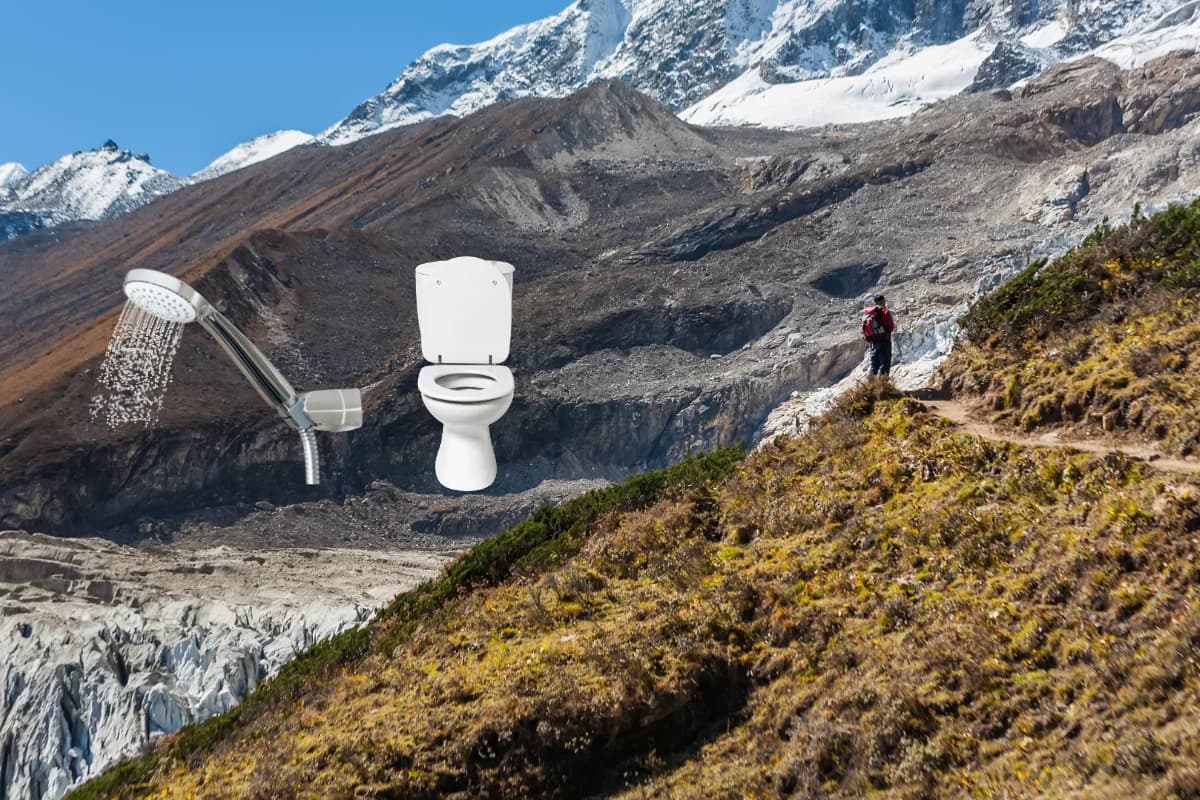
Internet connectivity is available on the Manaslu Circuit Trek but a stable connection cannot be guaranteed throughout the entire trek. The mobile networks on the Manaslu Circuit are usually better in the lower villages however the connection slows down and is usually unreliable as you go higher.
Nepal Telecom (NTC) normally has better coverage in the remote areas, and Ncell has better coverage in parts of the lower route. Most of the Manaslu Circuit Trek teahouses have paid Wi-Fi services and charging stations around Samdo and Dharamsala however, they might be limited.
Electric power is also less reliable at higher elevations. Lower villages often have hydropower or grid access, while higher settlements depend more heavily on solar power. So it is important to take a power bank and plan for offline areas.
Mobile Network Accessibility on the Manaslu Circuit Trek
The Manaslu Circuit mobile network varies drastically on the route. Signals tend to be stronger in lower villages and weaker in mountains, deep valleys, bad weather and on higher ground.
Parts of the lower Manaslu region receive services from both NTC and Ncell. In general, however, NTC is the more useful one as you ascend into the higher villages. Ncell in Manaslu is patchy further up.

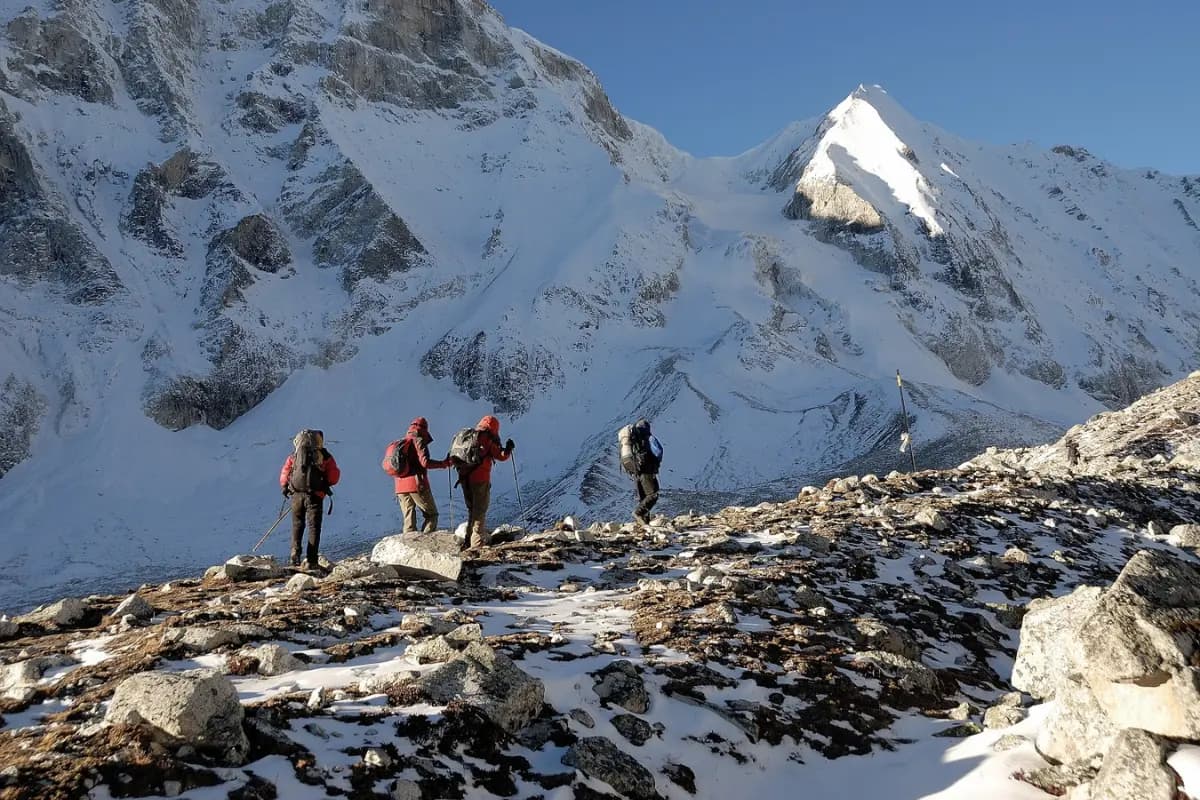
Larke Pass, the highest point of Manaslu Circuit Trek
When cell phone reception is available, it can be used to send and receive messages, to browse the web, to check the weather, and to call or receive a call every now and then. Video calls and upload speeds will be inconsistent during the journey.
Coverage is influenced by a number of factors:
Altitude and mountain terrain
Deep river valleys and surrounding peaks
Weather conditions
Distance from network infrastructure
Local power availability
Your exact location within a village
Temporary network congestion
A phone can have a signal in one area of a village and not in another area just a few metres away. Therefore, village-level coverage should never be treated as a guarantee.
NTC vs Ncell: Which SIM Card Is Better for the Manaslu Circuit?
If you are a trekker, then NTC SIM in Manaslu becomes a better default option. NTC generally offers greater coverage in the remote areas of the route than Ncell does in the higher reaches.
Ncell in Manaslu is still functional in the bottom half and offers tourist SIM and eSIM services. Its current tourist plans are available at Tribhuvan International Airport and other Ncell locations in Kathmandu.
You can use either network for:
Phone calls where coverage exists
Mobile data
Messaging apps
Navigation updates
Online banking when a connection works
Emergency communication when signal is available
Both SIMs can be useful if you have a dual-SIM handset. A network could be working while the other doesn't.
You can purchase a local SIM in Kathmandu before starting the trek. Ncell currently also offers tourist eSIM plans, while Nepal Telecom provides eSIM services for compatible devices.
It is better to consider the coverage and data allowance when choosing a SIM rather than just opting for an affordable package.
Mobile Network Availability Along the Route
The following table shows the general pattern trekkers can expect. Actual signal strength will vary from lodge to lodge, season to season, weather to weather, and location to location.
Route Section | Approx. Elevation | NTC | Ncell | Mobile Data |
Machha Khola | 890 m / 2,920 ft | Good | Good | Generally usable |
Jagat | 1,340 m / 4,396 ft | Good | Good | Generally usable |
Deng | 1,860 m / 6,102 ft | Good to fair | Good to fair | Usually usable |
Namrung | 2,630 m / 8,629 ft | Good | Fair | Often usable |
Lho | 3,180 m / 10,433 ft | Fair | Weak or patchy | Variable |
Shyala | 3,500 m / 11,483 ft | Fair | Weak or patchy | Variable |
Samagaon | 3,530 m / 11,581 ft | Often usable | Weak or patchy | Variable |
Samdo | 3,875 m / 12,713 ft | Weak or intermittent | Limited or absent | Unreliable |
Dharamsala | 4,460 m / 14,632 ft | Little to no reliable service | Little to none | Generally unavailable |
Larkya La | 5,106 m / 16,752 ft | No dependable service | No dependable service | Not reliable |
Bimthang | 3,728 m / 12,231 ft | Returning | Variable | Improving |
Dharapani | 1,910 m / 6,266 ft | Good | Good | Generally usable |
This table is an outline plan and not a current coverage map. Network availability may vary at any time, particularly in remote mountain regions.
Wi-Fi Availability on the Manaslu Circuit Trek
Wi-Fi is available in some teahouses, especially in the lower and middle levels. The internet on Manaslu Circuit Trek, however, is generally slower and less reliable than in Kathmandu.
Better access is generally found in the lower villages, like Machha Khola or Jagat. Some of the lodges in Deng, Namrung, Lho and Samagaon also offer paid Wi-Fi.
The wireless network becomes more unreliable in the higher levels. Well, make sure you are ready for no internet connection around Samdo and Dharamsala.
Location | Elevation | Manaslu Circuit Trek Wi-Fi Availability | Expected Use |
Machha Khola | 890 m / 2,920 ft | Common at some lodges | Messaging and browsing |
Jagat | 1,340 m / 4,396 ft | Available at some lodges | Messaging and basic browsing |
Deng | 1,860 m / 6,102 ft | Available at some lodges | Basic internet |
Namrung | 2,630 m / 8,629 ft | Available in selected lodges | Messaging and browsing |
Lho | 3,180 m / 10,433 ft | Limited | Basic messaging |
Shyala | 3,500 m / 11,483 ft | Limited | Light use |
Samagaon | 3,530 m / 11,581 ft | Available at selected lodges | Messaging and basic browsing |
Samdo | 3,875 m / 12,713 ft | Available at a few lodges | Do not depend on it |
Dharamsala | 4,460 m / 14,632 ft | Generally unavailable | Offline preparation needed |
Larkya La | 5,106 m / 16,752 ft | None | No connectivity expected |
Bimthang | 3,728 m / 12,231 ft | Limited | Improving connectivity |
Dharapani | 1,910 m / 6,266 ft | More available | Basic internet and messaging |
The Wi-Fi quality is largely dependent on the lodge and its power or internet supply. Even if a network shows up, multiple trekkers can share the same connection.
Treat Wi-Fi as a useful extra rather than an essential service.
Wi-Fi Cost on the Manaslu Circuit Trek
Wi-Fi is typically available for an additional cost on the Circuit. The Manaslu Circuit internet cost is different for each lodge, village, connection type and altitude.
It is possible to pay for WiFi in lower villages at NPR 300-500. In middle and higher villages, prices may reach NPR 500-800.
Manaslu Circuit internet costs are higher at remote sites. Lodge owners can use a small amount of solar power or satellite-based systems, making internet access more expensive.

Types of Wi-Fi routers you will find in Nepal
Keep enough Nepalese cash for these small expenses. Many remote teahouses do not accept cards for additional services. Before connecting to a Wi-Fi service around the teahouses, be sure to know about their charges and the amount of access.
Is There Internet in Samagaon and Dharamsala?
Samagaon at 3530m (11,581ft) is the last stop with stable internet access before the Larke La Pass. There are mobile services and paid Wi-Fi services at selected lodges.
Connectivity remains inconsistent, so use Wi-Fi in Samagaon strategically. Send critical messages, check the weather, update family, and download anything necessary for the next section.
Before leaving Samagaon, download:
Offline maps
Trekking route information
Emergency contact details
Important documents
Accommodation information
Music and entertainment
Translation resources
Dharamsala, being at about 4460m (14632 ft), has much less connectivity facilities. There is no reliable mobile service nor Wi-Fi.
Plan for the Samdo - Dharamsala - Larkya La phase as an offline phase.
Mobile Network and Wi-Fi at Larkya La Pass
Larkya La Pass is around 5106m (16752ft) high. This is one of the most isolated parts of the Manaslu Circuit, and reliable cell phone reception or WiFi should not be expected.
There is no teahouse or regular Internet service on the pass. Larkya La mobile network can also be erratic even if a distant network signal is displayed.
Do not rely on your phone for navigation or emergency communication during the crossing.
On the way out of Dharamsala, ensure that you carry with you:
A fully charged cellphone.
A fully charged headlamp.
Offline route maps
Saved emergency contacts
Charged power bank
Key documents kept off-line.
Emergency information from your trekking agency or guide.
This Manaslu Trek preparation removes the need to find a signal when you are in the middle of the pass crossing.
Charging Facilities on the Manaslu Circuit Trek
Electricity is supplied at various locations throughout the Manaslu Circuit, though its availability and quality are reduced at higher elevations. Usually, the local electricity or hydropower system is more available in lower villages.
There are often charging points available at teahouses, but not always. In some lower lodges in the Manaslu Trek, charging points are available within the rooms, and higher lodges may reserve charging points in a communal dining area.
Solar energy plays a more significant role in the middle and upper parts. Cloudy weather can reduce available power and limit Manaslu Trek charging opportunities.
If you can charge your devices when you are getting electricity, do not wait for their batteries to become nearly empty.
Charging can usually support:
Smartphones
Cameras
Power banks
Headlamps
Small rechargeable devices
Large devices require more power and may not be practical to charge regularly.
Charging Cost and Power Bank for the Trek
Charging is generally a paid service on the Manaslu Circuit. The fees are different depending on the lodge and the altitude.
The lower part can cost about NPR 100 - 300 per device while in higher parts, the price can go as high as NPR 400 - 700 and more.
There are also various methods of charging. Some lodges may require a fee per device and others may require rates per time or equipment type.
For most trekkers, a 20,000 mAh power bank is a good option. It provides useful backup during long periods without dependable electricity.
Before entering the upper section, charge:
Your phone
Power bank
Camera batteries
Headlamp
Other essential rechargeable devices
Be extra cautious in the Samdo-Dharamsala-Larkya La section. Never assume a place will have power available to recharge.
Batteries can also lose their performance at low temperatures. Whenever possible, protect Power Banks, spare batteries, and phones from extreme cold.
How to Stay Connected When There Is No Network
A connectivity gap does not need to become a problem if you prepare before losing the signal.
Get all the essentials while you can still connect to the Internet. Your phone should remain useful even when it cannot connect to a network.
Make sure that the following resources are available while you stay offline:
Offline maps
Trekking routes
Emergency numbers
Accommodation details
Permit information
Travel documents
Weather information
Translation apps
Music and podcasts
Important photographs or files
Let family or friends know when you will not have service. Give them a rough period when you expect to reconnect.
When there is no meaningful signal, airplane mode also saves battery life. Searching continuously for a network can drain your battery faster.
Only switch off airplane mode if you need to make a call or are expecting a signal.
Connectivity After Crossing Larkya La
Mobile connectivity may be unreliable immediately after crossing the Larke La Pass, however, the coverage can gradually improve as you descend towards Bimthang. Bimthang at 3,728 m (12,231ft) may offer better networks but the signal strength and internet availability may vary.
Along the route towards Tilije and Dharapani, the connection becomes more reliable. Dharapani at 1910m (6266ft) offers better access to mobile networks and internet services compared to remote high sections of the trek.
Final Takeaway
Wi-Fi, mobile network and charging on the Manaslu Circuit Trek are available, but they become less reliable as you gain altitude.
NTC SIM in Manaslu is more suitable for remote sections, whereas Ncell can be helpful as a secondary SIM for low areas. If you have a phone that supports dual SIMs, then it can be beneficial to carry both networks.
Wi-Fi is available in lower villages and a few teahouses in the middle area. Use Wi-Fi in Samagaon as an important terminal connection prior to the higher and more isolated trail.
There is charging available along much of the way, although it is less consistent in the upper part of the Samagaon section. A 20,000 mAh power bank provides valuable backup. Download offline maps, save emergency information, charge all electrical devices and let family members know before you head to your destination.