You can’t just arrive in Kathmandu, trek to the Everest Base Camp, and take off with your drone once you spot the Khumbu Icefall below. That’s the short answer and it disappoints many trekkers who believe their little drone isn’t subject to the same legislation as commercial planes.
The reason is that Everest Base Camp Trek is situated in Sagarmatha National Park, meaning the general drone laws of Nepal from the Civil Aviation Authority of Nepal, or CAAN, get supplemented by those in place within Sagarmatha National Park in the Department of National Parks and Wildlife Conservation. Both sets of rules alone don’t paint the whole picture, but combined, they confuse many travelers.
This article discusses the question of legality in general, actual permits required, national drone laws of Nepal, Sagarmatha National Park laws, real costs, places where you can and cannot fly, consequences of flying without permits, and what it’s really like to use a drone at high altitude.
Is it legal to fly your drone over Everest Base Camp? Yes, but only when you have CAAN approval, all necessary permissions from the government, and special permission from Sagarmatha National Park. Getting your drone into Nepal and getting the right to use it in that area are two entirely different matters.
Can You Fly a Drone at Everest Base Camp?
Let's answer this directly before going further.
Drone Rules at Everest Base Camp: What You Need to Know
It is not allowed to freely operate a drone from the base camp of Mount Everest, and permission for operating a drone has to be obtained prior to turning it on in the air. It doesn’t matter if a person brings a drone to Nepal or keeps it in his/her backpack; it gives no right to fly a drone after arriving there.

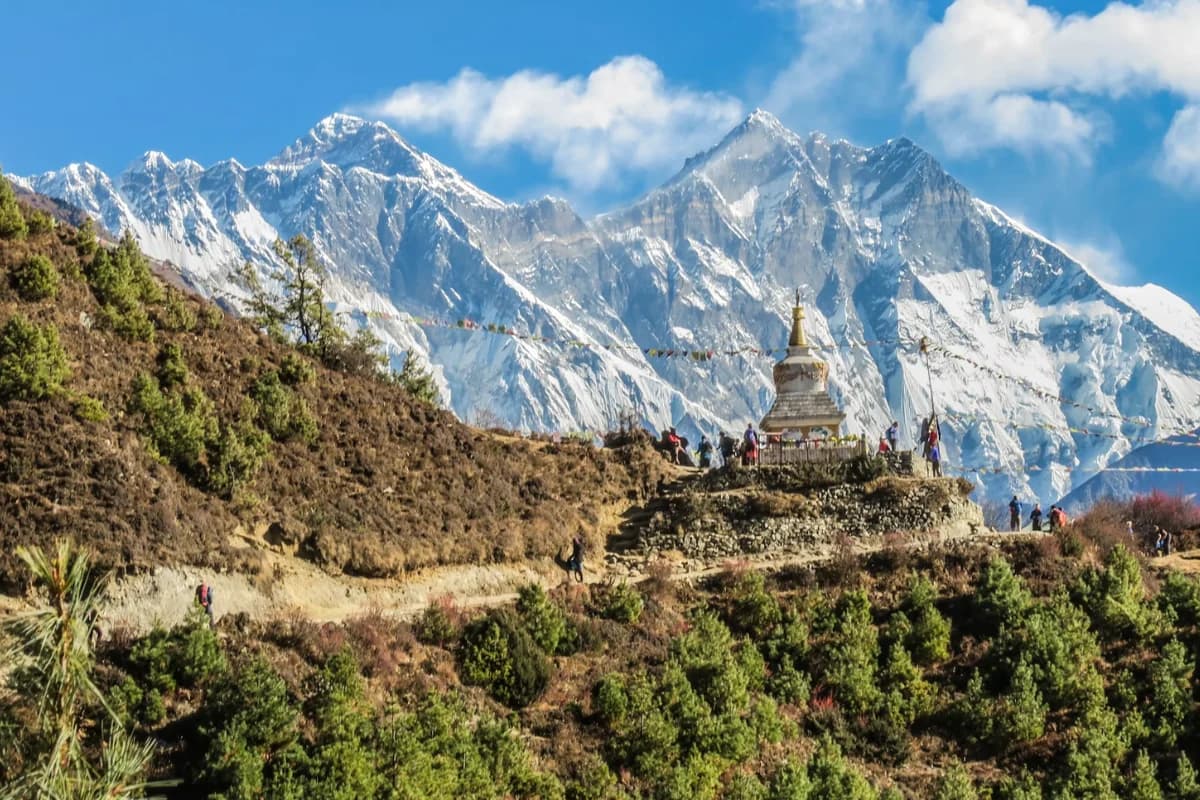
View of Mount Everest from Kala Pathar
There is a certain distinction between four completely different processes, which trekkers frequently confuse: bringing a drone to Nepal, registration of the drone in CAAN, obtaining the authorization for its operation, and receiving the protected area approval, required by the Sagarmatha National Park.
Recreational Drone Use Along the Everest Base Camp Trek
Casual recreational flights during the journey are really troublesome when it comes to legality despite seeing other trekkers do so. The system has been put in place based on purpose and location; hence, there is no general permission for flying “somewhere on the Khumbu trail.” Whatever permission one gets must correspond to where he or she wishes to fly.
Drone Operations Around Mount Everest and the Upper Khumbu
There is a great difference between Everest Base Camp and the top of Mount Everest in terms of regulations, and a permit for operating from Base Camp is not good enough to fly higher up on the mountain. There are other aspects of flying near the upper parts of the mountain such as safety, high-altitude performance, and airspace restrictions that come into play.
Why Drones Are Restricted at Everest Base Camp
Understanding the reasoning behind these rules makes them far easier to follow.
Aircraft and Helicopter Safety
One of the busiest areas for low-altitude flights in Nepal is the Khumbu region. Rescue flights by helicopters, trekking flights, and other flights from Lukla airport, which is considered one of the most challenging in the world, all fly relatively close to the trekking trail. One of the standard operating conditions defined by the CAAN contains limitations related to aerodromes and emergency situations. An unregistered drone flying together with a rescue helicopter is a very serious risk of collision.
Sagarmatha National Park Protection
It must be recognized that the area surrounding Everest is environmentally sensitive due to the presence of flora and fauna which the Nepalese government takes pains to protect under park laws. Noise and disruption created by the flight of drones cannot be considered an afterthought but a genuine threat, and that is precisely what park regulations address.
Local Communities, Culture and Religious Sites
The Sherpa villages, monasteries, and prayer spots along the Khumbu trail, and an unexpected flying drone above can feel invasive to those who are doing their routine work and praying there. The need for getting permission also arises because of the need to respect privacy and cultural practices of locals.
Security and Controlled Airspace
There are certain areas where government or security restrictions exist, and there are even some locations that will be inaccessible no matter how much documentation you have at other places in the region. This is because of the reasons stated above as to why it may be difficult to get approvals based on your destination.
Drone Permits Required at Everest Base Camp
There is no one worldwide Everest Drone Permit. In its place, there is a bunch of individual permits that are for distinct areas of the process.
CAAN Drone Registration
The latest CAAN guidelines clearly indicate that foreign nationals who wish to fly their drones in Nepal have to get themselves registered with the Temporary Drone Registration process that operates from the CAAN Flight Safety Standards Department located in Sinamangal, Kathmandu. For that, the applicant must produce their passport and Nepal visa that must be valid at the time of application. The application should include a detailed explanation about the purpose of operation, the area where it will be conducted, and the duration of the operation.
In addition to the above, one needs to provide information about the make and model of the drone used and its serial number. One also has to provide either a custom clearance document if the drone was imported into Nepal or the VAT receipt if the drone was purchased locally.
However, getting registered with the agency does not mean that one has been authorized to conduct the operation. CAAN's own certificate of registration clearly indicates that registration alone does not constitute authorization for flight operations.
Ministry / Government Approvals
However, other forms of approval from the government or security department may be required based on the nature of your business, and this is an aspect where one needs to verify the exact requirements for their particular flight as opposed to taking for granted a process that they saw somewhere else. In case of foreigners, the CAAN will usually forward the applications to the Ministry of Home Affairs for security purposes.
Sagarmatha National Park / DNPWC Permission
Everest Base Camp is located in a protected region where the Department of National Parks and Wildlife Conservation has its own authority. The cost of drones and filming may vary according to the purpose and the fee structure for the protected region. As the information available publicly in the form of a 2026 drone fee chart of Sagarmatha National Park is not clearly stated on their website, please verify the cost.
Local / District-Level Permission
Further permissions may be needed depending upon your specific enterprise. For example, in the case of the Everest region, it may require permission letters from the District Administration Office of Solukhumbu along with air traffic control in Lukla, which is handled through the National Park office in Namche. However, the requirements change over time, and thus, it is essential to ascertain the present requirements rather than follow a checklist that is old.
Nepal Drone Rules You Need to Know Before Flying
In addition to the layers unique to Everest, there is also a series of national regulations that apply to all drone flights.
Drone Registration
The CAAN regulations for UAS distinguish between four classes of drones, based on the maximum weight of take-off. Class A represents drones carrying out very low risk activities which have a weight below 250 grams; Class B represents low risk activities that have a weight between 250 grams and 2 kilograms; Class C represents regulated low risk activities that have a weight between 2 and 25 kilograms; and Class D represents regulated high risk activities with weights exceeding 25 kilograms. Weight is important in order to determine the level of processes needed by the particular drone.
Maximum Flying Altitude
In the typical operating environment of CAAN, there is a restriction on the flight of the drones that can only fly up to 100 metres above ground level, abbreviated AGL.

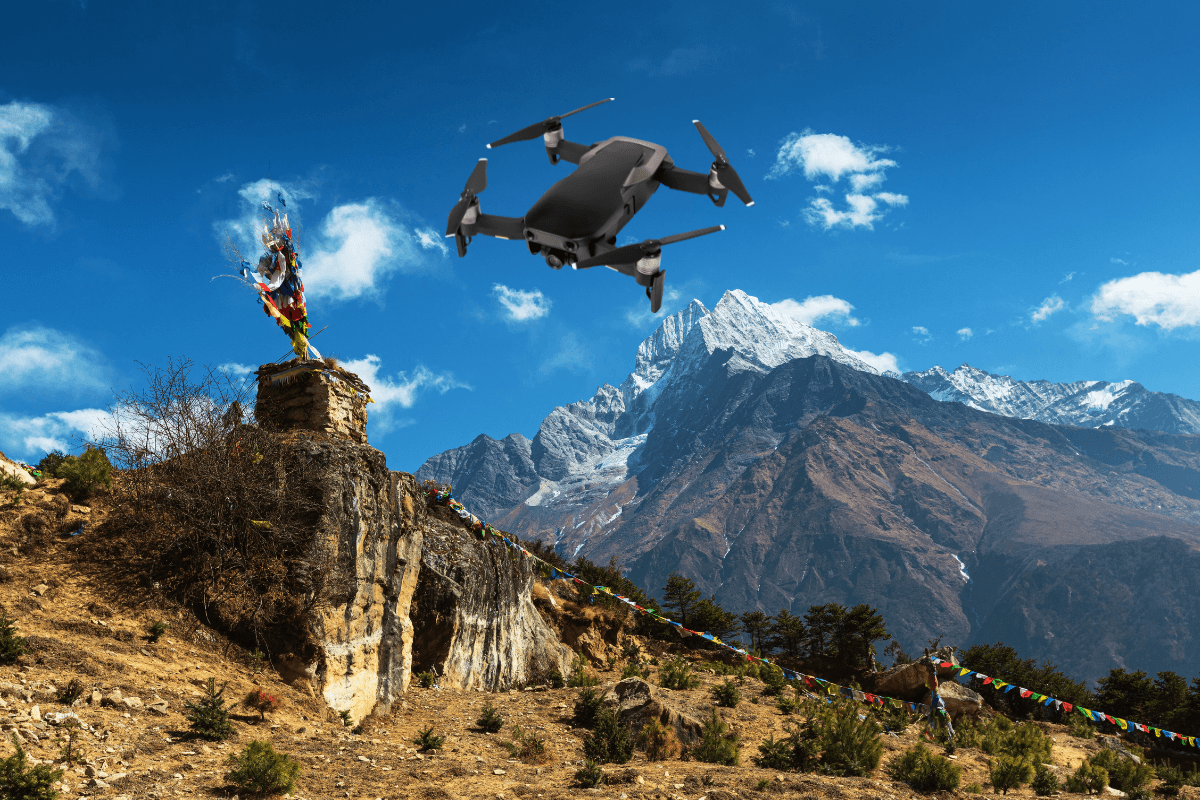
Kind of drone you can fly in Nepal with permission
It should be noted that when measuring the height above the ground, it is done above the ground right under the drone, not above the sea level. In such an area as Everest, the difference is crucial since the ground itself is at a huge height above sea level.
Visual Line of Sight
The standard operation guidelines stipulate that the drone should stay under the line-of-sight of the operator, implying unassisted visual line of sight and not relying on the camera feed alone.
Daytime Flying
Night flying is not allowed under normal circumstances, and all flights can only be conducted under Visual Meteorological Conditions, which imply sufficient visibility. All exceptions are made only upon special permission.
Distance From People
According to CAAN's guidelines, an unmanned aircraft shall not be flown within 30 meters horizontally from any person who is not a participant in the operation, and if there is any specific consent from such a person then this distance comes down to 15 meters. This indicates that one cannot fly over crowds or groups of trekkers on the trails.
Airport and Aerodrome Restrictions
According to CAAN's operating standards, the use of drones within 5 km of the movement area of an aerodrome is not allowed unless the particular authorization says so. Hence, Lukla becomes a particularly sensitive area for the drone pilots.
Restricted and Prohibited Areas
Nevertheless, government and security sites have their own restriction or prohibition regardless of the aforementioned general regulations, and present aviation NOTAMs can impose additional temporary restrictions. Regarding the Everest region, this may include additional temporary restrictions due to particular rescue missions, VIP transit, or expedition window that will not be included in the guide even written in the previous season.
It is necessary to check current restrictions before flying rather than relying on the restrictions applied in the previous season due to frequent changeability of particular restrictions. The fact that you had a permit last October does not mean that you will need the same permit in the current season.
How to Get Permission to Fly a Drone at Everest Base Camp
Here is the practical sequence most operators follow.
Step 1: Declare Your Drone When Entering Nepal
Declare the drone at the customs office upon arrival and retain all the papers that are handed to you, as CAAN registration will require them.
Step 2: Register the Drone With CAAN
Register your drone using CAAN’s Flight Safety Standards Department, attaching your passport, visa, documentation for the drone, and reason for operation. A physical examination can be required based on the type of drone.
Step 3: Apply for the Required Government Approvals
Depending on the purpose and operation you are carrying out, there may be some more approvals needed from the Ministry of Home Affairs or any other department. It is important to find out precisely what your particular flight needs rather than following a general process.
Step 4: Obtain Sagarmatha National Park / DNPWC Permission
The protected area permit is to be applied for separately while considering the budget needed for the production of the documentary as well as the cost involved in the UAV aspect.
Step 5: Confirm the Exact Flight Area
Your permission would most likely be contingent on particular coordinates, intended height, dates, purpose, and designated start and end points. Any modifications you make after being granted permission would normally require a fresh application, not just an on-the-spot modification.
Step 6: Confirm Before Launching
Even if you have everything in writing, make sure that there aren’t any restrictions, bad weather, NOTAMs, and helicopter flights before each flight and that you adhere to any local requirements on the day itself.
Cost of Flying a Drone at Everest Base Camp
Costs here genuinely vary based on your drone category, purpose, and current fee schedules, so treat the figures below as a general reference rather than a fixed price list.
Requirement | Possible Cost | Notes |
CAAN registration | Around $50 plus VAT; verify current fee | Applies to foreign nationals |
National park / UAV fee | Around $1,500 plus a 25 percent UAV surcharge | Sagarmatha-specific; verify current fee |
Filming/documentary fee | Depends on purpose | Combines with the park fee above for filming use |
Local approvals | Varies | Depends on the specific operation |
Professional / agency assistance | Varies | Optional, often smooths the process considerably |
The figures mentioned above may not necessarily hold true when you plan your trip. Fee structures can be revised, so it is best to check with CAAN and Sagarmatha National Park on the exact amount. The intention of this piece is to answer queries on Everest drone permit cost, drone permit Nepal cost, and Sagarmatha National Park drone fee, and all of them deserve answers based on up-to-date figures, rather than on one from a couple of seasons back.
Permitted Drone Flying Areas on the Everest Base Camp Trek
Restrictions genuinely vary by location along the route.
Lukla
This is the most critical point along the route given the ongoing air traffic from one of the busiest airports in the world. The 5 km aerodrome restriction comes into effect in this area, and this is no place for easy flight.

Kinds of drones mostly used worldwide
Namche Bazaar
Because Namche is the largest camp on the trail, it comes with real regulations that stem from its density. People and helicopters play a role in making recreational flying in this area a real challenge from a regulatory perspective.
Tengboche
As one of the places having a monastery of great significance, Tengboche is culturally sensitive and also restricted in terms of regulations that apply to the entire Sagarmatha National Park.
Dingboche
The altitude of the region, coupled with unexpected winds, is another variable which comes into play at this stage of the hike, besides the usual park regulations.
Lobuche
Flying a drone this high presents real battery challenges, along with all the necessary permissions for drone flying in the park.
Gorak Shep
Extremely high altitude and frequent presence of helicopters make this area dangerous for a scheduled flight.
Everest Base Camp
Base camp, being the last point in the trek, is situated deep within the area that is under protection. In this particular place, prior approval cannot be avoided, and this is the very spot that generates maximum interest for park authorities when flying without permission is involved.
DJI Mini Drone Rules at Everest Base Camp
One of the most widespread myths carried into Nepal by trekkers is that drones weighing less than 250 grams are exempt from the country’s regulations.
Are DJI Mini Drones Exempt in Nepal?
According to the weight classifications of CAAN, any drone weighing less than 250 grams belongs in Category A, which is very low risk. Being very low risk does not mean that there are no restrictions. Therefore, a Category A drone must be registered and also is subject to the Sagarmatha National Park protection area regulations should one wish to fly the drone in the protected areas of the park.
DJI Mini 4 Pro / Mini 3 Pro / Other Small Drones
Regardless of whether you have one small drone or another, the restrictions based on your location are not superseded by its weight. The important regulations are those related to the location at which you fly, not the weight of the drone.
Consequences of Flying a Drone Without Permission
The consequences here are genuinely worth understanding before you consider taking the risk.
Drone Confiscation for Unauthorized Flights
An unlawful drone flight could lead to sanctions, which could include confiscation of the equipment as well as fines or other possible legal actions, depending on the case. The appropriate sanction will depend on the relevant aviation, security, and protected area regulations, making it unwise to depend on reported figures for fines alone.
Financial Penalties for Unauthorized Drone Use
There are financial penalties for any illegal operation, and the level of these varies greatly according to where and how the offense occurred. The penalty increases the more often an offense occurs and even more so when a flight is near a protected area.
Legal and Immigration Consequences
Operating drones without authorization may involve breaking aviation laws and laws in protected areas, and the violations may involve legal proceedings under the Aviation Act. Foreign nationals may even be deported or face challenges getting trekking and mountaineering permits in the future. It's really not a field to experiment with.
The Reality of Flying a Drone at Everest Base Camp
This is where a truly practical guide goes beyond the rules and addresses what really happens on the ground.
High Altitude Affects Drone Performance
In terms of battery life, cold weather at the altitude of Base Camp will make the battery deplete much faster than at the sea level. Also, thin air will negatively affect the efficiency of lift provided by your rotor blades, resulting in a decrease in flight time and flight stability. Additionally, wind will tend to be stronger and less predictable at this altitude compared to the lower part of the route, while the signal from the GPS might become unreliable in the mountains.
Everest Weather Changes Quickly
The wind, cloud cover, and even snow may change within an hour at this altitude, and even though there was no problem seeing clearly from the camp, the visibility when the drone starts to fly may be poor. This is just something one has to contend with here.
Helicopters Are a Major Concern
Flights for rescues, trekking, and expeditions travel through this airspace all the time. An apparent vacancy in the sky at any one point of time doesn’t necessarily mean it will remain that way. Don’t ever assume that the absence of aircraft implies the absence of aircraft in the sky.
Takeoff and Landing Can Be Difficult
Rocky, uneven land, snow and ice on the ground, windy conditions, and true scarcity of level landing zones all make flying in and out of here significantly more difficult than at virtually any other location you may have flown from.
Battery Management at High Altitude
Battery warmth before flights will have a significant improvement on performance, and it is advisable to carry extra batteries according to your license and the type of drones you operate. It is better to check the battery voltages carefully without testing the limits of your flight in cold and thin air.
Drone Use on Mount Everest
The existence of drones cannot be ignored in the region of Mount Everest, but certainly not as perceived by most tourists.
Professional Drone Operations on Everest
Legal drone use for business and commercial purposes is actually well founded, and it is critical to differentiate this from what a casual tourist may do. This is licensed activity conducted in accordance with permission frameworks, and not an indication that it is okay to fly freely.
Drone Deliveries in the Everest Region
Perhaps the most obvious case in point is Airlift Technology, a Nepalese drone logistics firm working with the Sagarmatha Pollution Control Committee and the Khumbu Pasang Lhamu Rural Municipality, using the drones for carrying out heavy lift cargo operations from Base Camp to Camp 1 through the Khumbu Icefall.
During the 2026 season, this was taken one step further with drones used for transporting oxygen cylinders, route-fixing equipment, and expedition gear from Base Camp to Camp 1 through the Khumbu Icefall, thereby reducing an otherwise six-to-eight-hour-long task into mere minutes.
A particularly interesting use of the drone was in the context of an extremely high-profile no oxygen ski descent, during which the support team used the drone flying above to send real-time information about the route to the descending skier through the Icefall. This is an obvious example of drones already becoming an integral part of the mountaineering efforts on Mount Everest, and not just being observers from above.
This is a crucial point that needs to be noted by any reader of this article. The fact that drones are allowed to operate on the logistics from Everest Base Camp to Camp 1 proves that the presence of drones in the region of Mount Everest does not give tourists unlimited right to fly their drones there. The operations of Airlift Technology were conducted under an official agreement with the local authorities and in coordination with Lukla Air Traffic Control precisely due to that.
Bringing a Drone on the Everest Base Camp Trek
This is a genuinely different question from whether you can fly one.
Bringing vs. Flying a Drone
One can import a drone into Nepal and even travel around the country without flying it at all, but this is not the same as the permission to fly. Many trekking groups will have a drone on them just for this purpose, in case they return to Nepal later with the permits required.
Documents to Carry for Drone Operations
Should you be intending to travel, then you must bring your passport, your CAAN drone registration, your custom declaration forms, your letters of permissions, your Sagarmatha National Park letter, and your copies of applications you made. It is important for this information to be available physically as it will be required by park authorities or checkpoints.
Traveling With a Drone Without Flight Permission
Having a drone strictly for the purpose of still photography opportunities on the ground without any intention of flying it is totally different from having a drone with hopes of flying it after arriving at your destination. If you do not have the necessary permission, then expect that your drone will remain packed throughout this trip.
Drone Photography Alternatives at Everest Base Camp
None of this means you have to leave without any aerial perspective at all.
Use Professional / Authorized Drone Footage
Licensing companies that have already acquired the right permits as well as stock footage agencies and tour companies can offer you aerial shots without the trouble of getting permits.
Capture Ground-Level Footage
With wide-angle lenses, time-lapse photography, panoramic photography, and an action camera, there is plenty of spectacular filming of the Khumbu that doesn't require any drone permits at all.
Ask Your Trekking Agency About Authorized Drone Operations
Some organizations have relationships that can enable them to assist in coordinating any necessary permits for a drone flight that may be appropriate for your journey, thus making an otherwise complicated task easier for you.
Final Verdict: Should You Bring a Drone to Everest Base Camp?
As a casual hiker, don’t consider flying if you are not sure that it’s worth it to get all the permits and if you are not ready to accept that this particular process might turn out to be not worth it for one personal flight.
As a professional photographer or videographer, think of getting your approvals several months ahead of your flight, and expect your budget to include the costs associated with the Sagarmatha National Park permit system and CAAN registration.
As for a drone for personal souvenirs, a regular camera will be easier and cheaper to obtain and will have no compliance risks associated with its use.
The use of a drone could be carried out in the region of the Everest and already exists there in reality. However, the Everest Base Camp is not a starting point of any flights of drones for any trekker, and the flight of any unmanned aerial vehicles would depend entirely on aviation, governmental, and national park permissions described in this guide. Updated in 2026, and worth checking directly with the Civil Aviation Authority of Nepal and Sagarmatha National Park before trusting any of that.
Do you plan an Everest Base Camp trek in 2026? Write us a message on WhatsApp at +977-9851042334, and we will be happy to help you organize your trek according to your schedule, preferences, and physical condition.