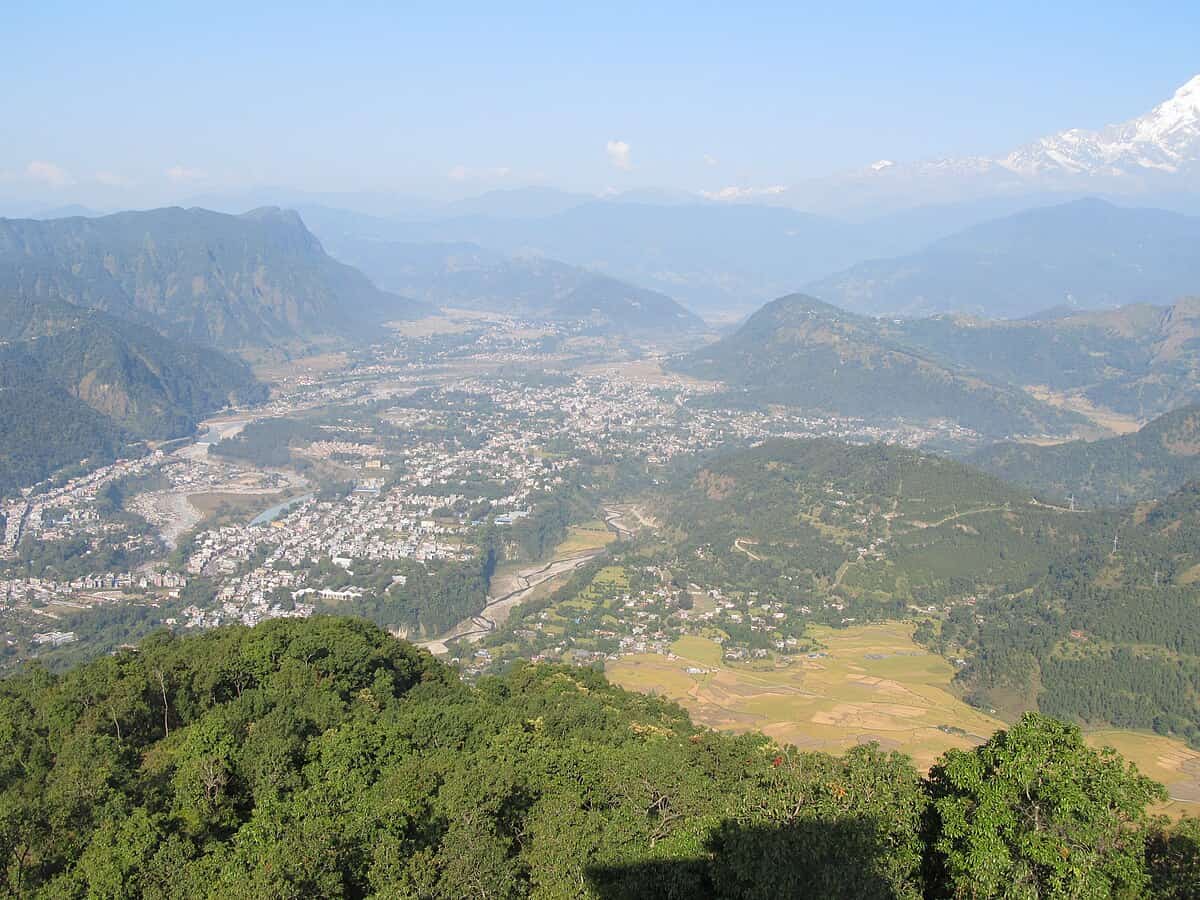
The Annapurna region of Nepal offers two distinct yet contrasting trekking experiences. First, the Mardi Himal Trek, and second, the Poon Hill Trek. They are becoming acclimatised among novice trekkers for Himalayan adventures.
These treks suit people who have less time and usually need moderate body fitness. They let trekkers explore the cultural diversity and stunning beauty of Nepal. All without deciding to take the rigorous and elevated tours. Such as the Annapurna Circuit or Everest Base Camp.
Mardi Himal and Poon Hill treks have some unbelievable rewards. There is a vast difference in altitude, remoteness, and trail quality. They also offer different emotional and physical experiences.
Briefing on Poon Hill Trek
The Poon Hill Trek is already considered the ultimate first trek to look at. Beginner trekkers can try the Poon Hill journey. It is thanks to the excellent trail markings and the less strenuous elevation status. Trekkers have a lot of choices in finding comfortable accommodation along the path.

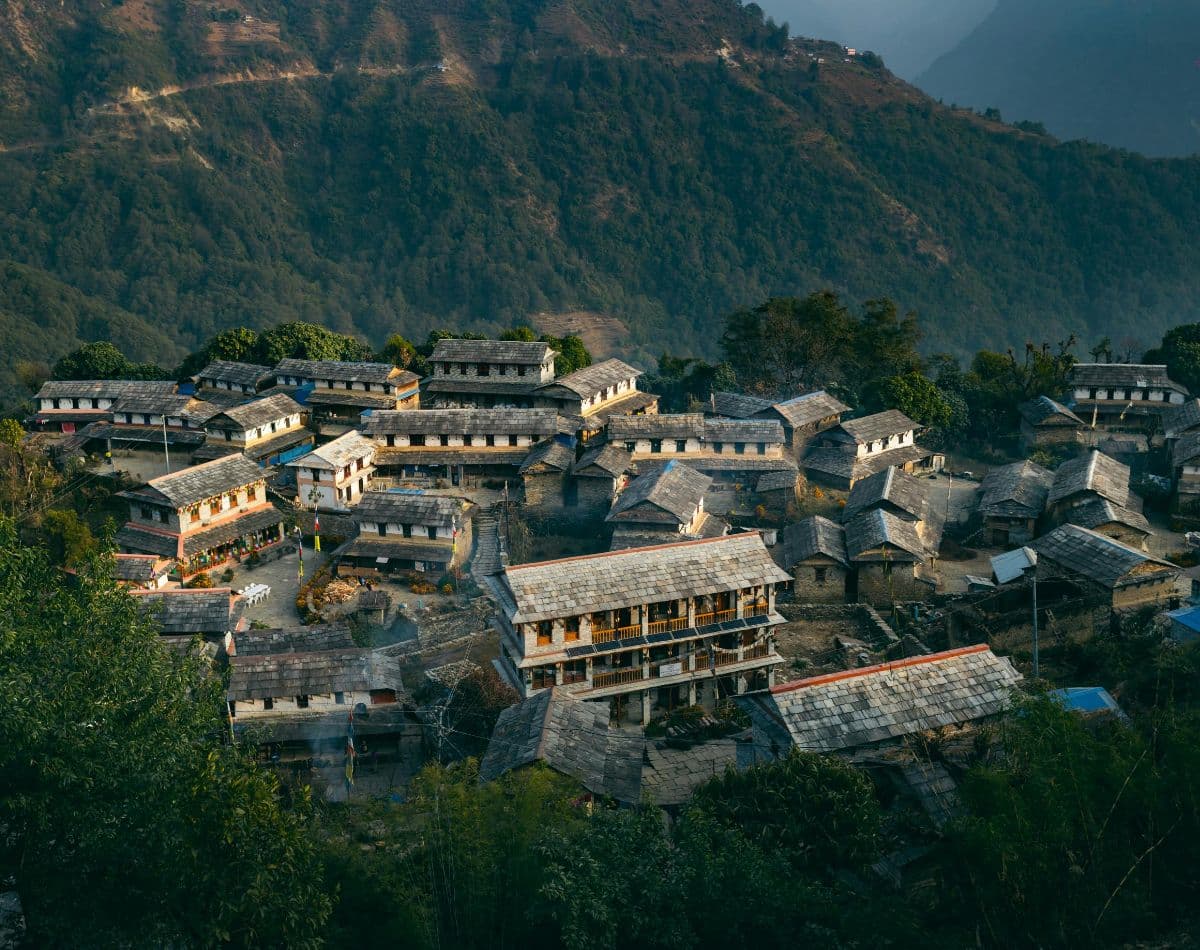
You go through beautiful forests of rhododendrons, terraced green fields, and beautiful villages. You travel through places such as Tikhedhunga, Ghorepani, and Ghandruk. Moreover, all are replete with Gurung and Magar culture.
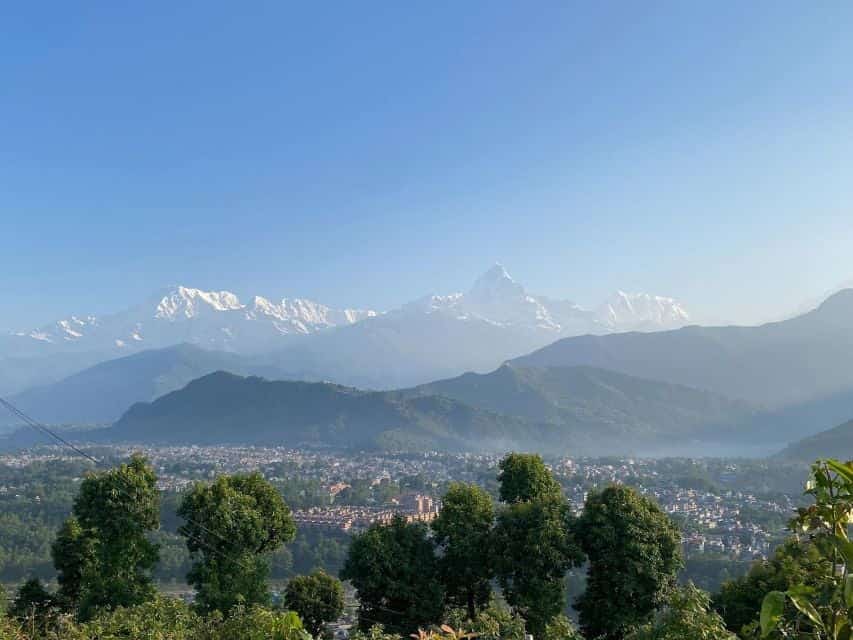
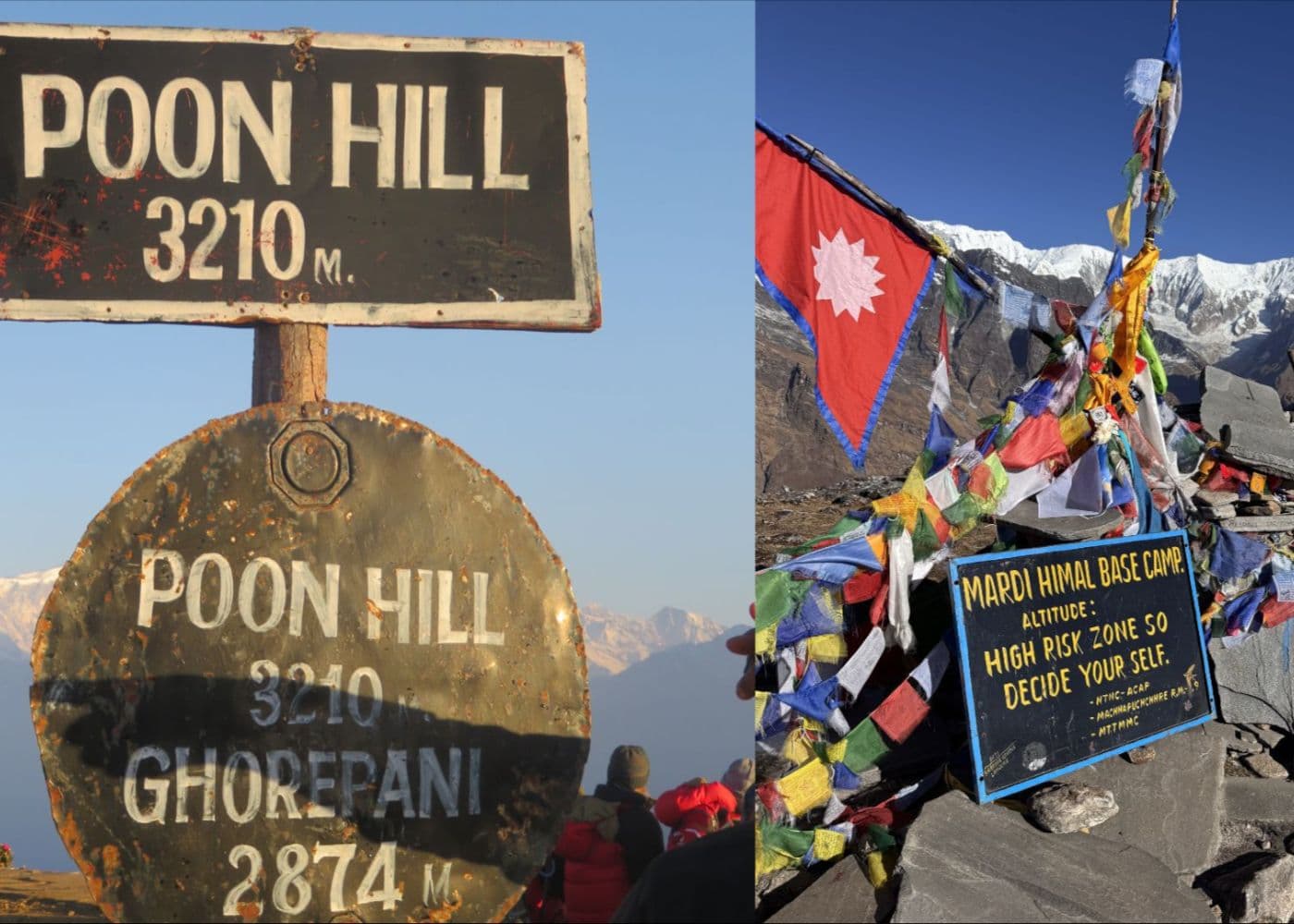
This trek holds the crown as a pre-dawn hike. Poon Hill Viewpoint (3,210 metres) offers mesmerising views of the morning sun. The sunrise gilds the snow-capped heights of Annapurna and Dhaulagiri. The peaks covered in gold produce breathtaking and accessible Himalayan sunrise vistas.
Mardi Himal Trek and what it offers
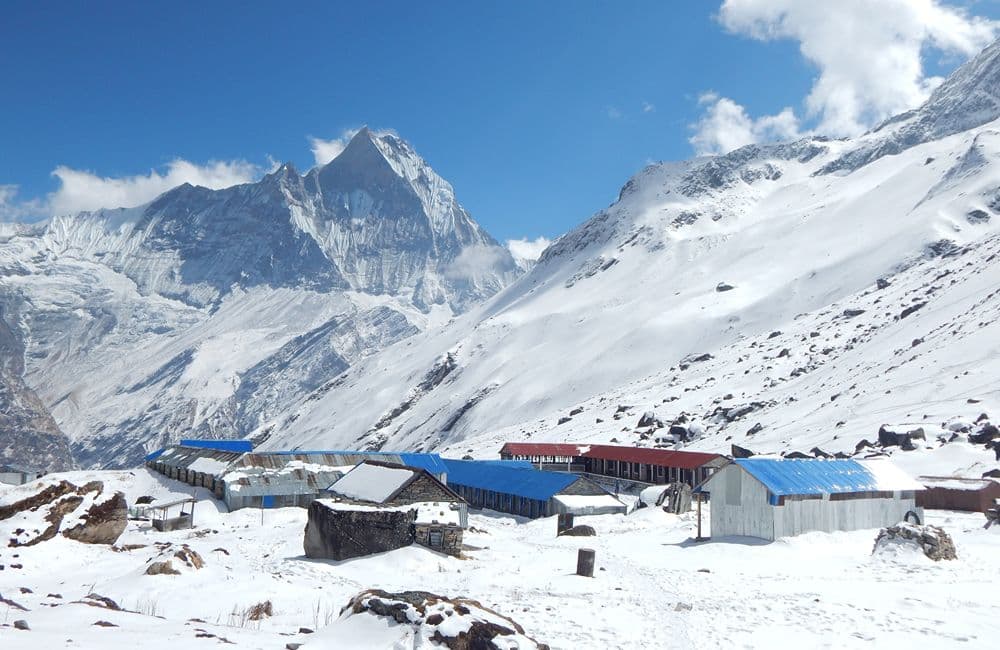
As an alternative, the Mardi Himal Trek is a new, more challenging route. It has become popular for its uninhabited, wild beauty and vista-edged, varied trails. They go through to the Mardi Himal Base Camp (approximately 4,500 metres).

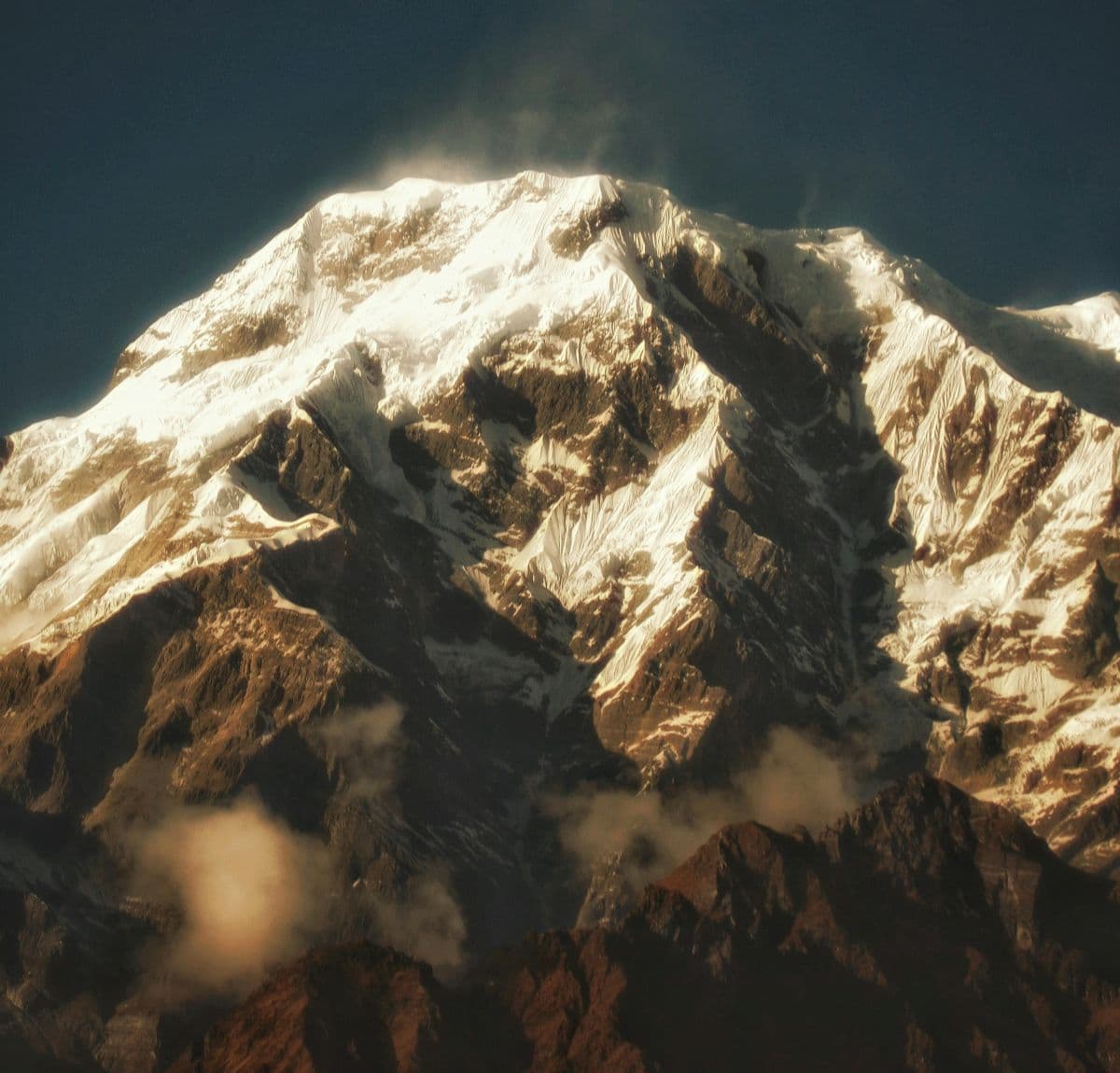
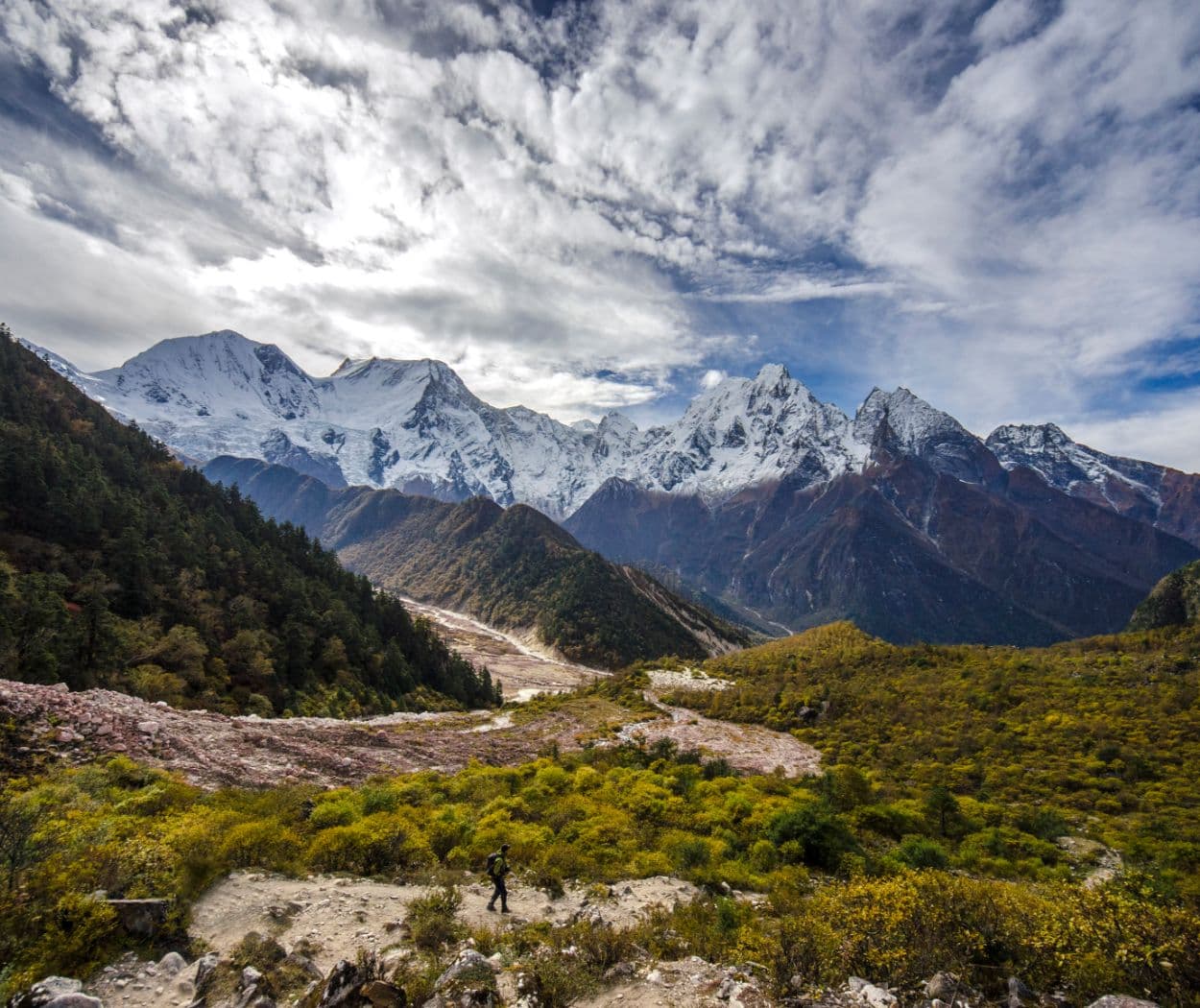
The trek originates in lower-altitude forest areas around Kande or Dhampus. It then ascends through beautiful cloud forests and yak pastures. You find a few narrow mountain ridges that reward you with unimpeded and up-close views. Machapuchare (Fishtail), Annapurna South, and Hiunchuli panoramas are amazing, to say the least.
It is a less commercialised route with fewer trekkers and closer to the wilderness. But it is more challenging too: there is more elevation gain. Also, trekkers need better physical endurance.
How to choose the right Trek: Mardi Himal or Poon Hill
To a newbie, the question is not simply which trek is more beautiful. It's also about which best suits his or her expectations. What level of preparation or convenience do they need as a first-time trekker?
Mardi Himal might offer trekkers dramatic mountains and more time away from people. But it also brings about some problems for a new trekker. They face steeper ascents, colder evenings, and altitude change.

By comparison, Poon Hill focuses more on cultural experience. It has low intensity up and down. Also, the trek offers easy accessibility and better accommodation. So it is a great choice for families, hikers, or people who are not confident in high-altitude treks.
Knowing the pros and cons is important. It involves selecting the right trek, which can determine your experience. Either it will be strong and unforgettable or draining and disappointing. More so if this is your first trek.
Expert-recognised comparison provides trekkers with the necessary expertise and knowledge. It helps to make decisions that suit their own comfort, objectives, and readiness. The following content helps you weigh the pros and cons of these two treks. Learn which suits your interest: the Mardi Himal or the Poon Hill trek.
Trek duration and distance
When you organise your trek, know how long the trip will be. Learn how many kilometres a day you have to cover. This helps you prepare in the physical and psychological aspects. Especially so when you are a beginner.

Both the Mardi Himal and Poon Hill treks are somewhat short treks. Yet they differ in hours walking, trek distance, terrain, and altitude gain.
The comparison in the table below holds all the details. It will assist you in deciding on which of the two treks you may like to do. It all depends on your time availability and fitness level.
Aspect | Poon Hill Trek | Mardi Himal Trek |
Typical duration | 4 to 8 days | 5 to 7 days |
Total distance | Approximately 40 to 45 km | Approximately 35 to 40 km |
Average walking hours per day | 4 to 6 hours | 5 to 7 hours |
Trail type | Gradual ascents with short descents; well-maintained paths | Steeper ascents, Ridge trails and Forest paths; more rugged terrain |
Altitude gain | Moderate, highest point at 3210m | Steeper and faster, Highest point at 4500m |
Rest/acclimatization days | Usually, no extra rest days are needed | Recommended. Acclimatization days at high camp or nearby |
Poon Hill is a less steep trek with fewer walking hours per day. So it is a great trek route to start your trekking journey. Yes, especially for first-time trekkers willing to take their time.
The total distance covered in Mardi Himal is the same. But walking takes more time, given that the steps are more inclined. So it requires a little more stamina and an acclimatisation day to avoid safety risks.

Select an appropriate time and speed that suits your level of fitness. Likewise, having comfort will go a long way in providing a wonderful trek and enjoyment.
Altitude Comparison
Altitude is an important distinction between the Mardi Himal and Poon Hill treks. It is a physiological challenge of how the altitude will affect first-time trekkers.
The top of the Poon Hill Trek is Poon Hill Viewpoint, which is at an altitude of 3,210 metres (10,531 ft). The Mardi Himal Trek’s Mardi Himal Base Camp goes to about 4,500 metres (14,764 ft). The height has an effect on the altitude-related issues and the trekking experience.
Acclimatisation Needs
Poon Hill Trek begins at a height of Nayapul (about 1,070 m or 3,510 ft). It grows at a gradual pace to villages like Tikhedhunga and Ghorepani. The trek presents quite a low acclimatisation risk as the elevation is rather low. The highest point (although still a high altitude) is 3,500 metres. It is unlikely to become a serious altitude-related issue, but there is still a chance.

It is best suited for beginners, families, or older passengers. They can visit the Himalayas without having to worry about high-altitude issues. Also, they will not have to experience extensive trekking.
The Mardi Himal Trek has its base in Kande (1,770 metres/5,807 ft) or Dhampus (1,650 metres/5,413 ft). Trekkers move from Forest Camp, Low Camp, High Camp, and finally Mardi Himal Base Camp. It is a rapid altitude transition.
Altitude Sickness Risk in Mardi Himal and Poon Hill Trek
At elevations above 4,000 metres, it can provoke the occurrence of such AMS symptoms. Keep an eye open for headache, nausea, dizziness, or insomnia.
The trek is of a short nature, but the elevation in the few days is quite intense. Thus, people have to be extra careful in how they pace themselves. Also, note how their bodies are handling the thinner air.

Acclimatisation to trek in the Mardi Himal will not be a precaution. It is a key component of trek planning. Spend an extra night at High Camp or go at a slow pace. Drinking adequate fluids, wearing warm clothing, and having a balanced diet help.
Compared to Poon Hill, Mardi Himal requires trekkers to adapt to high elevation. Hence, this trek is a little more technical and challenging for the novice trekker.
First-time trekkers should consider other aspects of the trek. Everyone is sensitive to altitudes, no matter their age or fitness. Certain people can have symptoms of AMS as soon as they reach 2,500 metres above sea level. Whereas others can acclimatise well up to 4,000 metres.

That's why it is imperative that aspiring trekkers at Mardi Himal at least be aware of the altitude. They should also have the mindset to be able to listen to their bodies. Trekkers need to have the ability to back out in case conditions deteriorate.
Which is safer? Poon Hill Trek or Mardi Himal
To sum up, the altitude profile in the Poon Hill Trek is safer, and AMS does not pose much risk at all. Hence, a more accessible and relaxed trekking destination is the Poon Hill Trek.
The Mardi Himal offers a higher altitude and a more violent elevation gain. It is dramatic and wilder, but also includes the actual risk of the need to acclimatise. Hence, it is more suitable for the fit and prepared.
Mardi Himal is a more adventurous experience for beginners than Poon Hill. These dynamics of altitude are vital in selecting an adequate trek. You can enjoy it while having general health and safety in the Himalayas.
Trek difficulty level and terrain
It is important as a beginner to know about accurate difficulty and terrain. As it defines the entire experience of the trekking process. Yes, it includes its physical, mental, and emotional aspects.

Both the Mardi Himal and Poon Hill treks include separate areas and difficulties. They correspond to the level of fitness and adventure hunger. Here is a deep look at what each trek involves. They ensure that you can choose one within your ability and meet your expectations.
Trail Type:
Poon Hill:
The path is wide and well established. It is a combination of dirt pavement, stone steps, and flats in the form of switchbacks. What makes it accessible is that it goes through villages, farmlands, and forests. So you rarely feel as if you are off the beaten track.
A very good network of the trail system is available. Trekkers can find plenty of rest stops and teahouses. This makes the journey simple and enjoyable, as most places are convenient.
Mardi Himal:
The trail is slimmer, and it is not commercialised. The trail passes through thick rhododendron forests. Trekkers cover steep hillsides and rough mountainous topographical regions.
The path is rocky and muddy in some sections. During raining season, especially. And requires careful footing. This is a more natural and less crowded way that provides a feeling of wilderness. But it demands more attention and strength from trekkers.
Elevation Gain and Steepness:
Poon Hill:
The climb is not steep, and the elevation gain is also distributed over many days. Hence, the climb does not seem daunting. There will be some staircases, particularly around Ulleri village.
But these are not very steep and are too long. This slow ascent will acclimatise your body to the altitude with less burden on the body and stress.
Mardi Himal:
The trek has steeper ascents during the section between Low Camp (3,000 metres) and High Camp (3,800 metres). The trail is steep uphill along ridgeways. You cover more elevation in the shorter days.
This requires good cardiovascular capacity and leg strength. As a newbie, the beginner should expect a rigorous workout. Trekkers encounter drawn-out phases of upward walking.
Physical Demand:
Poon Hill:
Ideal for trekkers who are of an average fitness level. They should have the ability to walk for 4-6 hours a day. Lower intensity and developed tracks are more convenient for breathing.
It is not so strenuous on joints and muscles. This is suitable for families, occasional hikers, and inexperienced trekkers at high elevations.
Mardi Himal:
It is also a more demanding physical condition. The distance of the daily hiking is greater, and the gradients are steeper. You will be applying more effort than usual in a backpack on the uneven terrain.
The elevation contributes to the physical difficulty as well. The trek is suitable for novice hikers and people who are willing to take on a greater challenge.
Terrain Conditions:
Poon Hill:
The trail is even and much-travelled. As such, there is rarely a problem of slipping except during the monsoon season. The steeper parts have stone steps.
There are quite often teahouses where one can take a break and refresh themselves. Such predictability creates confidence and safety among first-time trekkers.
Mardi Himal:
Trekkers find some muddy and slippery sections of the trail. It may need proper attention in case of rainy weather or during the early melt in the spring season. Some rocky parts will demand caution.
There can be roots and loose stones underfoot. Especially in the forested parts, so it is advisable to bring trekking poles in a bid to get some balance. A lesser number of teahouses implies minimal amenities. It is a good idea to bring along comfort necessities.
Altitude Impact:
Poon Hill:
The highest it goes is 3,210 metres, so most trekkers do not have severe symptoms of altitude sickness. The gradual climb and lower peak ensure the climber needs little acclimatisation.
It makes it a lower health risk for beginners. It has panoramic views without the physical concerns associated with elevated altitude.
Mardi Himal:
The trek reaches a height of approximately 4,500 metres. This falls under high altitude zones where the level of oxygen is rather low. This altitude brings with it the danger of acute mountain sickness (AMS).
This is the reason why one must be very cautious of symptoms. They include headache, nausea, dizziness, and more. Safe and enjoyable trekking requires acclimatisation over the right days.
Crowd Factor and Trail Traffic:
Poon Hill:
This is one of the most famous short treks in Nepal. Poon Hill tracks become even more crowded at peak times in spring and autumn. This vibrancy offers a social environment.
You mingle with other trekkers, tell tales, and eat meals. To some first-timers, this may be comforting and encouraging. To others, it could be a little congested.
Mardi Himal:
A less crowded place, the trek offers a calm adventure. There are a few trekkers on the same trail. This implies that you get a chance to enjoy the view of nature and mountains alone.
It is an ideal suit for individuals who need a more personal connection with nature. However, it is also associated with less instant help when emergencies arise. Hence, preparedness is essential.
Poon Hill offers easier treks with well-defined trails and moderate ascents. This makes it a must-go choice, especially with social activities.

Mardi Himal offers a closer view of the imposing mountain and tests your fitness. It is a more moderate, rocky, and tranquil experience compared to the standard trail in Nepal.
Both treks are awesome. Information on terrain and difficulty helps you plan a trek. You can form a trip according to your expectations and capabilities.
Scenic beauty and mountain views: Poon Hill
The Mardi Himal trek is as scenic as the Poon Hill trek. But it portrays different kinds of scenery to suit different expectations. More so for the trekkers who are new to the Himalayas.
The Poon Hill trek is famous due to its typical Himalayan reputation. It offers terraced farm fields and flowering forests of rhododendrons in spring. You will find settlements of the traditional Gurung and Magar people.

The crowning jewel is the sunrise at Poon Hill Viewpoint. Here, trekkers arrive every morning before sunrise. They greet a golden Himalayan view of Annapurna I, Dhaulagiri, Machapuchare, and Nilgiri. These peaks become dipped in a golden halo of the morning sun. The Poon Hill trek is quite scenic and comparable to strolling in a live postcard.
The months of March and April are when the rhododendron flowers assume their full bloom. The scenery painted here of nature is surreal. The red and pink flowers against green hills create a beautiful contrast. The mountains that have snow caps, and then there is the clarity of the blue sky. A novice finds it not only comforting but also inspiring.
Near the path, there is also a glimpse of the river valleys. Stone stairs wrapped in moss. Village settlements teeming with rich culture. A natural landscape that seems so full of life and proximity.
Views from the Mardi Himal Trek:
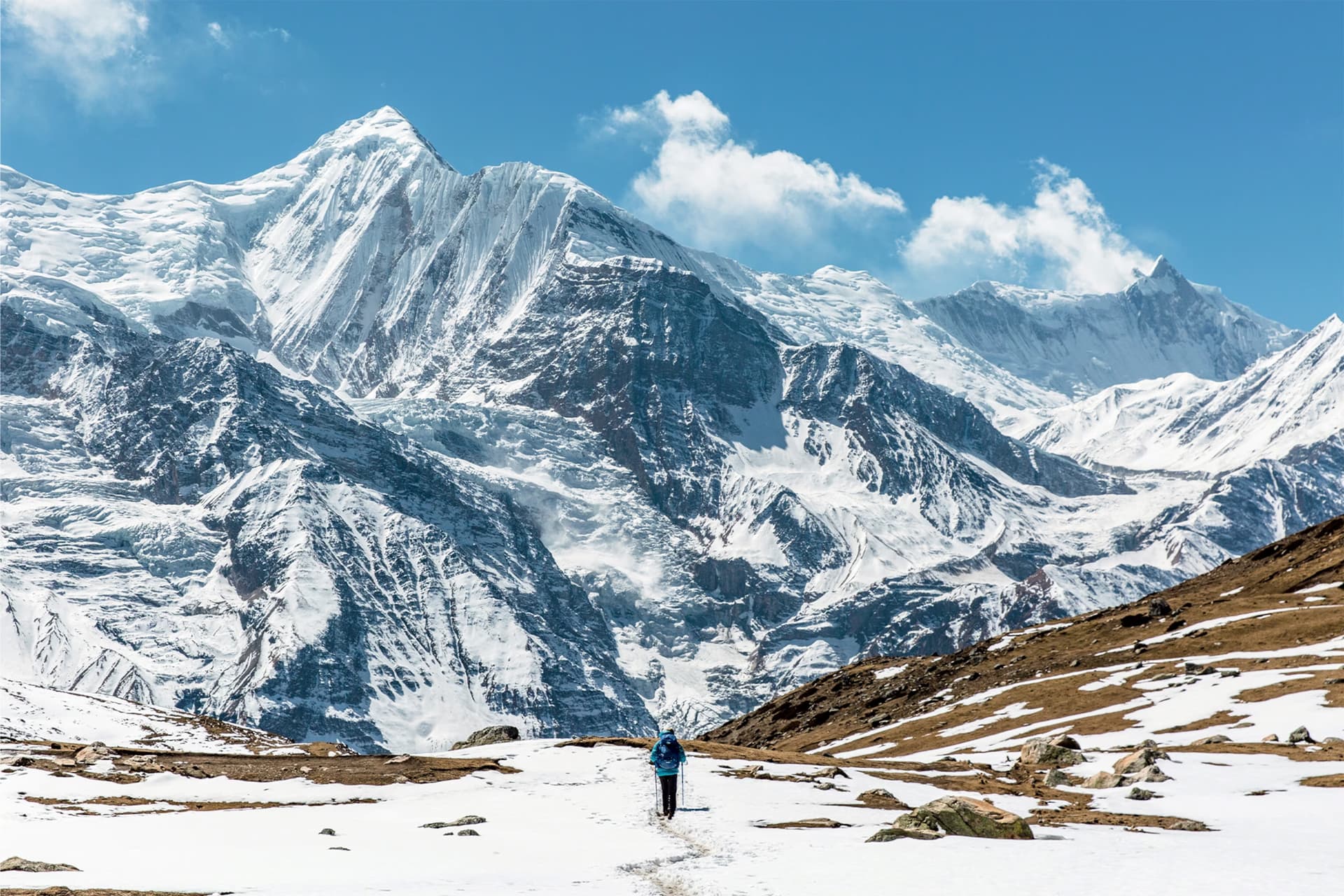
In comparison, the Mardi Himal Trek has an untouched, natural, and close-to-the-mountain experience. It brings you very close to the Himalayan giants. Although the trek starts in serene forests, it becomes ridgelines and alpine meadows. Here, the peaks are so close they seem well within arm's reach.
The trails between High Camp and Mardi Himal Base Camp open up some of the most secluded viewpoints. You get Machapuchare (Fishtail), Annapurna South, Hiunchuli, and the Modi Khola Valley. Find them in unedited, uncropped, and unrestricted pictures. Get to travel away from the throngs of people who usually congregate at Poon Hill.

Another distinct advantage of the Mardi Himal is the sensation of being above the clouds. It is impossible on most days, as the mornings have a layer of mist below the valleys. But at the mountain tops, they emerge like islands out of a cloudy sea of white.
The ridge trail, particularly between Low Camp and High Camp, gives you panoramas on all sides. The alpine hillsides, deep valleys, and snow ramparts reflect in the changing sun. These images are impressive and, at the same time, overwhelming. They afford travellers a real storm of solitude, calmness, and amazement. It is more difficult to experience on busier paths.
Which to choose? Poon Hill or Mardi Himal
Are you new to trekking and drawn to traditional beauty, villages, and sunsets? Then you might find Poon Hill to be more striking and pleasing. It is great for a photography trek, especially without the physical effort.

For visitors seeking intimate mountain grandeur, rugged landscapes, and an adventurous feel. You can be spellbound by the scenic panorama of Mardi Himal as seen in High Camp and the base camp panorama.
Both treks will display the magnificence of the Annapurna area. But through quite varying perspectives. One through the company of a sunrise. The other through the exhilarated silence of remoteness and nearness to high mountains.
After all, the scenic merits of every trek will go with the type of memory you seek to generate. You can choose either a soft introduction to its mountainous beauty. Or the daring, jaw-dropping freshness of its lofty presence. Both treks are great: they cater to different moods, ambitions, and expectations.

Learn about the visual character of the respective paths. Afterward, you may select the one that makes your heart and your adventure feel more engaged.
Cultural and Village Experience
The Nepal treks are not only about mountains. It is also about the cultural richness of the villages that present themselves on the way. Both the Poon Hill and the Mardi Himal trek have their own cultural flair.
Poon Hill Experience
The Gurung and Magar communities have resided in these hills for generations. They follow Buddhist and Hindu traditions in their daily living. The Poon Hill Trek is especially popular among these two communities.
Along the way, you will see stone-paved streets. Spot the carved wooden windows, prayer wheels, and terraced fields in the villages. The places you pass are Ulleri, Ghorepani, Tadapani, and Ghandruk. They remind you of a humble yet amicable lifestyle.

The village of Ghandruk is one of the most well-known villages along this trail. It features the Gurung Cultural Museum and offers a closer view of the traditions. Here, you get to try the traditional costumes and houses of the locals in this community.
Hospitality is very warm, and it is not uncommon for locals to invite tourists into their homes. They get to share some tea or dal bhat, or at least a brief conversation by the fireplace in a cosy teahouse kitchen. Such exchanges are authentic and nourishing to the soul. They allow first-time trekkers to bond with the land. Likewise, they taste the culture that has survived for centuries.
The Mardi Himal Trek
Mardi Himal Trek passes through smaller, less tourist-centred villages. The cultural presence, though less, is nonetheless significant. Especially for those wanting an undisturbed authenticity. In villages such as Siding, Lwang, and Landruk, the villages may be less commercial than those in Poon Hill. A trekker can experience an authentic mountain lifestyle with low impact from tourism.
Here, you might not find any organised cultural museums or village tours. What you will find are people working in fields, milk carriers, or some daily rituals. Encounter something that has remained unchanged for hundreds of years.

The area of Mardi Himal has a mixed population of Gurung, Brahmin, and Chhetri. There might be a language barrier. But try smiling, hand signals, and simple Nepali words to communicate. They go a long way in forming even temporary relationships.
With fewer trekkers on this trail, the hospitality you get is more personalised. A lot more unrehearsed but authentic. It is usually because people become interested in you and not because you're a tourist. The owners of the lodges are likely to do the cooking in the teahouses. You make memories along the way, which create emotional intimacy for the adventure.
Newbies seeking a more manageable and designed experience should opt for Poon Hill. It comes with many opportunities for interaction, education, and observation. It offers a richer cultural experience and a well-planned village stay.
But if you prefer a low-key, unpretentious experience, try the Mardi Himal trail. It offers authentic, raw, unstaged experiences and a cultural adventure. It seems a satisfying spiritual journey, although it is not as intense.
It is both treks, implying some powerful cultural takeaways. One can celebrate heritage and open interaction. You can taste a humble daily life woven into the beat of the mountain.
It all comes down to which type of cultural experience you would like to take back with you. The memory of dancing with schoolchildren in Ghandruk. Or sipping tea in a foggy hillside farmhouse in Siding, with nothing but the sound of the forest for company.
Such impressions are brief yet intense; they form the image of Nepal. But also of a larger fate that one shares with all humans peeking out of the wrinkles of the Himalayas. These initial glimpses of culture-in-nature leave a footprint lasting longer than photographs.
Availability of food and a place to stay.
A significant role in your trekking experience is comfort and nourishment. Particularly for all beginners who seek to feel safe, rested, and have good energy along the way. Teahouse-style accommodation is available throughout both the Mardi Himal and Pooh Hill treks.

The standards, range, and availability of food and accommodation differ. A complete comparison will assist you in setting your expectations.
Teahouse Standards:
Poon Hill:
This route is very busy and commercial. Hence, there are plenty of well-maintained teahouses. Rooms are typically made out of simple wood and stone. They offer simple beds and mattresses. The teahouse offers attached or shared bathrooms.
Hot showers and power charging spots are also available in some places. More so in bigger villages such as Ghorepani and Ghandruk. They make it more comfortable for novice trekkers.
Mardi Himal:
Lodgings are simpler and fewer on this trek. It is characteristic of the less touristy trail. Teahouses are generally smaller, family-managed lodges that are often simple in their construction. The rooms can, at times, contain basic bedding.
Most even have no attached toilet. Hot showers are not as widespread. They are sometimes available only at a higher price or even at special camps, such as Low Camp or High Camp.
Variety and quality in meals:
Poon Hill:
Since trekking traffic is high, the menu in tea houses will vary. They include typical Nepali food. Most offer dal bhat (lentil soup with rice), momo (dumplings), and noodles. Sometimes, some establishments offer Western food such as pasta or omelette.
Prices are lower, and the ingredients are fresher. You will usually find vegetarian food and a place that offers a special diet. There are snacks, tea, and coffee available throughout the trek.
Mardi Himal:
There are fewer and more traditional food options during this trek. The major meal is the dal bhat served twice a day. You can find noodles, soups, and other simple snacks at some lodges.
Western food is less prevalent, with ingredients bought from a greater distance. As such, at times you need to compromise on freshness. The environment is more homey and simple. The food is kept simple, with an emphasis on Nepali flavours. So, trekkers should not expect to find complicated food.
Comfort and Amenities:
Poon Hill:
An increased demand means that teahouses care about the comfort of their visitors. They offer comfortable dining spots, fireplaces, and social sitting rooms. At major villages, Wi-Fi and charging stations are available.
During the Poon Hill trek, it is easier to stay connected. This infrastructure provides greater social contact, relaxation, and rest for beginners.
Mardi Himal:
The focus is on basic human needs and not luxuries. So facilities differ greatly according to the lodge. A shortage of communal dining rooms and normal areas promotes peaceful nights. WiFi is unavailable to the majority of the footpath.
Small stoves are usually used as a source of heating. Moreover, nights can be cold due to high altitude and low-quality housing.
Availability and Booking:
Poon Hill:
Teahouses often book up during popular seasons. However, with such a large number available, you can find a place to stay after you arrive. Most trekkers would not have to make reservations in advance unless they are in a big group.
When trekking during the festival times, you will face a similar problem. Porters and guides provide accommodation services.
Mardi Himal:
Many lodges are further apart and spread over a longer distance. Thus, you might want to make reservations in advance or via a trekking company, at High Camp in particular.
The more peaceful path implies that you can enjoy a more personalised service, though with a smaller range of accommodations. One should plan to prevent the process of long walking without rest.
Best Season to Trek
Selecting the appropriate time of the year to go trekking is important. Trekking at the right time offers favourable weather, secure footpaths, and breathtaking scenery. Both Mardi Himal and Poon Hill have window trekking seasons.

Poon Hill and Mardi Himal react in their own way to variations brought about by the seasons. Since they are both located at different elevations and on different trails, the following seasonal comparison can be used to plan accordingly.
Spring (March to May):
Poon Hill:
During spring, the rhododendron flowers bloom completely. They are seen in red and pink, which colour the forests in beautiful colours. It also has continuous weather, with a clear sky and magnificent mountain views.
Spring in Poon Hill offers a good day and pleasant temperature. But the evening can still cool down, so layers need to be worn.
Mardi Himal:
Spring is another good time to be in Mardi Himal. During this time, the forests are full of flowers, and the air is fresh and cool. The trails become easier to walk after the winter snow melts. And the panorama of Machapuchare and Annapurna is clear.
It is a popular season, though also not as busy as Poon Hill. It is a great treat when one needs some quiet time surrounded by beautiful nature.
Autumn (September to November)
Poon Hill:
The most popular time of the year to trek in Poon Hill is during autumn. The region offers stable weather conditions, less rain, and the sky is extremely clear. It has sharp and vivid mountain views. The temperature on the day is comfortable and suitable for first-time adult trekkers.
It is also the busiest time of year on the trail. And so you will encounter more fellow trekkers and bustling teahouse environments.
Mardi Himal:
Mardi Himal is one trek that arguably is best in the autumn season. Many trekkers find the weather remarkably good. They get that the weather is crisp, visibility is also easy, and the route is mostly dry. There are fewer risks of slippery routes due to the weather conditions.
The beauty of the Annapurna range can be observed most spectacularly. This period attracts more trekkers; Mardi Himal is less crowded compared to Poon Hill. Mardi Himal is a trek that is peaceful yet beautiful.
Winter (December - February):
Poon Hill:
Trekking on Poon Hill can be done in winter, but it is subject to cold, particularly at night. Some snow may fall at higher elevations. The tracks are less busy, and the views are still beautiful in clear skies.
The cold is sometimes difficult for those who are not well-equipped. The availability of accommodation facilities is also scarce during certain periods. Moreover, some teahouses are closed during this season.
Mardi Himal:
Winter is not the best time to visit Mardi Himal. The weather is colder, and there might be snow accumulation at higher ridges. And because of the steeper parts that become more of a pain.
It should be done only by experienced trekkers with good equipment. The trail may become icy and dangerous. Many lodges are closed in the winter, which makes logistics more difficult.
Monsoon (June to August)
Poon Hill:
During the monsoon season, it is difficult to trek on Poon Hill. The area sees very high rainfall, the trails are slippery, and the visibility is poor. The rhododendron forests are lush and dense, yet covered with clouds most of the time.
Cloud obstructs the views of the mountains. The paths are muddy during this season. And landslides are common hazards that make many trekkers avoid the season.
Mardi Himal:
Mardi Himal is also the least suitable during the monsoon. The region has massive potential for erosion of the trails. You find many slippery rocks and a shortage of access to teahouses. The route is very tricky to follow.
The weather is always uncertain, and this may interfere with the trek. Trekkers need to wait until the post-monsoon or spring seasons to enjoy this trek. It offers safe conditions to trek in on Mardi Himal.
Cost Comparison: Mardi Himal vs Poon Hill
Proper budgeting of your trek will prevent surprises. It also prepares you to have a nice, comfortable trip. Though both Mardi Himal and Poon Hill are regarded as medium-level treks that can be done on a budget.

Their prices also differ based on permits, guides, and porter charges. The transport mode and accommodation. A comparison has been worked out below, with an attempt to give you a realistic picture in terms of expenses.
Cost Component | Mardi Himal Trek | Poon Hill Trek |
Trekking Permits | Annapurna Conservation Area Permit (ACAP) approx. $30 USD + TIMS card $20 USD | Annapurna Conservation Area Permit (ACAP) approx. $30 USD + TIMS card $20 USD |
Guide Fees | $25 to $30 USD per day (recommended) | $20 to $25 USD per day |
Porter Fees | $20 to $25 USD per day (optional) | $15 to $20 USD per day (optional) |
Transportation (Pokhara to Trailhead and Return) | Jeep/taxi to Kande or Phedi: approx. $15–$25 USD one way | Jeep/taxi to Nayapul: approx. $15–$25 USD one way |
Accommodation | $5 to $10 USD per night (basic teahouses) | $7 to $12 USD per night (more options) |
Meals | $5 to $10 USD per meal (mostly Nepali dishes) | $7 to $12 USD per meal (wider variety available) |
Overall Estimated Budget (excluding flights) | $350 to $500 USD for a 6-day trek | $300 to $450 USD for a 5-day trek |
Mardi Himal is a bit more expensive because a longer time is required. Much altitude is involved, and the accommodation is more secluded. Poon Hill is a cheaper alternative. But it provides more affordable mid-range accommodation and food.

Both treks are a low-end option for the first-time trekker. But taking things like your comfort needs and the way you trek into account. This is sure to get you the correct trip as per your budget and level of experience.
Accessibility and transport to the starting point
When choosing between Mardi Himal and Poon Hill, accessibility is an important factor. Considering both are easy treks to access in Nepal, the epicentre is Pokhara. The town of Pokhara is also directly linked with Kathmandu by land and air.
Several tourist buses run daily, that need 6-8 hours. And a flight that travels the distance in 25-30 minutes. The majority of international visitors arrive by flying to Kathmandu. They then catch a flight to Pokhara, which is the first step towards the two treks.

In the case of the Poon Hill Trek, the most popular transportation destination is Nayapul. It is approximately 42 km southeast of Pokhara and can take about 1.5 to 2 hours by any private travel or jeep. Or, there is also the use of public buses/share jeeps at the Baglung Bus Park in Pokhara. However, they might prove to be longer and more uncomfortable.
After reaching Nayapul, the trail starts with an easy walk past small settlements. It then gradually transforms into original road-like trekking villages. You walk to places such as Tikhedhunga and Ulleri. Here, the majority of the trekkers will remain on the first night.
It is a well-worn path that follows an easy route. It also holds signpost markers and teahouses throughout its length. As such, it is incredibly logistically beginner-friendly. Porters and guides can be easily found in Pokhara as well. Local travel agencies provide transportation (in a group or in person) to Nayapul in their packages.
Also, the whole trail around Nayapul to Poon Hill and back is a circuit. So the normal route is to turn around and go back through Ghandruk. Another pleasant village with a road down to Pokhara. Find a different landscape on the way back.
Mardi Himal Trek Transport
In the Mardi Himal Trek's case, the most common starting locations are Kande, Phedi, or Dhampus. They are approximately a 30-45 minute drive from Pokhara by jeep or taxi. These trailheads are located at slightly higher elevations. They are accessible by the Pokhara-Baglung Highway. Thus, very accessible even during early mornings.
Based on these points, trekkers will begin the journey up the forests and small villages. And later move up to the Australian Camp and the Forest Camp. Further into the trek, you reach Mardi Himal Low Camp, depending on your preferred route.

The first path of Mardi Himal is not as far as Poon Hill. But the last few kilometres for Kande or Dhampus can feel bumpy. More so during the rainy season, especially in the rainy season. Most tour operators, however, arrange a comfortable 4-wheel drive (4WD) jeep. This makes it an easy experience for beginners.
It is also good to mention that the village of Siding is normally the final junction of the Mardi Himal trek. It takes a road back towards Pokhara. Situated Sso you do not have to walk back along the same route. It is a good thing that makes the trek semi-circular and more adventurous.
Mardi Himal and Poon Hill treks are easy to get to by comparison with treks in far and remote locations. Domestic flights are necessary, no extensive overland journeys, and a no-hassle permit verification. They are flexible and logistically easy, as they are close to Pokhara. These treks have several entry and exit points. They are a great advantage to people who are new to trekking in Nepal.
Choose a classic sunrise at Poon Hill or the ridges of Mardi Himal. However, it is not just easy, but the journey itself is scenic. They give one an action-packed introduction to the adventures ahead.
Safety for First-Time Trekkers
A successful first trek in the Himalayas is all about staying safe. That is why we should not only focus on safety, but also consider it a key to a positive experience. Both Mardi Himal and Poon Hill have easy paths that can be an option to take.

Preparation and information on the possible issues can help avoid many typical issues. This guide outlines important safety considerations to make when trekking on these trails. It ensures that trekkers find their way safely.
Book a Registered Guide or Trekking Agency: This will connect you to an expert consultant. They offer a knowledgeable, licensed guide, someone who knows the trail. You can get help in negotiating the tricky parts. They help you understand altitude sickness symptoms. You can connect with the locals or emergency services in case you are in need of that. Registered agencies also make sure that all the necessary permits are obtained. This is essential to your safety and status as a legal entity in the trial.
Follow Marked Trails and Designated Routes: The two treks have well-marked trails. But in some cases, weather or trail conditions may render the trails invisible. Do not use a shortcut or any other side track without marking. Especially during fog or conditions of low visibility, to end up lost or hurt.
Acclimatise and fitness: Acute Mountain Sickness (AMS) develops at high altitude. It is possible on Mardi Himal. Pay attention to your body, go slowly, and make sure to stay hydrated. Take it easy in case you have headaches, dizziness, or nausea. Immediately descend in case of increased symptoms.
Basic First Aid Kit and Altitude Medication: Take basic things with you. You can carry bandages, painkillers, blister management, and any personal meds. Talk to your physician before the trek about such altitude sickness medications. See if you can take Diamox.
Mobile Connectivity and Emergency Contacts: In both treks, the mobile phone coverage is reliable in villages and camps. But it gets patchy in far-out places. Keep a local mobile SIM card (either Ncell or Nepal Telecom) to have complete network coverage. Save contacts in case of emergency, like local guides, nearest health posts, and the embassy.
Dress Appropriately and Prepare for Weather Changes: Mountain weather is capricious. It is necessary to dress with this in mind. Pack the outerwear and take jackets that are resistant to water. There are cold nights and even rainstorms. One has to be prepared to encounter the weather differently. It helps you go without getting hypothermic or feeling uncomfortable.
Trekking Travel Insurance: Your insurance should include high-altitude trekking, accident evacuation, and treatment. This is an insurance policy that comes in handy in case of illness or injury when you are on your trek.
Tell someone about your plan: Spread the word on what you do in a day, either to the family, friends, or your guide. Frequent check-ups are reassuring because they offer aid in case you do not check in on schedule.
Do not trek alone: Start your trekking journey in a group. It is safer, more enjoyable, and more motivating to trek with a partner, group, or a guide.
By following these safety precautions, you maintain yourself in good condition. You will enhance your entire trekking experience. All you need to remember is that when you are cautious and prepared.
You can experience the magic of the Himalayas to the fullest without worry. Whether you visit the serenity of Mardi Himal or the multicultural aspect of Poon Hill. As long as you are travelling safely, you are bound to remember it as a positive experience.
Beginner-Friendly Verdict: What Is Best Suitable for You?
As far as Mardi Himal or Poon Hill is concerned, they are beginner treks. It is once again a subjective question and depends on your fitness, the reason you want to go on a trek, and how tolerant you are of the height.
In case you are the type of person who would prefer a soft entry to the Himalayas, Poon Hill would suit you better. They also offer a culturally enriching experience and a well-maintained path. Moreover, Poon Hill has lots of facilities.

It has a moderate altitude, gradual climbs, and a scenic sunrise. They are very suitable for families, elderly tourists, or any other travelers. Trekkers also travel to Poon Hill to have an enjoyable and yet achievable experience.
In contrast, when you are in good shape and want a more adventurous experience, try Mardi Himal. When the thought of going higher with fewer people excites you, this trek is for you. The inclination rate is steeper, and the trek requires greater acclimatisation. But the closeness of mountain views and the serene trail make the trek a highly fulfilling one.
Mardi Himal can serve as an ideal gateway to bigger Himalayan treks. It takes novices closer to the breathtaking views. Yet still gives isolation to enjoy each of their experiences.
One should bear in mind that, in no way, is one of the treks considered to be a better one compared to the other. The one that most suits your personal profile and trekking goals is the most appropriate. Both treks provide a pure Nepalese experience. You get amazing scenery and memories that will last a lifetime.
The best trek you can choose will be one that is challenging enough and enjoyable enough at the same time. Considering your own level of fitness, experience with high altitude, and the type of experience you seek. You will be able to boldly take on a journey that treats both body and soul. It prepares you to seek future Himalayan adventures with pride and glee.
FAQs
Which of the two, Mardi Himal or Poon Hill, is easier for total beginners?
Poon Hill is normally less demanding because it is less steep and the pathway is relatively good. It is ideal when you are looking to experience an easy entry into the Himalayan treks.
What is the altitude of Mardi Himal and Poon Hill?
Poon Hill is at an elevation of 3,210 metres, and Mardi Himal rises up to approximately 4,500 metres. Mardi Himal is situated at a higher altitude, and you should be more acclimatised.
Is it possible to do these treks independently?
Though it is possible, it is strongly advisable to hire a guide to be on the safe side. You get a deeper glimpse of the culture there. The guides are there to guide you through the trails and detect any early symptoms of altitude sickness.
Which is the best period to trek either route?
In both treks, spring and autumn are the best times of the year because of the clear skies and pleasant temperatures. Monsoon and winter are not favourable since there is rain and cold.
Are there teahouses on the two routes?
Yes, there are teahouses on both of these treks, but there are more and better ones on Poon Hill. Mardi Himal teahouses are more basic and less so.
How long are these treks?
The duration of Poon Hill is usually 4 to 6 days, and that of Mardi Himal is 5 to 7 days. The fact that Mardi Himal takes longer is associated with adaptation requirements.
Are altitude sickness issues a big concern?
Mardi Himal is also at a higher altitude, and therefore, the risk of altitude sickness is high. The altitude of Poon Hill is moderate and not as dangerous. Yet one should be careful.
Which of the treks provides a good mountain view?
Mardi Himal offers near and close spectacular views of mountains such as Machapuchare. The best part of Poon Hill is its scenic view of the sunrise in the Annapurna range.
What are the physical requirements for these treks?
Poon Hill is a moderate grade, and it requires individuals of moderate fitness. Mardi Himal is more stamina-requiring due to steeper pitches and an extended time of walking.
What sort of cultural experiences will I have?
The Gurung and Magar villages are very vibrant, with a lot of exposure to their culture in Poon Hill. Mardi Himal provides a less commercial rural relationship and interaction.
What is the accessibility of the starting points?
The two trailheads can be approached by jeep or taxi in 1-2 hours in Pokhara. Poon Hill begins at Nayapul, and Mardi Himal begins at Kande or Phedi.
Are there mobile phone signals on these treks?
Both treks have mobile coverage that is generally good in villages and patchy in remote areas. Keeping a local SIM card facilitates connection.
What are the normal walking hours?
Poon Hill takes about 4 to 6 hours a day, and this is a relaxing rate. Mardi Himal involves long treks of 5-7 hours, looping particularly, and the steep ones.