Charging your phone on the Annapurna Base Camp trek is not as simple as finding a free socket at your hotel. Further up, you will get less electric charge and it might cost you an extra charge to charge your phone, camera or power bank.
Trekkers will be required to pay to charge a gadget in teahouses along the way. Depending on the location, the price may vary, with higher prices at higher altitudes.
When organizing the Annapurna Base Camp trek in 2026, you must know how your devices will be charged along the trail, what you can expect to pay and how your devices will be powered during the trek.
This guide will step-by-step show you what you will experience and the availability of charging facilities on ABC Trek. Depending on the way, it costs between Pokhara as low as 800 meters all the way to the top to Annapurna Base Camp at 4,130 meters. And what sort of gadgets you can literally plug, starting with a basic phone up to a drone as well as a camera.
Guide fees, meals and permits are all the focus. Charging, wi-fi and hot showers are in a category that everyone calls extras, and they are extras the kind that catch everyone off-guard.
Is Charging Even Available on the ABC Trek?
The answer is yes, charging is available on the ABC Trek. To be honest the answer is very dependent on where you are, and on the climate.
Each teahouse is powered in its own way and with increasing altitude your source keeps altering, this is in fact what makes charging easier, harder, or even non-existent that night.
Most of the lodges in the lower villages, all the way to Nayapul, as far as Ghandruk and Chhomrong, are small hydropower-generated systems. These draw energy from the rivers and streams that are cut across the valley. It is reliable, readily accessible, thus powering in these villages is nearly always on, generally affordable, and even free.
When you pass Chhomrong up to Sinuwa, hydropower is no longer so reliable. There is a more frequent occurrence of power cuts. A few teahouses carry a diesel generator as an emergency, but they will normally start the generator only in the evening to provide some lighting and do a little charging; they will charge only when you make a plan to do a charge, not when you make an assumption doing one.
Above that, from Dovan on to Himalaya and Deurali all teahouses are almost entirely reliant on solar panels. On cloudy or snowy days when the sun isn't available, solar power decreases quickly, reducing charges; you will always have to pay a charge for solar; sometimes you will not be able to use it at all if the battery bank is low.
In the Machhapuchhre Base Camp and further to Annapurna Base Camp, there is no option but solar, and become truly unpredictable.
Each watt counts, and battery owners of lodges are even protecting their batteries as they require that amount of power not only to light their property, but also to provide even basic heating.
Lodge owners protect themselves batteries and know how important every watt is. There's a good chance of a charge on a clear day. You may not get any following 2 or 3 cloudy days.
Why Teahouses Charge for It at All
One can easily get a bit irritated when a lodge owner requests him to pay 400 rupees only to plug in a phone. When you know how much you have to pay to get power up there the fee would make a lot more sense.
All power above the Chhomrong is battery-powered from solar panels, which are shouldered by someone or a mule. The cost of those panels, batteries, and wiring were far from insignificant, nor was it easy to come up this trail.

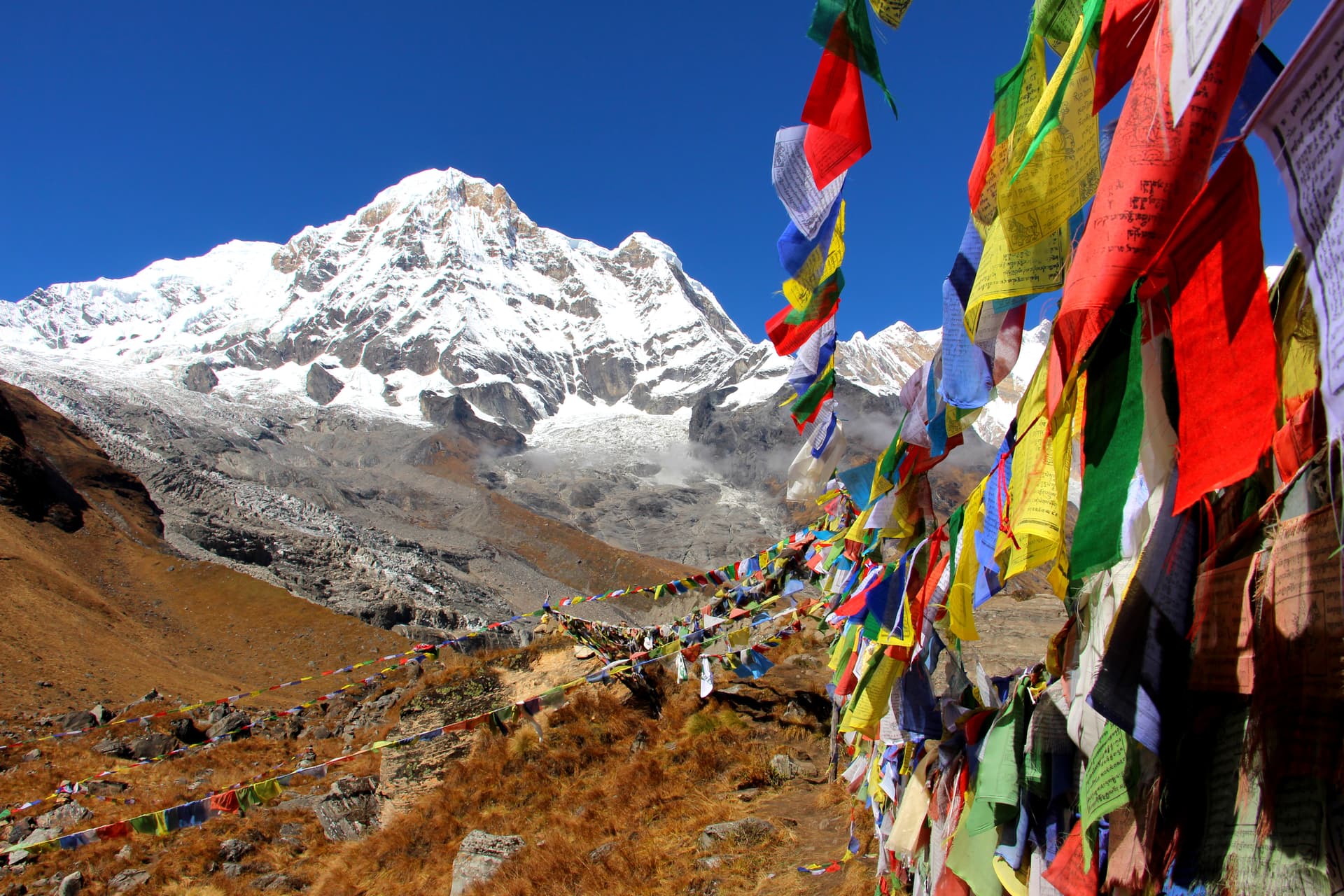
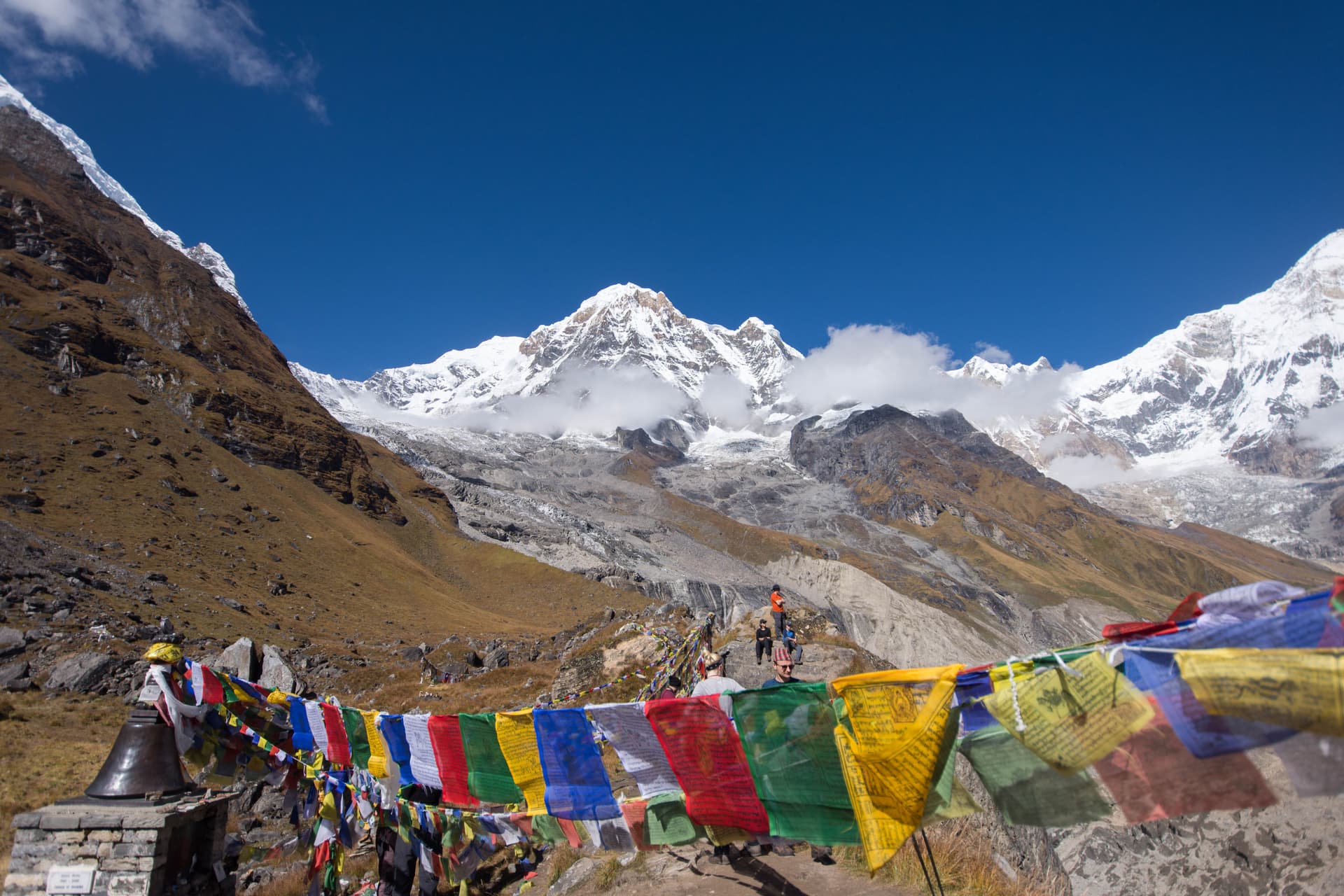
Mount Machhapuchhare seen from Annapurna Base Camp Trek
There is no electricity in a lodge at Deurali or ABC. That electricity generated in that building came from the sun that day, was stored in a bank of batteries, and began being rationed before any trekker packs his/her phone.
Thus, when a lodge asks you to pay a charge, it isn't all profit. It's paying for caring for the solar gear at such a high elevation and changing batteries that are easily damaged by the cold, to ensure the lodge is lighted and heated even when your phone is offline.
Charging facilities on ABC Trek at Each Stop
Here's a breakdown of what you can expect at each of the larger stops, either via the Ghorepani-Poon Hill route or on the drive through Ghandruk. Each one will include info about whether you can charge in your room, the dining hall or both.
Pokhara
This is where you begin and the last time charging is easy. A majority of attractions located here are free to charge, including in your hotel, and the hotels here operate via the national grid. You will find sockets in restaurants and cafes too. Fill all batteries up to 100% while here before you leave, as this is the easiest electricity over the next week.
Nayapul
The trailhead is in Nayapul, the final town on the road before the walk. Here continuous lighting is provided by small hydropower and there's some regularity. Room-charging and outside charging is provided. Some guesthouses still give it away as part of the price of your room. Others may have a small fee, inquire upon the check in.
Tikhedhunga
Tikhedhunga is the first overnight halt when you follow the classic Ghorepani route instead of through Ghandruk. It is in the low spot of the valley with local hydropower resources. Charging is typically provided in the dining hall and may be available in rooms (depends on the lodge).
Ulleri
Ulleri is located at the end of a long stone staircase that is one of the most challenging climbs during the whole trek. Here power is still relatively good, also from local hydro sources. The majority of teahouses provide charging within the dining hall, while others have in their rooms.
Ghorepani
Ghorepani is an active village, particularly during the busiest period of the year when all the crowds come to it on their way to Poon Hill for the sunrise hike. Electricity is reasonable and can be charged at most lodges in the restaurant. It is such a big commercial village, but some guesthouses will provide free charging for guests staying and eating there, and some of the better guesthouses have a separate charging point.

Beautiful local house on the way to Ghorepani Trek
Poon Hill
Poon Hill is simply a viewpoint and not an overnight destination, therefore there will be no need to have a charge infrastructure at all. You get up early in the morning, capture your photos and get down to Ghorepani to have breakfast. All you need to do is to ensure that you have some charge in your camera or phone battery left over overnight.
Tadapani
Tadapani is high and is more peaceful than Ghorepani. There is a combination of small hydro and some solar backup to supply electricity. Charging is available in rooms and also at the dining hall and can be subject to the weather that day.
Ghandruk
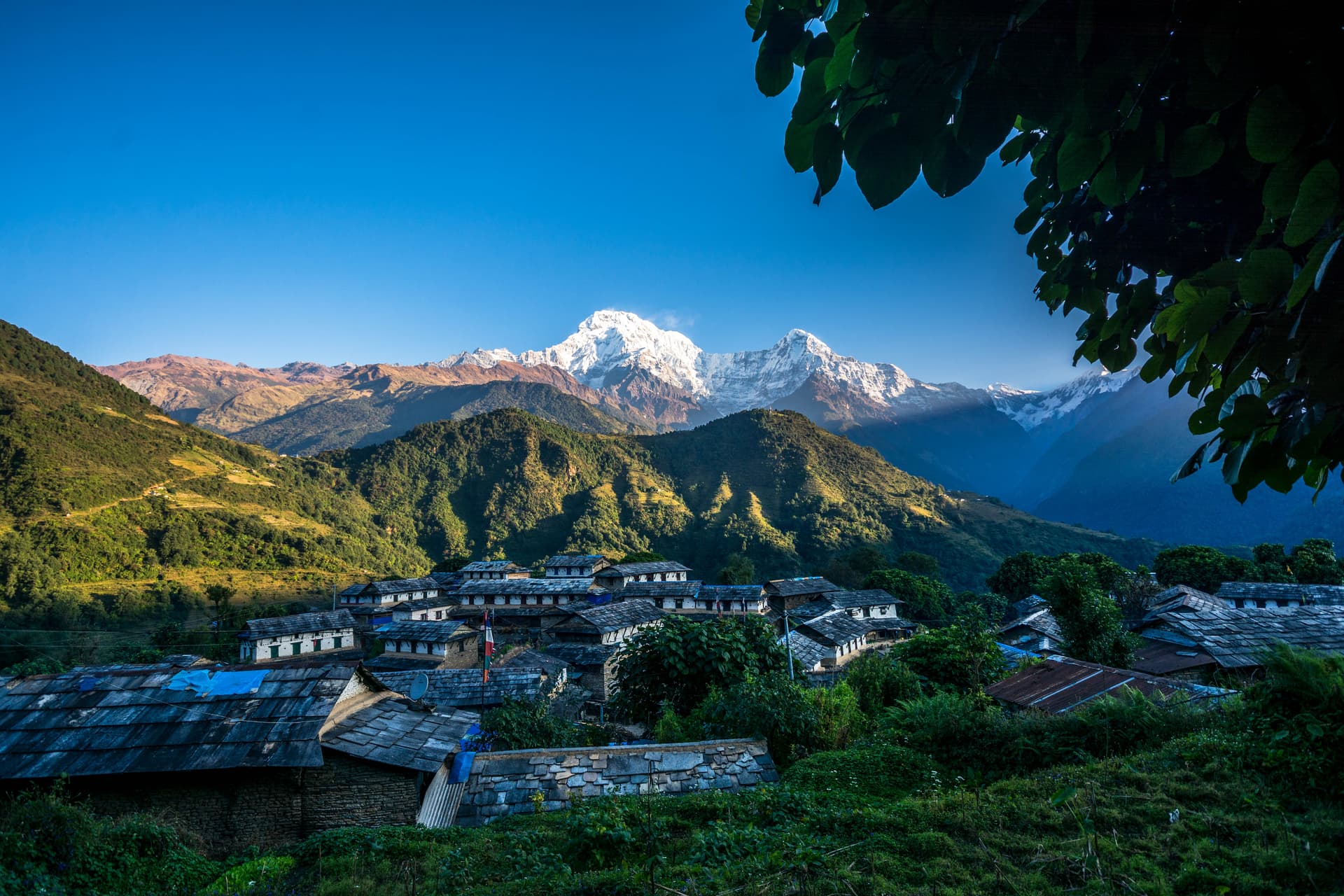
The trail passes through one of the more developed villages in Ghandruk if you follow the alternate route as an alternative to going through Ghorepani. It does have a micro hydro fed plant and their electricity is more reliable than most of the other stops. There is charging in the dining hall, and in some of the higher cost rooms as well, especially the newer teahouses for the larger groups.

Ghandruk village, one of the most beautiful villages in Nepal
Chhomrong
Chhomrong is the final major village before this strath narrows down into the Annapurna Sanctuary itself and is traversed by most trekkers irrespective of route taken to reach this point. It is powered by mini-hydropower in the vicinity, and the most secure sites for power along the whole trekking route.
Numerous lodges here provide electric charging in the dining room along with in your room. This is now the time to start replenishing all items as there will be some tougher challenges from here on.
Jhinu Danda
Jhinu is an off-road location that is popular for its hot springs. A large number of trekkers head here on one or the other side for a day. The electricity is adequate and mainly from micro-hydro. Better rooms even come with complimentary room charging (gets a booking of a better room), lower rooms have the socket in the dining hall.
Sinuwa
Beyond Chhomrong, the land becomes very steep and so does the dependability of power. Sinuwa is primarily solar powered. The only place where one can be charged is in the dining area, and not in the rooms. During the rainy season, its charging will be disabled or its power reduced to a minimal level depending on the state of battery of the lodge.
Bamboo
Named after the bamboo forest that surrounds the village, it's a popular lunch stop or overnight stay. Bamboo is a plant entirely relying on solar energy. Charging shall only be done in the dining hall. There is no charging room here at all. Some teahouses may just say no if the days have not been good, as they must utilise any power they do have for lighting purposes.
Dovan
Dovan is a small stop bordering the river, Modi Khola, which is forested. It has limited charging to dining and none of the rooms has charging facilities on ABC Trek. This part of the valley is usually covered by clouds during overcast days; thus, solar power may become virtually inactive.
Himalaya
Himalaya or as it is also known as Himalaya Hotel, is on top of Dovan, where the trees begin to clear away. It is completely solar powered. Charges will be done solely in the common place where people eat and not in rooms. Some lodges will refuse to charge devices on days that are not sunny, meaning the battery does not have to be charged only to be used during lights and kitchen.
Deurali
The last proper stop before the transition to the high alpine part of the Sanctuary is Deurali. It is totally powered by solar energy. No charging points to be found in the rooms, and charging is dining hall only. Charging can easily be switched off overnight when the solar battery is low, or on snowy days.
Machhapuchhre Base Camp (MBC)
MBC is located at almost 3,700m and offers one of the finest mountain scenes in the whole journey. It's also where things begin to get really tough to charge. Only solar power available and charging of devices is rare and limited to the dining area. No charging ports at all in rooms. But don't be alarmed if the lodge responds that things can't be charged that night due to cloudiness.
Annapurna Base Camp (ABC)
This is the highest point of the trek at 4,130 meters and is also the hardest point to charge anything. Power is scarce. As long as there is a charge available, it is charged at the dining hall only.
Many lodging establishments will just refuse to charge heavy devices of any kind, particularly during evenings, since the place requires all the available amount of stored electrical power to provide electricity and heating in an area where the temperature falls way below zero.
To get a full charge on your phone to get photos at sunrise, on Base Camp, remember to charge your phone the night before in MBC or Deurali to the extent possible and keep warm inside your jacket at night to ensure that cold does not drain your phone.
Cost of Charging at ABC Trek
Charging prices are not fixed across the Annapurna Base Camp trail.
Different lodges charge different amounts, and prices can also change over time.
As a general guide, trekkers may encounter charging fees of around NPR 200 to NPR 400 per device, with some higher-altitude teahouses charging more.
A rough idea of the possible charging cost on Annapurna Base Camp Trek is:
Location | Approximate Charging Cost |
Pokhara | Usually free |
Nayapul | Free to around NPR 150 |
Tikhedhunga | Around NPR 150-250 |
Ulleri | Around NPR 150-300 |
Ghorepani | Around NPR 150-300 |
Ghandruk | Around NPR 100-250 |
Chhomrong | Around NPR 200-300 |
Jhinu Danda | Free to around NPR 200 |
Sinuwa | Around NPR 200-300 |
Bamboo | Around NPR 200-300 |
Dovan | Around NPR 200-300 |
Himalaya | Around NPR 250-400 |
Deurali | Around NPR 300-400 |
MBC | Around NPR 300-500 |
ABC | Around NPR 300-500+ |
Charging by Device Type
Not all the devices are dealt with by teahouses on this trail. It breaks down as follows.
Phones
The most convenient thing to charge anywhere along the trek is phones. They use minimal power so a weak solar installation at Deurali or ABC will typically suffice to power one. It is the most accepted device that lodge owners will be most ready to plug in even on a cloudy day.
Power Banks
Power banks are fine to charge as well, and to tell the truth power banks can be considered among the smartest things to carry. You can use it to charge your phone at rooms, and other accommodations where there is no in room charging (most will be above Chhomrong).
Cameras
Simple digital cameras and GPS devices cost out of pocket with little concern anywhere. Different camera batteries are occasionally handled slightly differently at the top lodges as there are camera chargers that consume more power than a telephone charger.
Don't be surprised to be asked for a higher rate for a battery for your camera at MBC and ABC, and to wait until the day time, when the sun is producing more solar energy. When it comes to photography, bring extra charged batteries, so you're not charging the same battery repeatedly.
Drones
The case of drones is rather different. Their batteries become big and eat up the solar resources of a lodge rapidly. In case of aerial shots, you are bringing a drone, bringing a sufficient number of spare batteries to power through the entire trip since you cannot expect to rely on the charging of a drone above Chhomrong.
Laptops and Tablets
Laptops and tablets are generally a no-go. The majority of the teahouses do not support them or even have to pay more since they consume so much power as compared to a phone.
In altitudes particularly, you should not have your hopes that you can charge a laptop. When a genuine necessity to it really constitutes a part of your work, be prepared to spend a frustrating few days upon it, or simply drop it in your hotel at Pokhara.
Headlamps and Small Accessories
Some accessories, such as headlamp batteries, small torches and such like devices are viewed the same as phones just about everywhere because they consume very little power. Almost always, these are the last items that a lodge will deny charging even on a low-power evening.
Season Changes Everything Above Sinuwa
Since the power above Sinuwa is solar powered; therefore the period in which you trek determines the reliability and cost of recharging.
The best period on the trail is autumn (around October and November), the driest and clearest. On a daily basis, solar panels receive long and continuous sunbeams meaning that lodges have more power to save and the charging remains relatively cheaper to acquire, despite the charging cost on Annapurna Base Camp Trek remaining the same.
March, April through May is also quite predictable but there is more cloud cover in the afternoons than in the fall and it may produce weaker charging in the evenings even on the days which begin clearing.

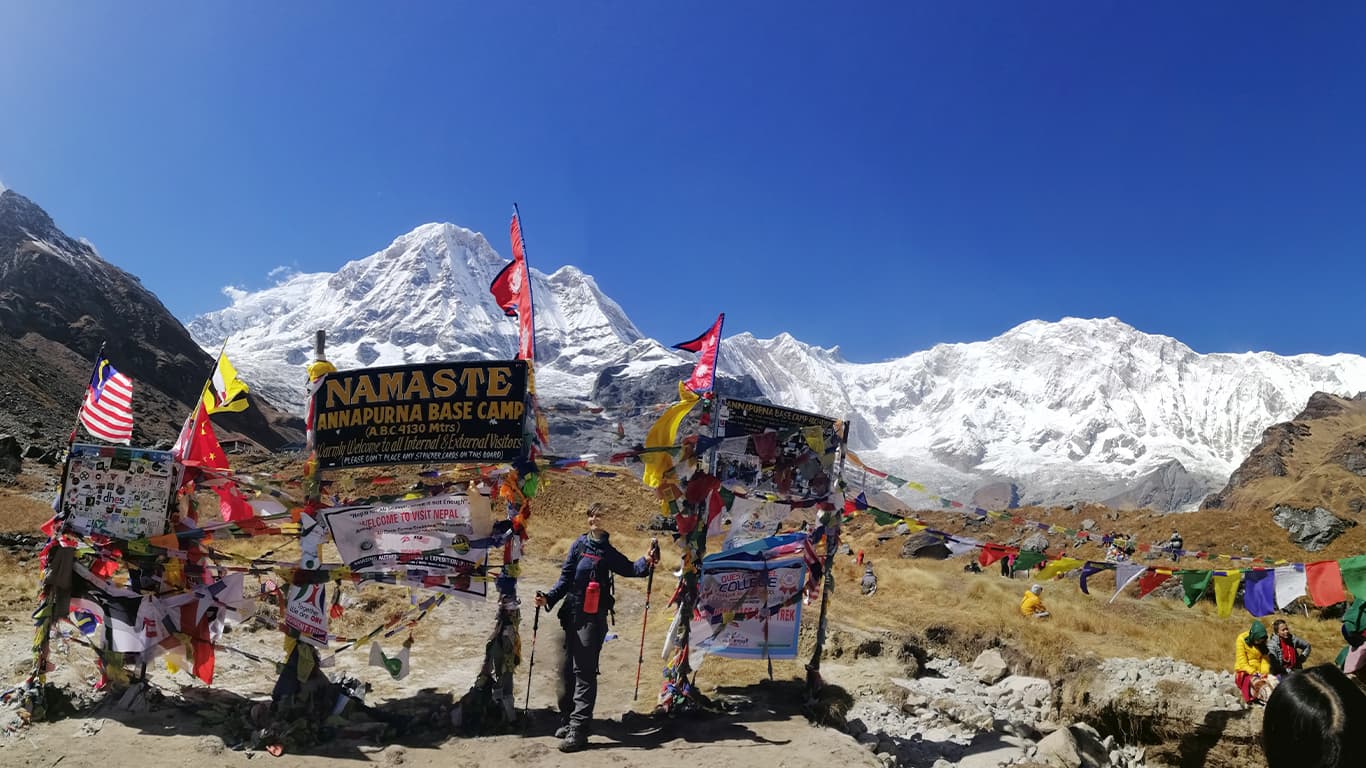
Happy client at the Annapurna Base Camp
If there is snow at all, it may cover the panels completely for one or two days when it is cold and clear, but the days are shorter in winter from December to February. If trekking during this period becomes very unpredictable charging over Deurali so bring extra battery backup if you're going through this season.
The least favourite time for this trek is during the monsoon season (June to September), due to the rain during this period, but it also results in days of cloud cover. Solar output decreases significantly and resorts located above Sinuwa may have to ration their charging.
Plugs and Sockets
The power sockets in Nepal are primarily (C, D, and M) 220V 50Hz. Type C is the smallest round 2 pin plug connector that you are likely to find.

Types of plugs and sockets in Nepal
Type D and M are larger, round, 3-pin receptacles which are found in more local, older teahouses and are more popular in India. Take a multi-pin universal travel adapter, and a few USB ports, if possible.
There's usually no fast charging up here at all. Most charging points are standard USB-A, so do not expect your USB-C fast charger to do anything special.
How to Spend Less on Charging
Some of these habits will actually save you some money and help reduce your stress when on the trail.
Enable airplane mode on your cellphone while you are not using it. Searching for signals will burn up battery, particularly after leaving Sinuwa where reception becomes weak or flaky, at best.
Have at least one solid Power bank fully charged from Pokhara. This will save you a few charging fees throughout the hike.
If possible, charge in the daytime, not late in the day. Solar batteries are most powerful in the afternoon, when they have had a full day of sunshine, and least powerful, late at night when everyone is already using the solar batteries.
Store your phone and power bank overnight in a warm place, such as your sleeping bag or an inner jacket pocket. Going from base to high altitudes is expensive in terms of battery life during cold weather.
Increase the arm, background apps and brightness of the screen wherever possible. Even some little changes such as this extends charging time to two or even 3 days in some cases.
Share charging as practicable. For work trips with a partner, or even small group, make sure that one power bank is doing the rounds, and make sure that everybody doesn't pay for the exact same wall socket every single night.
Final Thoughts
One of those little aspects of the Annapurna Base Camp trek that makes up the day as much as the landscape itself is charging. It's practically free at low altitudes, near Pokhara and Nayapul.
But eventually at Deurali, MBC and finally even at Annapurna Base Camp; it becomes a part of what you can budget for, plan around, and sometimes just realize, "I can't do that tonight.
You should bring a power bank, pack one universal adapter, make sure to keep your batteries nice and warm, and carry a little extra cash, in small notes to pay for charging stations.
Do that, and you will have enough battery left for the photo that matters most, standing at 4,130 meters with the Annapurna Sanctuary spread out in front of you.