How Difficult is the Annapurna Base Camp Trek? (Honest review)
Whether you want to know how difficult ABC trek is, the answer is not melodramatic- just sincere. The Annapurna base camp challenge does not strike you as one harsh climb, but rather comes in excessive doses of repetitions step by step, day by day, until your legs begin to bargain with your ambition.
And this is what the majority of us fail to comprehend at the beginning of this journey: this is not a journey of overcoming mountains, it is a journey of monitoring yourself. That is why a challenge of the Annapurna base camp is unique to each person, it redefines itself depending on your training, your patience, and how serious you were training prior to arrival. Ultimately, the actual question is not simply how difficult is ABC trek, but are you willing to go at a slow pace to actually experience something that requires you to continue going.
How Hard is Annapurna Base Camp Trek Really?
The straight forward response to the question of the difficulty of ABC trek is that the challenge is squarely in the moderate range, though the definition of moderate can be deceptive. This is due to the fact that in contrast to technical climbs, there are no ropes, ice axes and previous mountaineering experience needed, ensuring that a very broad group of trekkers can join in. But the challenge of the Annapurna base camp is physical stamina and consistency over a few days, not technical expertise, so you will need much more stamina and consistency than experience level.
Several of these travelers, who have asked themselves how hard the ABC trek is, would be interested to know that this trek is beyond effort to the novice, provided one arrives with the necessary fitness level for Annapurna base camp and mentality. One does not have to be a sportsman but must be able to walk 5 to 7 hours daily over rough surfaces with a light-weight backpack. There is no denying that we have witnessed average trekkers achieve success in the trek when they take their time, rest and take note of their limits which has demonstrated that trekking the Annapurna base camp is not as difficult as it has seemed to be.
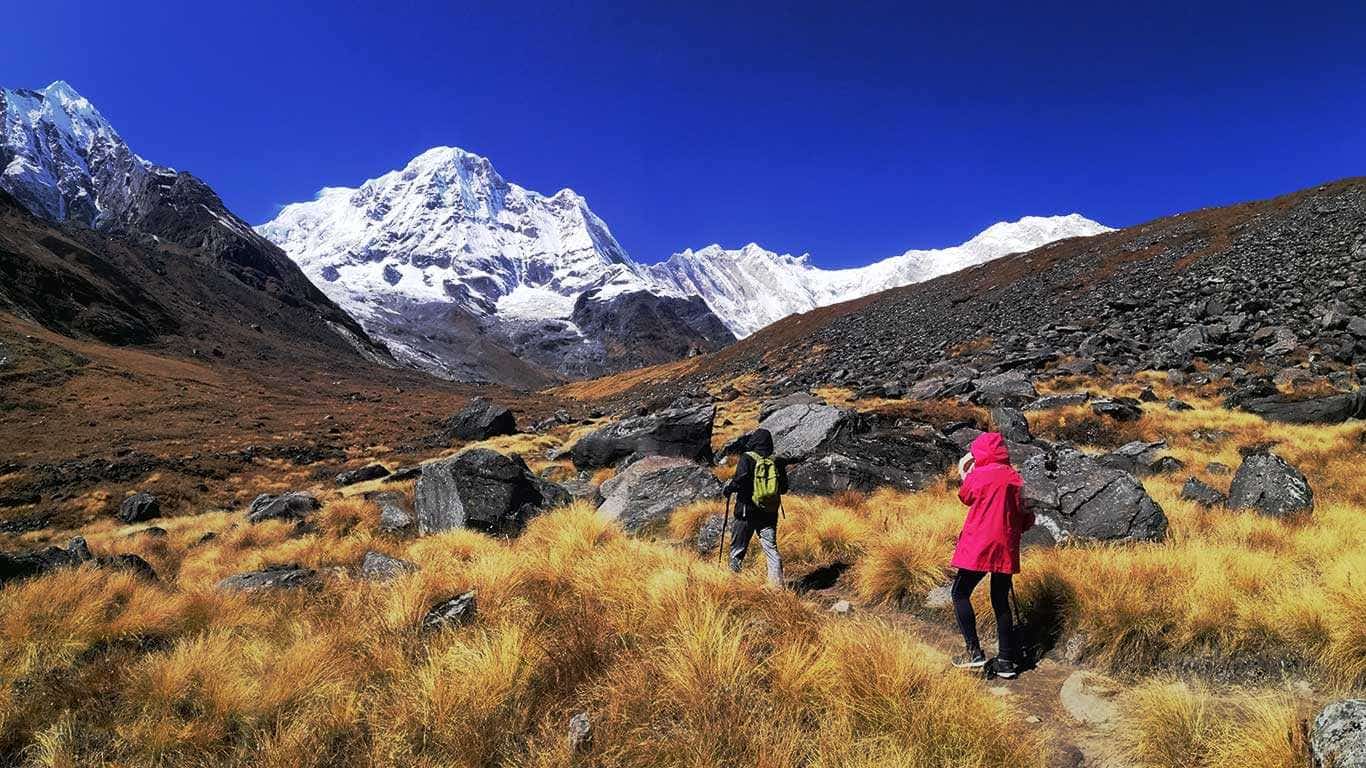
The terrain itself is one of the least perceived elements of the Annapurna base camp challenge, and the never ending ABC trek stairs that make up much of the path are a defining feature of the Annapurna base camp experience. Such villages as Ulleri and Chhomrong are all about stone staircases (or rather thousands of them). Not only are these stairs physically challenging to your legs, but they can also be a significant psychological strain and that is why these are among the largest contributors to the question of how hard the ABC trek is after having been through it.
Another determinant that contributes to the Annapurna base camp challenge is altitude, although it is deemed to be less risky than the higher treks such as the Everest Base Camp. The higher you go, to 4,130 meters, the less air there is, and your own body must labor more to deliver oxygen, causing you to go slower and even walking more tiring. Although a majority of the trekkers who have an adequate fitness level for Annapurna base camp manage them successfully with a good acclimatization strategy, a lack of concern to altitude elevates a moderate trek to an even more challenging ordeal.
The time spent on the trek is also a determining factor in the general difficulty of the Annapurna base camp since it usually takes 7 to 12 days of uninterrupted walking. This is in contrast to brief increases so that in addition to just one difficult day, your body actually gets tired, particularly when it is your daily ups and downs, not to mention the ever-present ABC trek stairs. That is the reason why a lot of trekkers declare that it is not a particularly complicated part of the trek, but the perseverance to continue day by day.
Weather and trail conditions also add another dimension to the difficulty of the Annapurna base camp that most people do not consider, making the difficulty of ABC trek higher. When it is good in spring or fall, the trek seems much easier to manage, the paths are clear and the weather is constant to help you on your way. Nevertheless, rain, mud or low temperatures can cause the same tracks to become slippery and physically demanding, and subject your own body to greater strain as well as challenge your overall fitness level at the Annapurna base camp.
The next notable factor with the Annapurna base camp challenge is the mental challenge that is frequently underrated in comparison to the physical demands. Making long walks every day, getting up early, and overcoming tiredness can break your spirit. In particular, such a person has to climb several long hills or endure some monotonous stairs. A positive attitude, paired with sensible assumptions regarding the degree of difficulty involved in ABC trek, usually makes the difference between painfully plodding the trek and truly enjoying the experience.
The Real Challenge: Endless Stone Stairs & Daily Elevation Gain
When inquiring how difficult the ABC trek is, one of the most straightforward answers would be the cognition of the actual nature of the trail itself. The difficulty of the Annapurna base camp is not distinguished by technical climbing but by the grueling nature of physical activity that one has to endure with the constant changes in elevation and the notorious stairs in the ABC trek. This is where your fitness level and more so the cardio endurance level really determines whether this trek will be comforting or painful.
Thousands of Stone Steps (Ulleri & Chhomrong):
The path contains some long stretches of steep and uneven rock steps especially at Ulleri and chhomrong, where it may seem like the steps are never ending. Even short distances can be challenging as climbing these ABC trek stairs can bring you up fast and challenge your endurance making even the simplest distances come across as a challenge. This is the very first actual situation faced by many trekkers who realize the actual Annapurna base camp challenge.
Continuous Ascents and Descents:
The ABC route is not like the flat hiking, as you are forever up and down a trail and in many cases, you have to lose elevation, only to gain it later that same day. This repetitive motion may also be physically tiring, particularly when you already feel tired in your legs after the past days. It’s one of the main reasons why people underestimate how hard the ABC trek is, as the effort is not just about climbing but also about maintaining endurance throughout the day.
Cardio Endurance is Key:
The adventure does not require brute strength or speed but endurance of breathing and a great heart. With a good stamina level in your Annapurna base camp, you will find it a lot easier to maintain a steady pace even during the steep climbs and long stair sections. Having the right stamina is all it takes to make the Annapurna base camp challenge seem much more serious, particularly in higher locations.
Knee Strain During Descents:
It is a difficult task to climb a hill, but many hikers realize that downhill can be quite as tough as well as more difficult on the body. Walking down thousands of stairs puts continuous pressure on your knees and joints, especially if you’re not used to it. This is also one of the major influences on the overall difficulty of the Annapurna base camp especially when one is near the end of the trek already affected by fatigue.
Exhausting but Fulfilling:
The monotony of stairs and gaining height may be mentally tiresome, particularly when you do not know where a climb will take you. It is much easier, however, to divide the journey into little bits and concentrate on one step at a time. This is a part of knowing the nature of how hard ABC trek is to save you not only physically, but mentally as well to prepare to take on the challenge.
All in all, the endless stairs, the constant alternation of elevation, and the necessity of powerful cardio endurance are what, in fact, makes the Annapurna base camp that challenging. Although it might sound challenging, when fitness level for Annapurna base camp and pacing strategy are maintained, these difficulties can be listed among the adventure and not a barrier.
Altitude Factor: Is It Dangerous or Manageable?
Altitude is one of the most significant aspects in considering the difficulty of the Annapurna base camp particularly to individuals who are inquiring how difficult is the ABC trek on the first attempt. The trek height has a peak of base camp of 4,130 meters that is high enough and your body experiences life on less oxygen even though having a good base camp fitness on Annapurna. Although this is quite a moderate altitude in comparison to other treks in the Himalayas, it still has to be respected, acclimatized and paced slowly so that the body can adapt safely.
This is also difficult with the altitude as the higher up you get, the air thins out therefore it requires your body to work harder to get oxygen into the muscles. Even simple portions of the trail, such as the sections of the ABC trek stairs, may seem more draining than they would be at lower altitudes. The difficulty of the Annapurna base camp is however manageable to most trekkers as opposed to more serious and severe treks since one has ample time to accommodate the altitude change gradually and in that way your body is accustomed to it on its own.
Risk of Acute Mountain Sickness (AMS) is another important consideration when speaking about the difficulty of ABC trek, as it may impact everyone regardless of age and fitness levels. Even trekkers with a high level of Annapurna base camp fitness are not immune because the altitude affects people in various ways and does not directly depend on physical health. The best thing is that risks of altitude on this trek can be reduced to a lot with the right pacing, hydration and awareness.
In spite of these issues, the difficulty of the Annapurna base camp can also be deemed safer than other treks, such as Everest Base Camp due to the poorer peak altitude and more favorable acclimatization pattern. The path offers a less aggressive rise, and the presence of teahouses in between gives you the chance to take a break, recuperate, and keep an eye on your state. This is the reason why lots of trekkers with altitude anxieties tend to use ABC as a cheaper way of experiencing the life of high-altitude trekking.
The typical signs of AMS:
Most of the commonly reported signs are headache, nausea, dizziness, shortness of breath, loss of appetite, and difficulty sleeping. These symptoms may begin to be mild, but they should not be neglected at all, particularly as it goes on increasing. To ensure the challenge of the Annapurna base camp is overcome safely, it is essential to identify them early.
Who is at Risk:
Any person may be affected by altitude irrespective of age, gender and fitness level at Annapurna base camp. Symptoms can occur even in experienced trekkers who have already inquired how difficult the ABC trek is, provided they go very rapidly or without proper acclimatisation. Pacing and awareness are essential in this trek due to this unpredictability.
Why ABC is Considered Safer than Everest:
Its highest elevation is much less than Everest Base Camp, and the hike does not have long-term exposure to high altitudes. The slow increasing profile and minimized time make the risk more manageable and helps the Annapurna base camp challenge accessible to more trekkers. It is this level of challenge and safety, among others, that makes many recommend ABC as essentially a first high-altitude trekking experience.
Trek Duration & Daily Walking Hours Breakdown
Knowledge about the day to day arrangement of the trek will be crucial in the determination of the Annapurna base camp toughness, particularly when you are attempting to provide yourself with a real answer to the question about how hard the ABC trek is. It is not merely about arriving at a destination, but also about sustaining a robust energy and stamina during multiple days of walking that may require walking on steep paths and stairs of the ABC trek. The overall experience will rely much on your level of Annapurna base camp fitness, and the way you can adjust to the long days of trekking.
Day Range | Walking Hours | Difficulty Level | Notes |
Start (Nayapul–Ulleri) | 5–7 hrs | Moderate | Long sections of ABC trek stairs that quickly test your stamina |
Mid Trek (Ghodepani–Deurali) | 5–6 hrs | Moderate | Forest trails with gradual elevation gain, allowing the fitness level to adapt steadily |
Final Push (ABC) | 6–7 hrs | Moderately Hard | Altitude kicks in, making even steady climbs feel tougher and increasing the overall Annapurna base camp difficulty |
Descent | 5–7 hrs | Easier (but tiring) | Less climbing but significant knee pressure due to downhill walking and continuous ABC trek stairs |
As it will be apparent, it is not only about a single hard day, but rather about maintaining the energy throughout the trek. The initial days accustomed to the actual physical challenges, particularly with heavy steps, whereas subsequent days present both exhaustion and elevation, and the Annapurna base camp challenge seems to be greater. This slow build-up is the reason why most trekkers tend to quickly underrate how challenging ABC trek is, only to understand later that the most difficult aspect is to be able to endure and be consistent.
When you arrive at the descent stage, your body is tired and even with the fact that the trail is already considered lower in difficulty, strain on the joints and knees is felt more. Especially on the protracted downhill areas surrounded by ABC trek stairs, which may be unexpectedly difficult to tackle regardless of being downhill. Having the appropriate base camp fitness level on Annapurna and a gradual style will make each step of the trek easier and lead to not just a very rewarding experience but a very satisfying one.
How Fit Do You Need to Be? (Honest Fitness Check)
One of the most upright questions before setting on the road to take the trek is how difficult the ABC trek is with your present fitness. The fact of the matter is that the difficulty of the Annapurna base camp does not seek exceptional athletic skill, however, it presupposes a high level of stamina and regularity. The fitness level of your Annapurna base camp will directly determine whether you will enjoy the experience as an interesting challenge or torture when you are facing prolonged days and incessant stairs.
Novices with Training Can Do It:
When you are new to the trekking business, you have to undertake several weeks of preparation, in that case, the difficulty of the Annapurna base camp reduces significantly. Moderate walking, light hiking, and preparation of stamina may go a long way in enhancing your experience. Numerous novice trekkers are able to complete the trek successfully after learning the difficulty of ABC trek and training accordingly.
Active Travelers Have an Advantage:
With an already active lifestyle like taking regular walks, gym sessions, or short hikes in place, then you should be at the level of fitness required to go to the Annapurna base camp. Stairs may not be accessible to you and you may continue to struggle with them but your body can adapt quicker to the everyday need. This renders the total Annapurna base camp difficulty not excessively wild.
Ability to Walk 5–6 Hours a Day is Essential:
Among the fundamental needs, there is the ability to walk a few hours a day in uneven areas. It involves mountainous climbs, downhills, and constant movement without taking prolonged rest, and that is a fundamental aspect of how strenuous is ABC trek. When this is a challenge at sea level, the difficulty of the Annapurna base camp will be much more challenging at altitude.
Basic Cardio Endurance is Non-Negotiable:
Good heart fitness will allow you to deal with extreme climbs and extensive stairs of the ABC trek without feeling too tired. Some of these activities such as brisk walking, jogging, cycling or stair climbing can significantly enhance your fitness level at Annapurna base camp . In the absence of this stamina foundation, even moderate parts of the trek will seem imbalancedly challenging.
Reality Check: It is not a casual walk:
Although the journey is not a walk in the park, it is not a sightseeing vacation and neglecting the base camp at Annapurna is the most prevalent error. You will walk several days in succession with a lot of fatigue, physical and mental exhaustion. Knowing the realistic rate of the ABC trek will help you prepare and not waste undue effort on the trail.
Pacing is Everything: Why Slow Trekkers Succeed More
To deal with the challenge of the Annapurna base camp, pacing is not only useful, but absolutely indispensable to success on the trail. A common issue with struggling trekkers came as a result of them underestimating ABC trek and coming out on too fast hoping to cover the distances within a short time without allowing their bodies time to acclimatise. A slow, consistent speed will not only enable your body to get used to the rising altitude but also save your energy on the days ahead, which will be important during a multi-day trek like this.
Sometimes slow and steady seems like a simple concept to some people, yet it is also among the most successful strategies to address the challenge of the Annapurna base camp. A steady but not too fast pace can also help control your breathing rate, decrease fatigue, and make the long trekking days much more manageable, even when you have to deal with uphill climbs all the time and endless ABC trek stairs. A sustainable-paced trekker is much less likely to be tiring too early in the day and therefore is able to enjoy the ride rather than be hustling to stay up to speed.
Pacing is also directly involved in altitude safety which is one of the important factors in considering how hard the ABC trek is. The higher you go, your body requires adaptation to lower oxygen concentration, and going too fast can further impress the chances of altitude sickness, no matter how fit you are at Annapurna base camp. Working at a slow pace, with adequate acclimatization time, you are giving your body the highest opportunity to receive the natural adjustment, thus making the trek still safer and considerably easing the overall Annapurna base camp challenge.
Conservation of energy is one more key advantage of pacing correctly, particularly at areas with back-to-back stairs that would rapidly deplete your energy in case you would attack it with force. Rather than straining on steep climbs and taking a big toll on yourself, a constant pace will help spread your burden evenly over the day. This not only refreshes your legs, but also makes sure that you still have sufficient energy to take on descents and the next days of trekking, without feeling utterly exhausted.
Many seasoned trekkers and experienced guides have noted that it is not speed that will make you successful at the Annapurna Base Camp trek but rather being consistent and conscious of your body. Some of the factors in the management of the ABC difficulty include a good habit of listening to your breathing, having some short breaks when necessary and not being tempted to hurry up. Slowing down enables even trekkers who are in Annapurna base camp fitness level to conserve fuel in the entire trek and not to lose their strength too soon.
Comparing ABC Difficulty with Other Popular Treks
In comparing the Annapurna base camp difficulty with other popular Himalayan treks, it becomes significantly easier to comprehend its level. When many trekkers pose questions like how hard the ABC trek is, they are actually seeking to situate the trek in the wider trekking value system, particularly compared to Everest, Langtang, Mardi Himal, and the Annapurna Circuit. Your level of fitness in the Annapurna base camp can vary relative to which trek you are comparing it to, although overall ABC is a moderate trek with certain physically challenging parts such as the ABC stairs.
The following table will give you a clear comparison of where the difficulty of the Annapurna base camp is when compared to other popular trekking paths in Nepal. This assists in developing realistic expectations and provides a realistic reference point to someone attempting to make a decision on how hard ABC trek is against any other Himalayan affairs.
Trek | Difficulty | Key Difference |
Everest Base Camp | Harder | Higher altitude, longer duration, more demanding acclimatization, making the ABC difficulty feel easier in comparison |
Langtang Valley | Similar | Shorter duration but similar elevation gain and terrain, with comparable Annapurna base camp fitness level requirements |
Mardi Himal | Slightly easier | Shorter trek with fewer crowds and less intense elevation gain, making ABC feel more challenging due to longer days and more ABC stairs |
Annapurna Circuit | More challenging | Significantly longer route with Thorong La Pass, higher endurance demands, and overall greater difficulty than the difficulty |
Based on such comparison, it is apparent that the difficulty level of the Annapurna base camp is moderate yet in a sweet spot that is neither as easy as the short treks nor as challenging as the high-altitude journeys. Although more difficult than shorter trails, such as Mardi Himal, it remains more accessible than the newer and further treks, such as Everest Base Camp or the entire Annapurna Circuit. This equilibrium is the reason why most trekkers tend to use it as the first significant Himalayan experience.
Weather & Season: When the Trek Feels Easier (or Harder)
In perceiving the difficulty of the Annapurna base camp, weather and timing of the season are incredibly significant in the aspects of making the trek more difficult or simple. Most trekkers who pose the question how hard the ABC trek is mostly ignore the fact that the same route may experience a total change based on the season. You may not have any change in terms of your fitness level, however, trail-related conditions, visibility, temperature and safety may change your entire experience, particularly in places such as the stairs of the ABC trek.
Spring or autumn conditions are typically the best period to have a trek, since the weather is consistently sound, the skies are clear and the paths are in the best accessible state. In such seasons, the base camp of Annapurna becomes a less daunting experience since you can stroll without feeling the severe cold, intense rain, or deep snow trying to slow down strides. This is the reason why most trekkers with advance planning seek these windows to have a best version of trek besides controlling the hardness of ABC trek at a moderate course.
Best Seasons (Spring & Autumn):
They are the best seasons to do the trek and there are clear mountain views, stabilized temperatures and dry trails that make the trek easier. ABC stairs are easier to walk on, and weather-related issues do not excessively challenge your level of fitness in Annapurna base camp. The level of the Annapurna base camp during this period is most predictable and manageable.
Monsoon Season (Slippery Trails and Rain):
During the monsoon season, the rainfall causes the trails to become muddy, slippery, and more physically challenging, particularly on steep stone-steps. ABC stairs are more difficult to walk upon, which can lead to slips and make your walk extremely slow. This increases the general difficulty of the Annapurna base camp.
Winter Season (Cold and Snow Conditions):
During winter, it is frozen and there is even the risk of snowfall particularly at high altitudes at the base camp. Even in the beautiful scenery, the cold can decrease stamina and increase the exhaustion of long walks even with the good level of Annapurna base camp fitness. Physical strain may also be another layer to the difficulty due to snow-covered ABC trek stairs.
Mental Challenge: It’s Not Just Physical
Speaking about the difficulty of the Annapurna base camp, the majority of people concentrate on the physical fitness, yet the mental challenge plays an even greater role in it - even pivotal. As the trek progresses, you do not just feel tired when you walk, but your mind becomes fatigued, particularly after a number of days of walking on rocky roads and ascending on stairs everywhere on the ABC trek. This buildup of fatigue may result in the simplest parts being more difficult and that is why it is important to look beyond physical strength to understand how hard ABC trek is.
There is nothing wrong with feeling unmotivated during the day, especially when climbing long uphill or when the weather is not so good. You may feel like doubting your fitness level at Annapurna base camp or whether the effort is worthwhile, particularly when you are confronted with another day of early mornings, day in and day out trekking. These psychological lows are part of the process and the attitude you take towards them contributes significantly to the overall Annapurna base camp challenge.
It is also mentally challenging in the early mornings and in day to day routine, something that most trekkers are not prepared to deal with. It may be tiresome and exhausting to wake up before sunrise in cold conditions in the mountains, prepare your equipment and be ready to spend another 5-7 hours of walking. This routine, coupled with physical fatigue as well as the use of ABC trek stairs, can challenge your stamina and consistency, unless you are psychologically prepared to undergo it.
One more important aspect of how hard ABC trek is is your capacity to remain optimistic and focused during uncomfortable situations. You will have days where your body is exhausted, you have slowed down in speed and the destination is miles away, yet with a constant mindset you are able to persevere during those days. Well-minded trekkers usually realize that the Annapurna base camp challenge could easily be overcome despite the average fitness of such a traveler.
It is eventually your state of mind which becomes the greatest tool to conquer the hardships of the trek. When you think that every day you are taking a step towards where you want to be, not how many steps you have left to go, it could be massive in terms of getting you to enjoy your trip. This change of thought does not only enable you to cope with fatigue and low motivational levels but also enables you to manage your energizing level better, as compared to the fitness level of Annapurna base camp.
Common Mistakes That Make the Trek Feel Harder Than It Is
Most of the trekkers who subsequently report the Annapurna base camp challenge to be worse than anticipated are not actually struggling due to the trail being strenuous, but due to unnecessary mistakes made along the path. How difficult is ABC trek? The straightforward truth is that you will make it just as much about preparation and attitude as it will be about the ground, altitude or your level of fitness at the Annapurna base camp. The slightest mistake on the path can soon increase the exhaustion and this is exacerbated by long days and stairs to ABC trek all the time.
Overpacking: It is one of the most common causes why trekkers end up getting tired early because they are carrying excess weight. A huge backpack causes un-needed pressure on your legs particularly when climbing long distances and stairs ascending to the ABC trek up and down, thus the Annapurna base camp difficulty may be seen as much greater than it really is. Carrying a small weight has immediate benefits on both your endurance and general comfort of trekking.
Walking Too Fast: Most trekkers begin too fast and attempt to travel large distances in a short time without knowing the intensity of ABC trek in several days. This causes early exhaustion, shortness of breath and the lack of strength in later parts. Keeping a consistent pace of how you train is critical in keeping your base camp Annapurna fitness level under control.
Ignoring Acclimatization: It is a good idea to take breaks or increase the altitude gradually because rushing or skipping both might result in making the journey more challenging than it should be. Proper acclimatization assists your body to adapt to the thinner air thus minimizing the risk of altitude-related complications that make the Annapurna base camp challenge even greater. Here, even moderate climbs will feel daunting without it.
Poor Hydration: Lack of sufficient consumption of water decreases energy and adds on fatigue particularly in high altitudes. Dehydration may make the ABC stairs more tiring and slows your healing between rests. One of the most easier methods of maintaining the challenge of the Annapurna base camp under control is by remaining hydrated.
No Training Beforehand: Going on the trek without basic preparations usually causes early exhaustion and soreness of the muscles. The smallest base camp level of fitness, which is established by walking, hiking or cardio, will go a long way in helping you manage the long days of trekking in the Annapurnas. In its absence, trekkers usually get caught unawares by the reality of how difficult ABC trek is.
Is Annapurna Base Camp Trek Difficult for You?
In terms of giving a real opinion about the ABC difficulty, the question actually lies with your experience, fitness level and expectations as you head to the trek. As to whether ABC trek is challenging or not, it is worth noting that the challenge is not a one size fits all since different trekkers find this experience different. Things such as your level of fitness at Annapurna base camp, your capability of walking long days, and how effectively you can withstand altitude significantly influence your experience.
When it comes to novices, the trek difficulty may seem challenging but by no means impossible, provided that you prepare prior to the expedition. The long days, constant climbs, and the strenuous ABC stairs, in particular, may be taxing to the physical standing, yet these can be overcome with the right speed and proper acclimatization. A lot of first-time trekkers who have constantly doubted how difficult is the ABC trek have found themselves successfully trekking it and may even call the experience a lifetime achievement.
To the seasoned trekkers however, the view is a bit different and the difficulty of the Annapurna base camp is more of a moderate and not an overwhelming activity. When you already have experience in trekking, and your fitness level of the base camp of Annapurna is high, then there is a high probability that your body is more adjusted to the long days of trekking and changes in altitude. Even parts inside that have endless stairs or gradual ascents in this instance feel more of a physical rhythm than a hardship, and you can take in the entire view, and the general experience of the journey.
That said, regardless of your experience level, it’s important to approach the trek with a sense of realism about how hard the ABC trek is. Miscalculating the terrain, elevation or the amount of work per day can easily make what was initially a manageable hike into a challenge, even to experienced hikers. Conversely, the Annapurna base camp challenge can be a more peaceful and enjoyable experience when given the due respect, preparedness, and timely pacing.
Pro Tips to Make the Trek Feel Easier
These pro tips have the basis of real trekking experience and are tailored to help you lessen fatigue, cope with altitude, and even enjoy the trip rather than merely endure it. When used in the right way, they will transform the perceived difficulty of the Annapurna base camp into a much more pleasant and easygoing journey.
Training 2-4 weeks prior to the Trek: Some basic workouts such as walking, climbing the stairs, jogging and hiking can significantly enhance stamina. It assists your body to get used to continuous work whereby the Annapurna base camp challenge becomes less overwhelming once you are on the trail. A mere Annapurna base camp fitness prepared in advance lowers an initial fatigue and muscle soreness.
Engage Guide or Porter: A guide finds your way, keeps you on schedule and safe and a porter can be of great use in minimizing the physical burden. Less weight matters a lot when having long walks up and down stairs used in the ABC trek which will directly reduce the total Annapurna base camp challenge. It also gives you more time to be in the scenery, and less time doing hard work.
Pace Yourself: Among the largest errors that trekkers can commit is walking faster in the beginning of the trip. It is important to maintain a consistent rhythm to be in a position to grasp the difficulty of ABC trek. A gradual and steady pace will enhance endurance and will assist in managing fatigue during the trek.
Stay Hydrated: Adequate intake of water is necessary in energy, recovery, and adaptation to altitude. Hydration is the key to making your body work more efficiently in steep climbs and helps to wear less in exhausting parts of trek stairs. It is among the easiest but most efficient means of making the Annapurna base camp even easier.
Use Trekking Poles: Trekking poles minimize the strain on the knees on ascent and descent mostly on the lengthy stone steps. They are beneficial to spread the load evenly, and the Annapurna base camp challenge might be easier to bear during several days. This is particularly handy when you become tired and your Annapurna base camp fitness begins to wane temporarily.
To sum up, the Annapurna base camp difficulty can be defined as an average trekking task which could be successfully completed by anyone who is reasonably fit and well prepared. With a minimum level of Annapurna base camp fitness, regular walking and the knowledge of how to approach pacing, altitude, and ABC trek stairs, the trip is much more friendly than many first-time trekkers assume it to be. How difficult is ABC trek, to most individuals posing this question, the true response would be that it is not about extreme difficulty, but rather endurance, patience, and proper attitude.
When setting up your adventure plans and looking to stay safe, well-organized and stress-free, then we are going to take care of you throughout. You can contact us at +977 985-1042334 for guidance, consultation, or any other assistance. We will always be glad to assist you in the preparation of a safe, enjoyable as well as a well-prepared trekking trip to the Annapurna region- be it a group trip or a complete personalized Annapurna circuit trek package.
We would be happy to create a tour plan that best fits your comfort level and travel interests, as well as safety requirements so that you can have the best experience of the Himalayas!