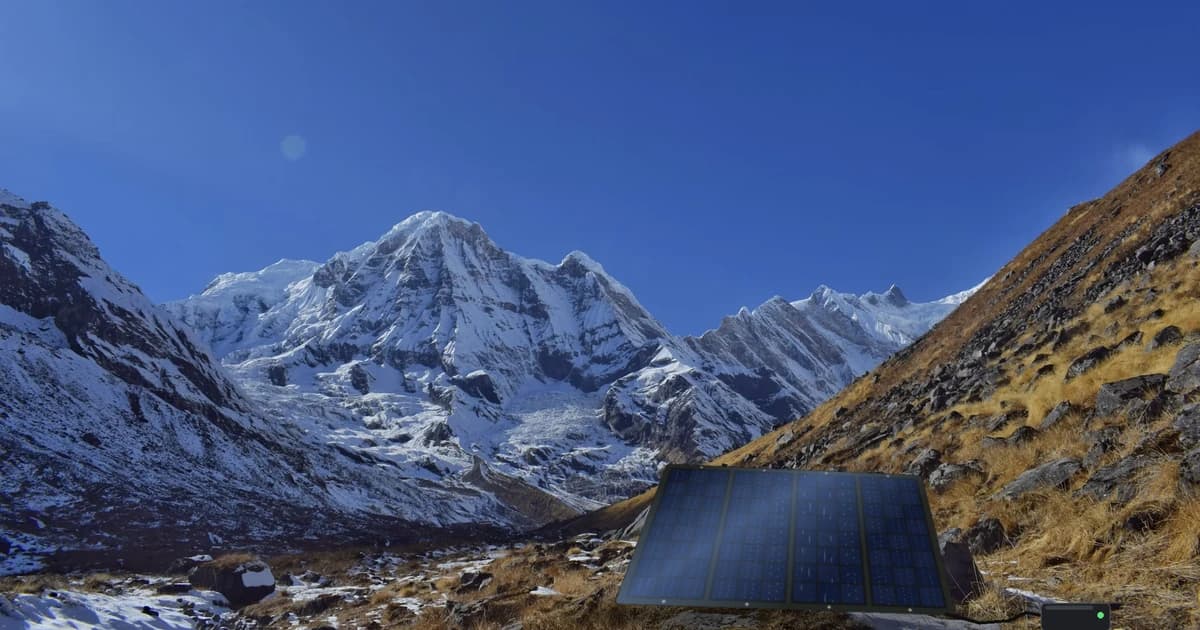
When you choose to trek to Annapurna Base Camp, you may also want to film the remarkable Himalayan views and lush landscape of the region with your drone.
And why not, after all; this is one of the most photogenic locations in Nepal. So, to answer your question: yes, you can legally fly a drone at Annapurna Base Camp in 2026.
But remember, you will have to obtain all the necessary permits from the concerned authorities before you carry your drone on your Annapurna Base Camp trek.
If you don’t get the essential approval legally, then your drone will be confiscated, and you may have to pay a heavy fine.
In this guide, you will learn about the current drone rules and regulations in Nepal, all the steps that you need to follow to get the essential permits, the areas where you can and cannot fly, and how we will assist you in completing these formalities.
Why Flying a Drone At Annapurna Base Camp Will Be The Best Experience?
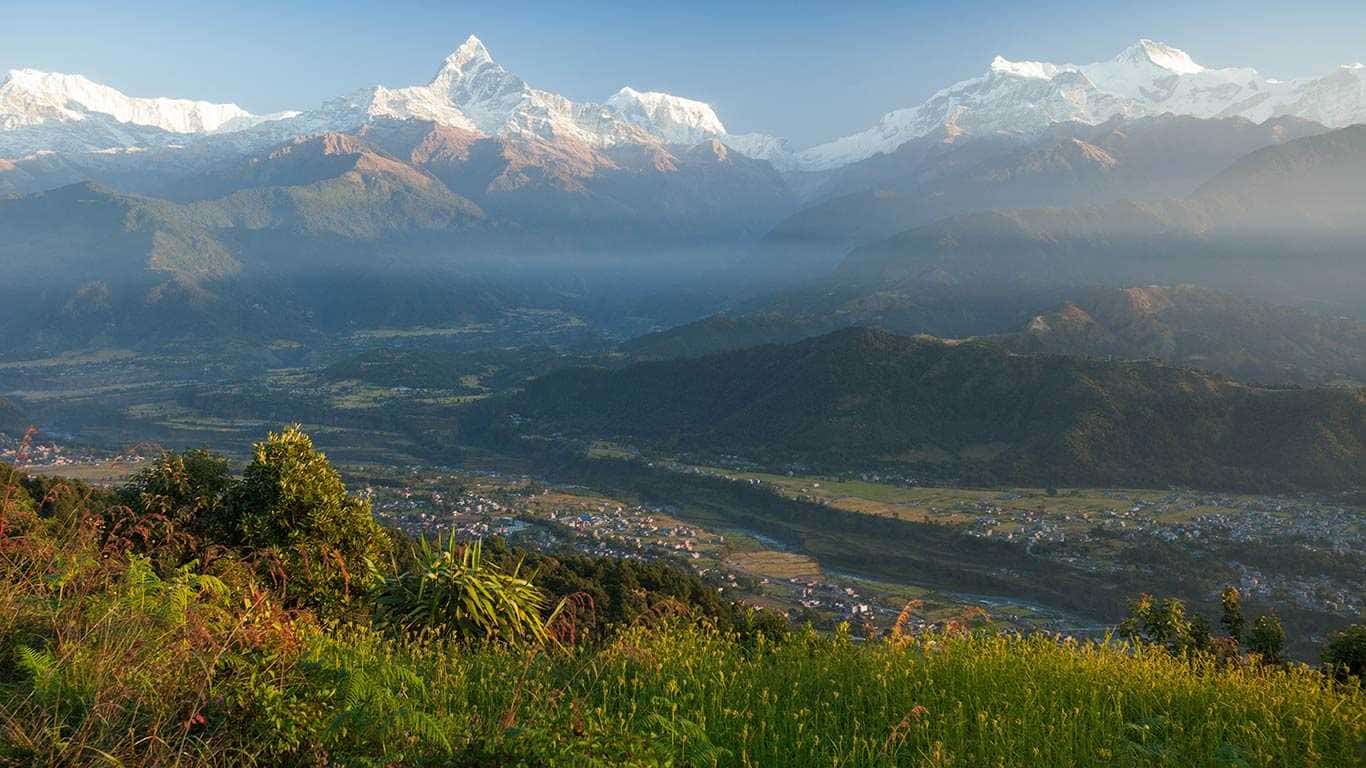
The Annapurna Base Camp trek is one of the most picturesque trekking paths in Nepal. The region is rich in lush forests enveloped in colorful rhododendron bushes (national flower of Nepal), terraced fields, mountain villages, and majestic Himalayas from Annapurna to Fishtail.
In fact, this region is a favorite among photographers, filmmakers, and videographers as they get limitless chances to capture breathtaking aerial shots.
Each day of the trek offers you unique topography, with remarkable viewpoints, and a high likelihood of spotting the beautiful wildlife of the Annapurna.

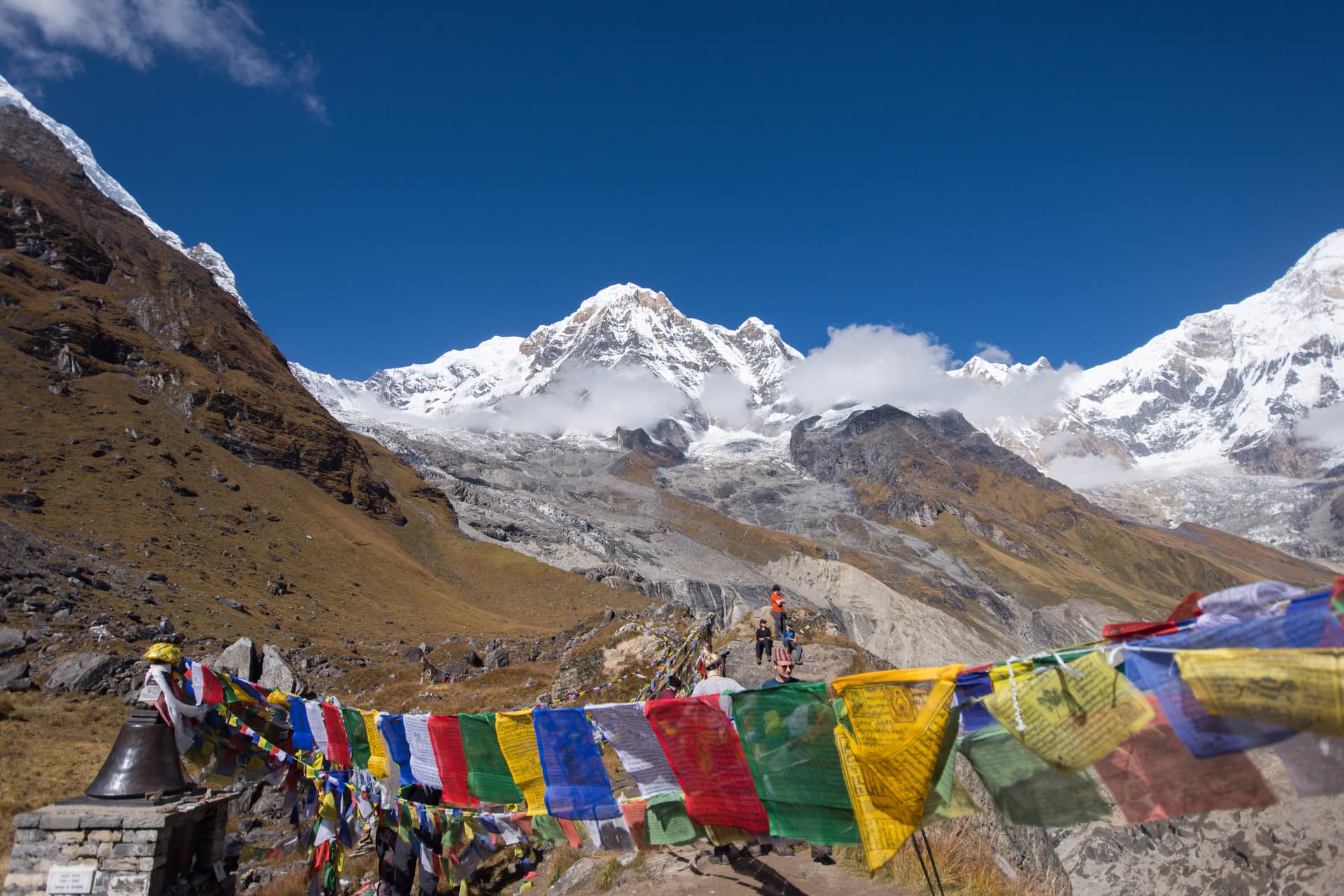
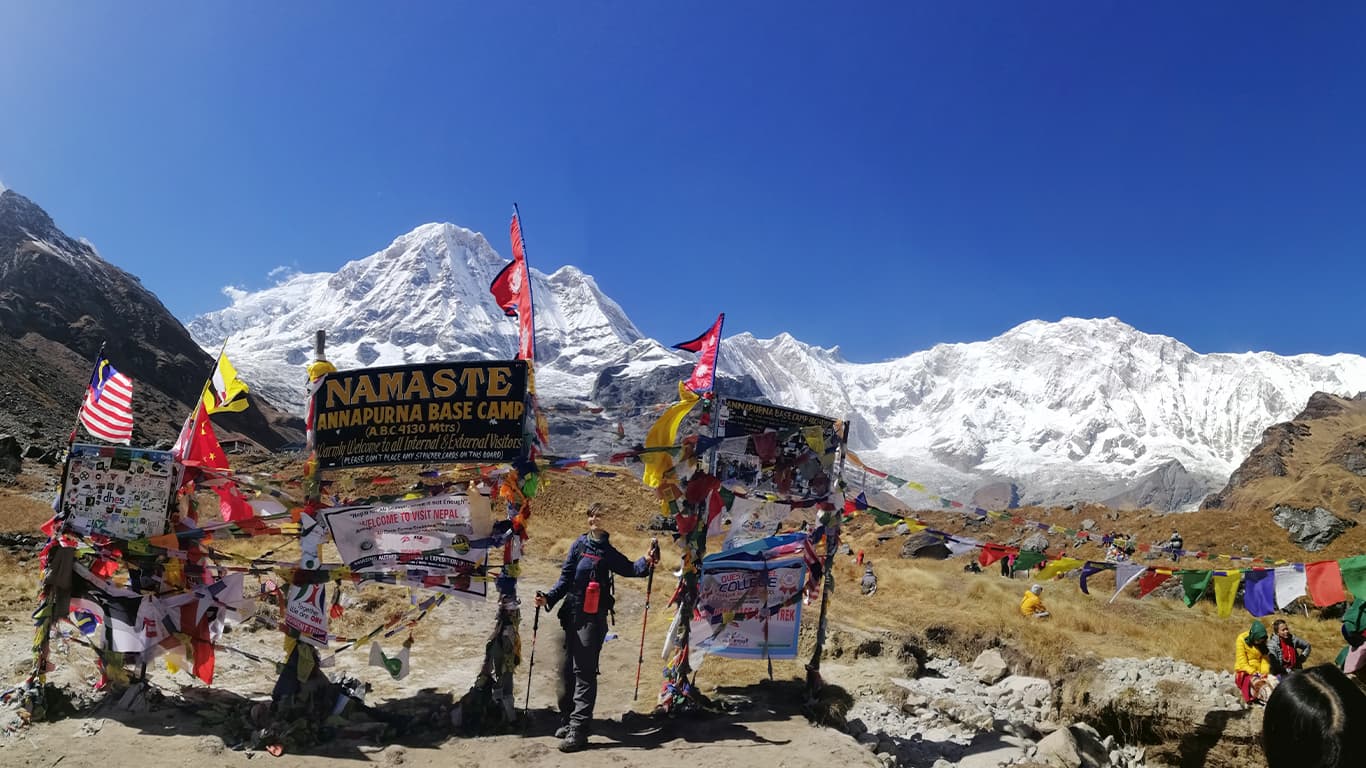
Prayer flags fluttering at ABC Trek Nepal
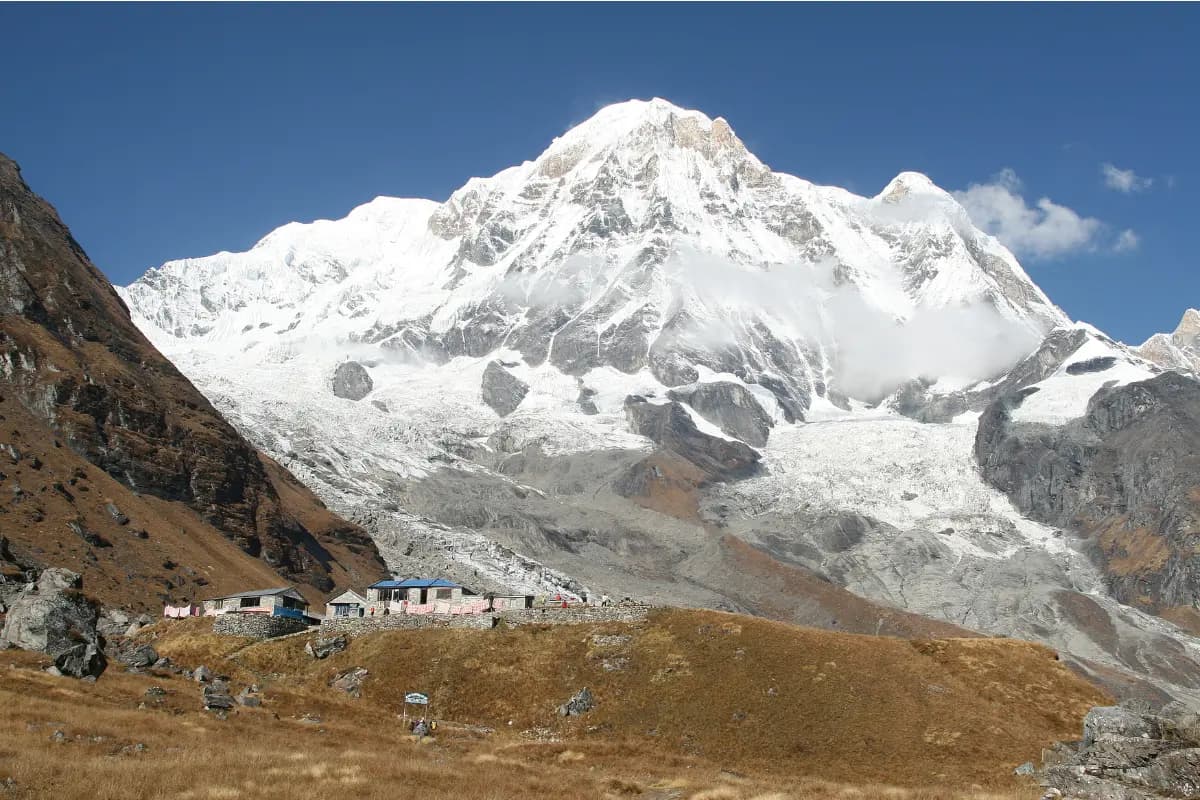
And, Annapurna Base Camp itself at 4130 m is a natural playground of massive Himalayas such as Annapurna I (8,091 m), Machhapuchhre/Fishtail (6,993 m), Annapurna South (7,219 m), Gangapurna (7,455 m), Hiunchuli (6,441 m), and Annapurna III (7,555 m). That’s why it is also referred to as Annapurna Sanctuary.
Many content creators and photographers visiting our office therefore often ask us about the legal formalities to fly drones here. They want to film the sunrise and sunsets over these magnificent white summits.
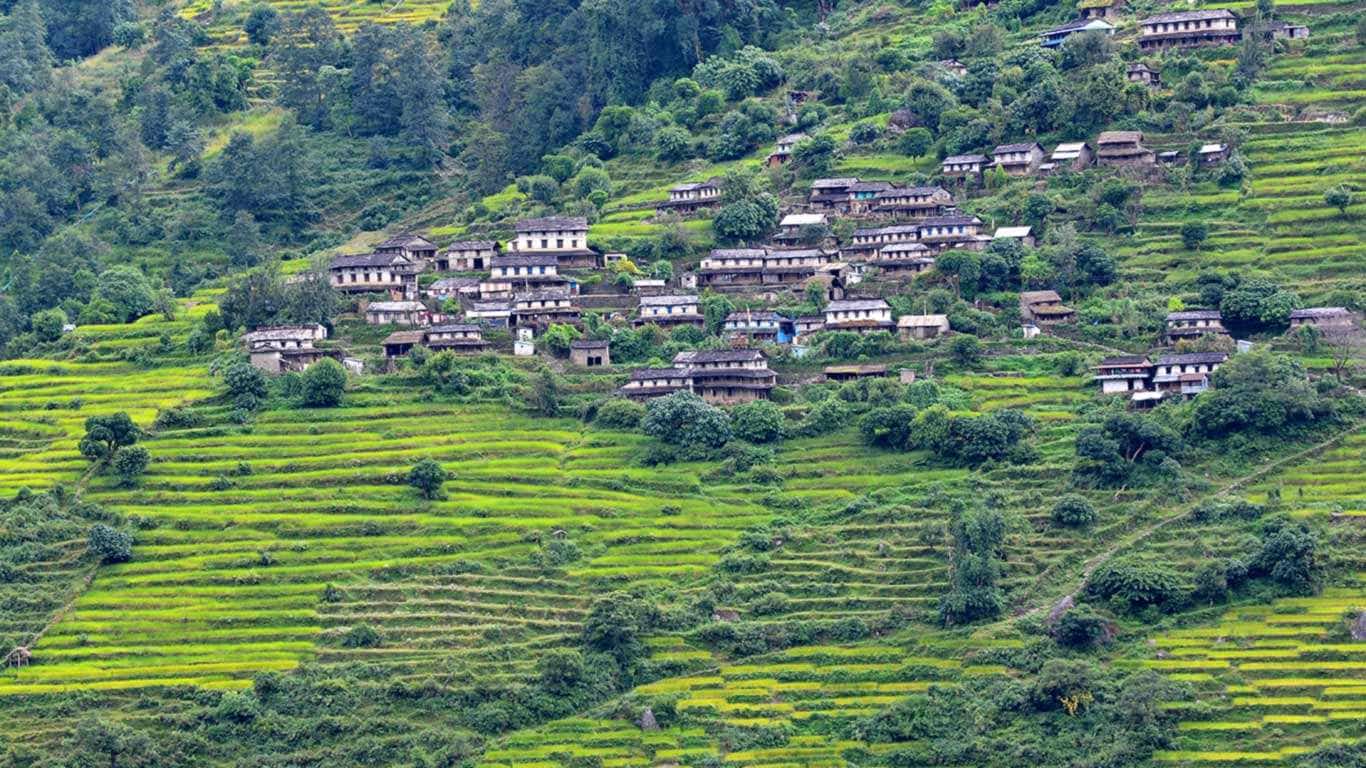
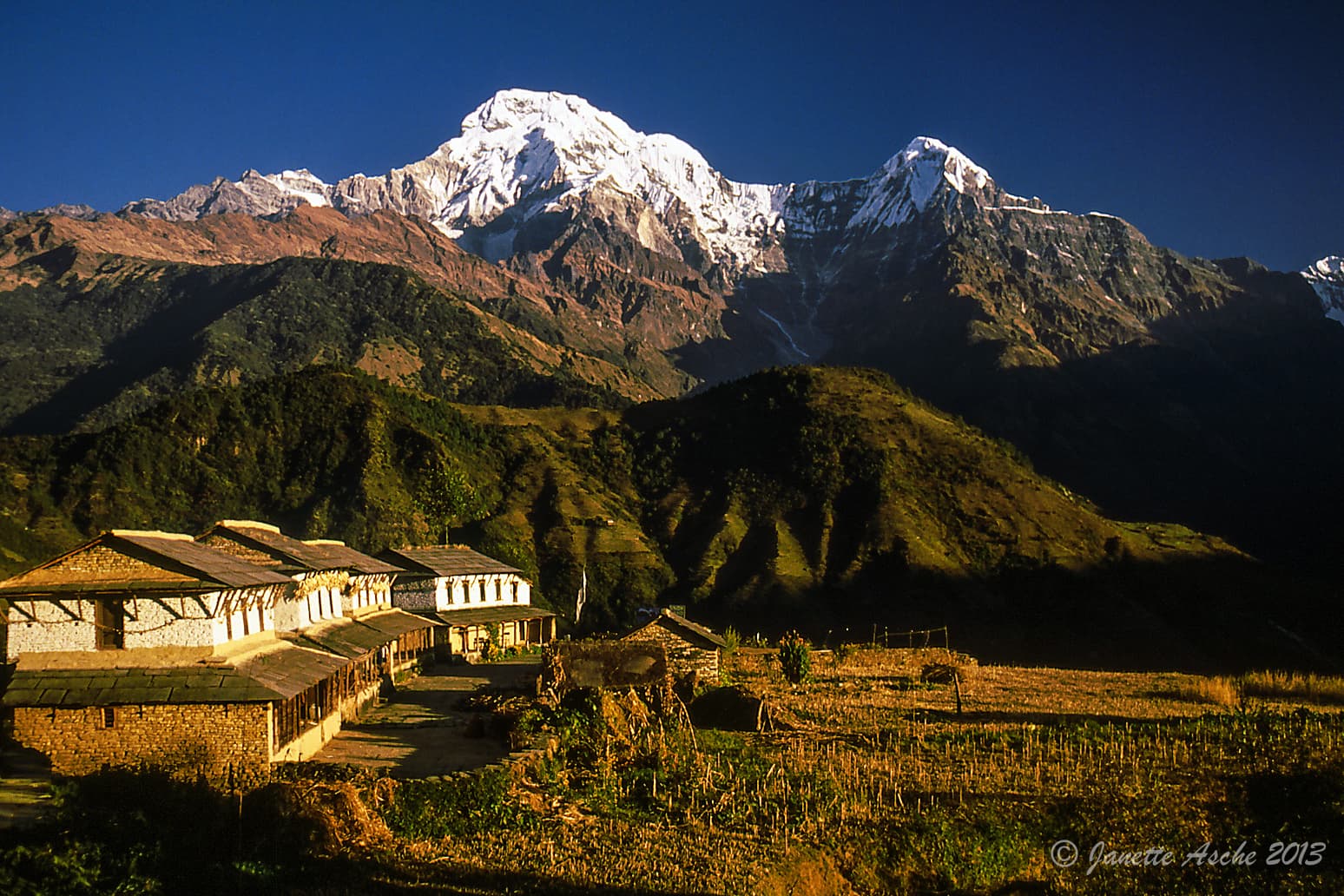
Apart from the mountains, the enticing stone villages and Gurung and Magar communities of Chhomrong, Ghadruk, Poon Hill, and Ghorepani also offer captivating views from above.
Therefore, if you are eager to turn your journey into an incredible story of your life, then follow the regulations of flying drones in Annapurna Base Camp. This way, you can avoid wasting your time, money, and unnecessary stress throughout your adventure.
Why Do You Need To Follow Guidelines To Fly a Drone At Annapurna Base Camp?
Many trekkers believe that they can simply bring in their drone and fly in Annapurna Base Camp because it is a remote mountain area, so no regulations will apply.
But this is not true; although the Annapurna Base Camp trek is a mountain trek, the entire trail lies within the protected Annapurna Conservation Area.
Every activity from hiking to mountain biking, from jeep ride to drone flying is strictly monitored here by the concerned authorities. Therefore, you need to have written permission from the government, and only then can launch your drone in the area.
The main government authorities supervising the region are from Nepal Aviation and from the Conservation Area. They have regulated these rules to preserve wildlife, maintain trekker safety, and prevent disturbance to local sacred sites.
If local park rangers or police checkpoints that you can come across along the trail find out you are flying an unauthorized drone in the region, then they will seize your drone and issue high penalties.
So, keep in mind that drones are not banned at Annapurna Base Camp, but if you have permission and you operate it responsibly, then you can certainly bring your drone on the trek.
Nepal Drone Regulations
Drone regulations in Nepal apply both to Nepali citizens and international travelers, and they vary based on your purpose of filming, weight of the drone, and where you want to fly.
If you intend to shoot in the Kathmandu Valley, then the protocols will be different, and if you plan to fly in any protected region of the country such as National Parks, then the rules are different.
Likewise, commercial filming also needs additional permissions compared to regular photography. Therefore, if you are planning to bring your drone, then please tell us in advance so we can explain the procedure to you in detail.
Who are the Concerned Authorities for regulating Drone Flights in Nepal?
There are several government authorities in Nepal who monitor and implement specific rules and regulations for flying drones in Nepal. The rules can vary based on where and why you want to fly your drone.
Mainly, the Civil Aviation Authority, local government offices, National Parks officers, and conservation authorities are the ones who are involved in approving drone flights.
For the Annapurna Base Camp trek, you need to get flying permission from the Civil Aviation Authority of Nepal (CAAN) and the Annapurna Conservation Area Project (ACAP).
Kindly understand that obtaining these permissions may need additional processing time. We, therefore, suggest you inform us in advance when booking your Annapurna Base Camp trek so we can start the permit process before your arrival in Kathmandu.
Permits Needed To Fly a Drone At Annapurna Base Camp
When you engage in an Annapurna Base Camp trek, we organize on your behalf two types of trekking permits, which are the ACAP and the TIMS (Trekkers' Information Management System).
However, these permits won't allow you to fly drones in the region. You need to have separate approvals from CAAN and APAC, and it depends on the weight of your drone, type, purpose, and where you want to fly.
If it is only for personal use, then the process of getting the permits will be simpler and faster. If it is for commercial purposes, then the permit process will take longer time.
Two Mandatory permits that you need are:
Drone Operation Permit from the Civil Aviation Authority of Nepal (CAAN)
Drone Filming Permission from the Annapurna Conservation Area Project (ACAP)
Steps to Obtain the Permits to Fly a Drone at Annapurna Base Camp
Your process of obtaining the permits for flying a drone at Annapurna Base Camp starts right from your arrival at Kathmandu Airport (TIA). Here are the exact steps that you need to follow:
Customs Declaration at Tribhuvan International Airport (TIA)
When you land at TIA with your drone in your belongings, you will have to declare it at the customs department of the airport. The officials will check your drone and then issue a formal Customs Clearance Certificate that certifies that you have brought your drone into Nepal legally.
Remember, a customs declaration is needed even if you enter Nepal through its land border. Failure to show the customs clearance certificate for your drone means rejection from CAAN for your drone registration application.
Registration at CAAN and Getting a Unique Identification Number (UIN)
The second step is to visit the CAAN office located in Sinamangal of Kathmandu near TIA. The officials here will check your drone, its weight, register its serial number, and then issue you a Unique Identification Number (UIN) sticker for your drone.
This number will remain valid for one year, and you can also renew it once the validity ends. If you have any questions, you can send your questions to [email protected], or you can ask us directly.
You can also log in the online portal of CAAN for filling the registration form. However, please note that the portal may sometimes not work, and you will have to still be physically present in the CAAN office with your drone.
You can also download the online form and fill it in advance through the RPA/Form/001 drone registration form. Drones in Nepal are classified into four categories based on their weight.
The weight of your drone will determine the processing time, and always register it in the right category when filling out the online form.
Weight of Drone | Category | Risk Class | Example |
Under 250 g | A | Very low | DJI Mini series, DJI Neo |
250 g to 2 kg | B | Low | DJI Air, Mavic series |
2 kg to 25 kg | C | Regulated low risk | Professional cinema drones |
Above 25 kg | D | Regulated high risk | Industrial and film production rigs |
Note: A permit will be needed for all types of drones.
Forwarding of Application to the Ministry of Home Affairs for security clearance
CAAN automatically forwards your drone application to the Ministry of Home Affairs (MoHA) for security clearance if you are a foreign citizen. You don’t need to visit the ministry, but the clearance can take anywhere between 7 to 14 working days.
We therefore suggest you start your CAAN registration before you arrive in Kathmandu. As your travel partner, we can prepare a support letter for you, prepare your itinerary, and submit the initial application form along with your passport and drone specifications.
However, CAAN will require your personal presence to verify the customs clearance certificate of your drone to issue the UIN. The cost for the CAAN registration and UIN can be between USD 10 to USD 50, with an added 13% VAT.
Permission from ACAP for Filming
After the CAAN registration and clearance from MoHA, the next step is to get the filming permission from ACAP. The National Trust for Nature Conservation (NTNC/ACAP) is the responsible body who will charge a small permit fee so they can work for the local conservation, development, and waste management.

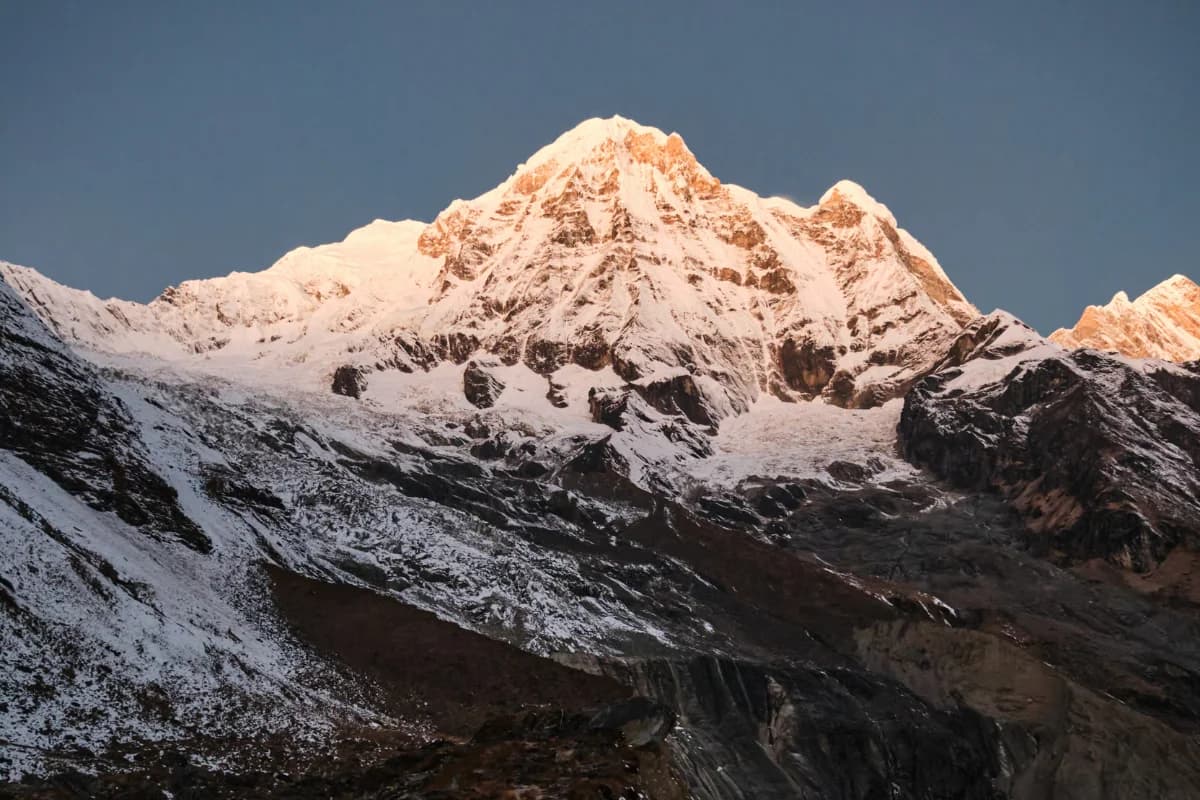
Sunrise at Annapurna, Annapurna Base Camp
The fee amount depends on the weight category of your drone and the purpose of your flying. If it is for recreational or personal use only, the permit fee can range between USD 100 to USD 300.
However, if the purpose is for commercial use and it will earn revenue, then the fee cost can be higher, between USD 60 to USD 350.
Local Checkpoint Verification on the Trail
Once you are on the trail of the Annapurna Base Camp trek, the local police checkpoint at Nayapul or Jhinu Danda (entry point to Annapurna) will register your permits.
You should keep the permit in your short pocket or in an easily accessible area in your backpack as the local checkpoint officers along the Modi Khola valley will check your permits frequently.
Essential Documents for Obtaining Permission to Fly a Drone at Annapurna Base Camp
Completely filled application form for Drone registration at CAAN
Passport-sized color photo
Clear photo of the drone showing its serial number
Custom clearance certificate from TIA
Copy of your passport
Nepal tourist visa
Purpose of flying drone
Your trekking itinerary for the Annapurna Base Camp trek
Letter from Himalayan Trekkers
A NOC (No Objection Certificate) from local authorities
Where can you fly your Drone at the Annapurna Base Camp Trail?
Now that you are on the trail of the Annapurna Base Camp trek, you can fly your drone legally. However, it doesn’t mean that you can fly anywhere along the trail.
The specific locations where you can fly your drone and that are more suitable for unique scenery are:
Ghandruk Village Upper Terraces
You can film the wide agricultural terraces above Ghandruk village, its stone houses, the outstanding panorama of Annapurna South, Hiunchuli, and Machhapuchhre from open ridge clearings well away from private local houses and schools. The preferable time for the best aerial photography would be early morning for the calmest weather and clearest Himalayan views.
Chhomrong to Sinuwa Ridge Overlook
If you launch your drone standing on the high ridge gap above the Chhomrong Village, you will get the clearest aerial view of the Modi Khola River, suspension bridge, trekking trails, and traditional mountain homes.
Deurali
Deurali is a high alpine ridge at around 3200 m altitude from where you can get the open clearing perfect for operating your drone safely. From this location, you can capture the dramatic alpine terrain, steep cliffs, Annapurna mountains, and the wide valley of Annapurna.
Machhapuchhre Base Camp/MBC
MBC at 3700 m elevation stands as a wide open mountain basin, and so it is the safest and most photogenic spot to fly your drone. With plenty of clearance from the cliffs, you can freely operate your drone and capture the Annapurna Sanctuary, the Machhapuchhre glacier, and the peak itself.
Annapurna Base Camp Sanctuary
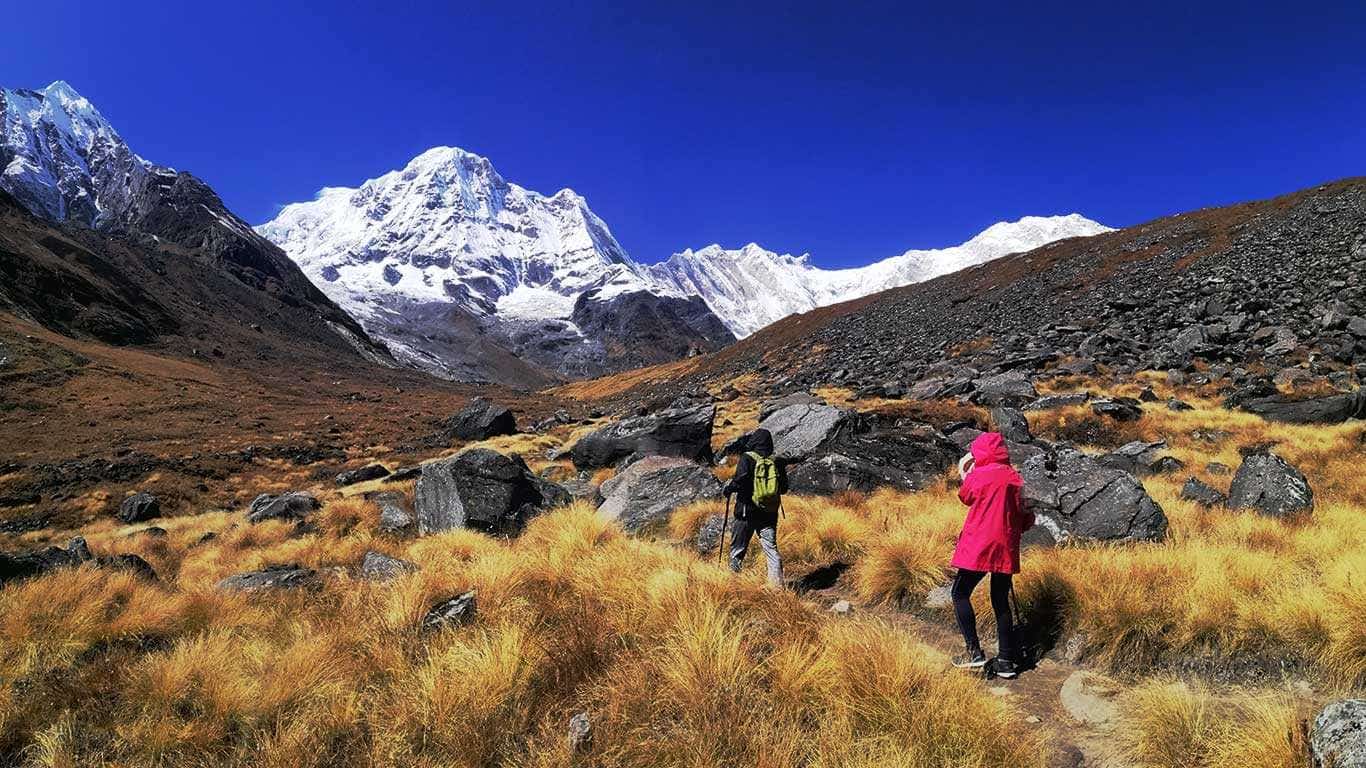
At 4130 m, this Base Camp will offer you the chance to shoot the world-class south face view of the tenth-highest peak in the world, Annapurna I (8091 m).
Along with Annapurna I, you will be able to capture the enticing panorama of Annapurna South, Hiunchuli, Gangapurna, Machhapuchhre, and several other Himalayan giants.

Mirror Lake, on the way to Annapurna Base Camp
Make sure you launch your drone from the designated open spaces on the moraine ridge. Also, remember to keep a respectful distance from the teahouse in the base camp.
Poon Hill (if included in your itinerary)
If reaching Poon Hill Viewpoint (3210 m) is also planned in your Annapurna Base Camp trek, then you will be among the lucky ones as flying a drone from Poon Hill will give you the most enchanting and world-famous sunrise aerial views of Dhaulagiri, Annapurna I, Annapurna South, and Nilgiri.
However, do not fly your drone directly over crowds or within 30 meters of non-consenting travelers. The safest place will be to launch your drone from open clearings along the ridge path, which is located slightly below the main observation tower.
No-fly zones in Annapurna Base Camp Trek
You need to know about the strict no-fly zones in the Annapurna Base Camp Trek that include:
Helipad zone of Annapurna Base Camp
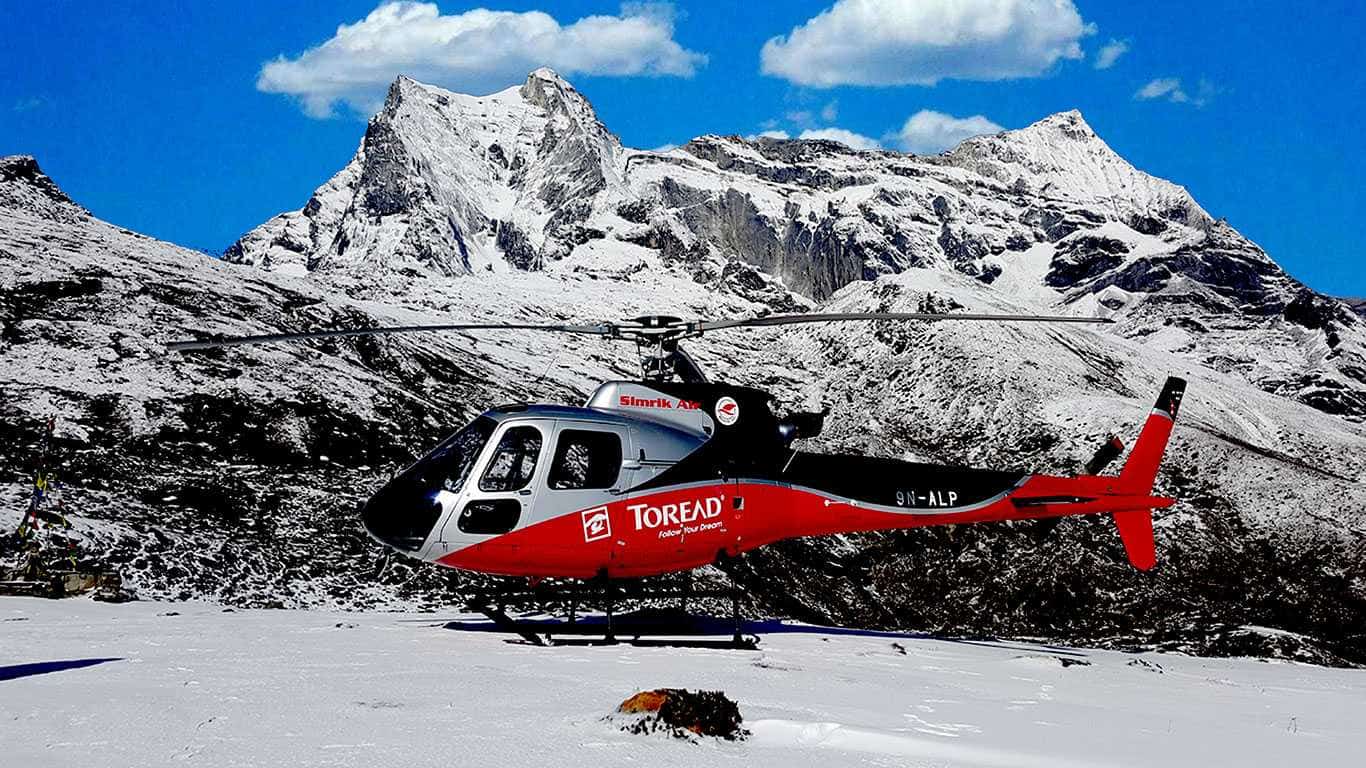
You should never fly your drone within a 5 km radius of the helipad zone of Annapurna Base Camp. This is because the rescue helicopters frequently operate and land at Annapurna Base Camp without warning for medical evacuations, supply missions, and emergency relief.
If you operate your drone near the helipad of ABC, there will be a risk of mid-air collision, creating an unnecessary safety risk.
Religious Monasteries and Villages
You should never fly your drone directly over local mountain teahouses, schools, monasteries, Mani Walls, prayer ceremonies, festivals, and chortens in villages like Chhomrong and Landruk.
The local communities of Gurung and Magar people are quite spiritual and hold a strong belief in their culture and traditions. Therefore, before flying your drone and filming them, always ask for permission.
Most locals are welcoming and will allow you to film them, appreciating your respect for their culture.
Avoid flying your drone in narrow canyons between Bamboo and Deurali
There is a deep shaded gorge between Bamboo and Deurali with iron-rich cliff walls. Here, the GPS signal may get interrupted, and there can be extreme magnetic interference.
There can be a risk of signal loss, rotor instability, and permanent aircraft loss.
Guidelines and Tips for Flying a Drone Responsibly in the Annapurna Region
Nepal Civil Aviation Authority has set specific guidelines for flying drones in Nepal. Also, it is important that you practice responsible flying within the Annapurna region so you can also contribute to the protection of the fragile mountain environment of the region.
Here are a few guidelines and practical tips that you should follow while flying a drone at Annapurna Base Camp:
Fly your drone below 120 m (400 ft) above ground level
Make sure your drone is always within your direct line of sight
Immediately land your drone if there is high mountain wind
Fly your drone at a distance of 50 m from people, animals, and private properties
Ensure your batteries are prewarmed before flying at Annapurna Base Camp
Keep your flights short, smooth, and gentle on the controls
Fly only in safe and approved locations
Land your drone immediately if you see rescue helicopters flying by
Conclusion
Flying a drone at Annapurna Base Camp is not completely banned, provided you follow the legal procedures specified by the Nepal Civil Aviation Authority. It is also important that you follow the guidelines specified by local authorities and show respect for the mountain environment and the culture of the local communities. Understand that the local regulations can frequently change, so always verify the latest rules with Himalayan Trekkers. Do not depend on the news and information from old blogs and other social media posts.
Ready to capture the landscape and skies of Annapurna in 2026? Message our team on WhatsApp and let us assist you with your permits and with making your itinerary.