The Himalayas have always been a magnet for adventure seekers, trekkers and mountaineers from all over the world. For many, climbing a mountain over 6000 meters is a lifelong dream. But the hardest part is to find the right peak for your first Himalayan climbing adventure. There are several incredible options in Nepal.
Some of the most popular choices are Mera Peak, Island Peak and Lobuche East. Each mountain offers a varied climbing experience from long glacier walks and high altitude endurance tests to steep snow slopes, fixed ropes and technical mountaineering.
But which one is best for your first 6,000m climb?
The answer depends on your physical fitness, previous trekking experience, confidence at high altitude, and the type of climbing adventure you want. Some climbers prefer a less technical route with breathtaking mountain views, while others want to develop practical mountaineering skills.
In this guide, we will compare Mera Peak, Island Peak, and Lobuche East, exploring their elevations, climbing difficulties, highlights, and suitability for beginners to help you choose the right Himalayan adventure.
Understanding Nepal's Popular 6,000m Climbing Peaks
Before choosing your first Himalayan summit, it is important to understand what makes these three mountains different.
Although all three are classified as trekking peaks in Nepal, their climbing routes and technical requirements vary considerably.
Mera Peak (6,476m): The highest of the three, known for its long glacier approach, relatively straightforward climbing terrain, and exceptional panoramic mountain views.
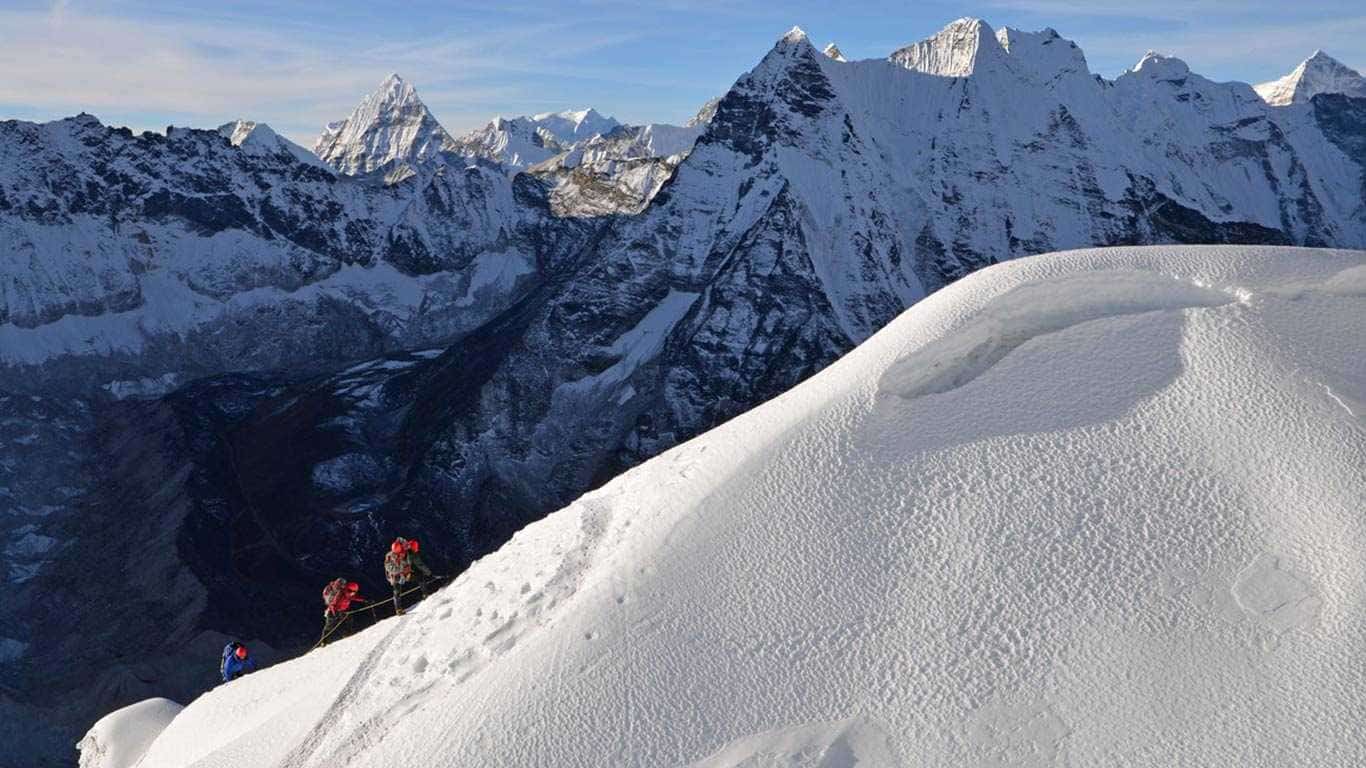
Island Peak (6,189m): Also known as Imja Tse, this mountain offers a more technical climbing experience involving glacier travel, fixed ropes, and steep snow and ice sections.
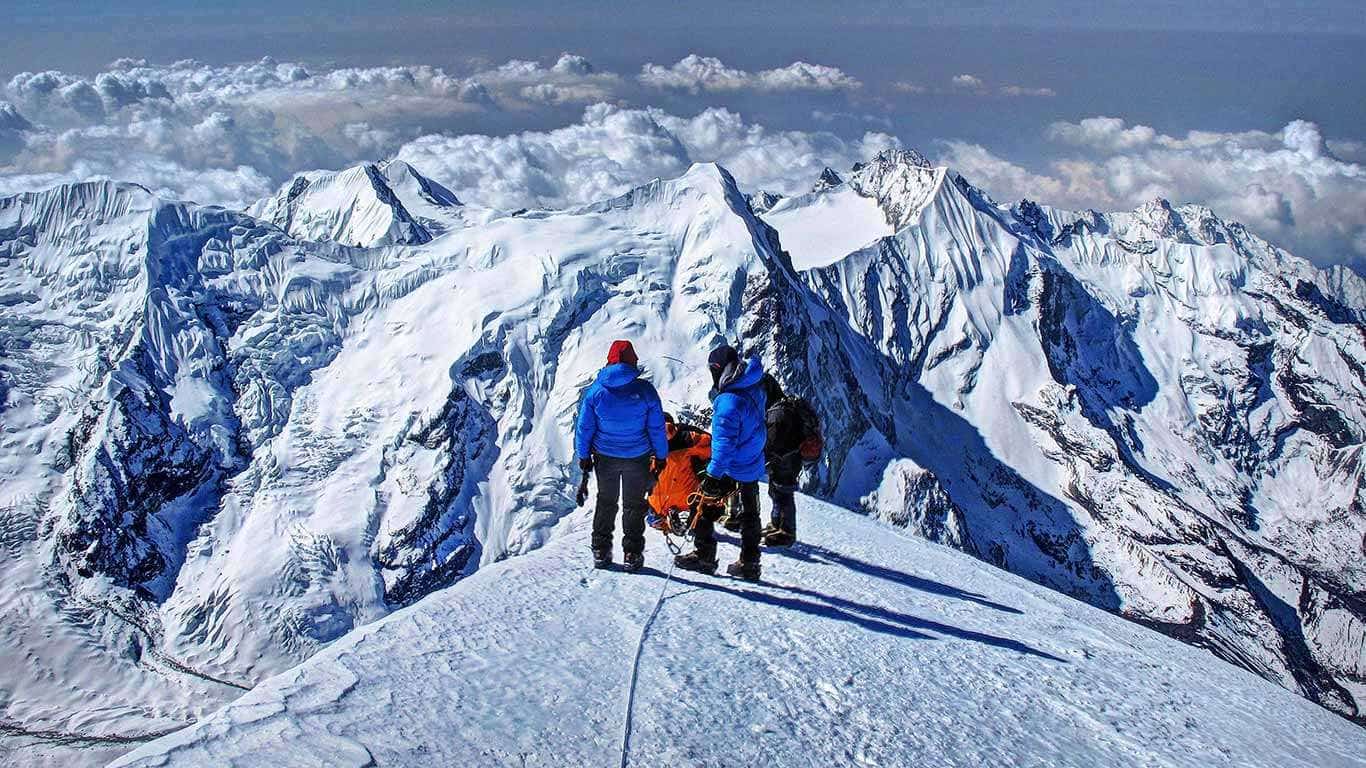
Lobuche East (6,119m): A challenging technical peak featuring rocky sections, steep snow slopes, and an exposed summit ridge.
Each mountain provides an excellent opportunity to experience Himalayan mountaineering, but the best choice depends on your personal climbing goals.
1. Mera Peak: The Best Choice for Your First 6,000m Himalayan Climb
One of the most popular destinations in Nepal for trekkers looking to make their first foray into high-altitude mountaineering is Mera Peak. This magnificent mountain rises high in the remote Hinku Valley of the Everest region. It is famous for its formidable elevation, beautiful glacier landscapes and spectacular views of the world’s highest mountains.
It is generally considered the highest trekking peak in Nepal, with its summit at about 6,476 meters. It is the highest of the three climbs presented here, but the normal route is less technical than either Island Peak or Lobuche East.
This makes the Mera Peak Himalayas experience particularly attractive to physically fit trekkers who want to experience climbing above 6,000 metres without immediately facing demanding technical terrain.
However, less technical does not mean easy. The altitude, cold temperatures, long summit day, and physical endurance required make this a serious mountaineering adventure.
Why Choose Mera Peak?
1. High-altitude experience
A great chance to experience climbing above 6,000 meters is provided by Mera Peak. It assists hikers in figuring out how their bodies react to low oxygen levels and strenuous high-altitude circumstances.
2. Less technical climbing
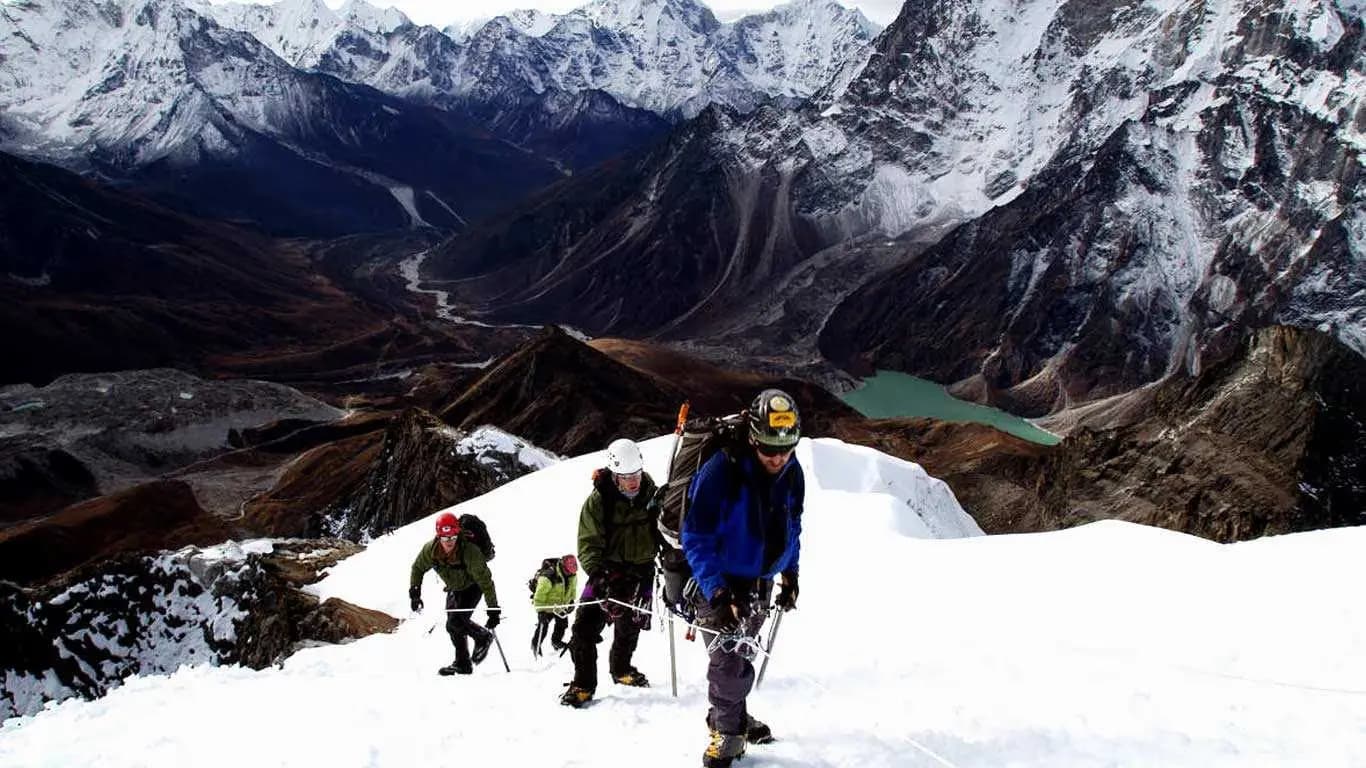
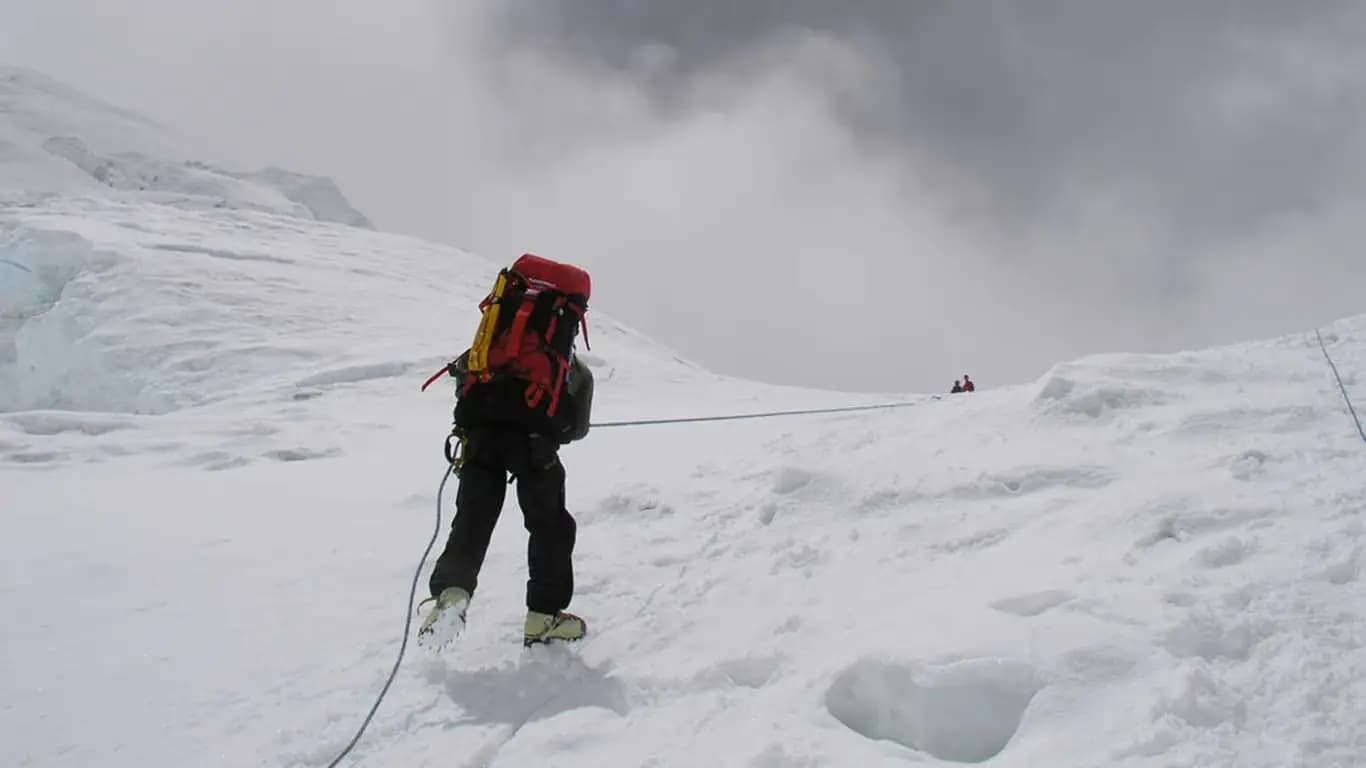
The standard route mostly passes through snow slopes and glaciers. When necessary, climbers typically use harnesses, ice axes, crampons, and fixed ropes. In comparison to the steeper climbing sections of Island Peak and Lobuche East, the route is relatively simple in favorable conditions.
3. Exceptional Himalayan views
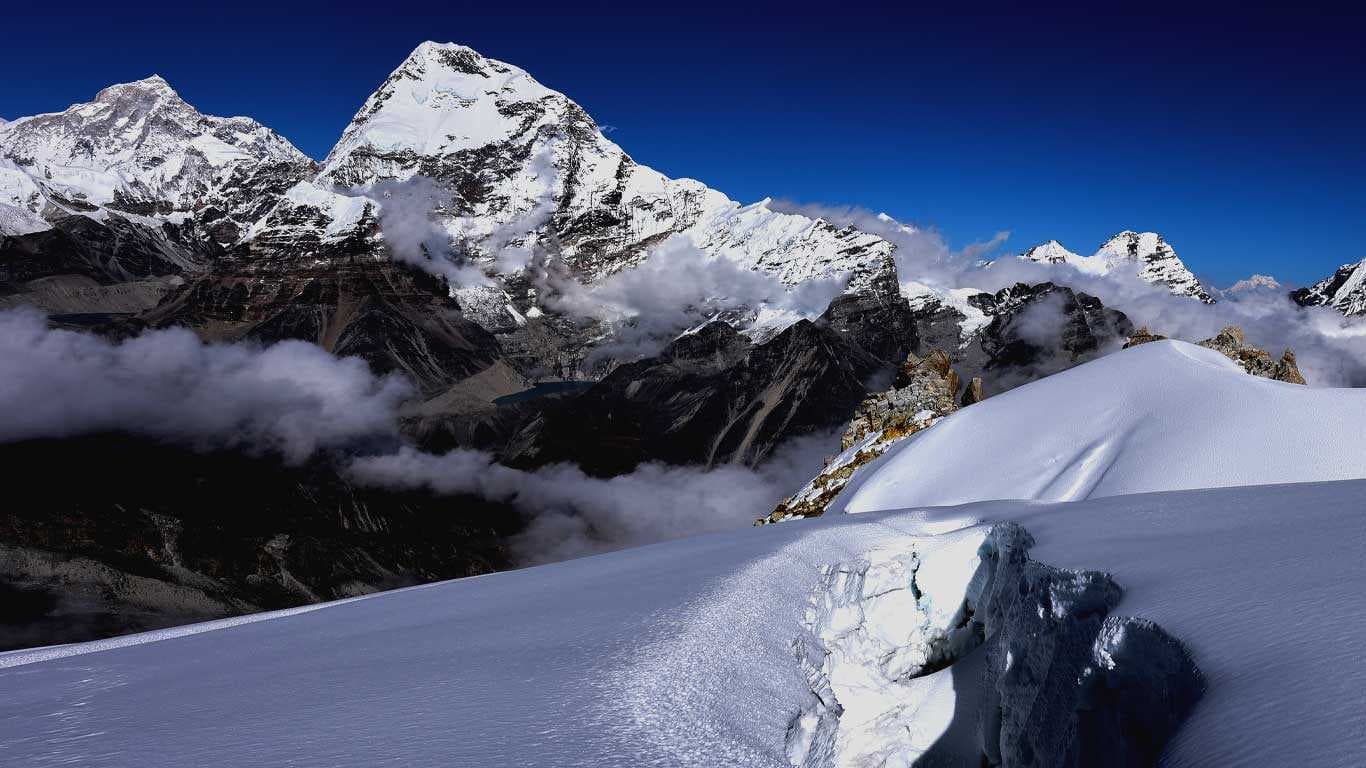
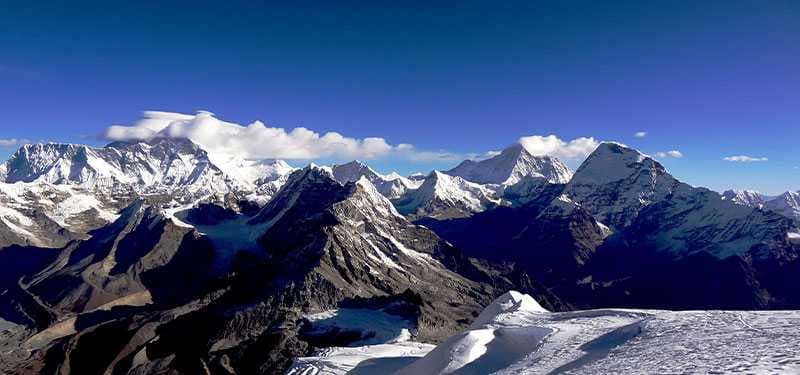
One of the biggest attractions of the Mera Peak summit is its extraordinary mountain panorama. On a clear day, climbers can enjoy views of five of the world's highest mountains: Everest, Lhotse, Makalu, Cho Oyu, and Kangchenjunga.
4. Physical endurance
Although the technical difficulty is comparatively low, the climb requires excellent physical stamina. The long approach trek, high camps, and demanding summit day test your endurance and determination.
Mera Peak Trek: What Can You Expect?
The Mera Peak trek leads you through beautiful forests, traditional mountain villages, remote valleys and dramatic Himalayan landscapes.
The Hinku Valley is more remote compared to the more popular Everest Base Camp trek and it’s a quieter trek. You ascend slowly, passing through various landscapes on your way to Khare, the main point for acclimatisation and preparation for the climb.
From Khare climbers continue to Mera High Camp and attempt the summit.
A good Mera Peak trekking itinerary includes acclimatisation days, climbing preparation and sufficient time for the body to adjust to the rising altitude.
Best for
Climbers seeking a high-altitude challenge, endurance development, spectacular Himalayan scenery, and their first experience of climbing a 6,000m mountain.
2. Island Peak: The Best Choice for Developing Mountaineering Skills
If you want t a high‑altitude trekking adventure and you want to learn real mountaineering techniques, Island Peak could be the perfect choice.
Island Peak is located in Nepals Khumbu region. Island Peak, which is officially called Imja Tse, rises to 6,189 metres. Surrounded by Himalayan giants, Island Peak offers one of the most exciting climbing experiences for aspiring mountaineers.
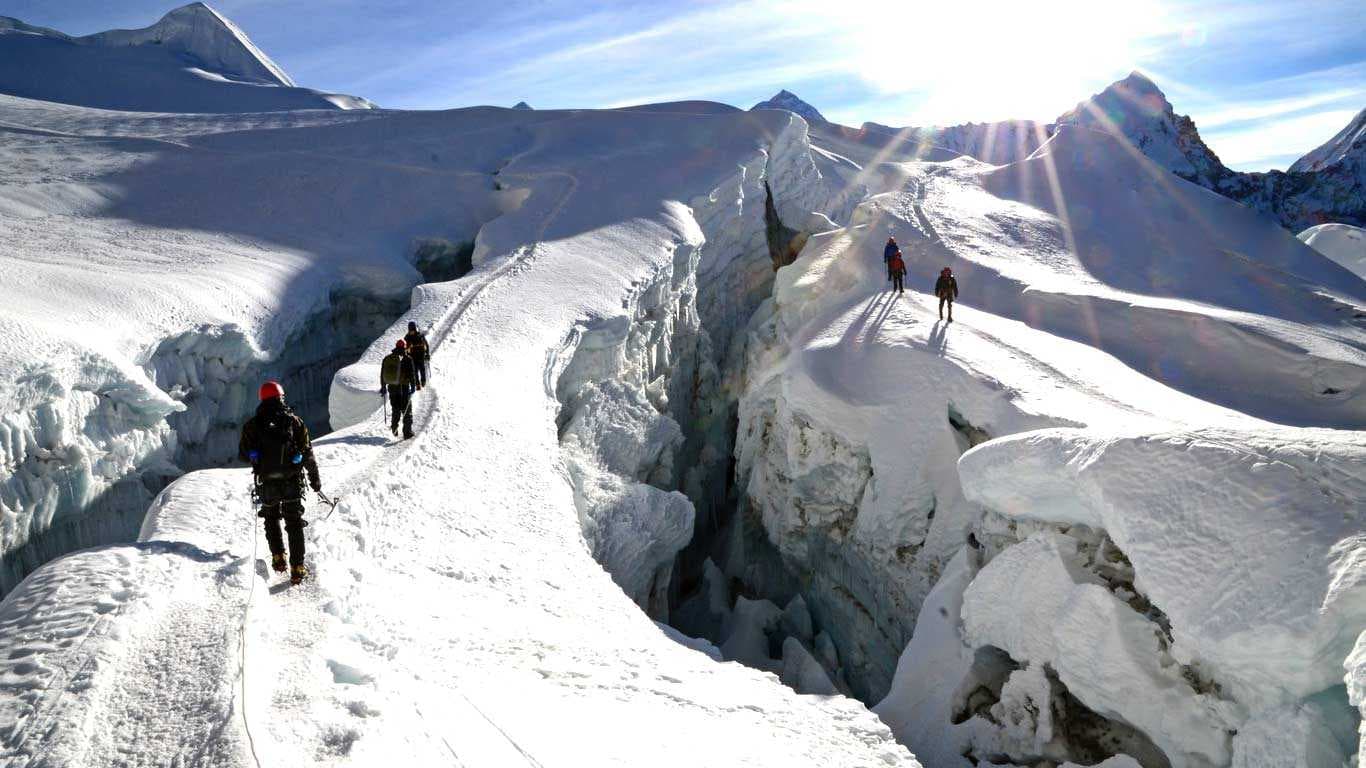
The Island Peak adventure blends trekking through the Everest region with glacier, snow climbing and technical sections that need climbing skills. Unlike Mera Peak, the Island Peak climb has a headwall near the Island Peak summit, where climbers may need to use fixed ropes and ascenders. Crevasse crossings and exposed sections also add to the challenge.
Why Choose Island Peak?
1. Real mountaineering experience
Island Peak offers a more challenging climbing experience that includes fixed-rope sections, snow climbing, and glacier travel. It teaches climbers a number of crucial mountaineering skills.
2. Technical skill development
During the climb, you can develop practical skills such as:
Using crampons on snow and ice.
Handling an ice axe.
Ascending fixed ropes with a jumar.
Abseiling or rappelling.
Moving safely across glaciers.
Understanding basic rope systems.
These skills are valuable for anyone planning to attempt more technical Himalayan mountains in the future.
3. Iconic Himalayan location
The mountain is situated in the Everest region and surrounded by spectacular peaks, including Lhotse, Nuptse, and Ama Dablam.
4. Adventure and challenge
Trekking, glacier travel, and technical mountaineering are all rewarding aspects of the Island Peak climb. The summit attempt is especially thrilling because of the last climbing section.
View from Island Peak: What Makes the Summit Special?
The best part of climbing Island Peak is getting to the top.
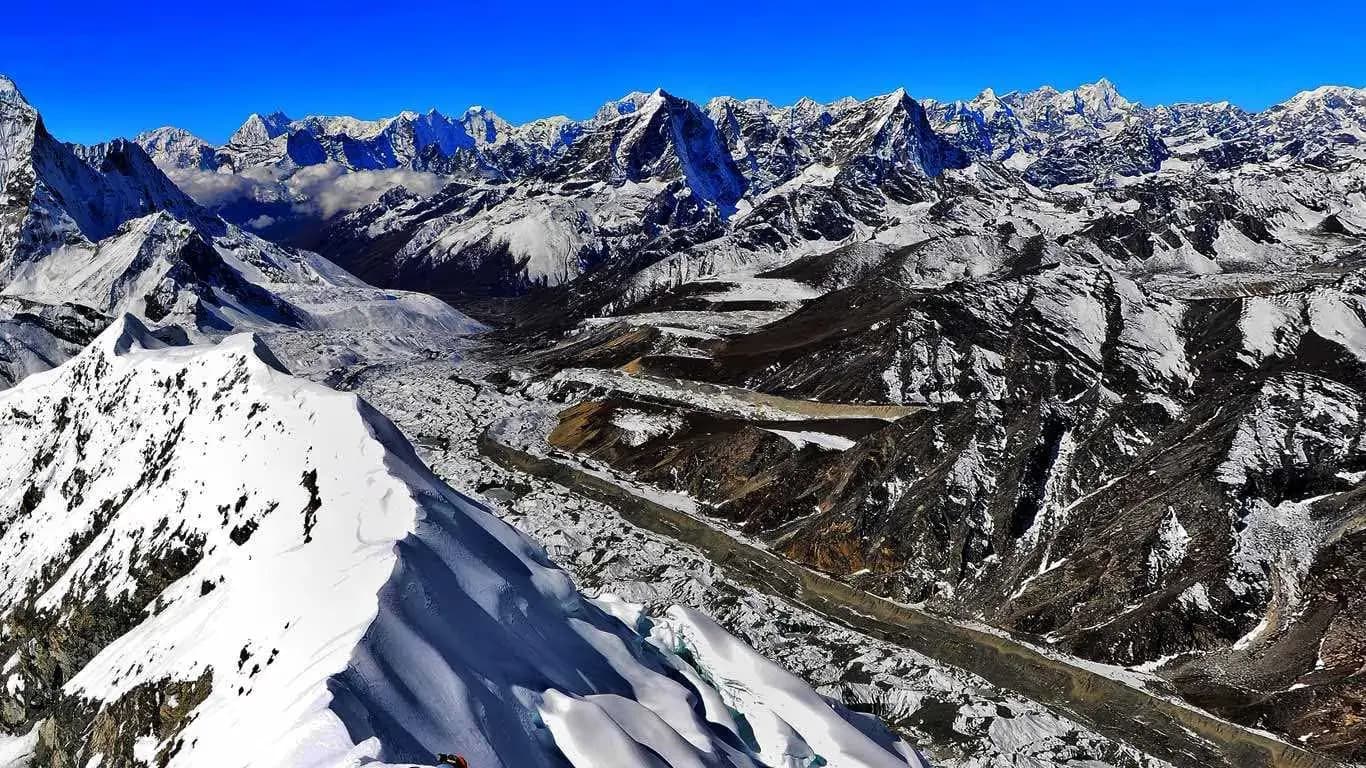
From the summit, the view is amazing. You can see the whole Himalayan landscape spread out around you. Climbers get to look at Lhotse, Makalu, Baruntse, Ama Dablam and other big mountain peaks.
Standing on the summit feels great. You have beaten a climb and you get to enjoy the beauty of the Everest region at the same time.
Best for
Climbers who want to develop practical mountaineering skills, experience technical snow and ice climbing, and prepare for more challenging Himalayan expeditions.
3. Lobuche East: The Best Choice for a More Technical Climbing Adventure
For those wanting a bit more of a technical challenge, Lobuche East is another very good option.
Lobuche East is situated right in the vicinity of the famous Everest Base Camp trek, at around 6,119m. It's lower than both Mera Peak and Island Peak, but the route up it is a more difficult mix of rock, steep snow and exposed sections.
The Lobuche East is very appealing to those who already have high altitude trekking experience and are looking to hone their mountaineering skills.
It's also in a location that allows you to combine the climb with an Everest Base Camp adventure (depending on the itinerary).
Why Choose Lobuche East?
1. Technical climbing challenge
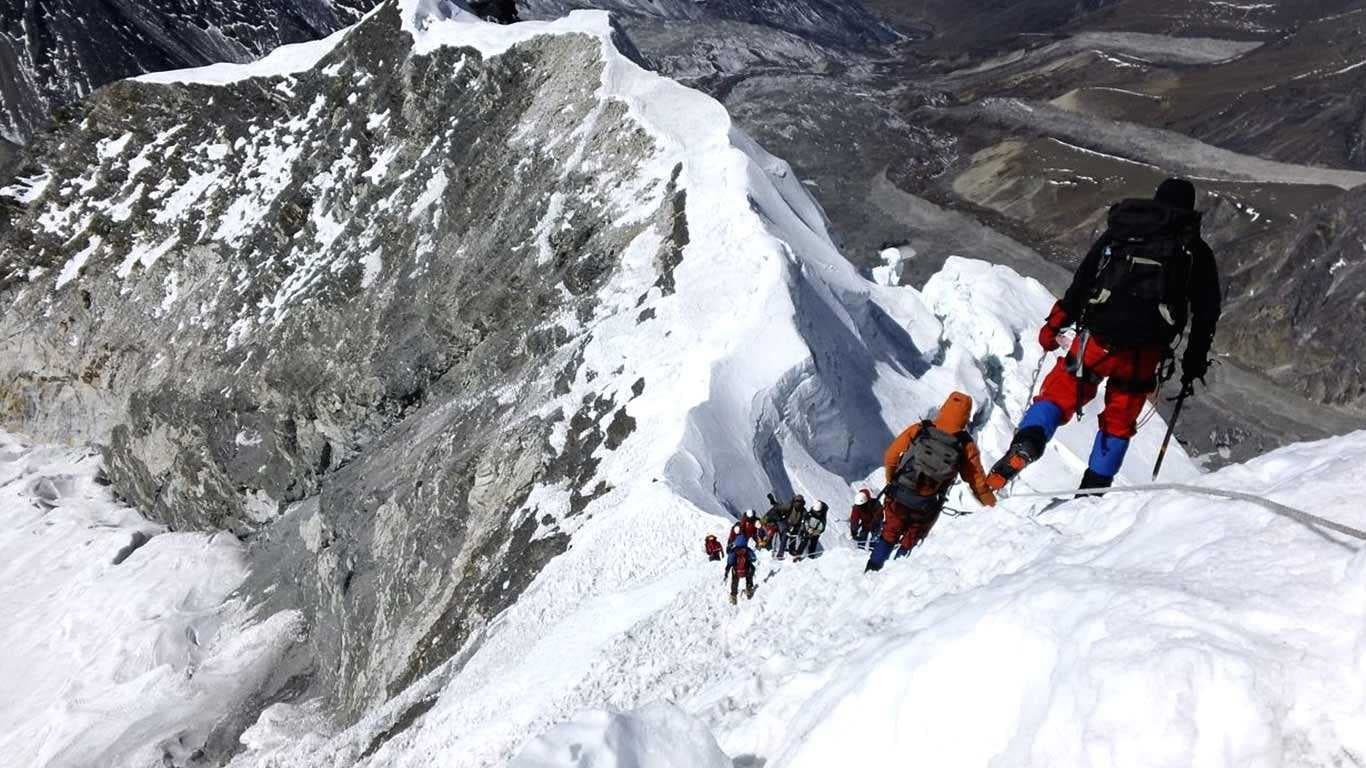
Lobuche East offers a more technical climbing experience, with steep snow slopes, rocky sections, fixed ropes, and an exposed summit ridge.
2. Develop important mountaineering skills
Climbers can improve their confidence and practical abilities with:
Crampon techniques.
Ice axe handling.
Fixed-rope climbing.
Ascender and descender use.
Glacier travel.
Movement across mixed rocky and snowy terrain.
3. Incredible Everest region scenery
The climb offers beautiful views of Everest, Nuptse, Lhotse, and other surrounding Himalayan mountains.
4. Excellent climbing preparation
Lobuche East is a valuable stepping stone for mountaineers interested in more demanding Himalayan expeditions. It helps develop confidence on steep and exposed mountain terrain.
Lobuche Base Camp: Preparing for the Summit
The route to Lobuche Base Camp takes you through some of the most stunning scenery in the Everest region.
A lot of climbers go up the traditional Everest Base Camp trek route via Namche Bazaar, Tengboche, Dingboche and Lobuche village.
Once at the climbing area the climbers will acclimatise, do their equipment checks and do their technical training for the summit push.
The way to the Lobuche summit is considerably more challenging than a standard high altitude trek. Depending on the conditions and the route taken you could well be faced with rock scrambling, snow and ice slopes, fixed ropes and exposed ridge sections.
Proper preparation and experienced climbing support are a absolute necessity if you're going to have a safe and successful attempt.
Best for
Climbers looking for a more technical 6,000m climbing experience, with opportunities to develop their mountaineering skills and gain confidence on steep and exposed terrain.
Mera Peak vs Island Peak vs Lobuche East: Which One Should You Choose?
Choosing between these three mountains can be difficult because each offers something different.
The following comparison will help you understand their main differences.
Comparison | Mera Peak | Island Peak | Lobuche East |
Elevation | 6,476m | 6,189m | 6,119m |
Location | Hinku Valley | Khumbu Valley | Khumbu Valley |
Technical difficulty | Relatively low | Moderate to challenging | Challenging |
Main challenge | Altitude and endurance | Glacier travel and steep headwall | Mixed terrain and exposed ridge |
Climbing experience | Snow and glacier climbing | Technical snow and ice climbing | Mixed technical climbing |
Mountain views | Five 8,000m peaks | Everest region panorama | Everest and surrounding peaks |
Best for | First 6,000m adventure | Mountaineering skill development | Technical climbing experience |
Which Peak Is Easiest for Beginners?
For the majority of physically fit trekkers attempting their first Himalayan peak, Mera Peak is the ideal first peak to attempt.
It's a fairly straightforward route, a good introduction to high altitude mountaineering. The problem is it's at a much higher elevation so you're looking at a very long and physically gruelling summit push.
Island Peak is the better option for those who want to learn some more technical climbing.
Lobuche East is the one that's better for people who are comfortable with exposure and want to get a proper mix of rock, snow and ice climbing.
Remember none of those mountains are an ordinary trekking sort of thing. All three of them demand proper preparation, proper acclimatisation, the right kit and professional guidance.
Physical Preparation for Your First 6,000m Climb
Climbing a mountain above 6,000 m is a serious physical challenge in itself and requires far more than just ordinary trekking fitness. If you're planning to go up Mera Peak, Island Peak or Lobuche East you need to be in good shape in advance to cope with the long trekking days, the steep ascents, the cold and the sheer demands of the summit attempts.
Ideally you'd start your physical prep at least 8 weeks to 6 months prior to your expedition (depending on your current fitness and your level of previous mountain experience). The focus of your training should be on building up your cardiovascular endurance, strengthening your legs and core, building up your muscular stamina and getting used to hiking with a backpack.
Above 6,000 m the oxygen pressure is far lower than at sea level and any physical exertion will be very tiring. A good level of physical fitness will help you to manage your energy but of course it won't help with acclimatisation or prevent you from getting altitude sickness.
Here are five key things to look at prior to your first Himalayan climb.
1. Build Cardiovascular Endurance
Cardio fitness is one of the most important components of preparing for a 6,000m climb. You're going to be spending a lot of time walking up hills, over rocky terrain, through snow and through glacier.
Hiking, jogging, cycling, swimming and stair climbing are all activities which can be used to improve your aerobic fitness.
Start with fairly short sessions and work up to longer ones as your fitness and endurance improves. The aim is to get to the point where you're doing sessions of 1 to 2 hours or more.
For Mera Peak, Island Peak and Lobuche East good cardio will help you to keep a steady pace on the long trekking days and the demanding summit pushes.
2. Strengthen Your Legs and Core
Your legs are going to do the vast majority of the work on a Himalayan expedition. The long uphill sections, the steep descents, the all sorts of uneven ground and the snow slopes are all going to be a massive workout for your legs and require very strong, stable lower body muscles.
Include exercises such as:
Squats: build strength in your thighs and hips.
Lunges: build leg strength, balance and stability.
Step-ups: get your muscles ready for the constant uphill movement.
Calf raises to strengthen the calves for the steep ascents.
Planks: develop core stability and improve body control.
Core strength is just as important as the other elements as it will help you to stay balanced when you're carrying a backpack and moving about on uneven mountain terrain.
If you're doing Island Peak or Lobuche East, upper body work for your shoulders, arms and back can also be very useful when you're actually handling the climbing gear (ice axes, fixed ropes etc).
3. Practise Hiking with a Loaded Backpack
Walking on a treadmill or running on flat road is of some use but doesn't really get you ready for carrying a backpack through the Himalayas.
A loaded backpack for hiking will help your body adapt to the extra weight you'll be carrying on your expedition.
Start off with a light pack and progressively increase the weight as your strength and fitness improves. Work on walking on uphill trails, on the various types of terrain you'll encounter and on stairs.
Focus on maintaining a comfortable pace rather than walking too quickly. The object is to build up the stamina to be able to walk for several hours without getting winded.
This is of particular use on the Mera Peak trek where you have long walking days and a very gradual ascent.
4. Develop Altitude Awareness and Acclimatization Readiness
Physical fitness in itself doesn't guarantee you'll be alright at high altitude. An experienced athlete can still suffer altitude illness if they go up too fast.
Before you go on your expedition you need to gain some experience through regular hiking and if you can, some lower altitude mountain walking. That will give you a good idea of your walking pace, your hydration levels and your energy levels over a period of time.
During the actual climb you follow your guide's acclimatisation schedule, have plenty of rest days and don't rush up the mountain.
Remember these important points:
Walk slowly and keep a steady pace.
Drink plenty of fluids throughout the day.
Eat regular, energy-rich meals.
Stick to your planned acclimatisation schedule.
Let your guide know straight away if you start to get the symptoms of altitude sickness.
Never carry on ascending if you're showing the signs of altitude illness which would necessitate you stopping or descending.
Proper acclimatisation is absolutely vital for all three peaks, irrespective of your general fitness or your previous climbing experience.
5. Practise with Your Climbing Gear Before Departure
Getting to know your kit before you even get to the Himalayas will go a long way towards making your expedition a much more comfortable one.
Wear your trekking boots on your training hikes to make sure they're the right size and won't cause blisters. Get used to carrying your backpack and get comfortable with your clothing layers, gloves and the other kit.
For technical climbing sections, you should also become familiar with the basic use of:
Crampons and mountaineering boots.
Ice axes.
Climbing harnesses.
Carabiners and locking mechanisms.
Ascenders and fixed rope equipment.
Your climbing guide or instructor should give you some practical training on how to use the equipment safely prior to the summit push.
How long should you train before your first 6,000m climb?
Well that's a very good question. The answer is: it depends. There's no one size fits all answer. You could go in and do it after 6 months of training (which would be a very good thing to do in the circumstances) or you could go in and do it after 3 years of training (which would be a very good thing to do in the circumstances too). It all comes down to the individual and the circumstances.
Your preparation time will obviously vary depending on your own level of fitness, your existing trekking experience and the mountain you're planning to climb. If you're a regular hiker then you'll probably need less preparation than someone who's fairly sedentary.
A gradual training programme is normally far more effective than attempting to improve in every respect over a few weeks.
As you get closer to the expedition, gradually reduce your training volume so that your muscles have a chance to recover. It's far more important to arrive in the Himalayas feeling strong, fresh and recovered than to go in and do some absolutely gruelling sessions straight before you leave.
Remember: the objective is not simply to get stronger or faster. It's about building the stamina, the stability and the confidence to be able to safely enjoy a demanding Himalayan climb.
So, Which 6,000m Peak Is Best for Your First Himalayan Climbing Adventure?
The best mountain depends on what you want to achieve from your first climbing experience.
Choose Mera Peak if:
You are a fit trekker entering the world of mountaineering.
You want to experience an elevation above 6,000 metres.
You prefer less technical climbing terrain.
You want spectacular panoramic Himalayan views.
You want to develop high-altitude endurance.
Choose Island Peak if:
You want to learn practical mountaineering skills.
You are interested in glacier travel and fixed-rope climbing.
You want a more technical snow and ice climbing experience.
You plan to attempt more technical peaks in the future.
Choose Lobuche East if:
You already have some high-altitude trekking experience.
You want to challenge yourself on steep and exposed terrain.
You are interested in mixed rock, snow, and ice climbing.
You want to improve your technical mountaineering abilities.
Ultimately, Mera Peak is generally the best starting point for fit trekkers attempting their first 6,000m Himalayan climb, Island Peak is ideal for those seeking a more technical introduction to mountaineering, and Lobuche East is an excellent choice for climbers looking for a greater technical challenge.
Your first Himalayan summit should not simply be about reaching the highest possible altitude. It should be about choosing a mountain that matches your abilities, preparing properly, and enjoying the experience of climbing safely in the world's most spectacular mountain range.
Conclusion
Your first 6,000m Himalayan climbing adventure is an opportunity to challenge yourself, discover your mountaineering potential, and experience the incredible beauty of the Nepal Himalayas.
Whether you choose Mera Peak for its impressive elevation and panoramic views, Island Peak for its technical climbing experience, or Lobuche East for its challenging summit route, each mountain offers an unforgettable adventure.
Take time to evaluate your fitness, experience, and climbing goals before making a decision. Choose the mountain that suits your abilities, work with experienced climbing professionals, and never underestimate the importance of acclimatization and mountain safety.
The right preparation can turn your dream of reaching a Himalayan summit into a rewarding reality.