

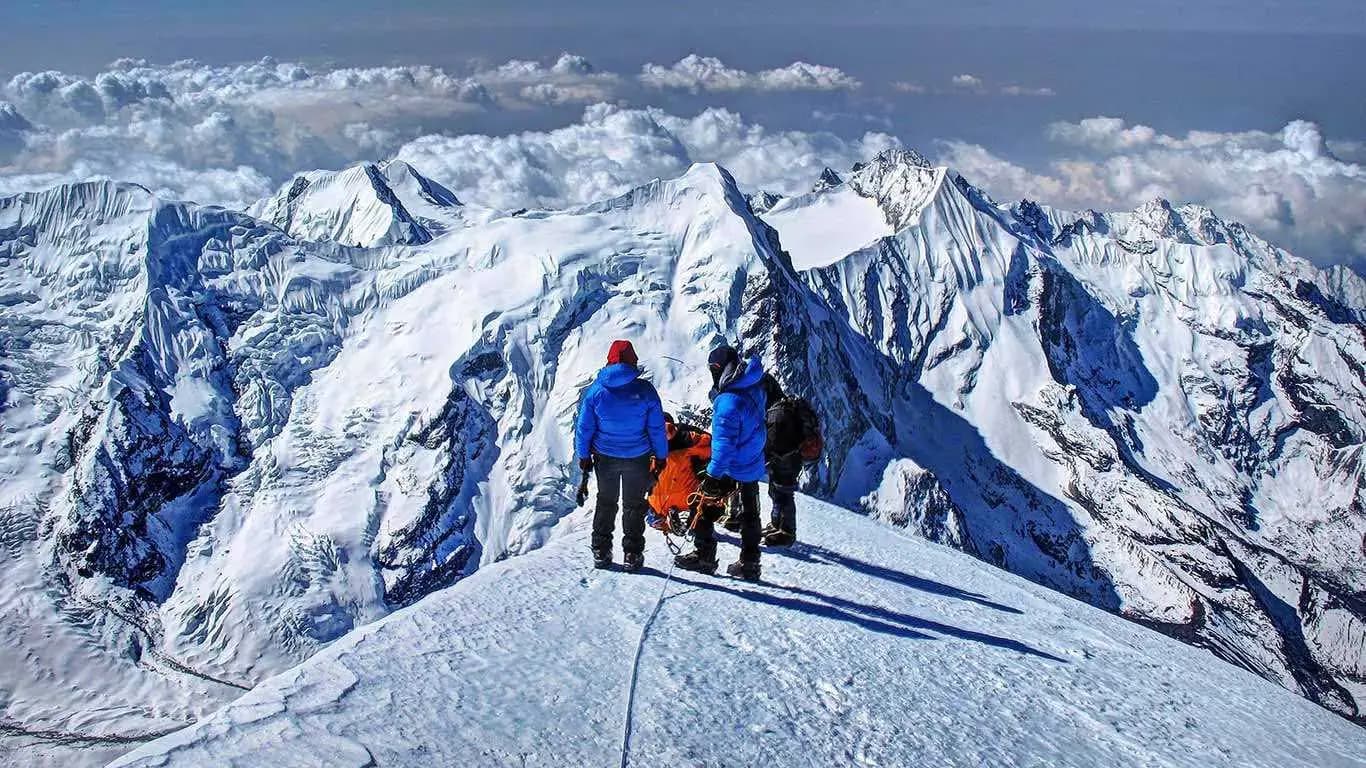
Mera Peak Climbing is one of Nepal's most rewarding Himalayan adventures, standing at an impressive elevation of 6,476 meters (21,246 feet) in the remote Hinku Valley of the Everest region. It offers an exciting combination of challenging trekking, glacier climbing, traditional Sherpa culture, and breathtaking mountain scenery.
One of the biggest attractions of Mera Peak is its spectacular summit panorama, featuring five of the world's highest mountains: Mount Everest, Kanchenjunga, Lhotse, Makalu, and Cho Oyu. Along the journey, climbers also explore peaceful mountain valleys, alpine forests, traditional settlements, and beautiful Himalayan landscapes.
Whether you are an experienced trekker dreaming of your first 6,000-meter summit or an aspiring mountaineer looking for a new challenge, Mera Peak offers an unforgettable adventure. Its combination of natural beauty, mountaineering experience, and rewarding summit views makes it a perfect addition to your Himalayan climbing bucket list.
1. Enjoy Spectacular Panoramic Views of the World's Highest Mountains
One of the biggest reasons to climb Mera Peak is the extraordinary panorama from its summit. At 6,476 meters, climbers are rewarded with magnificent views of some of the world's most iconic Himalayan mountains.
On a clear day, the summit offers views of five of the world's 14 mountains above 8,000 meters:
Mount Everest (8,848.86 m): The world's highest mountain.
Kanchenjunga (8,586 m): The world's third-highest mountain.
Lhotse (8,516 m): The world's fourth-highest mountain.
Makalu (8,485 m): The world's fifth-highest mountain.
Cho Oyu (8,188 m): The world's sixth-highest mountain.
Beyond these magnificent giants, the Himalayan landscape offers dramatic glaciers, snow-covered ridges, and countless smaller peaks. Watching the first sunlight illuminate the surrounding mountains from Mera Peak's summit is an unforgettable experience that makes every challenging step worthwhile. This breathtaking panorama alone is a compelling reason to add Mera Peak to your Himalayan climbing bucket list.
2. An Excellent Introduction to High-Altitude Mountaineering
Mera Peak is widely regarded as a very good introduction to high altitude mountaineering for trekkers who are looking to go beyond the normal trekking.
Compared to a number of other technical Himalayan climbing destinations the normal Mera Peak route is essentially just straightforward snow and glacier climbing rather than any kind of demanding technical rock climbing.
During the climbing preparation, participants can learn essential mountaineering skills, including:
Walking safely with crampons on snow and ice.
Using an ice axe for balance and self-arrest.
Wearing and handling a climbing harness.
Understanding basic rope techniques.
Learning glacier travel and crevasse safety.
Following climbing guides during snow and ice sections.
It is important to remember that good physical fitness, previous trekking experience, proper acclimatization, and professional climbing support are essential.
3. Escape the Crowds and Explore the Remote Hinku Valley
Unlike the Everest Base Camp trek, the Mera Peak expedition takes you through the more remote and quieter landscapes of the Hinku Valley.
This is one of the major draws for those wishing to experience a more tranquil side of the Everest region. Rather than tramping the well-worn trekking routes you'll pass through beautiful forests, alpine meadows, traditional villages and some very dramatic mountain valleys.
The journey passes through several scenic locations, including Chhuthang, Thuli Kharka, Kothe, Thangnak, and Khare.
Along the way, you can experience:
Beautiful rhododendron and pine forests.
Traditional Sherpa settlements and mountain lodges.
Spectacular views of surrounding Himalayan peaks.
Peaceful alpine landscapes and glacial valleys.
Buddhist prayer flags, monasteries, chortens, and mani walls.
The Hinku Valley offers a wonderful opportunity to connect with nature and experience the traditional mountain lifestyle of eastern Nepal.
4. Experience a Real Himalayan Glacier Climbing Adventure
Mera Peak is a proper high altitude mountaineering experience involving glaciers, snow slopes, climbing gear and high camps. You go from Khare to Mera Base Camp and then on to Mera High Camp as part of the preparation for the final summit push.
The summit climb normally starts early in the morning (depending on the weather and the snow conditions). With crampons, ice axes, ropes and experienced guides you'll cross the glacier and climb up to the summit, an absolutely superb Himalayan mountaineering experience.
5. Experience Authentic Sherpa Culture and Himalayan Hospitality
Mera Peak climbing is not only about mountains and adventure but also offers a glimpse into the rich cultural heritage of Himalayan communities. Along the trekking route, travelers can experience local hospitality, traditional lifestyles, and the daily activities of the Sherpa people.
The trail features Buddhist prayer flags, mani walls, chortens, monasteries, and traditional mountain houses. The peaceful atmosphere, welcoming communities, and traditional teahouses make the journey a memorable cultural experience.
6. Enjoy Beautiful Himalayan Landscapes in Spring and Autumn
The season you choose can make a significant difference to your Mera Peak climbing experience.
Spring is particularly attractive because the lower trekking trails become colorful with blooming rhododendrons. The higher mountains remain covered in snow, creating beautiful contrasts throughout the journey.
Autumn is another excellent season, especially October and November. Following the monsoon, the skies generally become clearer, offering spectacular views of the surrounding mountains and valleys.
Winter and Monsoon climbing are also possible with appropriate arrangements, but colder temperatures, snowfall, rainfall, and changing mountain conditions can make the expedition more challenging.
For most climbers, spring and autumn are the preferred seasons for Mera Peak climbing.
7. A Valuable Stepping Stone Toward Bigger Himalayan Expeditions
Mera Peak is a very useful mountain for those who are getting ready to go on more serious Himalayan expeditions. It gives you a good grounding in high altitude, glacier travel, cramponing, ice axe use, rope work and the whole of the expedition side of things.
These experiences will build confidence and familiarity with the basic mountaineering skills and equipment. Mera Peak can be a useful stepping stone to bigger Himalayan objectives, but climbing it on its own doesn't in any way qualify you for an 8000m expedition. You need further training, more experience and a good bit of technical preparation.
Conclusion
Mera Peak deserves a place on your Himalayan climbing bucket list, offering a unique combination of remote mountain landscapes, authentic Sherpa culture, glacier climbing, and breathtaking views of the world's highest peaks. From exploring the peaceful Hinku Valley and crossing Zatrwa La Pass to reaching the 6,476-meter summit, every stage brings a memorable adventure.
Whether you are an experienced trekker dreaming of your first high-altitude summit or an aspiring mountaineer preparing for bigger challenges, Mera Peak offers a rewarding Himalayan experience. With proper physical preparation, gradual acclimatization, experienced climbing guides, and a well-planned itinerary, you can make your dream of Himalayan mountaineering a reality.


