Being on the foothills of Mount Everest is the dream destination for many adventure tourists. The Everest Base Camp Trek gives Americans a unique chance to visit the world’s highest peak, walk through the core of the Khumbu Himalayas, interact with the Sherpa people, and discover the most impressive mountain area of Nepal.
However, traveling to Nepal from America to go trekking is much harder than a simple vacation.
One has to consider flight tickets, visa requirements for Nepal, trekking permits, travel insurance, altitude acclimatization, fitness, packing, finances, communication issues, and the overall process of traveling in the Everest region.
This ultimate guide covers everything Americans should know before going to the Everest Base Camp Trek.
Why Should Americans Trek to Everest Base Camp?
The United States is home to some of the world's most impressive hiking and long-distance backpacking trails. For American hikers there are classic routes like Appalachian Trail (AT), Pacific Crest Trail (PCT) and Continental Divide Trail (CDT).
Other than that, there are other challenging trails like John Muir Trail, Rae Lakes Loop, Hoh River Trail, Kalalau Trail, and Angels Landing. The Appalachian Trail is reported by the National Park Service to be around 2,190 miles long while the Pacific Crest Trail is 2,650 miles long and Continental Divide Trail is 3,100 miles long..
American hikers that are experienced in challenging trails in their country will find Everest Base Camp Trek to be something quite unique. This hike trail is not more challenging than the famous trails of America in terms of length and difficulty level. However, the attraction of this route comes from altitude, extreme landscapes, cultural experience and proximity to Mount Everest.
Experience the World's Highest Mountain Up Close
One of the major reasons why the American hiker would want to undertake the Everest Base Camp Trek would be because he gets to explore the geography of the regions that surround Mount Everest.
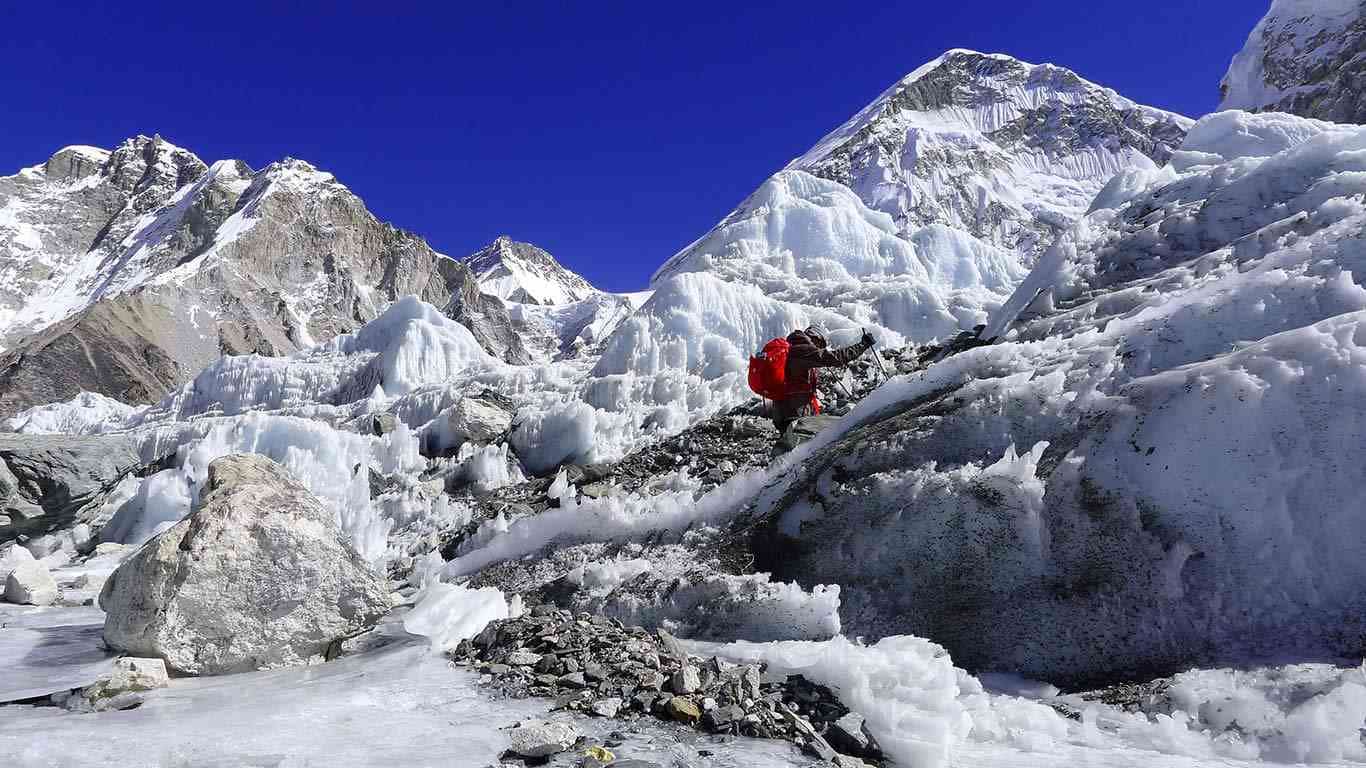
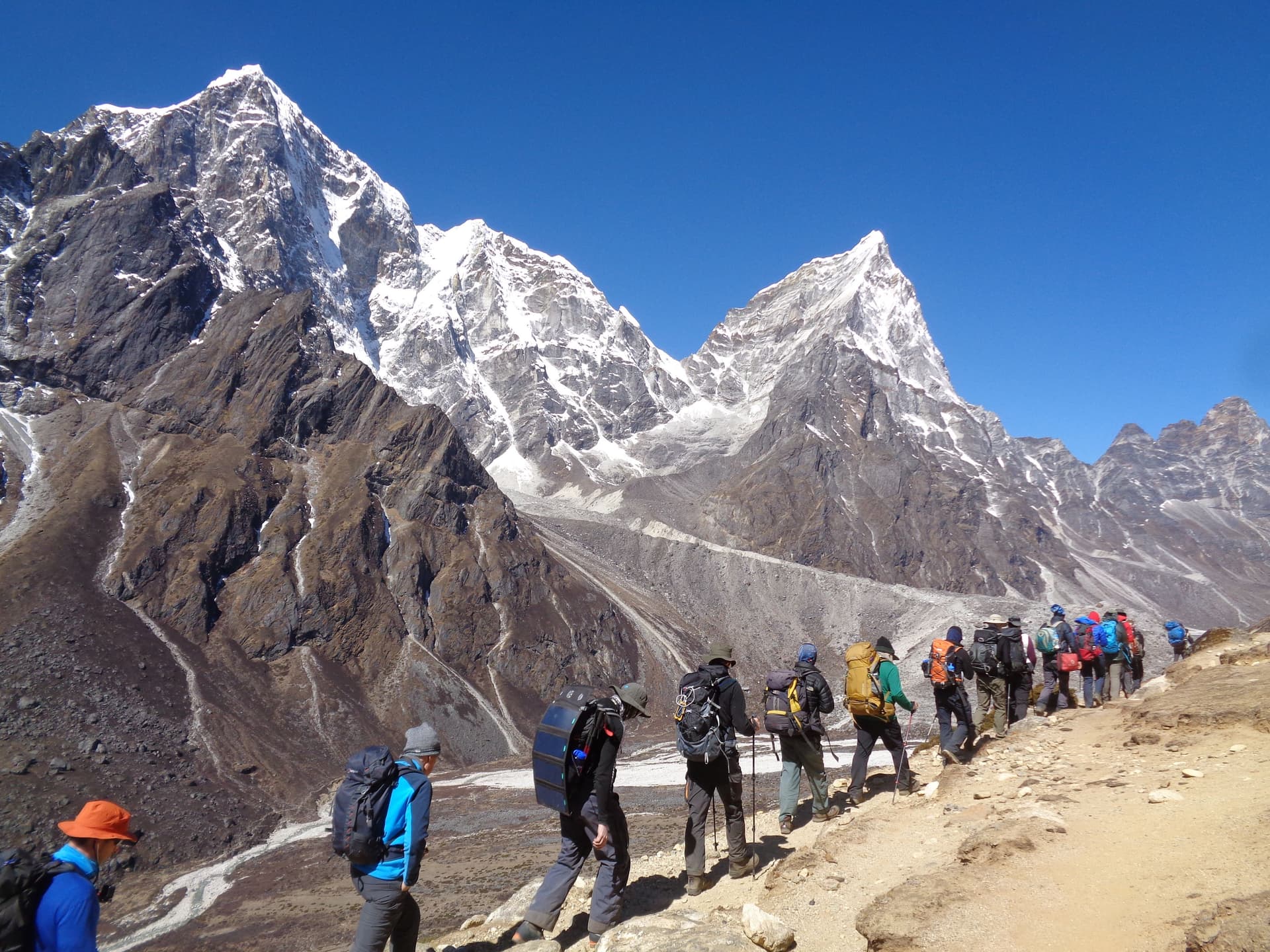
The trek goes up to Everest Base Camp where one gets to explore the Khumbu Himalayas, reaching heights of about 5,364 meters (17,600 feet). One sees Mount Everest, Lhotse, Nuptse, Ama Dablam, Thamserku, Kangtega and Pumori during the trek.
For an American who is used to hiking through the Appalachian forest, desert regions of the Pacific Crest Trail (PCT), or the Rocky Mountains of the Continental Divide Trail (CDT), the geography of the Everest region will offer him something new.
A Different Kind of Challenge
Major U.S. long-distance trails put hikers to test in terms of distance, endurance, weather changes, navigation, elevations, and long hours of hiking. The Everest Base Camp Trek, however, offers a different kind of test to those who embark on this journey.
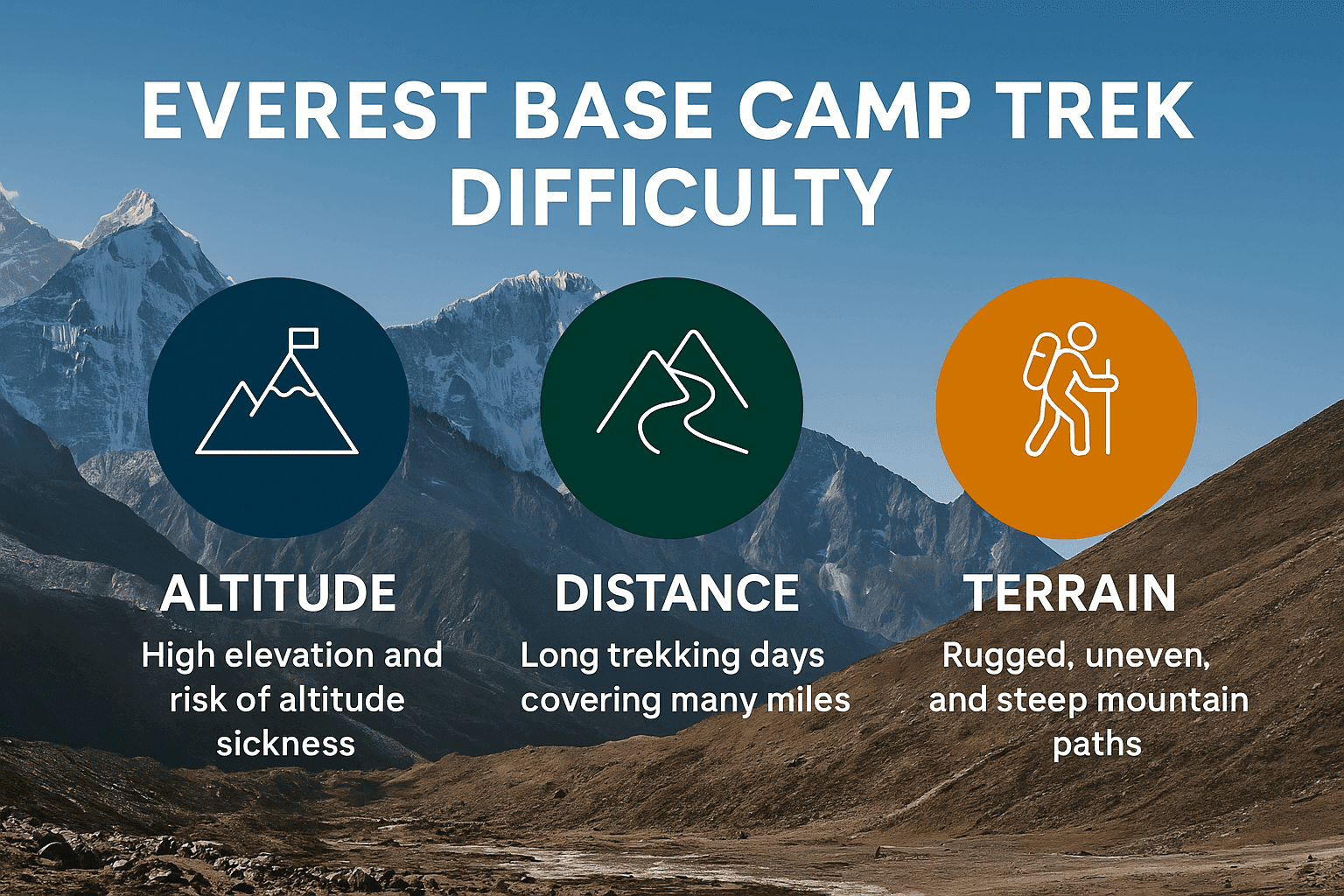
The most obvious one is the elevation. The trek will see you hike from Lukla via Namche Bazaar, and other higher points, all the way to the Everest Base Camp area. Hence, it is advisable to ensure that your body has been adequately acclimatized during the process.
For this reason, the Nepal Tourism Board advises spending extra days acclimatizing in such towns as Namche Bazaar due to the dangers posed by quick elevation gain.
From America's Long Trails to the Himalayas
American hikers already have access to extraordinary long-distance adventures:
Appalachian Trail (AT): Approximately 2,190 miles through the eastern United States, crossing forests, ridgelines, and mountain landscapes.
Pacific Crest Trail (PCT): Approximately 2,650 miles from Mexico to Canada through California, Oregon, and Washington.
Continental Divide Trail (CDT): Approximately 3,100 miles along the Rocky Mountain divide from New Mexico toward Canada.
John Muir Trail: A renowned high-elevation route through California's Sierra Nevada.
Rae Lakes Loop: A shorter but demanding alpine route through Kings Canyon.
Hoh River Trail to Blue Glacier: A dramatic transition from temperate rainforest to alpine terrain.
Kalalau Trail: A rugged coastal route along Hawaii's Na Pali Coast.
Angels Landing: A steep, exposed hike known for its dramatic views and chain-assisted sections.
These trails provide perfect locations for endurance hiking, technical hiking, and long-distance trekking. However, Everest Base Camp provides one thing that no other American trail can: the chance to hike through the highest mountainous region in the world surrounded by some of the highest mountains on the planet.
The Adventure Goes Beyond the Trail
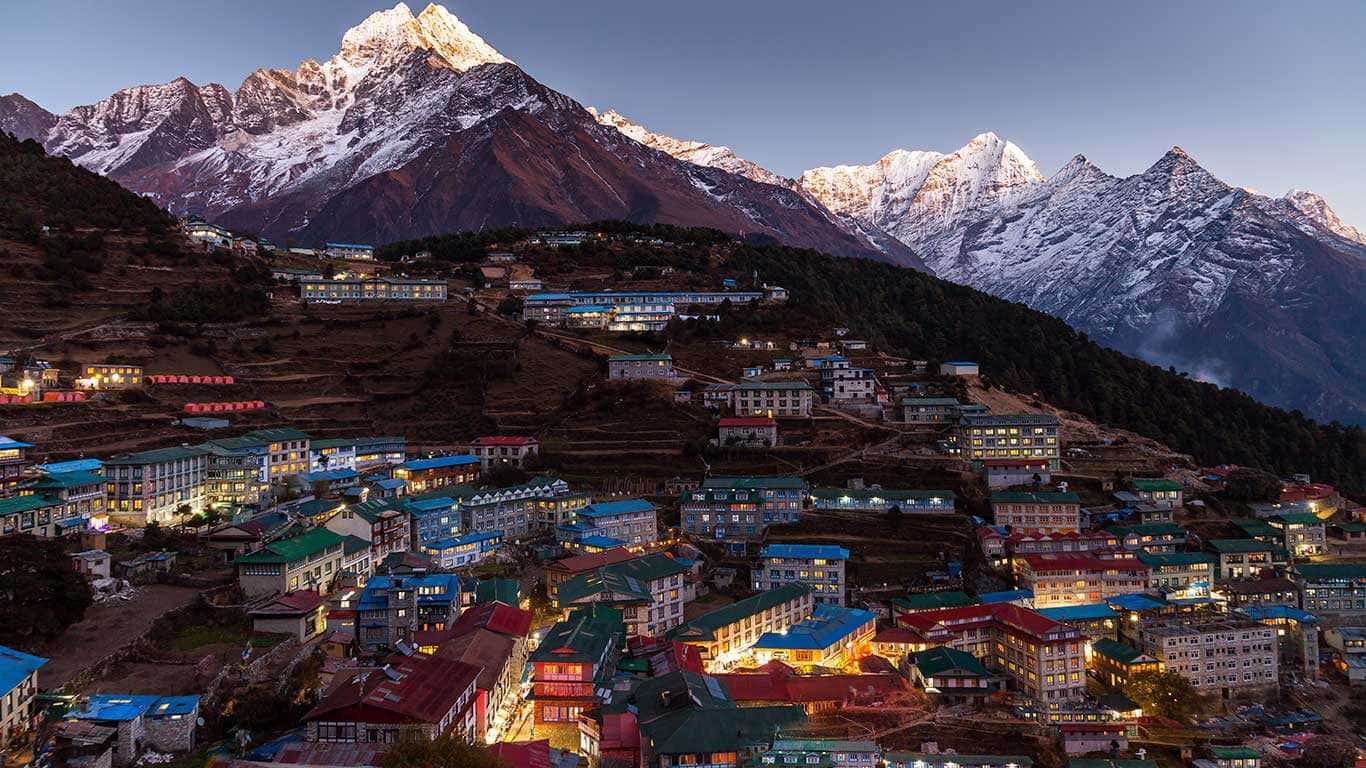
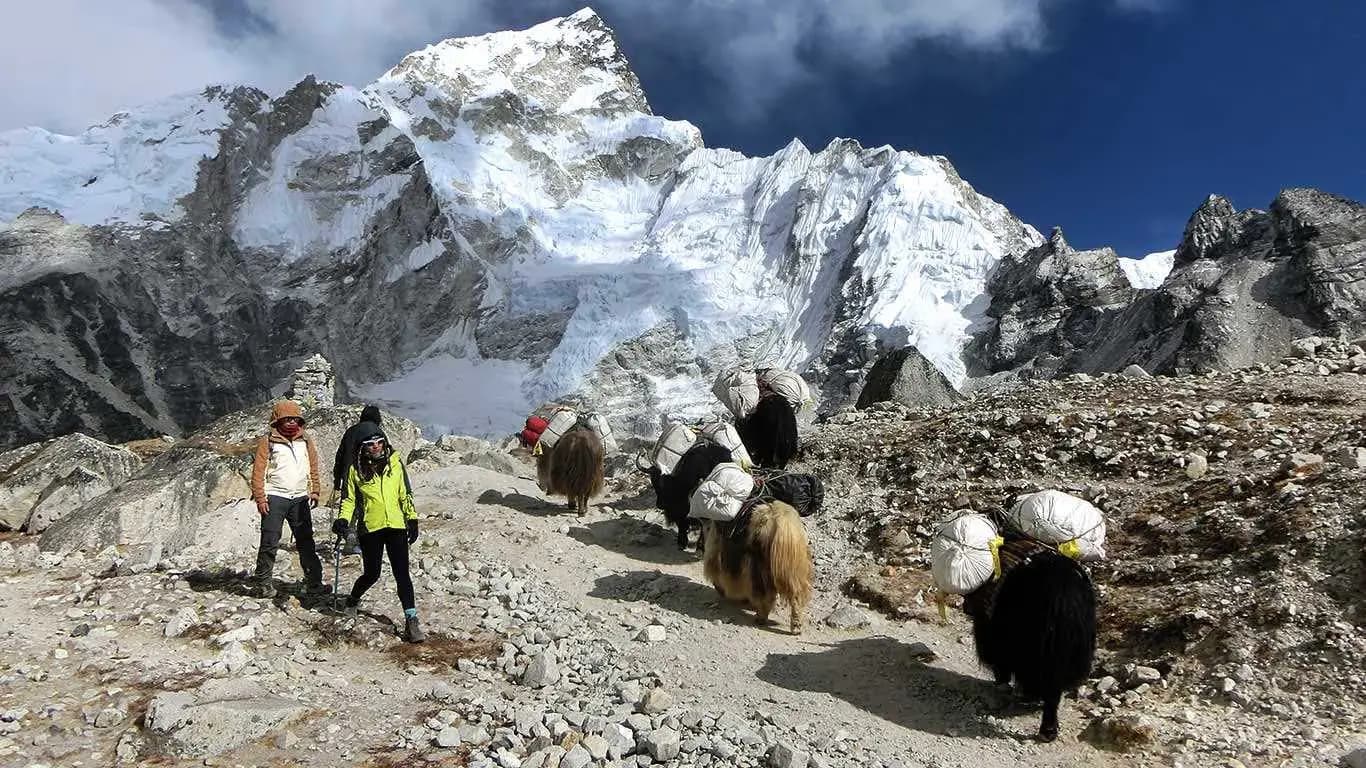
The EBC trek is more than reaching a destination. It passes through Sherpa villages, Buddhist monasteries, suspension bridges, alpine forests, and Sagarmatha National Park. Namche Bazaar serves as a major cultural and trekking hub, while Tengboche is home to one of the most famous Buddhist monasteries in the Khumbu region.
Thus, for Americans it means that you get to explore Nepalese and Sherpa culture along with hiking at high altitude. In other words, you do not just pass through the mountain range but also get to travel among communities that have much to do with the Himalayas in terms of their history, religion, economy, and identity.
See Everest While Exploring Nepal's Himalayan Geography
Yet another reason to go for an EBC trip is the chance to get to know the geography of the Himalayas by walking on foot.
The tour starts somewhere near Lukla and moves towards Namche Bazaar via the valley of Dudh Koshi. With the increase in altitude, the scenery transforms from that of forested areas and valleys into one of alpine zones, glacial regions, moraine, and mountain passes.
For those trekkers who love to learn about landscapes instead of just seeing them, such transformation makes this Everest journey more enjoyable.
A Compact Himalayan Adventure Compared With America's Long-Distance Treks
An additional benefit for American trekkers is that you do not require several months hiking in order to have a significant hiking experience.
In contrast to the Appalachian Trail, Pacific Crest Trail, or Continental Divide Trail, all of which are thousands of miles in length, the traditional EBC itinerary can be completed in approximately two weeks starting from Lukla, although the time required will depend on many factors including acclimatization, itinerary, weather, and side trips.
For this reason, EBC is a good choice for Americans with limited vacation days.
Nepal Is Relatively Straightforward for U.S. Travelers
The visa procedure for Americans wishing to enter Nepal is also relatively simple. As stated by the Department of Immigration in Nepal, “tourists may get their Visa on Arrival in Tribhuvan International Airport” with the following available options for the standard tourist visa of 15, 30, and 90 days. U.S. citizens are not included among those nationalities that are restricted from Visa on Arrival.
It is also possible to apply for the visa and pay its cost via online services of the official immigration website of Nepal. According to the Department of Immigration, one should utilize the government's official sites instead of non-government visa websites.
Concerning the trek, the following route is mentioned on the Nepal Tourism Board website as one of those where it is necessary to have a licensed guide with TIMS card issued by the trekking agency.
Why EBC Can Be More Memorable for an American Hiker
The appeal of Everest Base Camp is therefore not that it is automatically harder than the Appalachian Trail, PCT, or CDT. Those American trails offer extraordinary tests of endurance and distance.
The difference is the combination of challenges and experiences:
High-altitude trekking in the Himalayas
Views of Mount Everest and other 8,000-meter peaks
Sherpa villages and Himalayan communities
Buddhist monasteries and spiritual traditions
Glacial valleys and alpine landscapes
Suspension bridges and dramatic mountain trails
A genuine international adventure outside the familiar U.S. trail system
The opportunity to experience Nepal's geography gradually, from lower valleys to the high Himalayas
A world-famous trekking destination that can be completed within a typical multi-week vacation
It is not that the trails in America are less challenging; rather, the trails in Nepal provide a totally different definition of adventure for an American who has explored some of the well-known trails of the United States before.
Where Is Everest Base Camp?
Everest Base Camp is located in Nepal's Khumbu region at approximately 5,364 meters (17,598 feet) above sea level.
The route lies within Sagarmatha National Park, a UNESCO World Heritage Site and one of Nepal's most important protected areas.
The standard trekking route usually begins at Lukla and passes through settlements such as:
Lukla → Phakding → Namche Bazaar → Tengboche → Dingboche → Lobuche → Gorak Shep → Everest Base Camp
Trekkers generally return to Lukla by following the same route in reverse.
The exact itinerary can vary depending on the trekking agency, acclimatization requirements, weather, and whether you choose to include destinations such as Kala Patthar or Gokyo Valley.
How Long Does the Everest Base Camp Trek Take?
For American travelers flying from the United States, it is important to allow considerably more time than the trekking days alone.
A typical EBC itinerary from Nepal takes around 12–16 days, depending on the route and acclimatization schedule.
Do American Citizens Need a Visa for Nepal?
Yes. U.S. citizens traveling to Nepal for tourism require a tourist visa.
Nepal's Department of Immigration states that tourist visas can be obtained on arrival at Tribhuvan International Airport or through Nepalese diplomatic missions abroad. The current standard tourist visa options listed by the Department of Immigration include 15 days for $30, 30 days for $50, and 90 days for $125. (Immigration Nepal)
You should always verify the latest requirements before departure because visa procedures and fees can change.
What Should American Travelers Bring?
American Traveller should Carry:
Valid U.S. passport
Passport photographs or digital photo as required
Visa application information
Accommodation details
Travel itinerary
Travel insurance documentation
Copies of important documents
Your passport should meet Nepal's validity requirements. The Department of Immigration currently states that passports should have at least six months of validity. (Immigration Nepal)
For the latest requirements, check the official Nepal Department of Immigration before traveling.
How Much Does Everest Base Camp Trek Cost for Americans?
For American travelers, the Everest Base Camp Trek generally costs more than USD 1,200 per person, excluding international airfare from the United States. The final price depends on the trekking agency, itinerary, number of trekking days, accommodation standard, guide and porter services, transportation, permits, and level of support included in the package.
What Is the Best Time for Americans to Trek to Everest Base Camp?
According to the Nepal Tourism Board, the best seasons for trekking for all trekkers including Americans in the Everest region are March to May and October to November. These months are generally considered the most suitable periods for experiencing the Everest region and its mountain scenery.
How Fit Do You Need to Be for Everest Base Camp?
You do not need to be an elite athlete to complete the Everest Base Camp Trek. However, you should be prepared for multiple hours of walking on consecutive days at increasing altitude.
If you live in a flat part of the United States, such as Florida or parts of the Midwest, practice walking on inclines or stairs to prepare for sustained uphill and downhill sections.
What American Trekkers Should Know About Health Issues
American trekkers should be aware of several health challenges that can occur during the Everest Base Camp Trek, including Acute Mountain Sickness (AMS), High-Altitude Pulmonary Edema (HAPE), High-Altitude Cerebral Edema (HACE), dehydration, exhaustion and fatigue, cold-related illnesses such as hypothermia and frostbite, sunburn and increased UV exposure, digestive problems, and breathing difficulties caused by high altitude.
What Should Americans Pack for Everest Base Camp?
Proper packing is important for the Everest Base Camp Trek because weather and temperature will change according to the different altitude. Americans who plan to undertake the journey must be well-prepared and pack appropriately with the necessary clothes, shoes, bedding, and other trekking gear.
Read Here to know more about the packing list of Everest Base Camp
Should You Bring U.S. Dollars to Nepal?
U.S. dollars are helpful when traveling internationally in Nepal, especially in case of costs associated with tourism activities; however, you will be using Nepalese rupees (NPR) when making routine purchases. Credit cards are acceptable at most hotels, restaurants, stores, and shops in big cities like Kathmandu; however, their use is very restricted once you move to the Everest area.
ATMs are easily accessible in cities like Kathmandu, but they become less and less accessible as you get to higher altitudes. It is recommended that you carry sufficient Nepalese rupees in cash for your routine expenses, snacks, beverages, tipping, and other purchases while you are on your trekking tour. Your trekking company can guide you about the amount of cash you should carry according to your trekking package.
Can Americans Use Their Cell Phones in Nepal?
Well, but the internet and mobile connectivity can differ greatly on the trail to Everest Base Camp because there will be a good mobile and internet connection in Kathmandu, although it can be slow, limited or nonexistent in some areas in the Everest region.
There are several ways to stay connected during the trip by using an international roaming service, a SIM card of Nepal, an appropriate eSIM and even Wi-Fi in some tea houses and lodges in the area. But do not expect to have internet access everywhere all the time.
What Is Accommodation Like on the Everest Base Camp Trek?
Most trekkers stay in tea houses and trekking lodges, where accommodation generally includes private or shared rooms, beds with mattresses, blankets, shared bathrooms, dining areas, and simple meals, while more comfortable and luxury options are available in some lower-altitude locations but become increasingly limited as you approach Everest Base Camp.
How Much Should You Tip Your Guide and Porter?
Tipping is not compulsory in Nepal, but it is a common way to show appreciation for good service in the trekking industry. The amount is entirely up to the trekker and can depend on the quality and length of service provided by the guide, porter, and other support staff, rather than following a fixed American-style percentage.
What Makes the Everest Base Camp Trek Different From Hiking in the USA?
While the American hiker might have prior experience hiking difficult trails in the likes of Colorado, Utah, California, Washington, Montana, Wyoming, or even Alaska, the Everest Base Camp Trek is an entirely different kind of hiking adventure owing to its incredibly high altitude. As the trek approaches its peak of over 4,000 meters leading up to the Everest Base Camp, the low density of air means that any physical activity performed by the hiker becomes that much harder to do.
Why Choose Himalayan Trekkers for Your Everest Base Camp Trek?
For tourists from America, selecting the right trekking agency would make it easier to organize and accomplish the trek to Everest Base Camp. A professional and reputable trekking agency based in Nepal would make it easy to organize airport transfers, accommodations in Kathmandu, permits for trekking, TIMS, local flights, licensed guides, porters, accommodations at the tea houses, food, etc
Himalayan Trekkers, the best trekking agency in Nepal, can assist American travelers in organizing their Everest Base Camp adventure, from their arrival in Nepal to the completion of the trek. Our team can also help you choose an itinerary based on your available time, trekking experience, fitness level, and preferred travel style. Whether you are taking your first Himalayan trek or are an experienced mountain traveler, working with a knowledgeable local team can help make your journey safer, smoother, and more enjoyable.
Conclusion
With the EBC trek, American trekkers have the chance to explore the highest peak in the world, the landscapes of the Himalayas, the lifestyle of the Sherpas, and high altitude trekking. As long as you prepare yourself well, have an appropriate itinerary, and choose a reputable local trekking company, your trip will be safe and enjoyable.
Himalayan Trekkers, a top trekking agency in Nepal can assist you to plan and organize your EBC trip as per your schedule.