Rato Machhindranath is one of the most esteemed divine figures in Kathmandu. His local name is Bunga Dyah. Both Hindus and Buddhists worship the deity.
In Hindu belief, many believe Rato Machhindranath to be a form of Shiva. Yet he is also known as Varuna. The god who brings essential agricultural rains.
The association of Rato Machhindranath with Avalokiteshvara, the Bodhisattva of Compassion. It demonstrates how the Mahayana Buddhist faith overlaps with religious practices.
Both aspects of Rato Machhindranath make him distinct. It demonstrates the religious tolerance that exists throughout Nepal's cultural environment. Buddhists maintain devotion through chanting, while Bhaktapur honors through traditional rituals.
Both religious groups follow the very same chariot. The deity unites all demographic groups across time and religiosity. The deity protects and creates prosperity throughout the Kathmandu Valley.
Origin and Legend of Rato Machhindranath Jatra
The religious festival stretches back more than a millennium. You can learn about it through a tale told by the locals. It combines natural difficulties with divine intervention. The legend says of a severe drought in the Kathmandu Valley. It turned farms to dust and threatened the basic agriculture of valley residents.
 King Narendra Dev of Bhaktapur received divine advice from astrologers and priests. The priests revealed a way to solve the issue. The king needed to get the presence of the deity Machhindranath. The deity who lived in Assam, India, was the only solution to restore life-giving rains.
King Narendra Dev sent a team to recover the deity. The team included Bandhu Dutta, the influential Gorakhnath, and himself. The team brought Machhindranath to Nepal. And soon afterward, the drought came to an end.
The land received abundant rainfall. The deity obtained his Rain God designation. This remarkable sign became the founding of the Rato Machhindranath Jatra. The Nepali festival is a holy ceremony to invoke his divine powers yearly.
Throughout the centuries, this religious event evolved into a vital cultural event. It is deeply linked to Newar communities and people from other backgrounds. The Rato Machhindranath Jatra tradition takes place in April or May.
The seasonal patterns match the first rainy farming period. Thus connecting to both agricultural and religious significance.
Many believe that worshipping Rato Machhindranath secures beneficial weather conditions and protects harvests. It also preserves the balance between the natural world and human society.
The Ritual Timeline: Pre-Festival Preparations
The Rato Machhindranath Jatra crosses many weeks. Organizers and volunteers put in significant preparation efforts to fulfill their ritual obligations.
The most essential aspect consists of constructing the elevated chariot structure. Locally called "rath." It uses methods that previous generations of Newar artisans used.

Before constructing the chariots through indigenous engineering, the craftsmen employed robust logs. They combine and make wooden wheels and holy ropes knitted from jute fibers. You will see traditional woodworking tools and create these marvels of religious significance.
The monumental wooden structure reaches heights of more than 30 feet. It depends solely on wood joints and tension mechanisms. It contains no nails or metals.
All aspects of the chariot, including its foundation and decorative elements. From these, it receives spiritual significance. Construction takes place at favorable times under a local astrologer. Raths are also used during the Bisket Jatra in Bhaktapur.
Before construction starts, the builders must perform religious offerings to tools and timber. It creates blessings for safe construction and a successful outcome.
Post Chariot Building
People bring the main idol of Rato Machhindranath after the chariot's creation. The idol stays in the Rato Machindranath Temple in Bungamati, Pulchowk, Patan. People carry it through a celebratory festival.
The devotees set the deity within the chariot. Before that, priests bathe the deity and dress it in royal garments. After the proper veneration.

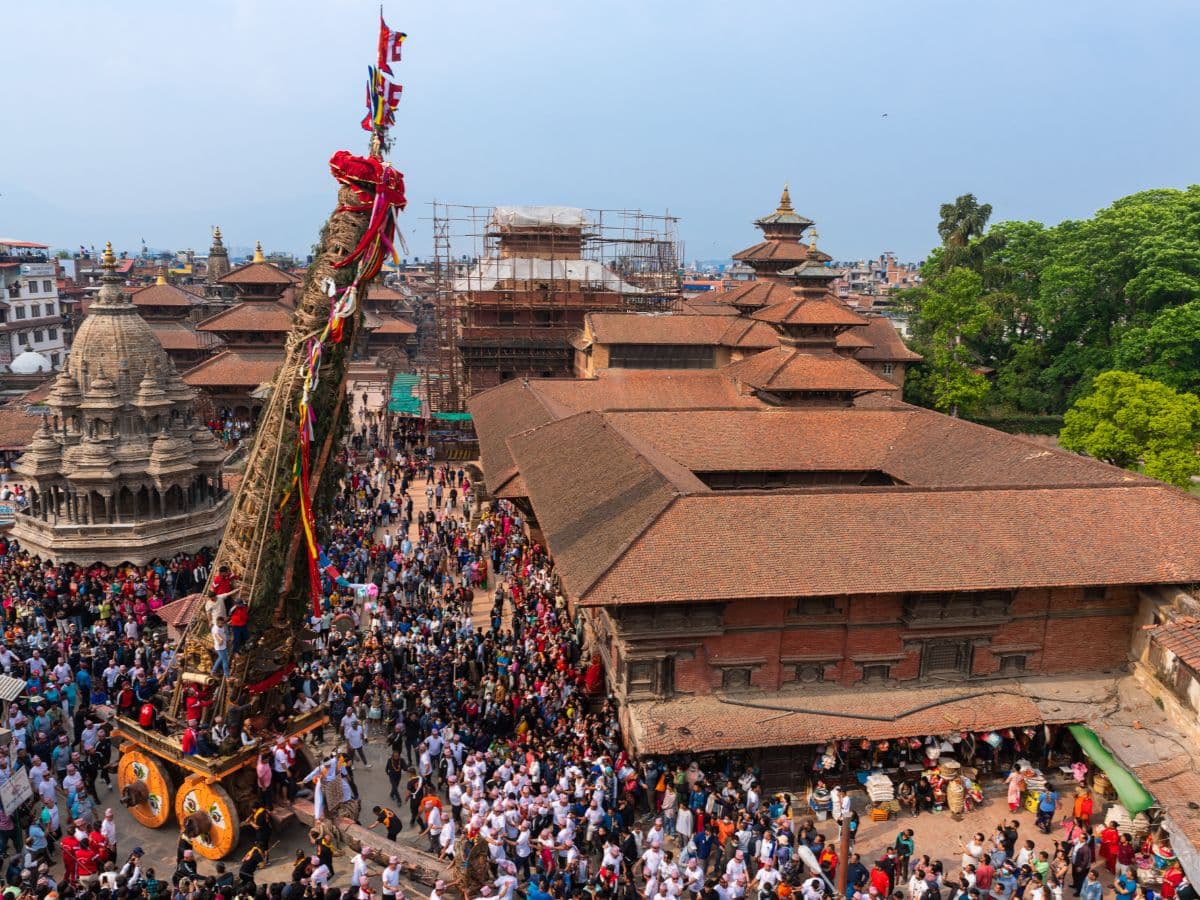
After its installation, the chariot starts its gradual pilgrimage. It moves across the central area of Lalitpur. Thousands of worshipers ensure the deity's movement through the streets.
The sacred procession extends for many weeks. It moves according to a ceremonial path with various stopping points.
It pauses so locals can perform their religious rites. They offer food and prayers with flowers. It creates musical offerings. The chariot follows a historic route. It passes key temples along with courtyards and crossroads.
They have sustained the Jatra for many centuries. It serves as an active venue for cultural presentations. You can view traditional dances and communal spiritual celebrations, and folk music.
Each neighborhood during this period seeks to deliver the most exceptional festive appeal. They space their streets with oil lamps and colorful materials. You can see chanting groups in the Jatra. It is so they embrace the rain god within their community boundaries.
The Finale of Rato Machhindranath Jatra
The Bhoto Jatra is the pinnacle of the celebration of Rato Machhindranath Jatra. It occurs when huge numbers of people gather before Jawalakhel. They witness the main event with the Nepalese high authorities. You can even see the President of Nepal in attendance.

The public witnesses the display of a sacred Bhotō. Priests hold their chariots aloft during this event. Its original reason for existence or previous owner remains unknown. Its enigmatic nature creates mystery around the tradition.
Devotees come to observe the vest presentation. It represents divine justice paired with unfinished karmic obligations. It attracts thousands of spectators looking for blessings.
Who organizes the festival?
Guthi organizations maintain all festival operations. Behind the scenes, it acts as the traditional socio-religious body. They coordinate the complete Logistical execution of the event. Guthi organizations ensure the smooth execution of the annual festival.

Ritual management alongside funding coordination, volunteer coordination, and traditional preservation of centuries-old customs. The festival shows commitment to traditional values. You can see the communal spirit of the people.
The Rato Machhindranath Jatra demonstrates the conservation of Nepalese cultural heritage. It creates a vibrant testament to cooperative social beliefs.
The Chariot Procession: Route, Rituals, and Celebrations
The Rato Machhindranath chariot procession stands as Nepal's most visually magnificent spiritual event. It embodies timeless sacred rituals sustained by the people of Patan. It is their joint cultural traditions.

The ceremony begins when Pulchowk volunteers raise the tallest wooden handcrafted chariot. It is at the base and then leads it on an annual journey. It then moves through Lalitpur's streets until reaching Jawalakhel.
The yearly custom follows this precise route as a religious journey. It cleanses the city and brings rain. It expresses both contemporary and ancestral spiritual devotion.
Local communities along the route create sacred temples out of their neighborhoods. The deity emerges as people greet the chariot with worshipful devotion. It is a happy festival that seems like a divine visitation.
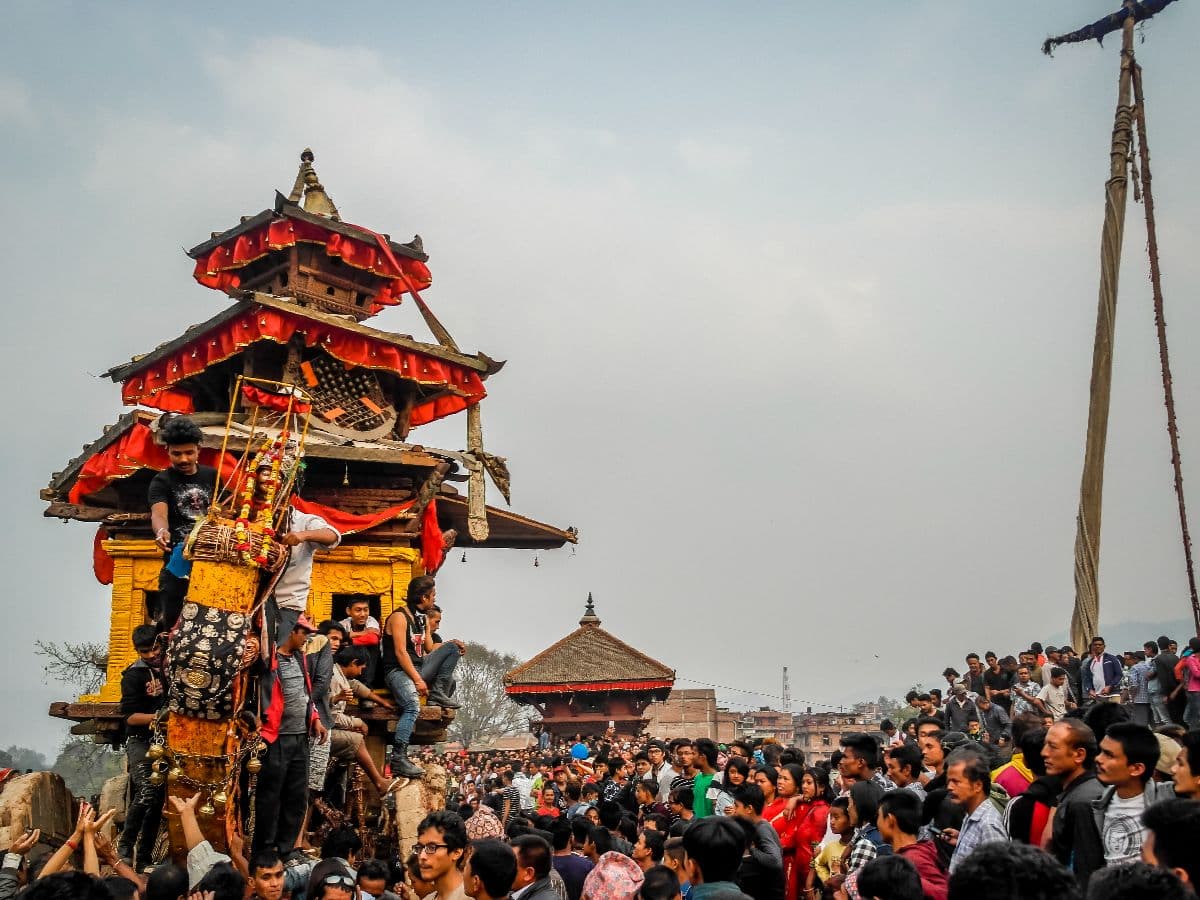
Hundreds of local people put their hands on massive ropes and pull the elevated chariot. It moves from Gabahal to Mangal Bazaar, passing Sundhara and Lagankhel regions.
It isn't until they reach Jawalakhel. These people include youthful males, elderly devotees, youngsters, and visiting tourists.
People believe Rato Machhindranath controls his own movements during the festival. It is his unpredictable stopping points that signify divine interaction with the community. It also comes with undisclosed divine blessings.
The procession stops in Rato Machhindranath Jatra.
The procession stops at different locations. Priests conduct particular pujas while offering seasonal grains. The handout includes flowers and chanting of agricultural prosperity mantras.

Families take part by presenting food and incense. It is the application of vermillion from balconies and doorways.
Each stop during the processional tour introduces musical interludes. It continues with community feasting, then spiritual tributes at nearby homes.
They spend days decorating themselves and making temporary shrines. They are also running cultural programs that focus on honoring the deity.
Colorful sounds and sacred energies activate entire neighborhoods. It opens a ritual that blurs distinctions between divine and human territories. It connects social life to spiritual activities in outdoor spaces.
How is the Chariot on Rato Machhindranath Jatra Built?
The sterling architectural masterpiece of the procession stands 60 feet high. It remains without nails. It symbolizes developmental skills and ethereal undertones.

Professional artisans known as Karmacharyas and Shilpakars. They construct the structure for the Jatra.
They build the chariot as they follow the ritual norms. They work with wood, bamboo, jute, and cloth. Then the tantric priests bless the final form for an idol placement.
How does the Festival proceed?
The hand-built temple structure moves through the streets. It is a sacred monument. People pull ropes, and pathway walking continues a timeless cosmic ritual. It unites nature with harmony among communities while maintaining spiritual balance.
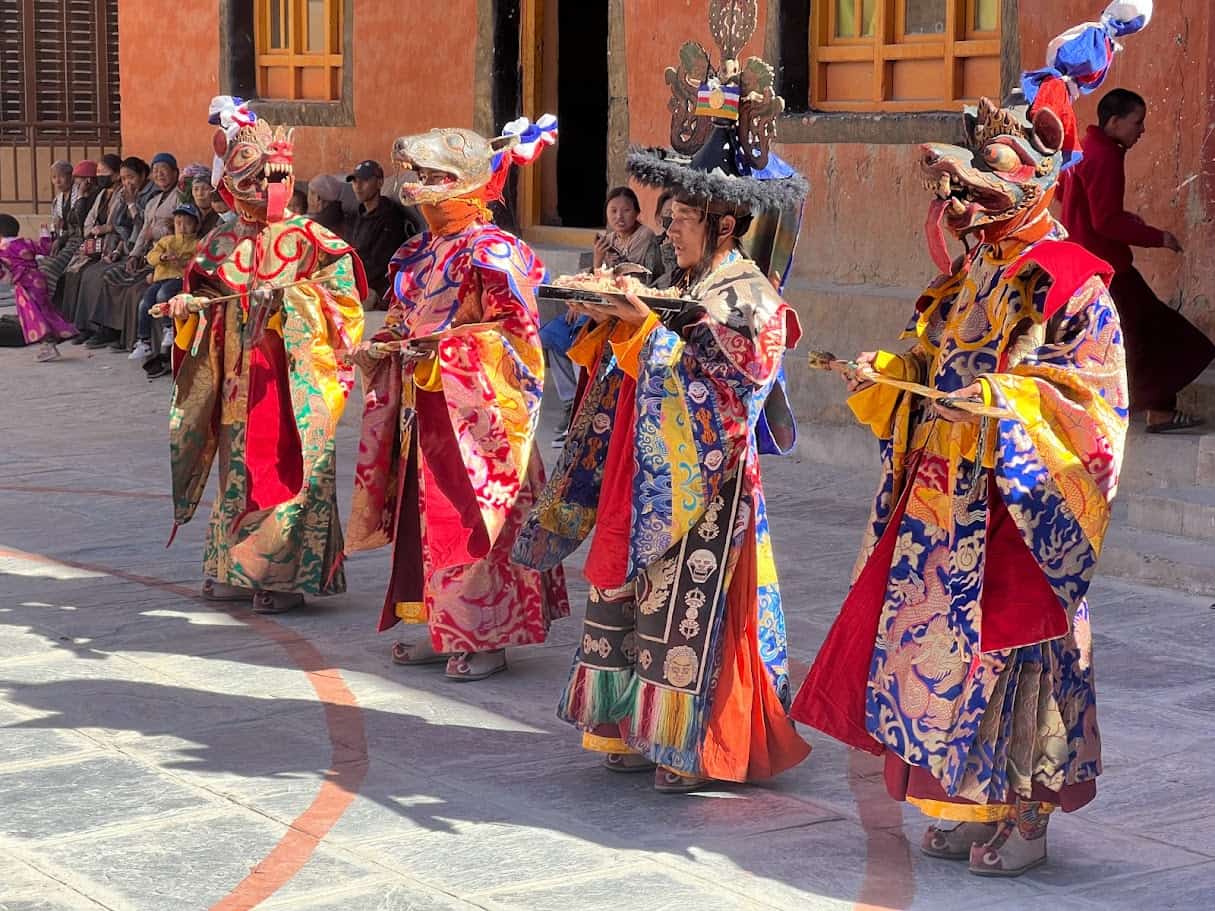
Traditional dancers meet masked performers and dhimey drummers. They parade next to the chariot in festive disarray. Children wear traditional costumes to perform folk hymns.

Elders who wear white shawls beneath their umbrellas. They softly chant religious mantras or share stories about past religious celebrations.
Rato Macchuindranath Jatra: A shared Festival
People experience a spiritual procession. It creates unity through rituals of humility. It also maintains coexistence between Hindus and Buddhists.
They share their celebration along the streets. It is a symbol representing collective power and equilibrium.

People recognize that chariot pulling cleans karma while bringing blessings along with it. The united community efforts to steer the massive structure through tight spaces. And this symbolizes social harmony.
During moments of chariot difficulties, people interpret it as divine communication. They are aware that divinity frequently presents itself through challenging yet majestic events.
The Bhoto Jatra: A Festival Within a Festival
The Bhoto Jatra transforms the Rato Machhindranath Jatra into a three-in-one spectacle. People regard it as a festival and a mystery, a sacred legend. Thousands of people from Jawalakhel's open field gather for the event. They witness the high elevation of the Bhoto. It remains an ordinary vest, though held sacred by worshippers.

The Prime Minister or President, along with dignitaries, is present for the occasion. This appears as an ordinary vest. But manifests divine possession to the people. It encompasses myths about unresolved justice. It unlocks spiritual power that blesses its annual public display.
For many years, people have heard stories. It is about how a farmer healed a deity. It was through medicinal herbs. For this, he received the valuable vest as his reward. The vest disappeared at some point, so the farmer saw another person wearing it.
This triggered legal and logical ambiguities. It prompted him to bring the vest before Rato Machhindranath, who became its keeper.
The deity became responsible for preserving the bhoto forever. People show the vest once a year, while facing in four directions. They witness an act that symbolizes ethical choices. It remains unsolvable and divine intervention for unanswerable questions.
Importances of Bhoto Jatra
Every year during the Bhoto exhibition, the Priest climbs the towering chariot. He then raises the vest above his head. The crowd celebrates with spiritual wonder and deep devotion, and powerful prayers.
Throughout the proceedings, they present bhoto in the north, south, east, and west. It is a ritual believed to give blessings to all worshippers from the sacred offering.
The ordinary fabric serves as a divine path connecting individuals. It connects to sacred and historical elements. It reminds them of their past, their territory, and the spiritual realm. The Bhoto Jatra went on through the republican era.

Nepal's top political leaders now attend instead of royalty. They watch the event while sharing pavilions with government officials. Overseas dignitaries and media representatives join the officials.
The state's continual attendance shows that modernizing Nepal values its cultural heritage. It sustains the relevance of this ancient tradition. During this moment, all social classes become equal. Everyone becomes a worshipper in front of the divine justice that exists in cloth form. Devotees of all backgrounds stare at the cloth. They lower their necks to witness the sacred material.
Crowds of thousands gather at Jawalakhel. Vendors sell spicy snacks to thousands of people who swarm the massive fairground. All who await the vest display. People from all over Nepal journey to the event. It carries out multi-day walks to take part in this spiritual tradition.
Nepalese residents decorate their rooftops with flower decorations to greet the chariot's arrival. The field displays intense excitement. During the Bhoto appearance, a profound silence descends upon everyone. A holy quiet temporarily envelops the audience.
The traditional Bhoto Jatra event serves as a dynamic exchange of ideas. It is between mythology and community morality. Citizens test justice and spirituality together. The sacred ritual teaches people to respect certain truths that exist beyond resolution.
Bhoto Jatra is to understand that divine power. It maintains social cohesion through the preservation of sacred uncertainties. The bhoto shows us that mystery contains great power when we recognize the meaningful value of stories that stay open-ended.
Cultural Impact and Community Involvement: The Rato Machhindranath Jatra
The Rato Machhindranath Jatra plays an essential role as the cultural foundation. It unites the Newar people throughout the Kathmandu Valley region. The history of this region is deeply ingrained in the community fabric. People share a united identity through their strong cultural heritage.
The Newar community celebrates its cultural heritage through this festival. It creates a shared connection between all community members. This spreads communal pride throughout diverse segments of the community.

The Newar community relies on Guthi organizations to manage the festival. These social groups have maintained their existence throughout history. These community-run groups must conduct all festival activities in tradition-based ways.
They lead the work of chariot assembly and spiritual procedure. These community groups dedicate themselves to maintaining traditional integrity. They ensure the event functions as a social solidarity center.
The festival fosters interfaith harmony through shared practices and participation. It comes from both Hindus and Buddhists in the Kathmandu Valley. The festival centers around a Hindu deity. Yet finds Buddhist participation. They join in religious rituals and festivities.

The joint participation between religions demonstrates respect for relationships. It represents Kathmandu Valley's special pattern of co-religious living.
The social impact of Rato Machhindranath goes beyond spiritual domains. It enhances all cultural events throughout the community.
Throughout the festival, local artisans show their inherited artisanal knowledge. It revolves around woodcarving and metalwork. They are essential to chariot creation.
The event functions as both an academic learning experience. This enables younger people to discover their cultural roots. Thus preserving cultural traditions across families and communities.
Through religious and cultural cooperation activities during the festival. The community unites across all demographic groups, including every age sector. The traditional festivities include a wide range of activities.

Here, both the youngest and the senior members of the community take part in assigned tasks. Through hands-on participation, people develop stronger family bonds. The event remains authentic while adapting to new traditions.
Rato Machhindranath's observance of the festival unites modern and traditional practices. It actively involves young people in preserving ancestral customs. Youth volunteers maintain the ancient art form of education. This enables younger people to take part in traditional music, dance, and rituals.
Young participants will protect the festival in future years. Currently, they contribute towards advancing its development. Their energetic approaches follow established traditions.
When and How to Experience Rato Machhindranath Jatra as a Visitor
Attending the Rato Machhindranath Jatra demands proper scheduling. To witness its complete excitement, visit Nepal at the right moment. The entire Rato Machhindranath festival spans many weeks of Baisakh (April-May). Its ultimate conclusion through the final procession.
 The ideal time to witness the festival is when the chariot reaches Jawalakhel. This is when the bhoto display happens.
People visiting Patan for the festival should devote at least two or three days. That is, if you want to experience the events. Many neighborhoods host the chariot procession over many days.
Visitors can experience many festivals and lively community events. It includes sacred rituals and traditional performances in each neighborhood. During Bhoto Jatra, visitors must attend the sacred vest presentation. This event stands as one of the paramount festival highlights.
Most festival enjoyment can be achieved through local guided tour participation. It delivers explanations about the festival's culture along with spiritual significance. Local tour guides understand the traditions’ historical background.
Also, they can guide visitors throughout ritual practices. They explain both the cultural heritage and social influence of the event. Your cultural experience will improve through local guidance. This deepens your festival knowledge.

A visitor can observe proper conduct to respect the holy aspect of the ceremony. Wear modest clothing that extends from the shoulders down to the knees. It represents the traditional acceptance of the Newar religious heritage. During prayers, rituals, and processions, visitors need to show devotion. They remain quiet and move away from active participants.
During the festival, photographers can take pictures in various areas. Yet should exercise caution about their photographic activities. Request approval before taking snapshots of devotees. During the bhoto event, along with prayer sessions. Take photos after obtaining permission. Religious activities deserve privacy and respect.
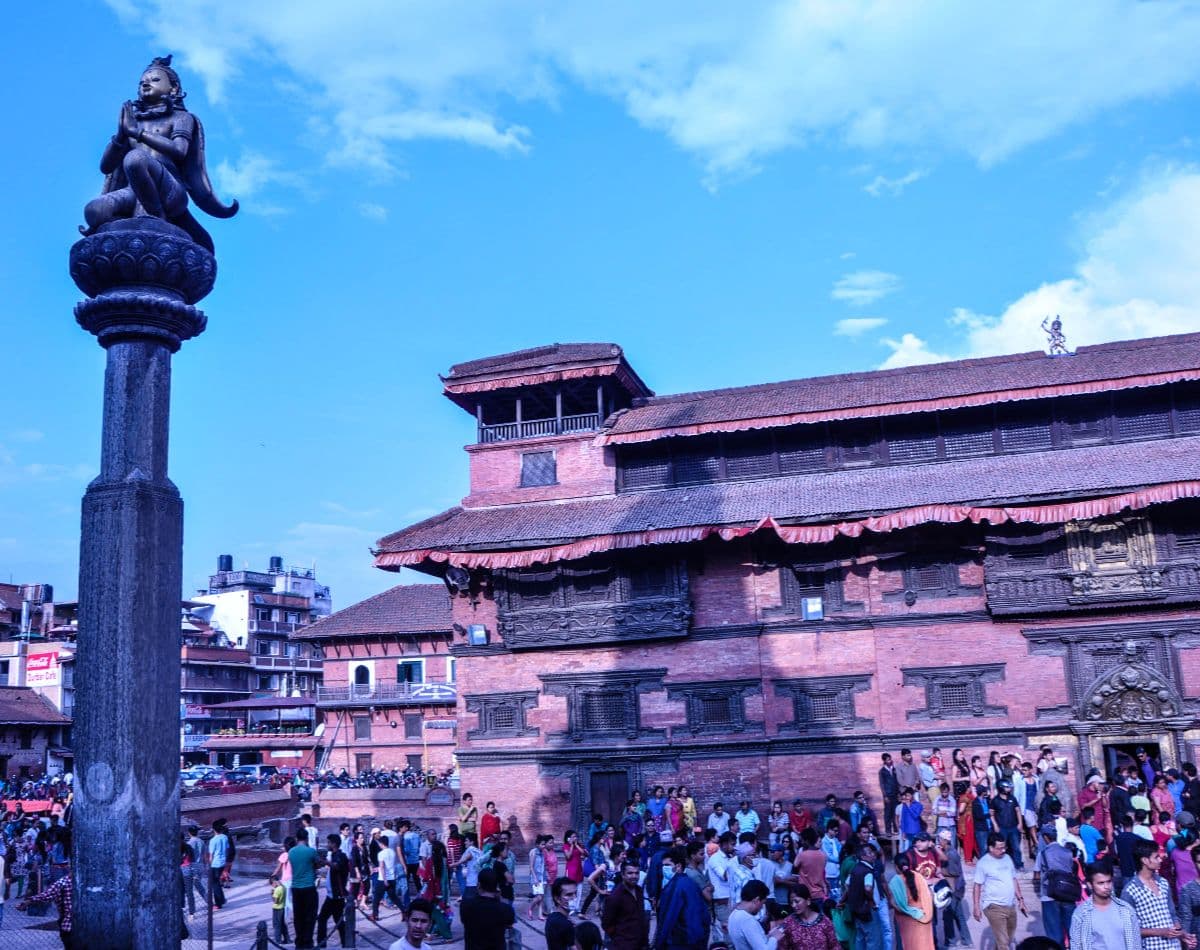
During your stay in Patan for the Rato Machhindranath festival. You can discover many nearby interesting sites after participating in the festivities. The UNESCO World Heritage site Patan Durbar Square stands as a major destination.
It displays Malla period grandeur. You can find it in ancient temples and palaces with shrines. You can appreciate the preserved cultural heritage of Patan at the Patan Museum. Visitors can explore the architectural beauty of the Newar style in the square.

Tourists searching for tranquility can visit Swayambhunath. It is also known as the Monkey Temple. They can admire Kathmandu Valley vistas and watch one of Nepal’s crucial Buddhist stupas. It also shares similarities with Seto Machhindranath Jatra.
The Asan Tole market stands out as a must-see destination. Bisitors enjoy seeing fresh produce and Newar handicrafts. Or buy spices from this thriving market section. The Bhaktapur Durbar Square presents an opportunity to experience Newar artistry. It's a traditional cityscape that highlights ancient cultural elements of daily life.
The Kathmandu Valley contains many cultural attractions. This enhances the Rato Machhindranath festival experience. Take advantage of your visit to witness two major religious landmarks of Nepal. Pashupatinath Temple stands as a prominent Hindu sacred site.
The Boudhanath Stupa represents the center of Tibetan Buddhism in Nepal. The spiritual sites provide visitors with religious benefits. It is an opportunity to study Nepal's extensive religious diversity.
FAQs
The Rato Machhindranath Jatra represents what celebration?
The annual Rato Machhindranath Jatra festival in Patan, Nepal. It honors Rato Machhindranath, who stands as a Hindu-Buddhist deity. The celebration includes a grand temple procession. It holds many sacred ceremonies to invoke blessings for rain and prosperity. The Rato Machhindranath Jatra is an important cultural celebration of the Newar community. It welcomes both residents and visitors from outside the area.
When exactly does the Rato Machhindranath Jatra occur?
The Rato Machhindranath Jatra starts in the Nepalese month of Baisakh (April-May). It extends its duration for many weeks. The Bhoto (sacred vest) is displayed to the public as the festival reaches its conclusion. Visitors should plan their trip towards the end of the festival. They can witness the peak moment of the procession.
What significance does the Rato Machhindranath Jatra hold for the Newar community?
The Jatra plays a crucial role in maintaining Newar cultural heritage and customs. Members of the community unite throughout the festival. They worship their deity through both spiritual rituals and voluntary service. Members of the community experience an increased unity during the festival.
Why do followers take part in the traditional procession of chariots?
During the festival, Rato Machhindranath conducts a procession across the Kathmandu Valley. It is to spread the blessings of rain along with vibrancy to the population. Going through the entire procession using human power to pull the chariot. It serves as a religious devotion.
The Jatra is also a part of religious rituals meant for the deity. The festival's visuals, along with spiritual significance, reach their peak with ceremonial display.
During the Bhoto Jatra, what rituals occur?
A sacred vest referred to as a bhoto becomes publicly displayed. It is a part of the Bhoto Jatra tradition. The festival’s significance in this part comes from a belief. The displayed object protects against evil and brings thriving conditions.
How many days does the Rato Machhindranath Jatra span?
Many ceremonies span the entire duration of the festival. But the concluding chariot procession stands as its most important ceremonial event. The festival duration is extensive. As such, it has a wide range of people from local areas, and visiting groups can actively take part. The festival maintains constant activity through various events and ceremonies. It pushes it toward high energy levels, attracting all participants.
What are the steps to join the Rato Machhindranath Jatra festivities?
People who visit can join by both watching the ceremony procession. They witness performing the religious rituals. Tourists who want to support the event should watch respectfully and learn. Chariot pulling duties belong to town residents. The Bhoto Jatra presentation holds limited participant opportunities while offering an all-encompassing experience.
Is Rato Machhindranath Jatra considered a religious gathering?
The Rato Machhindranath Jatra begins as a deeply religious celebration. It honors the deity Rato Machhindranath. As a significant religious celebration in the Kathmandu Valley. It unites Hinduism with Buddhism. During this festival, the performers execute spiritual traditions and symbolic activities. Devotees offer prayers, which intensify the spiritual value of the festival.
Does the festival permit photo-taking activities for visiting travelers?
Most visitors can photograph the Rato Machhindranath Jatra with proper courtesy. People should seek permission before taking photographs. Especially when prayers occur or sacred obligations take place. The documenting of events through photography follows rules of etiquette. This safeguards both the festival practices and event documentation.
What are Guthi organizations, together with their contributions to society?
Guthi organizations function as local volunteer groups. They help lead all the festival functions. Guthi organizations maintain essential roles by managing religious rituals. They lead the chariot procession. They also uphold cultural traditions throughout the event. These community efforts maintain traditional practices. It brings together volunteers who create community bonds.
What elements in the festival create unity within the local community?
The traditional festival creates social unity. It is a collective work between all members of the Newar community. They can pull chariots or perform devotee practices. People unite around the common purpose of honoring the deity. It creates strong bonds among them. The communal tasks create stronger bonds between members of the community.
How does the Newar community function during this festival?
Newar people take the lead position in festival organization. They actively take part as key members of the event. Building the chariot alongside performing traditional dances and musical performances. It is the responsibility of the Newar community throughout the festival. Through this event, the Newar people display their cultural heritage. They transfer their culture to upcoming generations.
Are visitors allowed to explore the attractions in Patan during the festival?
Visitors can access Patan Durbar Square, Patan Museum, and Swayambhunath. Yes, even while attending Rato Machhindranath Jatra. The cultural heritage of Nepal can be studied through these Jatras. Travelers exploring Kathmandu Valley. They can appreciate these destinations as perfect choices for maximizing their limited time.
When is the optimal period to see the Rato Machhindranath Jatra?
Visitors should experience Rato Machhindranath Jatra during its final days. It is when the peak processions of the chariot occur. The Bhoto Jatra stands as the main event during the festival and occurs closest to its final days. Your visit will achieve its peak during the concluding days of the festival.
During the festival, what steps should I take to show respect?
Visitors need to wear covering clothes that reach both shoulders and knees. This is for demonstrating respect for the festival's religious background. At prayer times, along with rituals, visitors need to keep silent. They can observe but avoid interrupting other participants. The practice of mindfulness toward local customs will help you show appropriate respect.
Are there any other celebrations occurring simultaneously with Rato Machhindranath Jatra in Nepal?
Rato Machhindranath Jatra simultaneously occurs with both Nepali New Year celebrations. It also falls with the Buddha Jayanti festivals within Nepal. The Kathmandu Valley becomes lively with various cultural and religious activities. You will experience many community events during these auspicious times.