

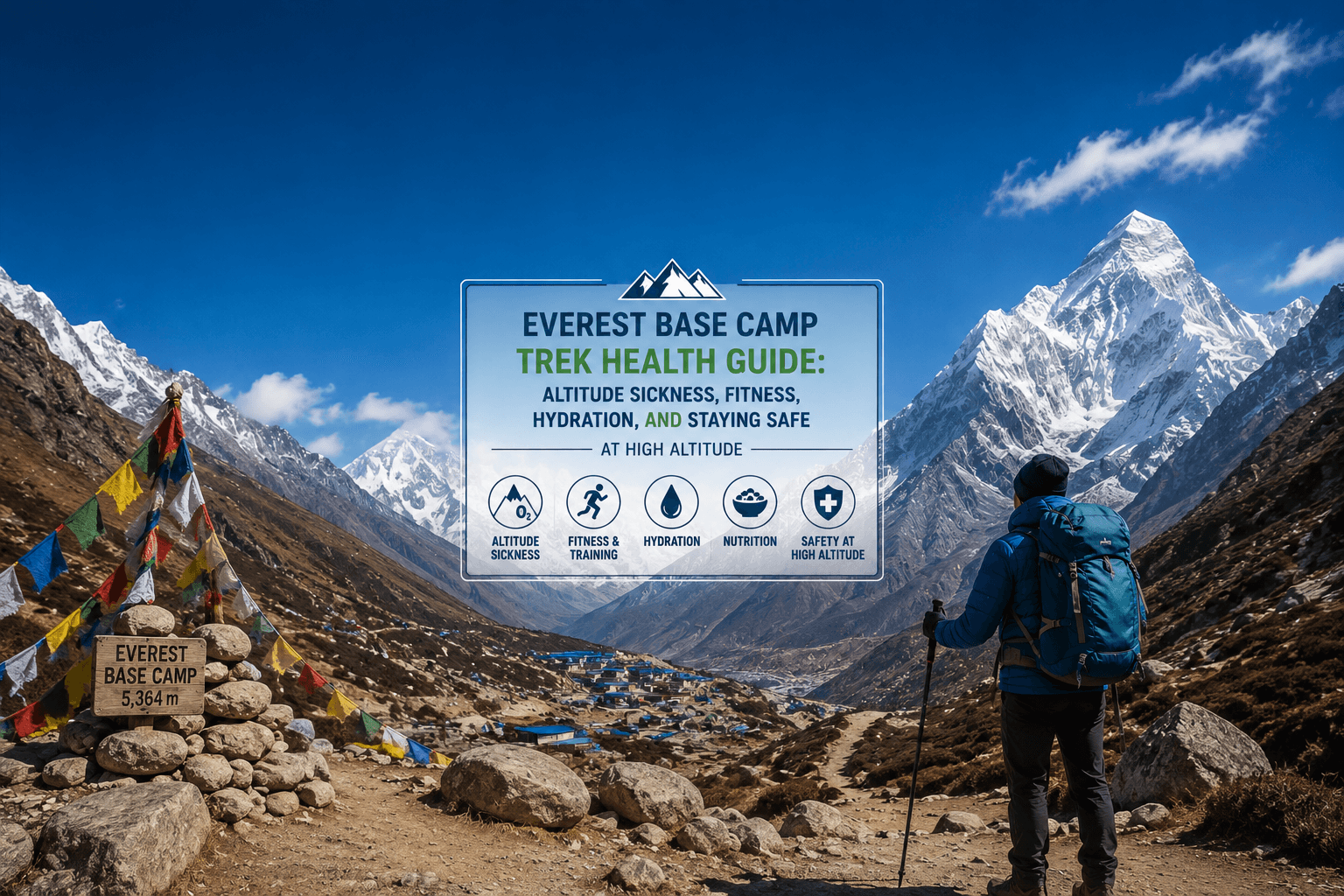
The Everest Base Camp Trek is an unforgettable Himalayan adventure, but reaching the base of Mount Everest requires more than enthusiasm. Trekkers need to prepare their bodies for long walking days, cold temperatures, changing weather, limited facilities, and, most importantly, high altitude.
The standard Everest Base Camp Trek offered by Himalayan Trekkers is a 14-day journey reaching a maximum elevation of approximately 5,545 meters, with acclimatization built into the itinerary. The route passes through major stops including Namche Bazaar, Tengboche, Dingboche, Lobuche, and Gorak Shep before reaching Everest Base Camp.
Whether you are a first-time Himalayan trekker or an experienced hiker, understanding altitude sickness, physical fitness, hydration, nutrition, and high-altitude safety can make your Everest Base Camp experience safer and more enjoyable.
Why Health Preparation Matters for the Everest Base Camp Trek
The Everest Base Camp Trek is a deal and you need to get your body ready for it. The route goes really high to 5,364 meters. That is a lot higher than sea level. At that height there is not much oxygen so you need to be in good shape. You should get ready by walking, hiking or cycling to build up your endurance. You should also do exercises like squats and lunges to make your legs stronger.
You also need to know about altitude safety when you are getting ready for the Everest Base Camp Trek. You should learn what the symptoms of mountain sickness are, like headaches and feeling dizzy. You should also know what to do if you get these symptoms. It is an idea to take your time and not rush, especially around places like Namche Bazaar. You should also talk to a doctor before you go on the Everest Base Camp Trek especially if you are thinking about taking medicine like acetazolamide.
What you eat and drink is important, on the Everest Base Camp Trek. You should try to drink 3-4 liters of water every day and eat food that will give you energy like Dal Bhat. You should not drink water from the tap. You should not eat raw salads or fruits that are not peeled unless you are sure they are safe. It is also an idea to get insurance that will cover you if you need to be rescued by helicopter. The Everest Base Camp Trek can be tough so you need to be careful and get ready beforehand.
Understanding Altitude Sickness During the EBC Trek
Altitude sickness, which is also known as mountain sickness or AMS happens when the body does not adapt properly to the lower amount of oxygen available at higher elevations. The risk of getting altitude sickness generally increases as you go above 2,500–3,000 meters. It can affect both trekkers and beginners.
Being physically fit does not completely protect you from altitude illness because people's bodies react differently to lower oxygen levels. Since Everest Base Camp is at 5,364 meters proper acclimatization is one of the important parts of a safe Everest Base Camp trek.
Common symptoms of AMS include headache, tiredness, dizziness, loss of appetite, nausea, vomiting and difficulty sleeping. If you experience these symptoms do not continue going to a sleeping altitude until they have improved. You should inform your trekking guide immediately, rest and monitor your condition. If your symptoms become worse despite resting you need to go to an elevation. Trekkers should never hide their symptoms. Continue upward just because they want to stay on schedule.
How to Reduce the Risk of AMS
The way to reduce the risk of altitude sickness is to acclimatize gradually. A planned Everest Base Camp itinerary should include acclimatization days at places like Namche Bazaar and Dingboche. This gives your body time to adjust before moving. During the trek you should walk at a pace, avoid gaining elevation too quickly, take rest days seriously, stay hydrated and avoid alcohol and smoking. Your sleeping altitude is particularly important so you should avoid gaining elevation quickly between overnight stops.
A good rule for high-altitude trekking is to climb and listen to your body. Being fit can help you manage the demands of the trail but it does not prevent AMS. Some trekkers may also be advised to use also known as Diamox to help prevent or manage altitude sickness. However medication is not a substitute for acclimatization and should only be used after discussing its suitability and dosage with a qualified healthcare professional before the trek.
Recognize Serious Altitude Illness
AMS can sometimes progress into dangerous conditions particularly if symptoms are ignored or a trekker continues ascending.
1. High-Altitude Cerebral Edema (HACE)
High-Altitude Cerebral Edema or HACE is a potentially life-threatening form of altitude illness that affects the brain. Warning signs may include confusion, unusual behavior, extreme drowsiness, difficulty walking or maintaining coordination and a worsening headache. HACE requires action. The affected person should go down quickly and safely as possible and receive urgent medical assistance.
2.High-Altitude Pulmonary Edema (HAPE)
High-Altitude Pulmonary Edema or HAPE is a condition in which fluid builds up in the lungs. Symptoms can include shortness of breath while resting, weakness, a persistent or worsening cough, chest discomfort and difficulty breathing. HAPE can deteriorate rapidly. Should be treated as a medical emergency. Immediate descent and urgent medical care are essential with emergency evacuation considered when necessary.
For altitude illness do not try to push through the symptoms to reach Everest Base Camp. Going down to an altitude is often the most important emergency measure. Trekkers should also have travel insurance that covers altitude trekking and emergency evacuation including helicopter rescue where available.
Ultimately successful Everest Base Camp trekking is not about reaching Base Camp; it is about reaching it safely. Following an itinerary allowing sufficient acclimatization, communicating openly with your guide and responding quickly to warning signs can significantly improve your safety and trekking experience at high altitude.
How Fit Do You Need to Be for Everest Base Camp?
You do not need to be an elite athlete to trek to Everest Base Camp. However, you should be prepared to walk for several hours on consecutive days, often across uneven and uphill terrain. Himalayan Trekkers recommends preparing through activities such as hiking, jogging, cycling, cardio, and other outdoor activities. Ideally, begin your training several weeks before the trek and gradually increase your workload.
Focus on these six key areas:
1. Cardiovascular Fitness
Walking, hiking, jogging, cycling, swimming, or stair climbing.
Aim for 30–60 minutes, 3–5 times per week.
Builds the endurance needed for long trekking days.
2. Leg Strength
Include squats, lunges, step-ups, calf raises, and hill walking.
These exercises strengthen the muscles used during steep ascents and descents.
3. Core and Balance Training
Practice planks, bridges, yoga, and balance exercises.
These activities help maintain stability on uneven mountain trails and while carrying a daypack.
4. Practice Hiking
Go on regular hikes while carrying a backpack to simulate trekking conditions.
Gradually increase your walking distance, duration, and elevation gain as your fitness improves.
5. Flexibility and Recovery
Include stretching, yoga, mobility exercises, and adequate rest in your training routine.
Recovery helps reduce muscle soreness, maintain mobility, and prepare your body for consecutive trekking days.
6. Mental Preparation
The EBC trek can be mentally demanding as well as physically challenging.
Patience, steady pacing, determination, and a positive mindset can help you manage long walking days, changing weather, and challenging trail conditions.
A consistent and gradual training routine is more useful than intense workouts immediately before the trek. Your goal should be to build endurance, strength, balance, flexibility, and mental resilience so you can comfortably manage the physical demands of the Everest Base Camp Trek.
Walking, jogging, cycling, swimming, and stair climbing can help improve endurance.
Hydration During the Everest Base Camp Trek
Hydration is an essential part of staying healthy in the Himalayas.Cold weather in the mountains can make you less aware of thirst, while dry mountain air and increased breathing can contribute to fluid loss.
Himalayan Trekkers also emphasizes the importance of drinking water during the EBC trek and describes several water options available along the trail.
How to Stay Hydrated
Carry a reusable water bottle or hydration system and drink regularly throughout the day.
Water may be available through:
Teahouses
Lodges
Shops along the trail
Boiled water
Filtered water
Properly treated water
Rather than relying entirely on single-use plastic bottles, consider using a reusable bottle together with an appropriate water-treatment method.
CDC travel guidance also recommends taking care with food and drinking water during travel in Nepal and following safe water practices.
Do Not Overhydrate
Do not drink excessive amounts of water during the trek. Your hydration needs vary according to activity, current weather, food intake, and individual needs.
The goal is to drink regularly and avoid becoming dehydrated without forcing excessive quantities of water.
Nutrition: Fuel Your Body for the Trek
Walking for hours at a high place uses up a lot of energy.
Don't only depend on snacks while you are walking. Try to drink about 500 to 700 milliliters of water each hour changing how much you drink based on how much you're moving, the weather and what your body needs.
Before you start the walk eat a meal that has a lot of carbohydrates one to two hours earlier like oatmeal or bread with nut butter to give you lasting energy.
While you are walking, have amounts of dried fruit, energy bars or other snacks that give you energy every 60 to 90 minutes to keep your energy up.
After you finish the days walk, eat a meal that has a lot of carbohydrates and protein to fill up the energy stores in your muscles, help your muscles get better and get your body ready.
Common trekking foods can include:
Rice and dal
Noodles
Potatoes
Soups
Vegetables
Eggs
Oatmeal
Bread
Pasta
Fresh or dried fruit
Nuts and energy snacks
When you are, at an altitude you may not feel like eating as much especially if you have some mild altitude sickness symptoms.. It is a good idea to keep eating regular meals even if you do not feel very hungry because this will help give you the energy you need for walking all day.
It is also an idea to bring some simple snacks with you on the trail like nuts or energy bars or dried fruit or chocolate because these can give you an extra boost of energy when you need it.
Sleep and Rest at High Altitude
Sleep is very important when you are climbing to a place like the Everest Base Camp Trek. When you go higher than 2,700 meters or 9,000 feet you might not sleep well because there is not as much oxygen. You might wake up a lot and breathe funny when you sleep or have dreams. This happens to a lot of people when they are getting used to the altitude. You should not think you will sleep well as you do at home.
If you try to walk more when you are tired you should try to rest. There are some places on the way like Namche Bazaar and Dingboche where you should stop and rest. These are days to take it easy, go for short walks, eat good food, drink a lot of water and see how your body is doing. You should tell your guide if you feel weird or have problems.
You can sleep better if you stay warm at night and do not drink alcohol. You should also not take medicine to sleep because it can be bad for you when you are high up. Just follow the plan. Go up slowly. Resting is important. It helps your body get used to the high altitude. If you rest, eat well, drink a lot of water and do not walk much you will be stronger when you are walking.
Avoid Alcohol and Excessive Exertion at Altitude
Alcohol is not a good choice while your body is adapting to high altitude.
CDC guidance recommends avoiding alcohol and heavy exercise during the first 48 hours after arriving at elevations above 8,000 feet.
During the trek, prioritize:
Slow walking
Adequate rest
Gradual ascent
Regular meals
Hydration
Good sleep
The Everest Base Camp trek is not a race.
A slower pace can actually make the experience more enjoyable because you have more time to appreciate the landscapes, villages, monasteries, and Himalayan views.
Protect Yourself From Cold and Sun Exposure
High-altitude environments can expose trekkers to both extreme cold and strong ultraviolet radiation. Temperatures in mountains can fall significantly after sunset, particularly at higher elevations. At the same time, sunlight can be intense because UV exposure increases at high altitude.
Pack appropriate layers, including:
Thermal base layers
Fleece or insulating layer
Down jacket
Waterproof outer layer
Warm hat
Gloves
Trekking socks
Sunglasses
Sunscreen
CDC guidance for Nepal recommends protecting yourself from cold conditions with appropriate layers and protecting yourself from increased UV exposure at high elevations.
Do not underestimate sun protection simply because the weather is cold.
Listen to Your Body and Communicate With Your Guide
One of the important health rules during the Everest Base Camp Trek is easy to understand: never pay no attention to symptoms when you feel sick.
Headaches, sickness, dizziness, strange tiredness, tiredness or trouble breathing should always be told to your trekking guide even if you are worried about making your group slower. A guide who knows what they are doing can watch your condition. Decide if you need to rest, stay where you are or go down to a lower place.
Himalayan Trekkers focuses on guides who know what they are doing and time to get used to the height as important parts of its Everest trekking programs. A company that cares about trekkers should always make sure the health and safety of the person going trekking comes first by following a plan or getting to the next place.
Should You See a Doctor Before the EBC Trek?
Yes it is an idea to get a medical checkup before starting the Everest Base Camp Trek. This is especially important if you have never been trekking at altitude before. The Everest Base Camp route goes up to 5,364 meters (17,598 feet). At this height there is oxygen. It is very cold and the days are long with a lot of walking uphill. These conditions can be tough on your body. A doctor can help you find out if you are ready for these conditions and check for any health problems that need to be fixed before you go.
What Should You Talk About With Your Doctor?
When you meet your doctor tell them that you are planning a -day trek above 5,000 meters. If you can share your planned schedule. Your doctor will look at your history and talk about any heart issues, lung problems, high blood pressure, joint pain or other conditions that could affect your trip. It is also a time to talk about allergies, any medicine you take regularly and any vaccines you need. You should also mention if you have been high before.
Altitude sickness is a topic to cover. Ask your doctor how to spot mountain sickness and what to do if you feel sick. Depending on your health your doctor may suggest acetazolamide (Diamox). They can tell you how to take it and what the side effects might be. Remember, medicine should not take the place of getting used to the height. Never take any prescription medicine without talking to them first.
Make a Health and Emergency Plan for Yourself
Your doctor can also help you choose the medicines and supplies to put in your first-aid kit. You might need painkillers, medicine for feeling sick drinks to replace fluids, any medicines you take regularly and supplies for injuries. Make sure you know how and when to use any medicine before leaving for the trip.
A checkup does not mean you will never get sickness. Everyone reacts to altitude differently no matter how fit they are.. Knowing your health, understanding the risks, having the right medicine and having a plan can help make your trip safer. It is also an idea to get travel insurance that covers high-altitude trekking and emergency evacuation. This way you are protected financially if something serious happens in the mountains.
Note: This article is educational rather than medical advice. For individual altitude-risk assessment or medication decisions, trekkers should consult a qualified healthcare professional before the trip. The altitude-illness recommendations above are based primarily on CDC and Wilderness Medical Society guidance.
Conclusion
The Everest Base Camp Trek is a demanding but achievable Himalayan adventure when approached with proper preparation.
The key to staying healthy is not simply being physically strong. You also need to respect the altitude, acclimatize gradually, stay appropriately hydrated, eat regularly, rest when necessary, protect yourself from cold and sun, and communicate immediately if you feel unwell.
A carefully planned itinerary makes a major difference. Himalayan Trekkers' 14-day EBC itinerary incorporates acclimatization stops and reaches elevations above 5,500 meters, making proper health preparation particularly important.
Most importantly, remember that reaching Everest Base Camp is never more important than your health and safety. Listen to your body, follow your guide's advice, and be prepared to change your plans if your health or mountain conditions require it.
With the right fitness preparation, gradual acclimatization, safe hydration, appropriate nutrition, and responsible trekking practices, you can focus on what makes the Everest Base Camp journey so special, the extraordinary landscapes, Sherpa culture, and unforgettable experience of walking beneath the world's highest mountains.
Frequently Asked Questions About EBC Trek Health
Can beginners complete the Everest Base Camp Trek?
Yes. The trek can be achievable for beginners who prepare adequately, maintain a sensible pace, and follow an itinerary with appropriate acclimatization. Himalayan Trekkers describes its standard EBC itinerary as suitable for both experienced and inexperienced travelers.
How can I prevent altitude sickness on the Everest Base Camp Trek?
The most important measures are gradual ascent, proper acclimatization, sensible pacing, adequate rest, and recognizing symptoms early. Do not continue ascending if altitude symptoms are worsening.
How many hours do you walk each day on the EBC trek?
Walking times vary by itinerary and individual pace, but Himalayan Trekkers describe typical EBC trekking days as approximately 5–7 hours. Some days can be shorter or longer depending on the route and conditions.
Is physical training necessary for Everest Base Camp?
Yes. You do not need to be an elite athlete, but cardiovascular conditioning, leg strength, hiking practice, and endurance training can make the trek considerably more manageable.
How much water should I drink during the EBC trek?
There is no single amount that is appropriate for every trekker. Drink regularly according to your activity, weather, and individual needs, while avoiding excessive forced water intake. Your guide and healthcare professional can provide advice specific to your circumstances.
What should I do if I develop altitude sickness?
Stop ascending and tell your guide immediately. Mild symptoms should be monitored carefully, while worsening or severe symptoms require urgent descent and medical attention. Serious symptoms such as confusion, loss of coordination, or severe breathing difficulty should be treated as emergencies.
Note: This article is educational rather than medical advice. For individual altitude-risk assessment or medication decisions, trekkers should consult a qualified healthcare professional before the trip. The altitude-illness recommendations above are based primarily on CDC and Wilderness Medical Society guidance.