
Arun Valley And Gokyo Lake Trek
Download Itinerary
Share with your friends
Trip Information

30 days

Gokyo Ri 5357

Difficult

Kathmandu

Kathmandu

Trekking


Trip Highlights
Trek through remote eastern Nepal via the historic Arun (Salpa) Valley, once used by early Everest climbers
Explore traditional Rai and Sherpa villages and experience their unique cultures, customs, and hospitality
Walk along the turquoise Arun River and lush terraced hills, with views of fertile valleys and snow-capped peaks
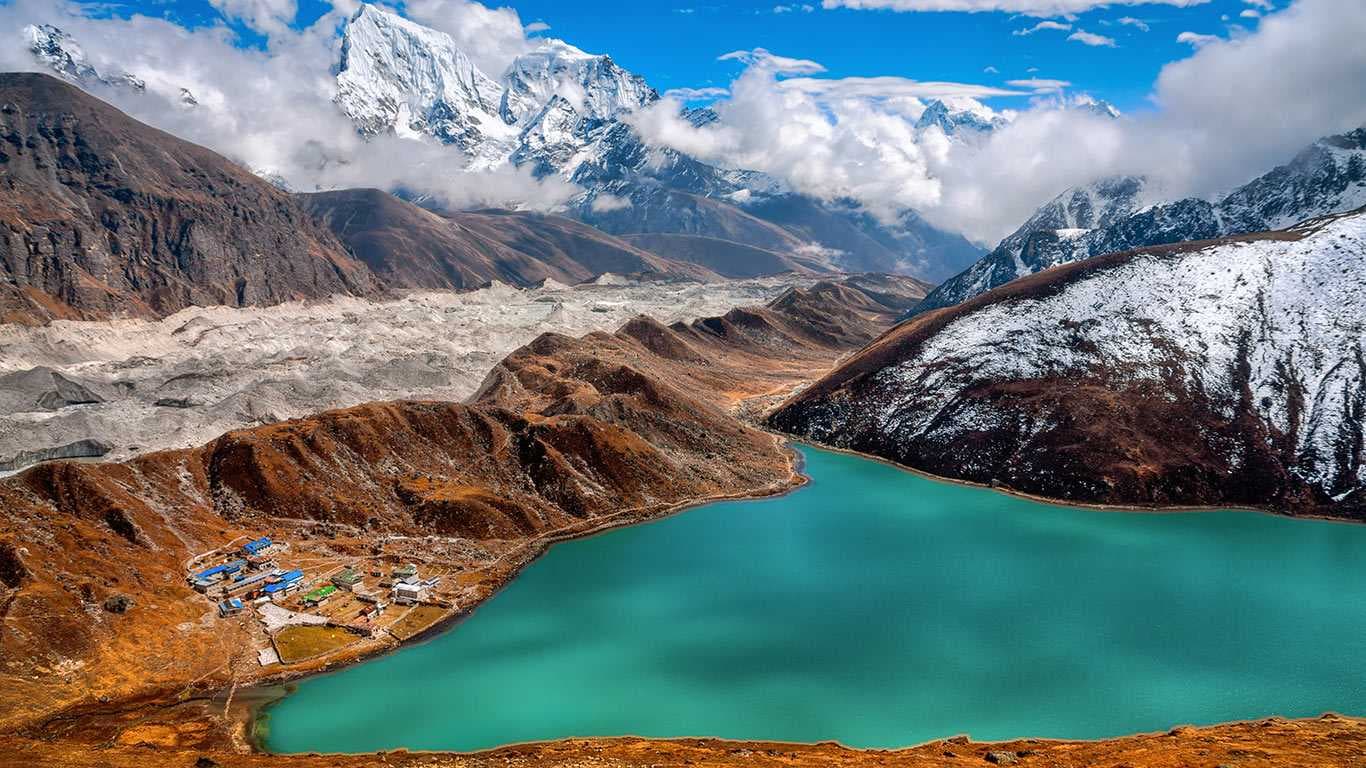
Visit Gokyo Lake and Gokyo Ri for panoramic vistas of Cho Oyu, Everest, and the surrounding Himalayan giants
Discover ancient gompas, including the famous Tengboche Monastery, and taste local delights like butter tea
Enjoy less-traveled trails with limited hikers, offering peaceful landscapes and pristine Himalayan scenery
Arun Valley And Gokyo Lake Trek Overview
Arun Valley is also known as Arun Salpa Valley. The early Everest climbers heading to the Everest region have used this enchanting route earlier. Our journey starts in the bucolic east of Nepal, home of the Rais and other middle-hill Nepalese. Once there, we start our journey from Tumlingtar, landing on a lush grass runway as we hike along the turquoise Arun River through the pastoral terraced hills of the Arun and the Salpa valleys to Solu.
We continue the Arun Valley and Gokyo Lake trek to descend through the large hills, as we pass the Rai and Sherpa villages and make our way towards Lukla along the old Tibetan trading center of Namche Bazaar. Very few hikers and mountaineers travel past the Arun Valley, but those who do so marvel at the sheer beauty of the mountain villages and the cultures of the Nepali people, along with the adventure ahead.
Here comes the next step of the mesmerizing Arun Valley and Gokyo Lake Trek. On reaching Lukla and the Khumbu region, we are greeted with the festival of peaks. On our way north towards Cho Oyu and the border of Tibet, the 8,000 m lofty mountains loom over us as we trek through the Sherpa villages. After a tiring journey through the snow-clad regions, we are offered accommodation in a cozy Gokyo lodge, whilst exploring the stunning Gokyo Lake and climbing the Gokyo RI.
As we head down towards the splendid eastern trail back to the old Sherpa villages of Phortse and Pangboche, we are introduced to the many gompas along the way, and famous among them is the Tengboche Gompa.
We visit the local people. Visit the old Sherpa homes while being offered their salt-butter tea.
All of these breathtaking landscapes, with a limited number of hikers until Lukla, a glimpse of traditional Nepalese villages with the Himalayas as a backdrop, is more of a delight for hikers. The amazing stay on the shores of Lake Gokyo in the heart of the Sherpa homeland is everything one can expect for a perfect Christmas.
Some Insights on Arun Salpa Valley
We embark on our journey through eastern Nepal, in one of Nepal’s many remote outposts, the Tumlingtar. Arun Valley Trek is a picture of green, fertile valleys, delightful snow-peaks, traditional mountain villages, and diverse cultures.
The inhabitants residing in the middle hills below Lukla are mainly the Sherpas, who are the tough devout Tibetan Buddhist mountaineers of international reputation. They live mainly in the upper Solu region and are the main inhabitants of the Khumbu region.
Their main occupation consists of farming barley, wheat, and potatoes, tending their livestock, visiting their gompas, and celebrating many Buddhist and Tibetan/Sherpa festivals, along with trekking and climbing the elevated peaks in the Khumbu region.
However, the lives of the Rai are different from those of the Sherpas. The Rai tend to live further south, in an organized, clean, fertile village with lots of opportunities to farm rice, millet, and corn. Appearance-wise, they differ from the Sherpas. They do not seem to consist in one place but tend to travel for work, such as joining the army, with many working as tour guides. They also work as cooks or porters.
The Rai, like the Sherpas, are of Tibetan descent, but their language consists of a Tibeto-Burmese dialect. Their religion, called Mundum, is an ancient form of animism worshipped at home with shamans and holy men (Dhami) practicing the many rituals and ceremonial rites. They are considered some of the oldest inhabitants of Nepal and are of the Kirat ethnic group.
Best Season for Arun Valley And Gokyo Lake Trek
The best seasons for the Arun Valley and Gokyo Lake Trek are the two peak seasons. Spring and autumn are the best times to enjoy all the treks in Nepal. And each of these seasons offers trekkers different experiences.
Autumn Crystal Clear Views and Festival Season
Autumn offers trekkers crystal clear skies and breathtaking views of the mountains. Trekkers are gifted with stable weather in the mountains. As such, the treks are their safest in this season.
Autumn also holds the biggest festivals of Nepal. We have the grand Dashain and Tihar during this season. Moreover, it is also the harvest season. Most communities harvest rice from their fields. If you can, try visiting during the festive season. Fall offers a vibe different from the other seasons.
Spring for the Lush & Vibrant Window to Nature
The lower Arun and Salpa valleys are at their lush and greenest during this time. The rhododendron forests and wildflowers are at their full bloom. This gives the traveler a journey through pastoral terraced hills with vibrant new crops.
Winter: Winterwonder Land, But Very Challenging
Trek to Arun Valley is relatively doable. But the Gokyo Lake Trek becomes very challenging. If you manage to trek to the Gokyo Lake, it rewards you with breathtaking winter views. You get an immense tranquility and unparalleled views of the Himalayas.
The temperatures turn very cold, and it goes well below freezing. The area has a high potential for heavy snow and trail closures. Most inhabitants migrate to lower elevations, leaving the area with limited teahouse availability.
Summer/monsoon: Season to Avoid
The lower Arun Valley becomes very hot and humid during the summer/monsoon. Traveling this season means facing heavy rains, but with lush forests. The runway at Tumlingtar airport will have lush grass, making takeoffs and landings difficult. The trails become muddy and leech-infested, making the travel uncomfortable.
Arun Valley and Gokyo Lake Trek Difficulty
The Arun Valley and Gokyo Lake trek is a long, strenuous trek. The journey is physically demanding, starting at a low elevation of 410 meters in Tumlingtar. The highest point of this trek is Gokyo Ri, sitting at 5,357 meters.
Trekkers face a massive elevation change during this trek. Travelers must prepare for a massive gain in altitude with diverse climates. You experience tropical heat to harsh cold.
The selection from Tumlingtar to Lukla is a less trodden path. You can find simpler teahouses and more rugged trails. This part is tougher than the standard Everest routes.
Permits Required for Arun Valley and Gokyo Lake Trek
The Arun Valley and Gokyo Lake Trek is a multiple-region journey. Here are the permits you need to take this trek:
Makalu Barun National Park Permit
Sagarmatha National Park Permit
Khumbu Pasang Lhamu Rural Municipality Permit
TIMS Card
Why choose Himalayan Trekkers for this trip?
Himalayan Trekkers has been part of the trekking industry for over two decades. We covered many long-distance routes over the years. We specialize in these traditional treks, which take a long time to cover.
With years and years of trekking in the Himalayas, we understand the pacing needed to travel from the Rai heartlands to the Sherpa highlands. Moreover, our guides work as a cultural bridge during this trek. They facilitate genuine interactions and an in-depth cultural experience.
We offer some of the most flexible treks around the Himalayas. Contact us today to book or inquire about this trip. Feel free to reach out to us on WhatsApp or via Email to know about any of our packages.
Itinerary Detail
Departure Dates
What is Included / Not Included
- Airport / Hotel / Airport pick up & drop off service by private tourist vehicle.
- Standard twin sharing accommodation in a three-star hotel in Kathmandu; Breakfast included.
- Guided city tour in Kathmandu by private tourist vehicle.
- All your standard Meals during the trek (Breakfasts, Lunches, and Dinners).
- Lodges, Guesthouses accommodation during the trek (On twin sharing basis and occasionally dormitory style).
- Local Himalayan trekkers licensed English speaking guide.
- The required number of local staff and porters to carry your luggage during the trek (We assign one porter for every two guests).
- Food, accommodation, salary, insurance, equipment, and medicine for all staff.
- Everest National Park permits and TIMS permit for trekking.
- Airfare from Kathmandu – Tumlingtar, Lukla - Kathmandu including airport departure tax in Kathmandu, Tumlingtar and Lukla airport.
- Sightseeing/Monument entrance fees in Kathmandu.
- Farewell dinner in a typical Nepali Restaurant with a cultural dance show.
- All our government taxes, vat, tourist service charges.
- Official expenses.
Accommodation
Himalayan Trekkers promises to manage the best, most comfortable, and preferred accommodation.
Generally, in cities like Kathmandu and Namche, we arrange basic three-star facilities. If available, you can opt for a more budget-friendly option or upgrade to a more luxurious hotel by paying a little extra.
Although not all the places might have all the modern facilities, we will make sure to arrange safe and comfortable accommodation. In general, hygienic and safe tea houses/local lodges/ home-stays with all the basic facilities are arranged. But you can, if possible, personalize according to your preference.
If your itinerary includes camping or you choose to experience camping during your travel, a proper camping site will be pre-decided. If required, we also provide the basic equipment, which is refundable. Please check the Gear-List and Requirement List for more information.
Meals
Breakfast is usually included with your B&B Accommodation within the cost that is evident.
For other meals in the city, you would have to pay separately. Often in the cities, you can choose from many different cuisines and varied food services. We can always help you find the right place to fit your taste.
In more remote areas, usually, there are not many options. But you can always find hygienic and well-prepared food. Moreover, almost all the meals during the trek are included in the cost. We can help you make changes according to your preference and budget, but only if choices are available!
On top of that, Himalayan Trekkers also organizes Welcome and Farewell Dinners as a symbol of warm greetings.
Please go through the detailed itinerary for more information. We are always there to help you travel to your heart’s content.
Drinking Water
For the drinking water, we suggest you carry a reusable 2-Liter bottle/filter bottle and water purifying tablets. You can refill as much as you can from the sources once it is empty.
Another alternative would be to ask for boiled water at the homestays. These establishments charge per liter since they use fuel to boil the water. They take the money to cover the fuel cost.