
Upper Dolpo to Jomsom Trek
Download Itinerary
Share with your friends
Trip Information

26 days

5550

Difficult

Kathmandu

Kathmandu

Trekking


Trip Highlights
Witness the beauty of the UNESCO heritage sites of Kathmandu
Exploring Phoksundo Lake (Nepal's deepest lake)
View of stunning panoramic Himalayas and Mountains
Indulging with the locals and knowing their lifestyle practices
Learning a new culture and traditions
One of the trails of the Great Himalayan Trails (GHT)
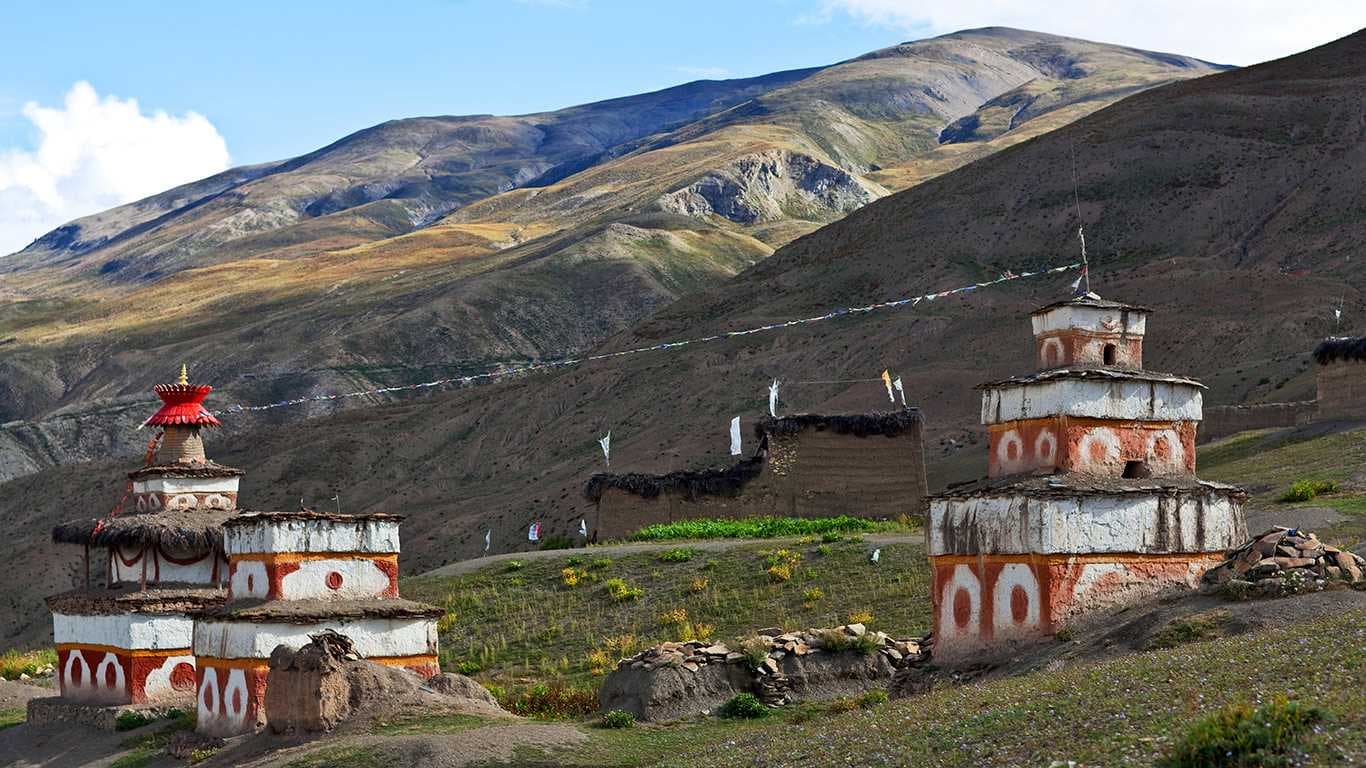
Tibetan Gompas, Monasteries, Mani Walls, Chortens
Upper Dolpo to Jomsom Trek Overview
Dolpo is already a trekkers' paradise & is unspoiled as it does not attract that many crowds. When you explore the route, you will immediately know why it is marked as paradise. Even today, it is one of the most restricted locations that allows only around 250 foreign tourists to visit per year.
Imagine the most expensive platinum ring and a very small but even more expensive diamond upon it. The Upper Dolpo to Jomsom Trek explains precisely that the route avoids the reasonably traveled common routes of Upper Dolpo and brings you to Jomsom via largely untouched lands. You can also visit the pace at which the film "Himalayan Caravan" written by Eric Valli was shot.
Upper Dolpo to Jomsom Trek is one of the places that still preserves the pre-Buddhist religion based on shamanism -Bong Po. The tribes that are scattered throughout the region have many followers of the religion and give you a peek into Nepal before the advent of Buddhism.
Here, you have to be careful with the acclimatization schemes because you have to pass several high passes, such as the Kang La, Saladang La, Chharka La, etc., and most of them rise above 5000m.
Here you will also see majestic views of sparkling mountains, Lake Phoksundo, the old Shey monastery, the Shey Phoksundo National Park, and the modest yet beautiful settlements of the locals. Domestic behavior will cultivate the urge to explore and engage more with the natives. You would also encounter different forests of bamboo, figs, pines, etc., and feel that your journey through the past has ended when you reach Jomsom, Mustang's headquarters.
Make sure you practice and get into your best shape before you embark on this adventure. This would certainly twist your guts and test your determination if you are a beginner, but it should be perfect for experienced adventurers.
Trek Highlights
Witness the beauty of the UNESCO heritage sites of Kathmandu
Exploring Phoksundo Lake (Nepal's deepest lake)
View of stunning panoramic Himalayas and Mountains
Indulging with the locals and knowing their lifestyle practices
Learning a new culture and traditions
One of the trails of the Great Himalayan Trails (GHT)
Tibetan Gompas, Monasteries, Mani Walls, Chortens
Best Trek for Upper Dolpo to Jomsom Trek
The best seasons for the Upper Dolpo to Jomsom Trek are Summer, Spring, and Autumn. Furthermore, each season has a distinct experience. As part of the Great Himalayan Trail, it is the diamond on the platinum ring.
The Clearest Window to the Himalayas: Autumn
Autumn is the golden period for trekking in Nepal. The post-monsoon air is this and clear. It offers a majestic views of sparkling mountains. You also find the deepest turquoise hues of Lake Phoksundo.
Spring for Wildlife Peak
Spring is when the snow at 5,000 meter passes starts to melt. Bon Po communities become more active during this season. Likewise, you find many wildlife scurring around during this seasson. Lucky trekkers can get a glimpes of snow leopard in Shey Phoksundo National Park.
Summer at the Rain Shadow region
Upper Dolpo falls in the rain shadow area. They remain dry and aird even during monsoon. As such, this makes it a rare and perfect "summer expedition." The other parts of Nepal are inaccessible during monsoon. As such, the Upper Dolpo becomes a great alternative during summer.
Seasons to Avoid: Winter
Trekkers should strictly avoid Upper Dolpo region. The season starts in December and ends in early March. The Kang la, Saladang La, and Chharka La become impassable. All above 5,000 meters, the trails become covered in snow.
The temperatures drop to the extreme levels. Even during day time it drops far below freezing level. As such, most of the settlements migrate to the lower regions during winter, leaving the upper regions mostly empty.
Upper Dolpo to Jomsom Trek Difficulty
The Upper Dolpo to Jomsom Trek takes us over 5,000 meters. As such, the trek’s difficulty grade is said to be Extreme. This trek tests your determinationa with multiple back-to-back passes over 5,000 meters.
Given how we over multiple passes back to back, trekkers need to be in their best shape. The daily walking hours tends to be six to eight hours. The journey takes you over a high altitude deserts.
Upper Dolpo to Jomsom Trek is a full tented camping adventure. You travel through largely an untouched lands during this trip. As such, this journey isn’t well suited for beginners and only seasoned trekkers find this trip worth the trouble.
Permites for Upper Dolpo to Jomsom Trek
Upper Dolpo Restricted Area Permit
Upper Mustang Restricted Area Permit
Shey Phoksundo National Park Permit
TIMS Card
You might be interested in:
Itinerary Detail
Departure Dates
What is Included / Not Included
- All airport arrival/departure transfers
- Accommodation with daily breakfast in Kathmandu as per the itinerary
- Guided Sightseeing with all applicable entrance fees as per the itinerary in Kathmandu
- Accommodation with breakfast in Nepalgunj as per the itinerary
- All Guesthouse, Lodge/Tented Accommodation during the trek
- All meals (Breakfast, Lunches & Dinner with Tea/Coffee) During the Trek
- All Private transfer as per the itinerary
- Domestic (Kathmandu – Nepalgunj – Juphal & Jomsom – Pokhara - Kathmandu) Airfare and taxes as per the itinerary
- An Experienced GOVT licensed Trekking Guide & required No. of Sherpa Porters & Crew
- All wages, allowances, insurance, medical and equipment for supporting crewmembers.
- She Phoksundo National Park Fees
- Special (Protected area) Permits fees
- Annapurna conservation Fees
- TIMS fees & Local Province (Municipality/Village) Fees
- Trekking & Camping / Kitchen Equipment as per itinerary/necessary
- A comprehensive medical kit
- Welcome/Farewell Dinner
- All GOVT local taxes
Accommodation
Himalayan Trekkers promises to manage the best, most comfortable, and preferred accommodation.
Generally, in cities like Kathmandu and Nepalgunj, we arrange basic three-star facilities. If available, you can opt for a more budget-friendly option or upgrade to a more luxurious hotel by paying a little extra.
Although not all the places may have modern facilities, we will make sure to arrange safe and comfortable accommodation. In general, hygienic and safe tea houses/local lodges/ home-stays with all the basic facilities are arranged. But you can, if possible, personalize according to your preference.
If your itinerary includes camping or you choose to experience camping during your travel, a proper camping site will be pre-decided. If required, we also provide the basic equipment, which is refundable. Please check the Gear-List for more information.
Meals
Breakfast is usually included with your B&B Accommodation within the cost that is evident.
For other meals in the city, you would have to pay separately. Often in the cities, you can choose from many different cuisines and varied food services. We can always help you find the right place to fit your taste.
In more remote areas, usually, there are not many options. But you can always find hygienic and well-prepared food. Moreover, almost all the meals during the trek are included in the cost. We can help you make changes according to your preference and budget, but only if choices are available!
On top of that, Himalayan Trekkers also organizes Welcome or Farewell Dinners as a symbol of warm greetings.
Please go through the detailed itinerary for more information. We are always there to help you travel to your heart’s content.
Drinking Water in Upper Dolpo to Jomsom Trek
For the drinking water, we suggest you carry a reusable 2-Liter bottle/filter bottle and water purifying tablets. You can refill as much as you can from the sources once it is empty.
Another alternative would be to ask for boiled water at the homestays. These establishments charge per liter since they use fuel to boil the water. They take the money to cover the fuel cost.