
Helambu Trek
Download Itinerary

Share with your friends
Trip Information

9 days

Tharepati (3690m)

Easy

Kathmandu

Kathmandu

Trekking


Trip Highlights
Explore Kathmandu's stunning architecture and religious monuments
At Kyangjin Ri, you may get up close and personal with the peaks and glaciers
Discover Gosaikunda, a magnificent high alpine lake
Relish the presence of different colored rhododendrons, tall pine trees, and grassy meadows
Splendid vistas of Ganesh Himal (7,406m), Langtang Lirung (7,345m), and Gaurishankar (7,145m)
Visiting old monasteries, shrines, and stupas to learn about Buddhist culture
Paying a visit to the Tibetan, Tamang, Sherpa, and Hyolmo ethnic groups and getting insights into their lifestyle
Helambu Trek Overview
Helambu Trek is one of the most stunning and popular short trekking excursions in Nepal in the Langtang region. This easy and pleasant path is located just north of Kathmandu Valley.
The trek will take you from the banks of the Bhote Koshi River via the Langtang Valley. We reach the stunning villages of Helambu, showcasing the unique Hyolmo ethnic group and their abundant culture.
This 9-day journey to this expansive region is a simple access to the high Himalayas in a reasonable amount of time. You get there without exposing oneself to high altitude.
Why Trek to Helambu?
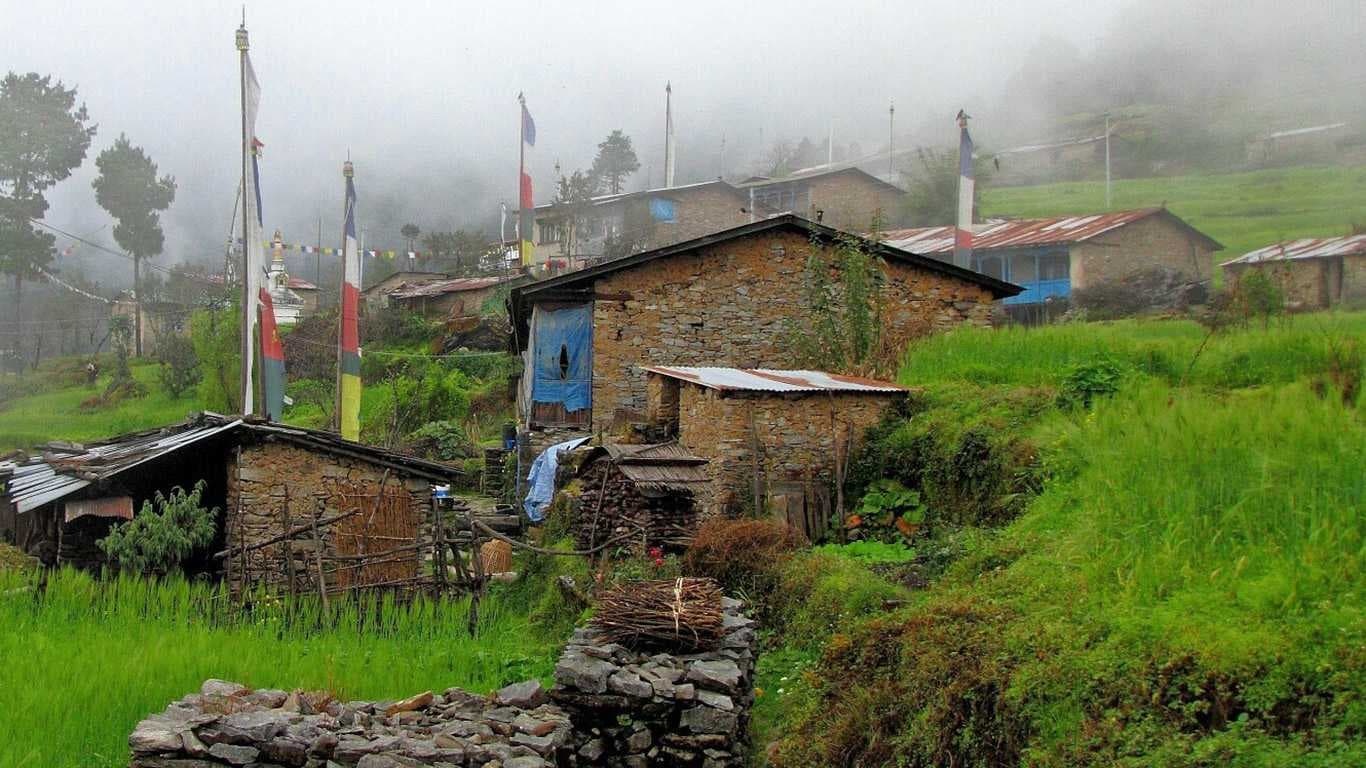
The Helambu trek is a pleasant walk through temperate forests, green valleys, and rhododendron forests. Get to visit the Tamang and Sherpa communities and Buddhist monasteries on a less-traveled trekking route.
Despite its proximity to the capital, the region's natural beauty and simplicity are so untouched that they can be found in their most natural state.
Aside from the Hyolmo lifestyle of high mountain people, the walk is one of the most diverse around Kathmandu. You travel through verdant rhododendron and bamboo forests, stunning waterfalls, and the snow-capped Himalayas.
On this Himalayan journey, you will witness soaring mountain views, including Langtang, Manaslu, Ganesh Himal, Rolwaling, and Gauri Shankar.
Highest Point of Helambu Trek
Helambu trek's highest point is Tharepati Pass at 3,690 m. It offers spectacular vistas of Dorje Lakpa, Gauri Shankar, Langsisa Ri, and other snow-capped mountains.
It also has a warmer environment, lush meadows, evocative woods, torrential rivers, and friendly people.
Pine forests, slow-moving rivers, and fast mountain streams, steep rock and snow-capped summits, grassy downs, and meadows covered with daisies and wild primroses may all be found in the valley.
You come across the snow bridges spanning the raging cascades in the valley’s upper reaches. You then move along with mist-shrouded mountain passes, and little lakes with icebergs coating them, and crystal-clear waters.
For those looking for less congested paths and to learn more about the Tamang and Sherpa cultures and history, Helambu Valley is not to be missed.
The outstanding natural beauty, fascinating cultural history, Buddhist temples and architecture, villages, monasteries, and mountain cattle grazing on rich alpine pastures under the watchful eyes of their herders make a trek through mountain ridges and surrounding landscape villages truly inspiring.
A trek to the Helambu region is an enthralling experience, with beautiful Himalayan scenery and monasteries on the border with Tibet.
Helambu Trek Highlights
Explore Kathmandu's stunning architecture and religious monuments
At Kyangjin Ri, you may get up close and personal with the peaks and glaciers
Discover Gosaikunda, a magnificent high alpine lake
Relish the presence of different colored rhododendrons, tall pine trees, and grassy meadows
Splendid vistas of Ganesh Himal (7,406m), Langtang Lirung (7,345m), and Gaurishankar (7,145m)
Visiting old monasteries, shrines, and stupas to learn about Buddhist culture
Paying a visit to the Tibetan, Tamang, Sherpa, and Hyolmo ethnic groups and getting insights into their lifestyle
Trek Difficulty
The journey is a mild one, requiring only 6-7 hours of walking each day on average; hence, trekkers with ordinary physical fitness and no prior experience can complete it.
Best Time for Helambu Trekking
Autumn (September, October, and November) and Spring (March, April, and May) are considered to be the finest seasons for Helambu Trekking. The weather is sunny and warm during these times, with a clear view of the Himalayas and mildly chilly nights.
In the spring, the trail will be covered with full blossoms of red, pink, & white rhododendrons. The weather is cool, the sky is crystal clear, and you can see the mountains in all their glory.
Autumn is a great time to go hiking because of the moderate temperatures, light winds, and low rainfall. The sun shines brightly, the skies are clear, giving you a spectacular view of the mountains, and the temperature is ideal for an afternoon hike.
The lowlands are lush, and the environment is clean. These seasons also coincide with Nepal's most important festivals, such as Dashain and Tihar.
Treks in the Langtang region are just as popular in the winter (December - February) as they are in the spring and autumn. Despite the cold, the skies are frequently clear, and the mountain views are spectacular.
Also, because of the snowy caps and the possibility of snow on the ground, the trails are the least crowded at this time.
Seasons to Avoid
Summer (June – August) is the warmest month of the year, making for the best trekking conditions compared to the other months. However, because the monsoon combines with summer, the trekking routes may be wet and slick, which might make it quite difficult.
But various flora blooms throughout this season, transforming the valleys into a lush green landscape unlike any other.
Itinerary Map
Itinerary Detail
Departure Dates
What is Included / Not Included
All airport transfers (pick-ups & drop-offs)
Category hotel/resort accommodation on twin/double sharing basis in Kathmandu
Tea house/lodge accommodation on twin sharing basis during the trek
Required ground transportation on a private vehicle as per the itinerary
All three meals (Breakfast, Lunch & Dinner) during the trek
Professional guide, assistant guide & porter (if required)
Coverage of guides and porters meals, insurance, salary, lodging, & transportation
Langtang National Park Entrance Fee
Trekkers’ Information Management System (TIMS)
Welcome/Farewell Dinner in Kathmandu
All applicable government, Local taxes, and official Expenses
Accommodation
You will spend three nights in a category twin-sharing hotel/resort before and after the hike. Kathmandu offers a diverse selection of hotels to suit all budgets and interests. If you prefer your accommodation to be more luxurious, it will be managed at an extra cost.
The 9-day Helambu walk includes five nights of lodge-to-lodge accommodation on a twin-sharing basis, where we use the finest available lodge.
Meals
During your stay in Kathmandu, you will be served breakfast every day. Lunches and dinners here are expected to be purchased on your own. We can recommend the best eateries that suit your taste and budget, as Kathmandu houses hundreds of thousands of such places with cuisines from almost every part of the world.
All standard meals (breakfast, lunch & dinner) with hot drinks are included in the cost during the trekking period. The food is quite convenient, but not as convenient as it is in towns. Almost everywhere on the menu, there is a mix of traditional local, Asian, and Western cuisine, but as we get closer, the menu list will be limited.