
Makalu Sherpani Col Pass Trek

Share with your friends
Trip Information

Duration
24 days

Max Altitude
6143

Difficulty
Strenous

Starts from
Kathmandu

Trips Ends at
Kathmandu

Activity
Hiking & Walking


Three high mountain passes: Sherpani Col (6135m), West Col (6143m), and Amphu Lapcha Pass (5850m)
Explore a distant and wild Himalayan Environment
Close-up views of the many snow-capped Himalayas, including Everest, Lhotse, and Makalu
Get a glimpse of amazing and diverse cultures, each with its own traditions
Traverse through the isolated valleys of the Makalu Barun National Park & Sagarmatha National Park
Makalu Sherpani Col Pass Trek Overview
The Makalu Sherpani Col Pass Trek is one of the most challenging treks in the Great Himalayas Trail (GHT). The trail takes you to a remote and desolate region in eastern Nepal.
Col Pass Trekking is also called the Ice Pass Trek, the Makalu Three Pass Trek. The Makalu to Everest via Three Pass Trek that climbs via the three Highest Mountain Passes of Sherpani Col Pass (6,135 m), West Col (6,143 m), and Amphu Laptsa Pass (5,850 m).
The Makalu Sherpani Pass Trek also takes you to the Makalu Base Camp at 4870 meters. It gives you a close-up view of the fifth-highest mountain, Makalu (8,481m), and high arctic vistas of a lonely alpine forest.
Why Trek Makalu Sherpani Col Pass Trek
The trip also offers you a great opportunity to experience Makalu's off-the-beaten-path, which combines a rich cultural legacy. It offers unrivaled natural beauty and ecological diversity.
As you walk through the abundant Makalu-Barun National Park, you could encounter endangered creatures. Animals such as the Red Panda and the Snow Leopard.
This three-week-long journey not only offers you an excellent trekking experience, but also nature and panoramic vistas. It also delights you with the firsthand experience of the culture and folklore of tribal hill and mountain peoples, as well as the beauty and fauna of remote Eastern Nepal.
Makalu Sherpani Col Pass Trek Route
The journey begins with a flight from Kathmandu to Tumlingtar with the beautiful Himalayan backbone sliding beneath our plane. The trek starting point of this Col Pass Trek is reached after a short scenic drive to Num from Tumlingtar.
Then the journey emerges from the calm grasslands and ascends the hidden Arun River valley with gradual ascents and descents to the Kongma Danda. The trail climbs all the way to Langmale Kharka, passing through Makalu and crossing the Barun Khola.
The climb to Sherpani Col (6,135m) and West Col (6,143m) requires a long period at altitude and some steep slopes, but it is rewarded with spectacular views of Mt. Makalu (8,463m) to the north and Island Peak (6,189m) to the west.
The Makalu Sherpani Col Pass Trek of 24 days is a challenging adventure that spans the stunning landscapes of the Everest Khumbu Region in Nepal.
The final phase of the journey takes you over the Amphu Labtsa Pass at 5,850 meters and into the picturesque Imjatse valley in the Everest Khumbu Region. We enter through the tranquil valleys and rhododendron trees and make our way to Lukla to fly back to Kathmandu.
Highlights of Makalu Sherpani Col Pass Trek
Three high mountain passes: Sherpani Col (6135m), West Col (6143m), and Amphu Lapcha Pass (5850m)
Explore a distant and wild Himalayan Environment
Close-up views of the many snow-capped Himalayas, including Everest, Lhotse, and Makalu
Get a glimpse of amazing and diverse cultures, each with its own traditions
Traverse through the isolated valleys of the Makalu Barun National Park & Sagarmatha National Park
Makalu Sherpani Col Pass Trek Difficulty Levels/Factors
The Makalu Sherpani Col Pass trek is, without a doubt, one of Nepal's most difficult and technical treks. It is a long journey that often lasts more than 20 days, traversing three high passes that are above 5000 meters. The trail runs through isolation, shifting terrain, and high-altitude passes with limited hiking amenities.
Altitude sickness is a serious issue that can be fatal during this journey if not addressed properly. If you encounter any early warning symptoms of altitude sickness, seek aid from your journey companions and guide as soon as possible.
In addition, to remain safe, purchase travel insurance that includes high-altitude experiences. It will help a lot when you need to be rescued from the mountain.
Unlike major trekking trails, the services available along the route are extremely rudimentary, with only a few lodges and tea shops. Following Tashigaon, there is no tea house or settlement where one can stay or eat. As a result, you should bring enough food and drink for the trail.
Can you do the Makalu Base Camp Trek?
While trekking to Makalu Base Camp is challenging, it is not as demanding as climbing to the peak of Makalu. You only need to plan ahead of time to conquer the trail. You can follow our well-crafted Makalu Base Camp Trek program and receive competent coaching.
To participate in the Sherpani Col Pass trek, you must be physically fit and mentally strong. We advise you to go for a jog, go to the gym, swim laps in the pool, or perform some local hikes. You should be able to walk for up to 7-8 hours per day. At the end of the day, you will be rewarded with a once-in-a-lifetime adventure and natural beauty after completing the hike.
Best time to do Makalu Sherpani Col Pass Trek
Spring and autumn are the shoulder seasons for the Sherpani Col Trek, like any other trekking route in Nepal. Both seasons feature plenty of bright skies and pleasant temperatures, allowing you to enjoy the breathtaking vistas of the highest mountains, diverse terrains, and the nature of the region’s surroundings.
Autumn
The Sherpani Col trek itinerary is best experienced during the autumn months of October and November. The skies are clear, the weather is lovely and sunny during the day, and there is little rain.
The nights are cool, but depending on the height, the temperature may drop below freezing. The trekking trails during these months are at their most stable state.
Spring
April and May of the spring season are the second-best times to do the Makalu Sherpani Col Pass Trek. The season of bright and sunny weather does see snowfall at high altitudes on occasion/early spring months, so trekkers might have to trample snow and ice on the high passes.
On the other hand, the sky is mainly clear, providing breathtaking vistas of the mountains. The entire mountainside blooms with wildflowers and Rhododendrons, and the surroundings are lush with greenery and a rainbow of colors.
Can it be trekked on Off Season?
You can trek in Makalu not only in the peak seasons but also in the off-season. I.e., during monsoon and winter, the Makalu region has magnificent and outstanding vistas. But these seasons are called off-seasons and are not recommended for the Makalu Sherpani Col Pass Trek for many reasons.
The first hurdle during the monsoon is the delayed or canceled flights between Kathmandu and Tumlingtar due to rain, fog, and clouds. Other challenges would be the wet, slippery trails, landslides, mudslides, obstructed views, pouring days, leeches, etc.
During the winter months, trekking on the Sherpani Col Pass route can be challenging due to the cold temperatures. Then heavy snowfall blocks trekking routes, especially the high mountain passes, making the trek difficult to accomplish.
Permits to do Makalu Sherpani Col Pass Trekking
Trekkers need to obtain the following permits to do the Sherpani Col Trek:
Trekkers’ Information Management System (TIMS)
Makalu Barun National Park Entry Permit
Sagarmatha National Park Entry Permit
Pasang Lhamu Municipality Entrance Fee
Note: The permit costs are included in the package, and the Himalayan Trekkers will obtain them on your behalf.
Why Choose Himalayan Trekkers for Makalu Sherpani Col Pass?
Trekking with us, Himalayan Trekkers, offers travelers an insightful journey. Himalayan Trekkers have over two decades of trekking history.
Our expert and seasoned guides help navigate the remote Makalu-Barun region. As such, our guides help trekkers safely cross the three techincal-pass above 6,000 meters.
Trekkers will have access to pulse oximeters to check oxygen saturation. And if necessary, we can arrange a helicopter rescue.
We also offer tailored itineraries for travelers. It typically spans 20 to 25 days, including necessary acclimatization days at key points.
Contact us today to inquire or book your next trip into the grand Himalayas.
Itinerary Map
Itinerary Detail
Packing List for Makalu Sherpani Col Pass Trek
 General
Backpack (40-50L for summit day)
Duffel bag (carried by porter/yak)
Sleeping bag (rated to -20°C or lower)
Sleeping pad (for extra insulation)
Headlamp with extra batteries
Sunglasses (category 4, glacier glasses)
Water bottles (2x 1L) or hydration bladder
Thermos (optional but useful at high camp)
Water purification (tablets or filter)
Trekking poles (collapsible)
Personal toiletries (toothbrush, toothpaste, wet wipes, etc.)
Sunscreen (SPF 50+)
Lip balm with SPF
Personal first aid kit
Snacks (energy bars, gels, trail mix)
High-altitude medications (Diamox, ibuprofen, etc.)
Passport and permits (TIMS, climbing permit, etc.)
Camera or phone with charger/power bank
Dry sacks or waterproof stuff sacks
 Upper Body
Sun hat or cap
Buff or neck gaiter
Warm hat (fleece or wool)
Balaclava (for summit night)
Lightweight base layer (synthetic or merino)
Mid-weight fleece or softshell jacket
Insulated jacket (down or synthetic, for cold evenings)
Heavy-duty down jacket (for summit push)
 Torso
Torso
Short-sleeve trekking shirts (2-3, moisture-wicking)
Long-sleeve trekking shirts (2)
Lightweight fleece or merino base layer (1-2)
Insulated vest (optional)
Hardshell jacket (waterproof/windproof with hood)
 Lower Body
Trekking pants (2)
Thermal base layers (2 pairs, merino or synthetic)
Softshell pants (for cold days)
Hardshell pants (windproof and waterproof)
Insulated pants (for summit night)
Shorts (optional for lower altitudes)
 Hands
Hands
Lightweight liner gloves (fleece or synthetic)
Windproof gloves
Insulated mittens or gloves (for high camp/summit)
Extra pair of gloves (backup)
 Feet
Feet
Trekking socks (4-5 pairs, wool or synthetic)
Thermal mountaineering socks (2 pairs)
Trekking boots (well broken-in, waterproof)
Mountaineering boots (double-layer for summit)
Camp shoes (Crocs or sandals)
Gaiters (for snow and scree protection)
 Undergarments
Moisture-wicking underwear (4-5 pairs)
Thermal underwear (2 sets, for sleep and summit)
Departure Dates
What is Included / Not Included
Arrival Departure transfers
Twin/double Bed sharing Accommodations in Kathmandu(3* Standard Category)
Guided sightseeing in Kathmandu
All domestic airfares (Kathmandu - Tumlingtar & Lukla- Kathmandu)
All required ground transfers by private vehicle as per our itinerary
All required camping equipment
Camping Cre
Portable Altitude Chamber (PAC) for emergency use
Everyday meals while trekking, which will be prepared by our cook
TIMS
Sagarmatha National Park Entry Fee
Makalu Barun Conservation Area Permit
Guide, porters and their daily wages, insurance with all necessary lodging & fooding arrangements.
High-altitude working crew / high-altitude porters / vastly experienced climbing Sherpa/guides with their daily wages, insurance, and all arrangements
Complimentary Welcome/Farewell Dinner
All applicable government taxes
All your stays in Kathmandu will be in the best available 3* standard category accommodations on a twin/double sharing basis in Kathmandu. If you prefer more luxurious stays in Kathmandu or simply want to have a single supplementary service, we can manage them for you at an additional cost if we are informed prior.
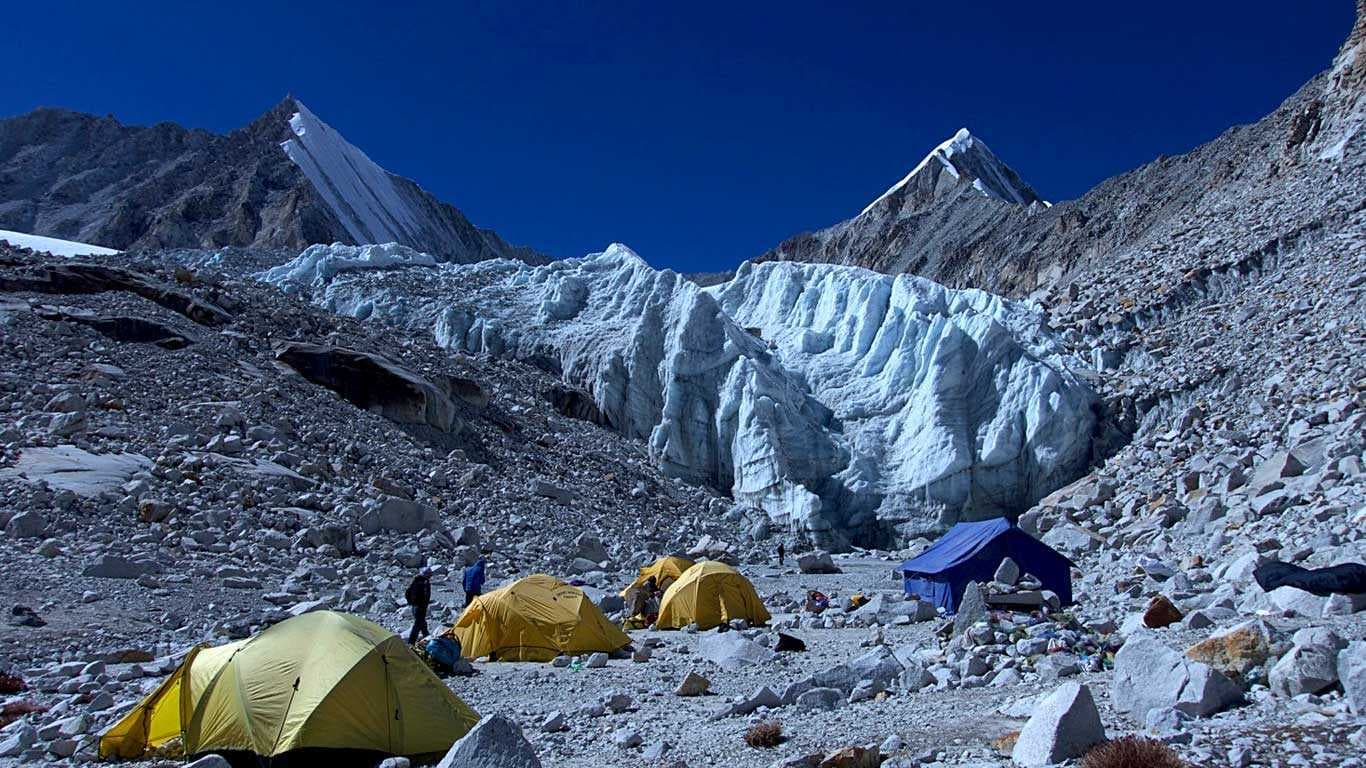
The Makalu trail up to Makalu Base Camp has a few trekking lodges and teahouses where you can spend the night. The lodges are very basic with a wooden bed, a mattress, a pillow, and a blanket. They will be on a twin-sharing basis. After we move forward from the base camp, there are no permanent settlements and no lodging options. So, we will be camping at Makalu Base Camp up to Amu Laptsa Base Camp. Then, from Chhukung, we will be spending the nights at the lovely teahouse.
Meals during Makalu Sherpani Col Pass Trek
The Makalu Sherpani Col Pass Trekking trail goes through one of Nepal’s remote regions. So, the availability of various types of foods is not possible. We will eat from the menus provided by the lodges till Makalu Base Camp. Dal Bhat (rice and lentil soup with vegetables), Nepal's national dish, is the most well-known, and we'll most likely have it every day, as well as for every main meal, lunch, and supper. After that, when our camping days begin, we'll be having freshly prepared meals provided by our tent cooks.
Drinking Water Availability
Hydration keeps AMS away from the trekkers. As such, you need to have plenty of drinking water during the trek. On the Makalu Sherpani Col Pass trek, you can restock water throughout the trail.
On the way, you have options to get water. First is by refilling water bottles or hydration bladders in teahouses for a cost. Or, you can opt to treat water by yourself with iodine tablets or UV light.
The last option is to buy bottled drinking water. However, it becomes excessively expensive the higher you go. Also, buying plastic-bottled water isn’t helpful for sustainable tourism.